
Sign up to save your podcasts
Or



On today's episode, I welcome my guest, Fred. Fred is the Chief Executive Officer of New Jersey Coalition for Inclusive Education, which is now All In For Inclusive Education.
In our conversation today, Fred, shares the exciting news about our transition from New Jersey Coalition for Inclusive Education to All In For Inclusive Education, what that name change means and what you can expect from the organization going forward.
Pamela Donovan, the founder, President, and CEO of the board of Ethan and the Bean, discusses how their organization collaborates with local schools and businesses to create an inclusive work environment outside of the classroom for students with disabilities.
Today I continue my conversation with Anjali, a parent advocate. As we conclude our discussion, Anjali shares what message she would like all educators and school districts to know about autism.
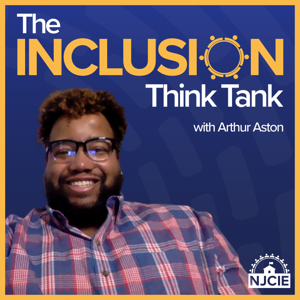
Arthur: This is the Inclusion Think Tank podcast brought to you by New Jersey Coalition for Inclusive Education, where we talk about inclusive education, why it works, and how to make it happen. This is part 1 of my conversation with Anjali. Anjali is a parent of two children who were diagnosed with Autism and Fragile X Syndrome. She shares what their family’s journey has been like working toward inclusion in their school district.
Arthur: I would like to welcome everyone back to another episode of the Inclusion Think Tank podcast brought to you by the New Jersey Coalition for Inclusive Education. I am back with a brand-new episode. I am your host, Arthur Aston. My guest today is Anjali and I am happy to have you on as a guest today to share your story and your family's story with us for this episode.
Anjali: Sure. Yes,
Arthur: So to get started, can you just share a little bit about yourself and about your family with us?
Anjali: So my name is Anjali, and I live in New Jersey with my husband and two kids. I have a ten-year-old girl and I have a seven-year-old boy.
Both of them are diagnosed with autism and they were recently diagnosed with Fragile X. They go to the public school in Berkeley Heights. And that's so family kind of and what I am afraid to say something about me I have been as a software professional for 14 years. Then I took a break after my little one.
And then I've taken a lot of programs in advocacy and stuff. And then I went to school and graduated in special education. And so right now that is what I have done and I mostly have kind of done volunteering things and all-around inclusion stuff. So that is and that is all about me.
Arthur: That’s awesome. I like for people to share their stories from their perspectives. It's better than any introduction I could ever do, for the guests. So that's why I always try to start off with a version of that question, allowing my guests to share information that they would like to share with everyone.
As you mentioned, your two children have an autism diagnosis and also a Fragile X diagnosis.
Can you talk about the diagnosis that your children received and the difficulty you had with getting the correct diagnosis?
Anjali: Yeah, I think that was the biggest journey for us because getting the diagnosis was not that easy for us. If I had to talk about my daughter, my daughter was not like she was mostly on all her milestones on time, except when it came to speech.
When she was speech delayed, we come from a multilingual family. I speak a different language my husband speaks a different one. And when together, a different one. So just like that, we and my pediatrician always used to say it's a multilingual family, so it's all the language delay was attributed to that. I think the most important thing that when people look for autism, all these diagnoses are the stereotypes.
And she didn't have those things. And so my pediatrician was I don't know, wasn’t worried., or they had less information about a profile like her to have autism. And so we didn't have anything. And even my pediatrician did not tell me anything about early intervention. So I found it from a colleague of mine.
Then we went through that road and meanwhile, I had my little one after that is when my daughter got the diagnosis and then two years down the line, then my son followed the same journey and got this diagnosis. But for him, he had a few more things that were kind of standing out. And like my daughter was just the profile was a little more different.
But the one year there was nothing kind of but so getting the diagnosis was not very easy. Maybe now I could relate to so many things because I said about the Fragile X diagnosis, I could relate some of the things because the fragile X have a very different profile. Maybe that was one reason my daughter was not kind of say they have a lot of autistic traits and sometimes they don't have it.
So it's like a very much different one than fragile X. So but the fragile X diagnosis came very like late. I got the fragile X, They were they had an autism diagnosis for some time and I got the fragile X diagnosis only last year. So we lived with the autism diagnosis for almost four or five years.
I don't know, does it change anything? I would not say not in that huge way. But not knowing this profile would have helped about how the learning things were so always a diagnosis. What I would see as a diagnosis is something to know them a little better so that you can profile them a little more better, then give them the accommodations and you know the learning style and help them through that way.
Anjali: So I felt having the diagnosis a little early would have helped me in those things. But either way, I don't know for me, but maybe for someone else in my daughter’s case. But for my son, I would say there are so many things that I face difficulties and everyone pointed it out to so many autistic stereotypes that was explained well as a medical situation in Fragile X
Anjali: because of something like I would say, there were frequent ear infections and I felt okay my son could see, but still I felt that he had struggling, focusing to read. And that is sometimes explained by a condition called strabismus that is very common in Fragile X.
But when I took my child to doctors with an autism diagnosis, they will always say, Well, this is a stereotype. This is like something that autistic children do. It's everything was kind of, I think, bundled up in that way instead, which explains much because now I have research papers devastating this condition exists.
That condition exists. So there was something that we can narrow down. So I feel there was a lot of so knowing a diagnosis help that in matter. I mean if I got that earlier it would have been better. But going through that medical process also so very difficult. I mean, so I don't know that was the process.
It was quite a process. I would say like getting that one. Even my when my first born, if they have even tested me, we would have known that Fragile X diagnosis. diagnosis. And Fragile X is one genetic noncondition for autism. Knowing those things would have helped and I feel that lack of awareness in those areas about the diagnosis.
Anjali: So it was difficult. If you get to the right people you get that one. But otherwise sometimes it's a journey. And mine was, I would say I always had the people who didn't know about it, but then I met someone at a later point. And so that is where all of our diagnosis journey was.
Arthur: Yes. And I appreciated what you said about, when you have the right diagnosis that leads to receiving the right assistance, the right help and to help out, the children with the diagnosis and the journey that it takes some time to get to the proper diagnosis is quite draining at times, I'm sure, and it's just to stick with it and how things are often grouped together. But, every child is an individual and that is what is, I think, so important to remember that every child is an individual.
And like you said, you would take your children and they would say, oh, that's because of the autism diagnosis. And, and it's like, yes, and maybe not.
Anjali: So you would like people to listen to you a little more because, and I feel like, you know, the friend I like to diagnose, even though it's not something that I wanted, but I say it gives a little more answers.
But then I feel okay when that autism spectrum is too wide. Like, I think some of the people might not get the right answers because it is like too big to kind of narrow down some of those things.
Arthur: So yes, So I would like to switch the conversation just a little bit and talk about inclusion and how you view inclusion and what your experience has been, with having your children included in the classroom.
And why do you feel it is important?
Anjali: So I would say, I will tell you, I think that inclusion part thing is a more matter down into what my personality is kind of. If you asked me to introduce myself I find I find it always struggling to say what pieces to say so in an inclusion that I think I would say that.
So for me, even before receiving any diagnosis or not knowing that my children are different in their own ways, inclusion was very important for me. I didn't know the benefit of it. I would be very honest. Like now I know the benefit of it and I very research base boy and then so many other things.
But at that point when initially the first place where I decided that inclusion part, I didn't know the benefit of it, I just felt that I needed that inclusion because I did not feel that my children should be separated in any means from their peers.
Anjali: So for my daughter, I would just kind of see as a story storyline for that that this like my daughter, she was having early intervention.
Then she went to school and she was in an inclusion classroom at that time in a pre-K inclusion classroom. And I liked it for that part at that point because we only have an IEP and for people an IEP, is an Individualized Education Plan. And what it was not at that point, she didn't have a diagnosis, so it was all well and good. We were in a regular classroom. We received all the extra support and stuff.
Everything changed the moment we received a diagnosis that when we got the diagnosis of autism from the day, the previous day to the next day, what happened in the IEP meeting was that they decided this class is no more right for my child something that I was not prepared for.
I have heard stories, but I didn't know anything when that first meeting. I still know that how ignorant I was about the system and how it works kind of thing. And when my child was asked to move to a classroom, she was three, four years at that point. And it was so difficult for me.
And only difference was I always tell anyone I said that the only difference was getting a diagnosis. And that time they said, okay, your kid would do better over here. So there is a lot of discussion that happened that something that was right for my child changed overnight like the educational situation changed. Like they cannot learn any more in this class.
Anjali: Everything just changed with that. And I remembered some of the things that I always looked at. A lot of that is what is in now code seeing that, okay, the use of supplemental like, you know, aid and services kind of a thing. And I remember taking my code book, I like it a friend of my administrative code book and talking to them that, hey, we can do all these things.
But I would say that at that time I didn't know. Well, to explain that much, but I know that this could exist. But at that time, the conversation didn't go well. It was all everyone making me believe that this is not right anymore.
Anjali: And at that point, inclusion was very important for me because I felt if she is a child who talks less does not have that language, why would you put her in another place and where everyone is learning to speak or talk, Why would you put them in an environment there, and not among the people who have more like language and stuff from them so that they can learn.
So it was like a different the body kind of say that that logical sense of you doesn't accept that part. That doesn't make sense to me. Whatever you're talking. Look it maybe other than your experience of it, but nothing makes sense to me.
So for me, that inclusion, that benefit of inclusion, what I was thinking is you always have appropriate peers to learn from. You always have a situation, and also your comparison of learning. We all say everything is relative. So for you, it is related to what everyone else is learning. Maybe your pace is different and I was okay to accept.
Not being unrealistic, but it was okay if my child learns a little slower. I was okay with that, but I just didn't feel well. I will still not be teaching them the same things. Why would you kind of think that is? A separate classroom would work. So for me, inclusion was important like to me because I was always seeing things through how, oh, the reality of our world is like.
If I'm if I'm considering myself as a person with without disability and how would my reality be that I am in the real world doing stuff and kind of doing them? Why would my child not able to do that? Or why would my child be not taught to do that? So for me it was just experience that you need to experience the same things, even though your experience feels different.
And that is how every one of us that even though if we are with disability, without disabilities, our experience is different.
Anjali: So I for me that inclusion, that is one reason why that inclusion was so important, because that was closest that you are going to be to real reality, your real life, what we call it, or our real experiences, what we call it. So and what I see is benefits is like what all of us think of like that's the same even my child.
Children with disability or without disability, this is what I would kind of want them to be independent, get a job, and do their own stuff. And if you have to navigate all those things, you have to have that experience of it, not in a separate place. Because if you have all of those separate experiences, how will you bring it together?
So, those are the things I had, I feel is common sense, that those are the things that you see as benefits. You don't have to have research or you don't have to have like, you know, people writing papers about it. It's just common sense that this is the normal experience that people should be having. So I think that is what I want.
And now I would say as a fear of a parent, I like as a spirit because I have two children with disabilities, that is, when I'm not around, they should be able to navigate. And I feel if they're not included, I don't think they will know how to navigate. So these are all benefits and I think they overweigh everything that people think of so that is why inclusion is very important for me.
Arthur: I loved what you said and I was holding on until you were finished to respond,
Anjali: I could talk a lot about inclusion.
Arthur: It was so great though. I love what you said that we have. They should have the same experiences although our experiences are different. Oh gosh, that was so good. I enjoyed that. We have to, and I love the thought that you said about, you know, for a child that is, not expressing themselves, with language, why wouldn't you put them in a class in a position where they could possibly learn more language from their peers?
I was like, oh, my gosh, that's so true. And something I never thought of in that way. That was like so well said. I really appreciated breaking it down in the way that you did. That was that was that was great. I was like, yes, that was so good.
So important to mention. And again, like all parents, you want those same things for your children and like you said, for them to when you're not around, for them to still be able to navigate and, experience the world and things around them when you're not around, that's the wish for every parent and for every person.
I think that our children and our loved ones can experience the world and get around in a world even if we're not around that. So well said.
Anjali: This is just so kind of to add to that. The first place kids, everyone sees each other is in school system Like they see that in the school. They are young. They understand, and they grow with that. They are kids. Then we become adults. And it's like that is that cycle of life. So I feel that younger kids, they should see they should know this is how to be. That is, with disabilities or without. People without disabilities should see them to see how different they are or how different they think.
And we are all different in our own ways. So I feel it grows together like be kind of that is what we are. A society like that we have to kind of that neurodiversity should be there kind of and if we are not seeing them as adults.
I have still people who don't know how to respond when we talk, when I talk about disability of my kids, that is because that is not the norm. People become uncomfortable and I feel that we if we normalize those conversations, it will become normal like it is playing. And I always bring that common sense. And it that is that is what is the importance of inclusion that we feel that it is normal to be different.
Arthur: Yes, it is. And as you said, we're all different. We all have different experiences. And the earlier that we can experience those differences, it makes it better for, as you said, when the children grow up to be teenagers, when they grow up to be adults living out in the real world on their own and their places of employment and college and,, beyond. The earlier we can make this happen and the earlier that the younger children can, you know, can experience diversity and differences, the better the world will be.
I'm so glad you took the time to really break it down that she did. That was really, really impressive. I really appreciated that.
Arthur: So, what are some important messages you would like to send to teachers and to school districts in general about children with an autism diagnosis?
Arthur: This concludes part 1 of my conversation with Anjali. Join us again in two weeks when our conversation continues and Anjali shares advice for school districts on how to effectively include students with an autism diagnosis. Be sure to subscribe on Youtube, Spotify, or Apple Podcasts, and don’t forget to follow us on social media At NJCIE. Until next time.
Arthur continues his conversation with Arvin. Arvin shares how he can adapt his dance classes to be accessible and inclusive for his disabled students.
On today’s episode, I welcome my guest Arvin Arjona, a fine arts teacher of dance. This is part one of our conversation where Arvin shares what inclusive education means to him, and the benefit that inclusive education can have on all students.
On today’s episode, I welcome Vikas back for part 2 of our conversation. Vikas is a parent advocate, and as we continue our conversation Vikas shares what advice he has for schools and for parents who are on this inclusive education Journey.
This is Part 1 of my conversation with Vikas, a parent advocate who shares his family’s story of working toward inclusion in his daughter’s school district.
This is part two of Arthur's conversation with Maureen from IncludeNJ and a parent who is advocating for her child to be included in the classroom. Listen to find out what advice our guest has for districts and other parents who are working toward a more inclusive environment for their students.
Arthur: This is the Inclusion Think Tank Podcast brought to you by New Jersey Coalition for Inclusive Education, where we talk about inclusive education, why it works, and how to make it happen. Join me today as I welcome Maureen from IncludeNJ and a parent advocate who shares her family’s experience of what inclusive education looks like in two different states where they have lived.
Arthur: I would like to welcome everyone back to another episode of the Inclusion Think Tank podcast brought to you by New Jersey Coalition for Inclusive Education. I am your host, Arthur Aston. And today I am joined by my co-host today, Maureen from Include NJ. And our guest today is a parent of a child who receives special education services, who will be sharing their family's experience of fighting for inclusive education.
So thank you both for joining me today for this episode.
Parent: Thanks for having me.
Arthur: So to begin our conversation, your family has had two very unique experiences with school districts related to inclusive education. Can you share what those two experiences were like for your family?
Parent: Yeah. Our Family’s had the experience of a public education system into different states where the approach towards Neurodivergent children with IEPs and their education in school environments couldn't be more different.
I would say that our perspective on inclusion in our current district in New Jersey has really deteriorated over the last year. As I explained to Maureen when I first reached out to IncludeNJ about the special services in our district. A lot of things here made me feel very uneasy and I had come from a district where my child got everything they needed and was very included to a place where the first thing they wanted to do was separate and segregate them in a separate classroom, separate hallway, separate everything.
And the moment we came here from that district, it was really interesting because the two were so different. We never knew how good it was, in our other district, in our other state, from where we moved, because we never heard words like inclusion and Gen-Ed and everything was fine. And we had been used to the whole special education environment, special services and having an IEP.
I'd even know how the whole thing went, even what an IEP was when we had actually started this journey and I didn't realize how much how much we had to pay attention to it. And when we were in our other state, I never really had to think twice about it. My child was in an integrated classroom, and any modifications or accommodations, any support happened within the classroom.
It looked great. It was wonderful. I didn't think twice about it. I didn't have to. And then when we moved back to New Jersey, the first thing that happened, like as I mentioned, was they suggested separating my child. So our first IEP meeting, I felt very kind of dismissed. And my concerns about why are you trying to separate my child when you come from an integrated setting for the last year?
And they convinced us it was going to be really supporting to look get all the services. They sold it to us, and it hasn't been the greatest experience for us. And just to be honest, I have just felt here versus there just very almost as a separate community of people.
Parent: I didn't even know what their classroom looked like until we got to have a meet and greet when at the start of this year.
And it just broke my heart because it was a completely different environment than what we had just come from. It was small. If the tables were all separated from each other, there was very little social interaction for the kids. And it just broke my heart to kind of see that they were not getting the experience of school and the social aspect of it and the academic aspect of it, for that matter.
So it was just very, very, very different experience and not a positive one here.
Maureen: And one of the things that that that kind of spoke to my heart when I first talked to this mom about inclusion was that she was explaining how her child in the other school was out on the playground playing with all the other kids, had friends, was part of the community.
And when she came to this new district, she went to the playground and her child was kind of standing alone, and didn't know anybody. And the other thing that was really kind of appalling to me was that the children with IEPs the segregation was so much that to the point where they came in separate doors, their classrooms were all in a separate hallway.
So they were in a public school building, but they were in a separate hallway. And one of the things that her child did, which I thought was really cool, was asked the teacher if I could go eat lunch with all the other kids, meaning go into the cafeteria and eat lunch with the kids. And so as this story kind of unfolded, I just felt that, child deserved the same things that he had been afforded in the other state.
IncludeNJ came into the picture and said, we're going to make this work. We're going to make this work, we're going to make this happen. And that was just really important to me on a professional level, but also, quite honestly, on an emotional level.
Parent: Yeah. I also want to add that it was just so nice watch them kind of playing in the playground and being happy and then coming here and just kind of witnessing this kind of change in the demeanor of like, you know, coming home from school, being frustrated.
And I never really understood what was going on, where these were things that didn't even cross my mind in our other state. And one of the things like when my child got their diagnosis, I remember going into the classroom super, the teacher in our other state, and I said, Oh my God, what changes? What changes? Day to day activities?
I'm just worried about this. And she looked at me and said, Nothing. Nothing changes. Everything in the classroom is already modified or accommodated. And the only thing that really changes is a little word on IEP, and that's it. And tomorrow we just continue as we've been going.
Parent: And the other thing, when we had our meetings that I didn't think of at the time, we would meet in the classroom, all the team, the therapist, the case manager would meet in the classroom, they'd look around and say, This is what the kids have been doing.
This is what your child does. And it was just very informal and calming. And as a parent who worries about their child, especially if you get a diagnosis of any kind of neurodivergent, anything neuro neurodivergent diagnosis of any sort, you already worry, right? Like, how is this going to separate my child or how is this going to separate my child from their just from experiencing things?
And they're they just created this atmosphere of just like you're just part of this and this is what we do here and we're here. It was very I don't know if this is in our districts, of course, but like here, it was just very we're in a conference room. We're standing there and we're sitting there and they're just talking about your child and a lot of jargon and terms you don't understand.
And as a parent, if you're not educated and all of this and you know, this is the first time coming around and being like, oh my gosh, and IEP, will have to do special services. You're already worried about everything. From how different, how different are they going to be to the other children? Is this is going to highlight their differences even further, and you don't really know what's going on in the kind of community of like, oh, this is going to be good for your kid.
It's going to be good for your kids. Doesn't even feel like a like a conversation, like a back and forth. Like you're just kind of like dismissed because they just do what they do with all of these kids. They just seem to lump them over in this classroom over here. It doesn't matter what their individual needs are. And I mean, just I don't feel relaxed here I feel stressed all the time here where I didn't even think of these things in my other state.
in our other state where we live. Right. These are things that didn't even cross my mind. So, I mean, the difference was very like just day and night there.
Arthur: There was so much of what you said there that, you know, really caught my attention. And Maureen, I'm really happy that you're here for this conversation as well.
The segregation part that you mentioned where like everything was just totally separate and the last part of toward what you were saying about, you know, the language that is being used. And if you're a parent who is not familiar with that, and that's where, I'm glad that you your family connected with IncludeNJ because they can, help with assisting you through all of this and, help you understand better because a lot of times, like you said, if it's your first experience, with this inclusive education and you don't know the right words and all the words that are being said to you.
Arthur: So it’s really, really great that you're connected with include and to have through all of all of this process and this journey that you're on now with your family.
Arthur: So the next question I have is why do you feel that inclusive education is important and beneficial for not just students with disabilities, but for all students?
Parent: This I feel really strongly about and this is what gets me to like, so passionate about this because I feel like in our current district, the segregated environment from the Gen-ED children feels like, like I mentioned before, we're a separate community. And it begs the question, how does the how do the Gen-Ed kids learn and understand children who are different in some way, Right?
I mean, everybody's different, so we should start there. But if your child is neurodivergent, how if you don't start young, especially, this is coming from my background as I used to teach little kids tennis and I really like teaching kids between like the six and nine years of age. They were very innocent and accepting younger as well.
But I just like that I could actually teach proper things as opposed to super basic things for younger, younger kids. But the younger they were, the more accepting they were. They didn't have preconceived notions about things right. What's normal, what's not normal, what's typical, what's not typical? I always think of this example of like, if young toddler saw somebody all of a sudden float in the air and go away, they would probably be like, This is great.
Where everyone else would be like, Oh my gosh, nobody does that. Why are you, like, floating, right? Because to them they have no notion of what is typical. So to me, the earlier you introduce children with differences, the earlier you start educating and producing, i don’t know the word, maybe not producing, but the sooner you do it, the more you're going to have these kind of children that are growing up to become more open-minded teenagers, adults.
And on top of that, if social behaviors are so integral to daily life of any neurodiverse child or person, why aren't these children in a setting that models what is considered typical behavior and then vice versa? Why aren't Gen-Ed kids learning to understand neurodivergent behaviors?
Parent: To me, learning is understanding, and understanding leads to this kind of acceptance. And we believe this environment.
My husband and I believe that this kind of environment only furthers the divide in the long run for my child project. And I think that we need to provide the experience and tools for neurodivergent and or typical children to navigate the real world where they're not sheltered from the differences of others. And the sooner we do that, the better for everyone.
And ultimately this just feels and this is totally my personal life, like a breeding ground for bullying because these differences, if they aren't highlighted early enough, it just creates this chasm between children who are different or, those kids, those kids that enter through that door or those kids that take the shortcut or whatever it is that kids will say about each other, it just creating this divide that we could be working on so early.
My child is pretty young. They're five. And I'm already worried that this divide has grown even in the past year just because of being here and how worried and described how I talked about going out to the playground. And it's like, why create the divide when there's always going to be a divide? We're always going to feel the differences whether we want to or not.
We are already worried about our kids all the time. And this kind of environment does nobody any favors.
Maureen: And yes, I think I think one of the other things that that we always talk about is that there when kids graduate from high school, there's no special ed world. There is the world. And I think that we have to start at a really young age, teaching kids about diversity, teaching kids about acceptance and what's the best way to do that.
It's not sitting and lecturing them and talking to them about it. It's showing them. It's showing them that we're all different. We all have, different attributes. And learning to accept those attributes is just a such a critical thing for especially the younger kids to learn and grow up with.
Arthur: That’s so true. Maureen, I've met you before, but I didn't share with you that I also have a disability.
So, I was born with spina bifida. I use a wheelchair and crutches and braces to walk. But I've shared it on this podcast before. I love that my friends allow me to spend time with their children from their earliest days through now that some of them are nine and ten years old. So it's no big deal that I have to use a wheelchair.
The first time, usually I'll I'll use my crutches if I go to their house. But if we go out in public, I use a wheelchair because it's easier for me to get around. So sometimes the child might be like, okay, like that's different. I don't know what that is, but like you said, you have to show them the experience and just talk them through it.
Arthur: It’s a wheelchair, nothing's wrong. I'm fine. I'm the same person. I just have to use it because it's easier for me to walk long distances. You know, we're walking in the mall or out in the in the city or at the zoo or whatever. And it's, it's just it's no big deal to them.
And again, after like you said, after high school, there's no you know, there's no separate worlds. It's just the world. And we're all, you know, out here together.
So the earlier we can share these experiences of differences and diversity with children, it's definitely more beneficial for them as they continue to go through school and then as they get older and go out into the real world and, they're more aware of things and you know, and aware of people and their differences that exist in the world around them.
Arthur: So, it's really, really important to start this whole thing early of inclusion and, you know, educating about differences. I think that's so important to mention.
Parent: Yeah. And one of the things that we were told actually some of our meetings was, your child is not always necessarily be in the separate classroom. We're working towards including them, working towards integrating them.
And to me it's how are you working towards that if they're not present around the typical behavior that is expected of them in the Gen-Ed class or wherever, they're not even aware of what is expected of them. And then they use an example like, Oh, well, we put them in this integrated class and they didn't do too well.
And I'm thinking, well, if you keep segregating it to separate their expectations with what the expectation is of them is so like they have no idea, and to me as a child, as children get older, they just become more self-conscious about their own differences, whatever they may be. Neurotypical at every minute, you're going to feel differences.
And I feel like I hear from other parents, as they get as they're getting older, they're going to incorporate them more in the genetic environment. And I'm thinking, well, when all of these kids are so self-conscious about themselves and this is kind of what leads to that kind of bullying that I'm thinking of, where children will point out differences of other people to almost like deflect off of their own discomfort with themselves or their self-consciousness.
And why? Why put a neurodivergent child in that same line of fire at these older ages when the kids,, are they're trying to deflect attention off of themselves? That doesn't help anyone either. It certainly doesn't help. The Neurodivergent child is only going to feel uncomfortable with the settings moving forward, but also the neurotypical children will always kind of just see them as them.
Parent: It will be like he or she is a peer of mine and this is just this is how they do things. This is normal for them, right? To me, it's just this whole excuse of waiting until they're ready. It doesn't sit well with me.
Maureen: Yeah, that's ready or not. Here we come. That's what I say. That's my motto.
Arthur: That was good. That was funny. So we've shared already that you have been working with Maureen and the team there at IncludeNJ, can you share how working with include MJ has been beneficial for your family?
Parent: Well specifically for me it well Maureen, Monica, they really just showed me that my concerns for inclusion here were justified, that when I was being told all of this to the meeting at meetings with the schools or the IEP meetings, where I honestly kind of felt like I didn't know what was going on and I shouldn't feel that way, they agreed with me, too. Like, yes, you should know that if you're in a meeting as a parent and you're being included in it, you should know the words and the jargon, what they mean. They should be explained when they're talking to you. You should feel included in your school community. You shouldn't feel this sort of separateness, this kind of segregation.
Your children treat your child can be like highlighting this way. And I know it just kind of justified. All right. But it's not just me in my head that thinks that.
Maureen: Can I just say something? When we talk about inclusion and we see this with lots of parents, it's not just about the inclusion or exclusion of their child, but,
So where do parents, where does the parent community come from? The parent’s own community. And typically it comes from schools in,, in the PTO’s and in all the school activities and all of those other things. So if a parent if parents of children who have IEPs are also not included, they're not part of the school culture, the school community, I think that,, a lot of parents feel disenfranchised from the school.
And so where is their community? And I think that's a really important thing that parents need to understand, is that it's not just your child being separated, but It's you as a parent who's being separated from the school community and and and that that's that's just not right.
Arthur: My next question is what have been some challenges that you have faced when working for inclusion for your child?
I was kind of made that point where I was justified in how I felt. But I agree because it didn't feel this way from our other state. But here just the fact that, I'm watching all of these parents all talking to each other and the kids, they're kind of interacting. And I'm thinking like, if my child keeps getting like separate, like kids being treated like separately, they don't know they're peers.
It just starts from the classroom, right? Like, this is where they meet each other. This is where their friendships grow, their groups grow. This leads to what activities? After school, setting up playdates, parents getting to know each other, parents doing things together. Like Maureen mentioned the PTO of the community. And honestly, like here, I have just felt as a lone parent standing there waiting for my kid at the separate entrance exits.
And, half the time it's like some kind of aide helps block out my child who has shown them that they can actually do this on their own. So me, it's like, well, this is like the normal this is supposed to be some kind of excuse me, this is like not normal, but like, this is what a typical behavior should be anyway.
If they can walk themselves on a door, why are they walking out this door or why I don't know if that makes any sense, but it's just, so separate, and then it comes out. I can't even find out what they did during the day because I have to talk to the teacher. And then we just go and there's really no one I can relate to because I honestly feel like these other parents that are around me might feel the same way, a little lost and just also confused as to what's happening because, your child goes to the school, but the activities don't seem like catered to you or you just kind of feel separate. And even when it comes to planning things and, you know, or planning events or activities, when they do consider the children that are neurodivergent or whatever they may be right of their ADHD are on the spectrum. It's constantly like they are reaching out to us as their parents to say like, it's nice, there's like kind of an approach.
There's an attempt at an approach to try to make this more inclusive, and yet we get called out on it all the time, where I feel like as an explanation to that in our other state headphones would be provided for our kids that they needed or don't need it, and this was provided for everyone. A separate area, a walking path, a sensory path was there for kids that just needed a body break.
Parent: This wasn't kind of directed at anyone, but it was just directed at everyone, right? So instead of sitting and making meetings about what can we do to make this easier for your child, why don't we just create that environment for any kid that uses you know what I mean? Let's say there's an activity after school and it might be loud, it could be some kind of, I don't know, pizza, afternoon playground and stuff.
Why is it like, let's highlight this classroom for those children if they need a quiet space, Like it'd just be the quiet space for any kid that might need a quiet space? Why can't their headphones, noise-canceling headphones be They're good for a child if they need them. And even this here, this effort at trying to be inclusive still makes me, as a parent feel separate still. Even as they try to bring us in, I just feel like they're still creating like this a separate community of people to still exist.
Maureen: I think one of the things that was that was great was when we when we first got the when we first got the referral, when we first got the call, it was just such a refreshing she was so refreshing to work with because she was a parent who came knowing having her child had been included, knowing what it looked like, and she came knowing what she wanted.
So for us at IncludeNJ, It was easier for us to work with with her and her district to make that a reality for her child, so that her child was no longer in a separate, self-contained class, moved into the gender class. And it took it took meetings. It took a lot of work.
It took a lot of determination. But, we had a parent who strongly believed in this and really wanted it. So it has just been a pleasure working with her family and, just seeing her child now be included and just knowing that. I always say this is not the end point.
Maureen: This is the journey that we're on. And, it's we still have a lot of tweaking to do. But I think the thing that I'm most proud of is that we were able to help move from a separate, self-contained class into a gender class with the appropriate supports and accommodations and all of the services that her child needs.
So, to me, through IncludeNJ has just been just such an A-plus. She’s like my best friend now. My IncludeNJ mother, my poster child.
Arthur: And I think, Maureen, I think what you said there was very important about it being a journey of, you're on a journey and it takes time.
Unfortunately, like a lot of things, it takes time and to have the connection and to be connected with you all there at IncludeNJ is you know I'm sure it's very helpful and you know I'm happy to hear that you’re working and it's a journey that continues so, I'm glad that we are having this conversation today.
Parent: But one thing I will definitely add is that all of this obviously is very challenging, but when you're when it feels like you're fighting for inclusion for your child, make a kind of a difference in the community or make a difference in how people see this in your community, You need other parents of other neurodivergent children or neurotypical children on board with you as well.
I find a little bit of the challenge, another little challenge, very little kind of a vision that I feel like I'm facing is when I speak to other parents. I have had parents say, Oh, this is the inclusion. Girls are very inclusive. They integrate everything. And it just boggles my mind that they think that this is what inclusive looks like because I you know, I know what it looks like.
You know, I came from what that looks like to a place where the littlest accommodation for our children is made and all of a sudden it's being praised as this inclusive environment when it really isn't. If we're parents who have neurodivergent children who need a lot of support. Right. I think a lot of the services and just the education that is provided in this particular district, there's a lot of these services provided.
Parent: So I think we're so grateful for that help that they don't even stop To think that their child is segregated, is separate, and they're not in the environment and it doesn't do their child any favors. When I talk to some of these parents who think that this is so great, they have all the services they need, I struggle with the parents who don't understand how important it is to get their children into the neurotypical.
I’m using neurotypical in this case, but the genetic environment is seen as possible. You know, I'm so grateful for every little thing that they don't understand the social aspect and how important it is in the long run. So I find that a little bit challenging, too, with the parents that think this is okay.
Arthur: You know, it's interesting how people view inclusion and different, you know, in different ways and what it means to them and based off of your previous experience and the previous school district and what you're experiencing now, it’s two totally different things.
And for the parents you may be talking to, this may be their only experience of what it inclusion is. So this is they have nothing else to compare it to like you do.
Parent: Yeah. And they don't they don't have the experience of it. And I don't want to sound like, oh I know it all. I really don't.
I didn't know that that was the experience I was having when I was having it. When I moved here, when we moved back here, it was really like highlighted to me how great it was before, because I didn’t have to think about it, and I'm here and it's like, if we want to fight for some kind of change in inclusion for our children, we need the support of those parents.
So that's a little frustrating because, I talk to parents, I don't exist to kind of like change their minds only. But I wish they could experience what we experienced. So they would know what it could be, how much better it could be, or at least what I think is better.
Arthur: Yes. So the last question I have, it's kind of a two-part question, and that is what advice would you offer to districts and what advice would you offer to parents who are seeking to have a more inclusive school environment?
This concludes part 1 of my conversation with our guests. Join us again in two weeks when we find out what advice our parent advocate has for districts and for other parents who are working toward an inclusive school environment for their students. In the meantime, be sure to catch up on all previous episodes of the podcast on our website www.njcie.org/podcast, and to follow us on social media @NJCIE. Until next time.
From the publisher's feed
The Inclusion Think Tank Podcast is presented by New Jersey Coalition for Inclusive Education (NJCIE). This podcast features conversations with inclusive education experts and advocates to discuss the impact of inclusion in schools. It serves as a resource for educators, school administrators, and families who are seeking additional knowledge about topics related to inclusive education.
NJCIE is a 501(c)(3) nonprofit organization that serves parents and educators in New Jersey. Established in 1989 by professionals and parents, it is the only nonprofit organization in New Jersey with the sole focus on inclusive education and provides needed expertise to schools and educators on how to include students with disabilities into school communities and classrooms with dignity and equality. NJCIE supports inclusive education for all students as a fundamental civil right and views inclusion as a means to creating an equitable, socially just democratic society.
52 Listeners
118 Listeners