
Sign up to save your podcasts
Or

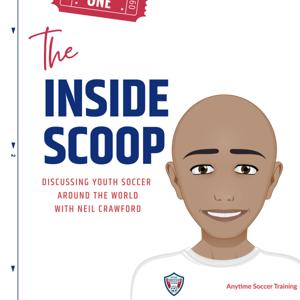


In this episode, I record a personal audio message to my sons reflecting on the choices behind our youth soccer decisions — specifically my younger son's move from a larger club to the smaller club where his older brother already plays.
I break down why the smaller club's culture and developmental preparation made it the better long-term fit, then push back on a mindset I see in a lot of parents: framing club, financial, league-level, and time-commitment decisions as if there was "no choice," when in reality there almost always are multiple paths available. My core message to my sons: recognize the power you have in these decisions, rather than feeling boxed in by circumstance.
I sat down with Carlos Mojica, author of Goal, for a special edition of The Inside Scoop — part book talk, part oral history of soccer in El Salvador. Carlos walks me through discovering the game around 1996 through Ronaldo, the street soccer culture of his childhood block, and the father-son debates (Maldini vs. Baresi) that shaped his love of the game.
We also get into the culture shock of moving to rural Ohio at 11, and how those experiences led him to write a book meant to help kids — and their soccer-illiterate parents — fall in love with soccer.
Goals For Good is more than a giveaway — it's Park-It Management's way of giving back to the game that shaped so many lives, including COO Derek Messulam's own. Derek moved from England to the US at 12, and soccer became the thing that helped him find his footing in a new country. Now he's channeling that same love of the game into a program built to send a deserving family to the World Cup.
In this episode of The Inside Scoop, Derek shares his journey from young transplant to soccer executive, breaks down how Goals For Good came together, and tells the story of the family whose life changed when Park-It delivered their World Cup tickets. We dig into the stories families shared, what it took operationally to pull off a moment like this, and what Goals For Good means to Derek personally.
🔗 Learn more about Goals For Good: https://parkitny.com/goalsforgood/
🔗 Park-It Management: https://parkitmanagement.com/
How many hours does it actually take to go pro? In this episode, we sit down with Erik McCue, a professional footballer, to get an honest, no-hype breakdown of what real youth training looked like on his path to the pro game.
Erik walks us through his journey from casual pickup soccer as a kid to disciplined, high-volume training as a teenager — and shares the numbers most academies won't tell you.
Coming up in this episode:
I hear this all the time from soccer parents: "If my kid really loved the game, they'd practice on their own." I used to believe it too. But here's the problem — it's backwards.
I'm going to break down why competency, not love, is what actually drives a kid to keep playing. Why waiting for your child to "show love" before you step in might be costing them years of development. And why the love you're waiting for might never show up... unless you're the one who builds it.
If you've got a kid who says they love soccer but won't touch a ball outside of practice — this episode is for you.
I'm continuing my series untangling the assumptions behind pay-to-play soccer, and this time I'm tackling a terminology problem that's easy to miss but really matters. I break down a proposal from an ECNL leader for a new national scouting program aimed at "amateur clubs" — and why I think that label is misleading.
As I see it, a program like this would mostly benefit families already paying into the system, not the grassroots kids it claims to help. I also share a personal story about my own son, who landed on the national team radar from outside the MLS Pro Academy pipeline, to make the point that talent doesn't only come from paid systems. Getting the language right matters if we actually want to reduce costs and widen access.
Passionate coaches aren't enough to build a great youth soccer program — passion doesn't scale, and it doesn't guarantee competency. In this episode, Neil breaks down why clubs need a clear, repeatable development process that even volunteer coaches can execute well.
He covers the 80-20 rule for structuring practices, dividing coaching responsibilities to reduce execution risk, and his philosophy of "keep the ball longer, take the ball faster." Plus, a practical checklist parents can use in just the first 10 minutes of any game to evaluate whether real development is happening on the field.
I make the case for a controversial idea in youth soccer: that great coaching isn't about finding the most passionate, experienced person — it's about building a process so strong it doesn't depend on them. I break down why "hope" isn't a system, how modular, McDonald's-style methodology could let modestly motivated volunteers deliver real quality, and what this means for the future of affordable, scalable club coaching.
I get into what it's really been like raising two soccer kids — the early mornings, the balance between pushing and living vicariously, and the small daily habits that shaped who they've become as players and people. Along the way, I share how those lessons turned into Anytime Soccer Training. Thanks
Going back to the beginning of this journey — to something I stumbled onto almost by accident when my sons first started playing, that most parents and players never think to do. It wasn't a coaching secret or expert advice — I found it through trial and error, and it ended up making more of a difference than anything else we did.
In this episode I break down what it is, why it works, and why it's so rarely talked about — plus the pushback I got from some coaches for doing things differently.
From the publisher's feed

3,642 Listeners
78 Listeners
157 Listeners

273 Listeners

1,145 Listeners

38 Listeners

214 Listeners

5 Listeners

350 Listeners

220 Listeners
8 Listeners

44 Listeners

405 Listeners
8 Listeners