
Sign up to save your podcasts
Or

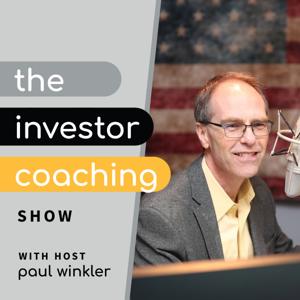


Part of being able to relax about money is knowing what makes you anxious and how to manage your anxiety. Many people struggle with anxiety and turn towards their finances to try to find control. Paul brings Lauren Combs, a Licensed Professional Counselor, Mental Health Service Provider (LPC, MHSP), and Lindsey Casabella, a Licensed Clinical Social Worker (LCSW), onto the show to talk about how anxiety affects your quality of life, your purpose, and your relationship with money. Listen along they cover spotting the symptoms of anxiety, when to ask for help, the stigmas around medication for mental health issues, the fear of developing medication dependence, and why anxiety is currently the most common mental health diagnosis in the United States.
Interview with College Financial Aid Counselor, Jacob Lagesse (Part 2)
Paying for college is often the biggest financial decision that a family has to make with their children and it requires some planning. In a two part interview, Paul invites Jacob Lagesse, the New Student Financial Aid Counselor at Trevecca, to talk about how to navigate paying for college. In Part 2, Paul and Jacob cover which of your assets to include on the FAFSA, which to exclude, and how they calculate those assets to provide aid. They conclude by covering the questions you want to ask when you sit down with a university counselor.
Paying for college is often the biggest financial decision that a family has to make with their children and it requires some planning. In a two part interview, Paul invites Jacob Lagesse, the New Student Financial Aid Counselor at Trevecca, to talk about how to navigate paying for college. In Part 1, Paul and Jacob cover both federal and state aid and the FAFSA and merit based scholarships offered by the universities.
Do you remember all of the hysteria around Y2K? People were stuffing cash in their mattresses and were convinced that banks would fail and planes would fall out of the sky. Today, Paul brings in a MarketWatch article called, “Stock market resembles the Y2K surge — and that didn’t end well” and talks with Ira about the similarities and differences between the market then and the market now. Later in the episode, the advisors get into a discussion about why it feels safe for investors and fund managers to invest in the largest companies then explains why this is such a risky practice.
When you see an attention grabbing headline or news story there are two important questions to ask: Is what you’re seeing true? And what is the bias of the writer? Today, Paul and Ira address these two questions when a listener sends in an article about how passive investing is breaking the stock market. It turns out that the article was written by a hedge fund manager. Listen along as the advisors address whether the claim is true and why the identity of the writer is relevant. Later in the episode, the advisors talk about their own personal experiences with owning real estate and how most people who walk into investing in real estate don’t have a clear picture of the work or the financial return.
Concerned about the market in an election year? Register for our new webinar: Politics and Portfolios: How to Invest During Election Season
A listener asks Paul about people who are wealthy and need long-term care insurance. A study finds that 70% of people who live to 65 will need long-term care, but is the insurance worth it? After some research, Paul finds that only 15% of people who need long-term care actually live in a nursing home for longer than two years. Of that sampler group, who are those people most likely to be? Listen along as Paul and Ira talk about this question, with some research and information of inheritances, long-term care needs, and insurance. Later in the show, Ira looks deeper into the Thrift Savings Plan (TSP) for a client and sees quite a few issues with how much people have in fixed income when they retire.
Paul, Evan, and Dan finish up a conversation on an article called “5 Signs It Could Be Time to Fire Your Advisor” and explain why the advice was a bit of a mixed bag and what they consider to be a dealbreaker in the advisor-investor relationship. Evan shares an encouraging email he got from an investor asking the right questions about their portfolio and explains why the right education makes all the difference. Later in the show, Evan talks about how crypto is targeting older investors through new ETF offerings.
Evan does some research and discovers that the S&P 500 has had almost double returns the year that the groundhog doesn't see his shadow on Groundhog Day. Paul, Dan, and Evan have some Groundhog Day fun on the show and talk about how you can dig around the data to find all sorts of patterns that give people a reason to gamble and speculate with their money. Listen along as the advisors have a good laugh about why they don’t plan to reallocate everything to the S&P 500 based on this “news”. Later in the show, the advisors talk about why it’s important to have a financial planner who works with you on investment decisions, but if your planner wants you to be involved in every move to manage your portfolio that should be a red flag.
For more information about what we do or how we can help you, schedule a 15-minute call with us here: paulwinkler.com/call.
Today, Paul invites Evan (from the Brentwood office) and Dan (from the Dixon office) on the show, and they quickly get into a discussion on some of the most frustrating parts of the investing industry. These advisors talk about their early experiences in the investment industry and how they were taught to twist academic research into advertising for products. Listen along to hear the investors talk giving an insider's view to the problems in their industry and how it’s easy for investors with some education and good intentions to get hurt. Later in the show, Paul shares how inheriting two REITs turned one investor's inheritance into a burden.
For more information about what we do or how we can help you, schedule a 15-minute call with us here: paulwinkler.com/call.
Today, Paul brings an article for advisors that claims the 60/40 portfolio is in fact not dead and can be used to take an income. Paul explains that for the last few years these companies have invested in risky bonds and stocks and then blamed the results on the ratio of stocks versus bonds instead of a lack of diversification and risky bonds durations. Listen along as Paul explains what’s going on behind the curtain in the industry. Later in the episode, Paul addresses the claim that your credit score doesn’t matter.
From the publisher's feed
Ranked by our users in the last 21 days

227,562 Listeners
152,942 Listeners
37,295 Listeners

2,247 Listeners

4,367 Listeners

796 Listeners
539 Listeners

3,680 Listeners
46,055 Listeners
39,401 Listeners
26,560 Listeners
198 Listeners
15,963 Listeners

1,887 Listeners