
Sign up to save your podcasts
Or



Based on Podcast App listening data
Jeremy Zakis reports on unusual winter weather in Sydney, suggesting a potential shift toward a severe El Niño. He explains the impact of trade winds and Pacific temperatures on global climate. Additionally, Jeremy shares that his grandfather served in the British merchant navy during the D-Day invasion.
O1952 QUEENSLAND
Tyler Anbinder details the origins of the Great Potato Famine, noting that the destructive fungus actually originated in North America and thrived in Ireland's cool, damp climate. By 1846, 90% of the potato crop—the primary food source for half the population—was destroyed. The hardest-hit regions were in the west, where poverty was most extreme. Landowners like Lord Lansdowne facilitated emigration primarily as a financial decision to avoid the taxes required to support indigent tenants. Consequently, the strongest survivors began an arduous journey, often walking to ports before taking cheap ships from Liverpool to New York. (2)
1849
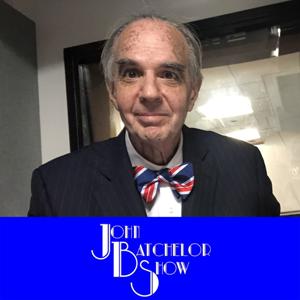
SCHEDULE JOHN BATCHELOR SHOW, 6-5-2026.
1900 ADAMS BOULEVARD LA.
Jeff Bliss highlights the stark contrast between Seattle's controlled homelessness and the pervasive crisis in Los Angeles. The discussion transitions to California's jungle primary, where late-arriving ballots in the Los Angelesmayoral race show statistically improbable gains for Karen Bass and Nithya Raman, fueling accusations of election irregularities.
Jeff Bliss previews the opening of a massive, multi-story In-N-Out Burger in Las Vegas, predicting it will become a celebrity destination similar to Hollywood's historic clubs or New York's Stork Club. He also reflects on a rare 1955 invitation from Walt Disney, noting its role in establishing Disneyland's enduring cultural legacy.
Richard Epstein examines the 14th Amendment's opening clause, distinguishing the robust rights of citizens from the conditional privileges of aliens. He argues that naturalization was historically a federal prerogative, noting that early statutes, influenced by Thomas Jefferson, included explicit racial exclusions for persons of African or Asiandescent.
Richard Epstein disputes the "plain meaning" application to the 14th Amendment, arguing that "subject to the jurisdiction" requires natural allegiance rather than mere physical presence. Critiquing the Wong Kim Ark ruling, he suggests that children of legal permanent aliens should inherit their parents' status rather than automatic citizenship.
Jim McTague reports on the cautious economic sentiment in Lancaster County, where despite falling gas prices, consumers remain budget-conscious. While tourism remains strong at venues like the Sight and Sound Theatre, local officials recently rejected a proposed data center in Columbia due to technicalities and concerns over its utility.
Lorenzo Fiori provides an optimistic update on Italy's economy, noting improved employment rates across various demographics. He highlights a landmark legislative shift toward nuclear energy, with small plants planned by 2034. For travelers, he recommends San Miniato, a strategic, less-crowded Tuscan village famous for its white beans.
Bob Zimmerman dismisses NASA's sheltering orders on the ISS as an overreaction to routine Russian repair work on the Zvezda module. He details SpaceX's massive IPO, which aims to raise billions, and observes that private space station firms like Axiom and Vast continue to secure significant capital despite SpaceX's market dominance.
Bob Zimmerman surveys global spaceport developments, contrasting Spain's investment in French Guiana with the liquidation of the UK's Sutherland facility due to red tape. He debunks claims that the interstellar comet 3I/Atlas is an alien craft and notes that unpredictable sunspot activity continues to defy scientific models.
Andrew Bayliss recounts how Pericles provoked the Peloponnesian War by steering Athens toward confrontation with Sparta. He details the Athenian strategy of retreating behind city walls and relying on naval imports, a move that tragically facilitated a devastating plague, claiming thousands of lives, including Pericleshimself.
Andrew Bayliss profiles Lysander, a Spartan general of modest origins who secured crucial Persian funding to challenge Athenian naval supremacy. Lysander achieved victory not through direct combat, but by using deception to capture the Athenian fleet while the crews were uncharacteristically casual and off their ships.
Andrew Bayliss explores the aftermath of Sparta's victory, noting that Lysander's immense power and ambition ultimately led to his death during a failed siege. Sparta's dominance eventually collapsed at the Battle of Leuctradue to a dwindling citizen population, reducing the once-mighty superpower to a minor village.
Andrew Bayliss critiques the modern application of the "Thucydides Trap" to US-China relations, arguing that the original Peloponnesian War was not inevitable. He suggests the conflict was precipitated by specific provocations and accidental circumstances, drawing parallels to the circumstantial outbreak of the First World War.
Henry Sokolski warns of China's fast breeder reactor program, which produces super weapons-grade plutonium capable of fueling efficient nuclear triggers. He also notes South Korea's growing interest in developing independent nuclear capabilities and submarines to counter threats from North Korea and China, despite international non-proliferation standards.
Henry Sokolski explains the strategic significance of deploying Dual Capable Aircraft (DCA), such as the F-35, to reinforce NATO's nuclear deterrent in Europe. He observes that while Moscow and Beijing oppose these deployments, the aircraft act as vital "glue" for alliances, ensuring that American nuclear guarantees remain credible.
Richard Epstein analyzes the Wong Kim Ark decision, arguing that Justice Horace Gray erroneously applied birthright citizenship to the children of ineligible aliens. He further critiques the expansion of the Equal Protection Clause in the 20th century, claiming it was originally intended for criminal matters rather than civil benefits.
From the publisher's feed
Ranked by our users in the last 21 days
22,894 Listeners
11,878 Listeners

2,120 Listeners

12,595 Listeners

732 Listeners

668 Listeners
6,548 Listeners

6,472 Listeners

716 Listeners
6,839 Listeners
557 Listeners
8,414 Listeners

214 Listeners
1,152 Listeners

1,180 Listeners