The John Batchelor Show

The John Batchelor Show

By John Batchelor Show.Society & CultureNewsArtsBooks
Download on the App Store
  • Ranking

    33rd

    on Books

  • Favorites

    578

    Followers

  • Typical duration

    18 min

    per episode

  • If it hooks

    62%

    finish an episode

Based on Podcast App listening data

The John Batchelor Show episodes

  • S8 Ep1177: Evan Ellis surveys shifting political landscapes: Javier Milei is rallying support for the Bolsonaros in Brazil, highlighting a n
    Evan Ellis surveys shifting political landscapes: Javier Milei is rallying support for the Bolsonaros in Brazil, highlighting a new era of cross-border political interference. In Colombia, President-elect Abelardo de la Espriella is signaling a pro-US shift by cutting ties with Cuba and Nicaragua. Conversely, Venezuela remains in a "holding pattern" under Delcy Rodríguez. Despite reports of crumbling oil infrastructure, major investment is unlikely until a legitimate government is established to address the nation's $240 billion debt. (7)
    1918 INDIA
    14 min
  • S8 Ep1177: Evan Ellis previews Brazil's upcoming October election, which pits the leftist Lula da Silva against Flavio Bolsonaro, son of the
    Evan Ellis previews Brazil's upcoming October election, which pits the leftist Lula da Silva against Flavio Bolsonaro, son of the former president. While Lula currently leads in polls, his Workers' Party background and ties to the São Paulo Forum raise concerns about radicalism and increased engagement with China. Ellis warns that a Lula victory could lead Brazil into a recession and a state-centric social policy, potentially settling political scores while lacking necessary financial resources. (6)
    1909 INDIA
    7 min
  • S8 Ep1177: Evan Ellis reports Keiko Fujimori has been inaugurated as Peru's president, appointing a respected center-right cabinet focused o
    Evan Ellis reports Keiko Fujimori has been inaugurated as Peru's president, appointing a respected center-right cabinet focused on fiscal discipline and US alignment. However, she faces challenges from endemic insecurity, corruption, and significant Chinese investment. Meanwhile, the influence of Cuba remains a concern across Latin America, with accusations of espionage and interference in democratic processes. Díaz-Canel's regime is under pressure from the Trump administration, potentially facing coercive negotiations or military action. (5)
    1906 INDIA
    12 min
  • S8 Ep1177: Charles Burton and Gordon Chang discuss how trade tensions and rhetoric from the US have led to increased disdain among Canadians
    Charles Burton and Gordon Chang discuss how trade tensions and rhetoric from the US have led to increased disdain among Canadians toward their neighbor. Burton discusses a poll showing Canadians view China more favorably than the US due to perceived economic threats from American tariffs. While the integrated North American market remains strong, Canadian provincial governments are reportedly restricting US alcohol sales. There are even suggestions that Canada should adopt "resistance" strategies similar to Ukraine. (4)
    1900 INDIA
    8 min
  • S8 Ep1177: Charles Burton and Gordon Chang note Xi Jinping broke tradition by skipping the 50th anniversary of the devastating Tangshan eart
    Charles Burton and Gordon Chang note Xi Jinping broke tradition by skipping the 50th anniversary of the devastating Tangshan earthquake, sending a surrogate instead. Burton suggests this absence may signal political instability or paranoia regarding his domestic standing. The earthquake historically symbolizes a loss of the "mandate of heaven." Furthermore, vacancies on the Central Military Commission and the mysterious death of former Premier Li Keqiangindicate profound internal disarray and a lack of clear succession. (3)
    1945 TOKYO STATION POSTCARD
    12 min
  • S8 Ep1177: Rick Fisher and Gordon Chang discuss reports that China is transferring hundreds of advanced QW-12 and FN-16 man-portable air-def
    Rick Fisher and Gordon Chang discuss reports that China is transferring hundreds of advanced QW-12 and FN-16 man-portable air-defense systems (MANPADS) to Iran via Hong Kong intermediaries. Fisher warns this poses a significant threat to US aircraft in the Strait of Hormuz. Chang advocates for reimposing sanctions on Hong Kong. The transfer, which China denies, represents a major escalation and highlights China's ongoing role in arming US adversaries like North Korea and Pakistan. (2)
    1944 TOKYO STATION
    10 min
  • S8 Ep1177: Rebecca Grant and Gordon Chang report China is escalating provocations against the Philippines and Japan, including dangerous man
    Rebecca Grant and Gordon Chang report China is escalating provocations against the Philippines and Japan, including dangerous maneuvers near Second Thomas Shoal and firing missiles from submarines. Grant highlights the US Navy's preparedness to defend allies, noting a "red line" if Filipino sailors are killed. Despite China's permanent presence, the US maintains dominance through carrier strike groups and superior undersea warfare. The lack of operational officers on China's Central Military Commission suggests potential command risks. (1)
    1923 TOKYO QUAKE
    9 min
  • S8 Ep1176: SCHEDULE THE MAKING OF THE JOHN BATCHELOR SHOW, 7-28-26. 1900 IDAHO
    SCHEDULE THE MAKING OF THE JOHN BATCHELOR SHOW, 7-28-26.1900 IDAHOLiz Peek reports the US economy remains robust, driven by strong consumer spending in rural areas like Connecticutand Lancaster County. Peek highlights rising small business and consumer confidence despite increasing gasoline prices. Attention shifts to new Federal Reserve Chairman Kevin Warsh, who may end "dot plot" forecasting. Warsh aims to be more "taciturn," forcing markets to rely on incoming data rather than Fed projections. (1)Liz Peek examines the Michigan Democratic Senate primary as a national test for the party's ideological direction. Moderate Haley Stevens faces Dr. Abdul El-Sayed, a candidate favored by the Democratic Socialists of America. Peek notes the "shocker" UAW endorsement of El-Sayed, highlighting a shift toward "woke" politics among union members in higher education. This race evaluates if a far-left candidate can win a statewide swing-state contest. (2)Thaddeus McCotter and Judy Dempsey discuss Ukraine's strike on an Iranian vessel in the Caspian Sea, which complicates global energy security for Europe. This inland sea is a vital source of non-Russian energy. Dempsey reports that Germany is carefully observing the implications of this new front. The strike underscores the deep military connection between Russia and Iran regarding equipment exchanges. Meanwhile, recent polls show seven out of ten Americans oppose the Iran war. (3)Thaddeus McCotter and Judy Dempsey turn to a deadly ramming attack at a Berlin parade that has put Chancellor Friedrich Merz on the defensive regarding his security credentials. The populist AfD party is exploiting the tragedy to criticize "uncontrolled immigration" ahead of crucial state elections. While Merz responded with calls for law and order, the incident underscores the difficulty police face in monitoring numerous terrorist suspects. The AfD utilizes these crises to offer simple solutions. (4)Mary Kissel notes diplomatic efforts with Iran currently involve "shuttling messages" through intermediaries like Omanand Qatar. Kissel argues that the Islamic Republic is a revolutionary regime with no interest in genuine strategic peace. The administration's lack of a cohesive strategy has led to declining public support for military action. Meanwhile, the Houthi threat in the Red Sea remains a dangerous Iranian-backed tool for disrupting international shipping. (5)Mary Kissel observes President Zelenskyy is receiving a warmer reception in Washington due to Ukraine's increasing military leverage. Innovative long-range drone strikes on Russian energy nodes have demonstrated Ukraine's utility to USstrategic interests. Unlike the situation with Iran, the US maintains active diplomatic channels in Moscow to discuss potential conflict resolutions. Kissel notes that influential voices on the right are beginning to shift their views on Ukraine. (6)Jonathan Schanzer reports the conflicts in Ukraine and the Middle East are merging as Russia, Iran, and Chinacoordinate their efforts. Schanzer notes that Ukraine's Caspian Sea strike has clarified this global partnership. The US is currently attempting to "keep a lid" on Israel to prevent a regional escalation. However, the US military faces a depletion of missile interceptors, making it difficult to sustain a long, high-intensity conflict. (7)Jonathan Schanzer discusses new UK–US talks focused on a maritime coalition to secure the Strait of Hormuz and Red Sea. Prime Minister Andy Burnham has an opportunity to reset the relationship with Donald Trump. The Iranian-backed Houthi threat remains a top concern for global oil analysts and regional powers like Egypt. Meanwhile, the US is signaling that Lebanon is "too big to fail" to counter Hezbollah's regional influence. (8)Gregory Copley reports the Trump administration has imposed tariffs on Australia, alleging "forced labor" practices—a claim Copley describes as spurious. This move antagonizes a loyal ally that has fought alongside the US for over a century. Consequently, Australia and Canada are beginning to lessen their strategic dependence on the US. Copley warns that such unilateral protectionism could weaken the long-term structure of the Western alliance. (9)Gregory Copley describes Cuba's total implosion as its infrastructure collapses and major blackouts occur. Copley describes a strategic failure in the Caribbean, where China has built significant influence over the last 20 years. The USmust decide whether to facilitate a rapid collapse or a managed transition of the regime. While the Cuban people suffer, the wealthy expatriate community remains ready to fund reconstruction. (10)Gregory Copley reports Xi Jinping faces significant internal opposition from Communist Party elders at the Beidaiheretreat. Despite his titles, Xi's operational power is waning as the Chinese economy evaporates and social unrest grows. A recent ballistic missile launch served as a show of strength before a state visit to the US. Copley notes that youth unemployment is high, and the PLA may eventually act independently. (11)Gregory Copley turns to the UK, where following the rise of Prime Minister Andy Burnham, the country faces political uncertainty as Labour struggles with a lack of growth. Copley highlights King Charles III's vital role as a unifying force, focusing on British national identity and values. While the Burnham government is viewed as sclerotic and ideological, the King remains an egalitarian figure. His efforts to preserve heritage, like Dumfries House, bolster his standing. (12)Joseph Sternberg criticizes Prime Minister Andy Burnham's economic policy as ineffective against the cost-of-living crisis. Sternberg argues that the UK is trapped by net-zero regulations that prevent the use of vast North Sea oil and gas reserves. Burnham finds it politically difficult to cut taxes or reverse climate policies despite potential economic benefits. This paralysis makes his government a target for future replacement. (13)Joseph Sternberg notes Chairman Kevin Warsh is moving the Federal Reserve toward a "taciturn" style, ending the practice of "forward guidance." This reform aims to prevent the Fed from becoming locked into policies that may become inappropriate as data shifts. Sternberg suggests that saying less may protect the Fed from political conflict with the White House over tariffs. Markets must now interpret raw data rather than Fed signals. (14)Thaddeus McCotter describes the Michigan Democratic Senate primary as a "civil war" between establishment candidate Haley Stevens and progressive Dr. Abdul El-Sayed. The candidates are sharply divided over AIPAC funding and support for Israel. Stevens is endorsed by high-profile figures like Gretchen Whitmer and Barack Obama. The result will indicate if the Democratic Socialists of America can succeed in a statewide race in a swing state. (15)Thaddeus McCotter notes Dr. Abdul El-Sayed denies being a socialist, claiming he merely wants to regulate "capitalism run amok." However, his platform includes radical proposals such as abolishing ICE. Haley Stevens frames him as a "celebrity candidate" and questions his appeal to women voters. McCotter notes that while the DSA lacks a ground model, identity politics may drive a high turnout among Michigan's large Muslim population. (16)Corrections applied throughout as directed: Thaddeus McCotter and Liz Peek.

    7 min
  • S8 Ep1173: STREAMING MAKING JBS, 7-28-26 1900 postcards hotel pontchartrain
    STREAMING MAKING JBS, 7-28-261900 postcards
    hotel pontchartrainThe provided text details a discussion between radio host John Batchelor and former Congressman Thaddius McCotterregarding geopolitical tensions and a pivotal Democratic primary for a U.S. Senate seat in Michigan. Internationally, the dialogue highlights the escalating conflict in Ukraine and a specific Ukrainian strike on an Iranian vessel in the Caspian Sea, illustrating how regional wars are becoming global. Transitioning to domestic politics, the speakers analyze the internal struggle within the Democratic Party between establishment moderate Haley Stevens and progressive insurgent Abdul El-Sayed. This ideological "civil war" mirrors recent shifts in the Republican Party, with the candidates clashing over issues like AIPAC funding, capitalism, and the future of ICE. The conversation emphasizes that Michigan serves as a critical national bellwether, where the outcome of this primary will signal whether the Democratic establishment can hold its ground against the rising Democratic Socialists of America. Ultimately, the sources suggest that the state's political direction is instrumental in determining the broader trajectory of the Midwest and the next presidential election.
    44 min
  • S8 Ep1175: Thaddeus McCotter notes Dr. Abdul El-Sayed denies being a socialist, claiming he merely wants to regulate "capitalism run amok."
    Thaddeus McCotter notes Dr. Abdul El-Sayed denies being a socialist, claiming he merely wants to regulate "capitalism run amok." However, his platform includes radical proposals such as abolishing ICE. Haley Stevens frames him as a "celebrity candidate" and questions his appeal to women voters. McCotter notes that while the DSA lacks a ground model, identity politics may drive a high turnout among Michigan's large Muslim population. (16)
    1701
    9 min

About The John Batchelor Show

From the publisher's feed

The John Batchelor Show is a hard news-analysis radio program on current events, world history, global politics and natural sciences. Based in New York City for two decades, the show has travelled…

Best of The John Batchelor Show

Ranked by our users in the last 21 days

More shows like The John Batchelor Show

Mark Levin Podcast by Cumulus Podcast Network

Mark Levin Podcast

22,896 Listeners

THE SAVAGE NATION by Michael Savage

THE SAVAGE NATION

11,893 Listeners

Hillsdale Dialogues by Hillsdale College

Hillsdale Dialogues

2,118 Listeners

Bill O’Reilly’s No Spin News and Analysis by Bill O'Reilly

Bill O’Reilly’s No Spin News and Analysis

12,600 Listeners

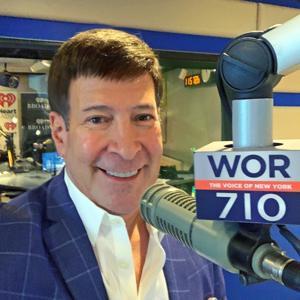
The Mark Simone Show by iHeartRadio and Mark Simone

The Mark Simone Show

731 Listeners

The Radio Free Hillsdale Hour by Hillsdale College

The Radio Free Hillsdale Hour

672 Listeners

Newt's World by Gingrich 360

Newt's World

6,550 Listeners

John Solomon Reports by John Solomon

John Solomon Reports

6,484 Listeners

The Hugh Hewitt Show: Highly Concentrated by Salem Podcast Network

The Hugh Hewitt Show: Highly Concentrated

713 Listeners

DINESH Podcast by Salem Podcast Network

DINESH Podcast

6,838 Listeners

The Big Ben Show by Fox News Podcasts

The Big Ben Show

557 Listeners

The Victor Davis Hanson Show by Victor Davis Hanson and Jack Fowler

The Victor Davis Hanson Show

8,406 Listeners

Kudlow by Fox News Podcasts

Kudlow

215 Listeners

Victor Davis Hanson: In His Own Words by Victor Davis Hanson | The Daily Signal

Victor Davis Hanson: In His Own Words

1,149 Listeners

Pod Force One by New York Post

Pod Force One

1,180 Listeners