
Sign up to save your podcasts
Or

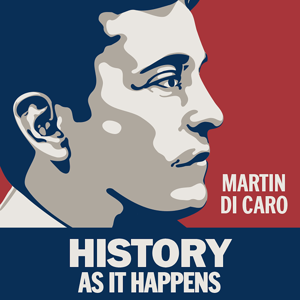

Historian Michael Kazin, a distinguished scholar of the American left, says American politics are caught in "the long 1960s." For decades Congress has been unable to pass sweeping measures desired by the progressive left to fundamentally reform American capitalism. They simply don't have the votes. In fact, neither major party recently has dominated Congress the way, for instance, Democrats did during the New Deal era, with more than 70 seats in the Senate and a massive advantage in the House. Why a partisan stalemate has endured since the 1960s is a complicated problem to unpack, but the answer leads to today's congressional math. Throughout U.S. history, very few periods of one-party dominance have occurred, periods where great legislative activity was possible.
 View all episodes
 By Martin Di Caro

4.4
6262 ratings
Historian Michael Kazin, a distinguished scholar of the American left, says American politics are caught in "the long 1960s." For decades Congress has been unable to pass sweeping measures desired by the progressive left to fundamentally reform American capitalism. They simply don't have the votes. In fact, neither major party recently has dominated Congress the way, for instance, Democrats did during the New Deal era, with more than 70 seats in the Senate and a massive advantage in the House. Why a partisan stalemate has endured since the 1960s is a complicated problem to unpack, but the answer leads to today's congressional math. Throughout U.S. history, very few periods of one-party dominance have occurred, periods where great legislative activity was possible.
8,474 Listeners
1,110 Listeners

743 Listeners

6,304 Listeners
724 Listeners

907 Listeners
14 Listeners

2,039 Listeners

7,244 Listeners
2,405 Listeners

16,525 Listeners

208 Listeners
385 Listeners
500 Listeners
496 Listeners