
Sign up to save your podcasts
Or

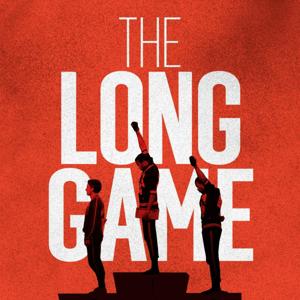


On The Long Game, we highlight stories of courage and conviction on and off the field. From Rohingya refugees who play soccer to share their story of surviving genocide, to the WNBA Players Association president who's fighting to bring Brittney Griner home, The Long Game examines the power of sport to change the world for the better. Olympic medalist and change agent Ibtihaj Muhammad guides the series around the globe to meet athletes who are fighting for change. Join us for Season 2 of The Long Game, launching on October 13th.
It’s no coincidence that factories and toxic waste facilities have been built near poor communities and communities of color. It’s part of the larger systems of racism that exist all over the world. But for a long time, the people most affected by environmental threats have been largely absent from the broader conversation. But there’s one environmental activist trying to change all that. Taking his cues from Captain Planet, his favorite cartoon from the 1990s, former American football player Ovie Mughelli is using his love of sports and comic books to help create the next generation of environmental superheroes.
To learn more about the Ovie Mughelli Foundation, email [email protected]. That's it for this season of The Long Game. We'll be working on Season 2. If you have ideas for future episodes, please write to us at:Write to us at [email protected] or tag us on social: @dohadebates.
In 2012, Annet Negesa qualified to represent Uganda in the 800-meter run at the London Olympics. But just weeks before the Games, she got a call from her agent. A test had shown high levels of naturally-occurring testosterone in her blood. She would not be allowed to compete. In an attempt to restore her eligibility, Annet underwent a serious, irreversible surgery that derailed her career and left her with serious medical side effects. Now, Annet is sharing her story to try to help other women avoid the same fate.
For as long as she can remember, Iona Rothfeld has loved playing soccer. But in Chile, soccer is considered a “boys” sport. When she was 13 years old, Iona was named to the Chilean Women’s National Soccer Team. She thought she had finally found a place where women’s soccer was respected. Instead, she was issued hand-me-down jerseys and told to shower in locker rooms that didn’t have hot water. But in 2016, at the age of 23, Iona founded the first union for women’s soccer players in all of Latin America. And things are finally starting to change in Chile.
Ibrahim Al Hussein grew up watching the Olympics on TV. He was a swimmer. And he dreamed of someday being one of the athletes up on the podium. But Ibrahim became one of the 5.6 million people who have left Syria since the start of the Civil War after losing his leg in a bomb blast. He still hasn’t been able to return to his home country, but in 2016, he became one of two paralympians to compete in Rio as part of the Refugee Olympic team – a team formed by the IOC in response to the number of stateless athletes looking for avenues to compete at the Olympics.
Hosted on Acast. See acast.com/privacy for more information.
Mohamed Salah is one of the best forwards in the English Premier League. He is a Muslim, playing in a league that has a reputation for racism and Islamophobia. But that hasn’t stopped Liverpool fans from rallying around their star. Salah doesn’t give a lot of interviews about his faith. You won’t see him leading a lot of protests or marches. But he does put his faith on display -- very publicly and very consistently. And since he’s started playing in Liverpool, Islamophobia in the surrounding area has dropped significantly. Now, social scientists are wondering what Salah’s popularity can teach us about how athletes can change attitudes.
When it comes to dealing with adversity, Scout Bassett has had more than her fair share. Born in Nanjing, China, she was abandoned after losing her leg in a fire when she was around 18 months old. At age seven she was adopted by a family in the United States and had to adjust to a new language and new culture. Despite her disability, Bassett was always passionate about sports, and eventually learned to run using a prosthetic leg. Bassett tells her story to host Ibtihaj Muhammad about how she eventually made it to the Paralympic Games and in the process became an icon for perseverance and determination.
Honey Thaljieh grew up in a war zone. One day, on the streets of Bethlehem, she passed by a group of boys playing football. By chance, they passed her the ball. Soon, Honey discovered that she was a gifted athlete. But more than that, football became Honey’s path to freedom and dignity. It took her to Europe and the U.S., where she saw young people, far from the tragic backdrop of war, playing on manicured grass fields smooth enough to shoot pool on. In 2003, Honey helped found the Palestinian Women’s National Football team. She was named its first captain. Now retired from competition, Honey works as a Manager of Corporate Communications for FIFA.
We want to hear from you! To fill out our 2021 listener survey, go to survey.fan/foreignpolicy.com
The 1995 Rugby World Cup marked the end of apartheid and South Africa’s return to the international sports stage. The home team -- the Springboks -- weren’t expected to go far. Instead, they won it all. And if that sounds to you like the kind of thing Hollywood would make a movie about, you’re right. It’s the story at the center of Invictus, the 2009 film directed by Clint Eastwood and starring Morgan Freeman and Matt Damon. The movie ends with Nelson Mandela being driven away from the stadium in Johannesburg, his car surrounded by overjoyed fans. But the true impact of that day -- and that game -- is still felt in South Africa today.
We want to hear from you! To fill out our 2021 listener survey, go to survey.fan/foreignpolicy.com
Whenever an athlete steps onto a field, court, or fencing strip, they bring with them all that they are: their background, their lived experiences and their religion. But for some athletes, their faith is a bit more visible than it is for others. As a college basketball player, Batouly Camara made three Final Four appearances with the University of Connecticut. She’s the daughter of immigrants, a children’s book author, and she’s the founder of WAKE, Women and Kids Empowerment. It's a non-profit dedicated to helping women and girls get access to sports and education. And if that’s not enough, she’s also one of the first Muslim women to play professional basketball in hijab.
We want to hear from you! To fill out our 2021 listener survey, go to survey.fan/foreignpolicy.com
From the publisher's feed

595 Listeners

2,719 Listeners

27 Listeners
39 Listeners
204 Listeners

358 Listeners
91 Listeners

75 Listeners
11 Listeners

0 Listeners
8 Listeners

3 Listeners

0 Listeners

0 Listeners
0 Listeners