
Sign up to save your podcasts
Or



There’s an upside to hosting a mega-sized sporting event. Governments plan new roads and train stations and airports. Corporate sponsors and foreign investors pile on. And when you build it, people come. Different people, new people, who may not have visited before. Often, these mega-sized sporting events also bring with them a spotlight on whatever problems plague the host nation. For the 2022 Qatar World Cup, that spotlight has led to increased international scrutiny of the treatment of migrant workers. But how effective is this mega-event activism? And what happens when the circus leaves town and the spotlight goes dark? Reporter Ken Shulman looks at three case studies -- South Africa, Brazil and, of course, Qatar, to learn more.
Because this episode touches on labor issues in Qatar, a disclosure: Doha Debates is a production of Qatar Foundation, which is a state-led non-profit organization in Qatar.
We want to hear from you! To fill out our 2021 listener survey, go to survey.fan/foreignpolicy.com.
Read the transcript.
The rivalry between the cricket teams of India and Pakistan is a little like if a billion people tuned into a Red Sox - Yankees game. Add in nationalistic fervor on both sides, and things can get tense. When Pakistan beat India in 1978, the Pakistani captain declared it a victory for all Muslims against Hindus. But until recently, Pakistan had never beaten India in a World Cup match. That changed when the Pakistani team made an unexpected run all the way to the 2021 T20 World Cup semi-final. And as Pakistani fans watched social media videos of their team visiting the Namibian dressing room and sharing a birthday cake with members of the Scotland team, some started asking, “Is this the future of cricket diplomacy?”
We want to hear from you! To fill out our 2021 listener survey, go to survey.fan/foreignpolicy.com.
Read the transcript.
Growing up in Afghanistan, Friba Rezayee didn’t always do as she was told. She didn’t enjoy the games the girls were supposed to play. So she played outside with the boys, even though it wasn’t allowed. As a teenager, Friba was introduced to the sport of judo, and she immediately knew that this would be how she would fight for her freedom. Friba qualified for the Olympics in 2004 and became the first woman to compete for Afghanistan at the Olympic Games. More recently, she founded the Women Leaders of Tomorrow, a non-profit dedicated to bringing sports and education to women and girls in Afghanistan. Her mission is to help create her country’s future leaders. But now that the Taliban is back in power, what’s to become of Friba’s dream?
We want to hear from you! To fill out our 2021 listener survey, go to survey.fan/foreignpolicy.com.
Read the transcript.
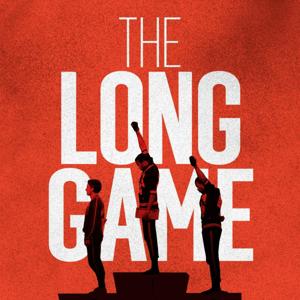
On The Long Game, we highlight stories of courage and conviction on and off the field. From athletes who are breaking barriers for women and girls to a Syrian refugee swimmer who overcame the odds to compete at the Paralympics, The Long Game examines the power of sport to change the world for the better. The Long Game is hosted by Olympic medalist and change agent Ibtihaj Muhammad as she guides the series around the globe to meet athletes who are fighting for change.
From the publisher's feed

595 Listeners

2,719 Listeners

27 Listeners

39 Listeners
204 Listeners

359 Listeners
91 Listeners

75 Listeners
11 Listeners

0 Listeners
8 Listeners

3 Listeners

0 Listeners

0 Listeners
0 Listeners