
Sign up to save your podcasts
Or



Based on Podcast App listening data
With attention fixed on the potential developments between the US and Iran, could the Israeli government be forced to end the war earlier than it might like?
The last few weeks have seen daily air strikes by Israel on Iran, and retaliatory attacks that have killed and injured Israelis. The wider picture is of two and a half years of constant conflict, particularly in Gaza.
In this conversation, Mishal Husain speaks to Shira Efron, who has been a Middle East analyst for the last 20 years and is now Distinguished Chair for Israel Policy at RAND. They discuss Israeli public opinion on Iran, the extent of the military operation in Lebanon and what’s at stake in the Israeli election due later this year.
02:25 - Life in Tel Aviv
04:42 - Israeli public opinion on Iran
06:24 - “A feeling of deja vu”
07:42 - Netanyahu's calculation
09:17 - Will elections go ahead?
10:59 - Did the Mossad get it wrong?
12:44 - American public opinion
14:24 - US and Israeli relations
18:24 - “There's one boss and this boss is President Trump”
20:11 - The future of Lebanon
23:52 - “Everyone forgot where Gaza is”
31:21 - Smotrich’s plan
33:44 - “We are seeing a shift to the right”
37:37 - Looking ahead to 2028
Read this interview with Mishal’s notes on Bloomberg Weekend: www.bloomberg.com/latest/weekend-interview
Contact The Mishal Husain Show [email protected]
Subscribe today on Apple Podcasts and Spotify.
See omnystudio.com/listener for privacy information.
US Representative Ro Khanna of California helped force Donald Trump to release the Epstein files. Now he wants to end the war with Iran. Earlier this month, the Democratic Congressman joined forces with Representative Thomas Massie of Kentucky, a Republican, on a War Powers resolution seeking to halt the military action, though it ultimately failed in the GOP-controlled House.
Speaking to Mishal Husain almost three weeks after the US and Israel began coordinated attacks on Iran, Khanna says he believes that opposing war in the Middle East and taxing billionaires could unite progressives and disaffected Trump voters.
02:57 - Hearing Epstein’s name for the first time
05:18 - Forcing the release of the Epstein files
10:07 - Holding this Epstein class accountable
11:05 - A new found confidence
11:59 - Hoping for a split in MAGA?
12:43 - “It’s a coalition that’s gonna win”
14:24 - Stopping the war in Iran
15:53 - Trump’s “looking for an off ramp to end the war”
17:21 - Increasing pressure on Trump over Iran
19:50 - Could Cuba be next?
21:21 - Khanna’s grandfather was an Indian MP
23:15 - Running for president in 2028?
24:58 - Taxing billionaires
30:08 - A progressive coalition
34:06 - “You can't help but be hopeful about the American story”
Read this interview with Mishal’s notes on Bloomberg Weekend: www.bloomberg.com/latest/weekend-interview
Contact The Mishal Husain Show [email protected]
Subscribe today on Apple Podcasts and Spotify.
See omnystudio.com/listener for privacy information.
Despite the intensity of the US-Israel bombing campaign, Iran’s regime, now under a new supreme leader, hasn’t given President Donald Trump the “unconditional surrender” he’s seeking.
Mishal Husain speaks with Vali Nasr, a professor at Johns Hopkins University’s School of Advanced International Studies and a preeminent scholar on the Islamic Republic. His life has been shaped by the story of Iran over the last 50 years, starting when his family fled amid the 1979 revolution.
His life’s work has been to study the region and its relationship with the US. He’s also worked as an adviser to the US State Department during the Obama administration.
Nasr explains why Tehran believes time is on its side in the war, and that a prolonged conflict may only strengthen Iranian nationalism.
02:34 - Why Iran is “prepared to suffer more”
06:28 - What drives the new ayatollah
10:03 - How Iranians view the US and Israel
12:07 - War will last “longer” than Trump hopes
14:00 - School strike, destruction of heritage sites
15:35 - Lessons from the Iran-Iraq war
19:03 - “This is the final battle”
20:17 - Impact of US sanctions
22:40 - Will Iran pursue a nuclear bomb?
26:02 - Iran’s experience of foreign intervention
28:27 - Can Reza Pahlavi, son of the Shah, succeed?
30:48 - Nasr’s experience fleeing Iran in 1979
35:15 - Mood among Iranian-Americans
39:32 - Iran’s “rightful place in the world”
Contact The Mishal Husain Show [email protected]
Read this interview with Mishal’s notes on Bloomberg Weekend: www.bloomberg.com/latest/weekend-interview
Subscribe today on Apple Podcasts and Spotify
See omnystudio.com/listener for privacy information.
Within 24 hours of the US and Israeli strikes on Iran, a host of other countries were drawn into the latest conflict in the Middle East.
Iran retaliated by targeting sites in Israel and across the Gulf, including the UAE, Saudi Arabia, Qatar, Kuwait and Bahrain, as well as Iraq, Oman and Jordan. Israel, meanwhile, has carried out air strikes on Lebanon and sent in ground troops as it seeks to dismantle Iranian ally Hezbollah.
For this conversation, Mishal Husain has turned to an expert on the broad sweep of Middle East politics. Bernard Haykel is a professor of Near Eastern Studies at Princeton University. Born in Lebanon, he is known for weaving together knowledge of history, religion and social change across the region. His forthcoming book is about contemporary Saudi Arabia and its leader, Crown Prince Mohammad bin Salman, with whom he is in regular contact.
02:45 - “I was not surprised”
03:40 - The Iranian retaliation
09:00 - The three scenarios in this conflict
11:00 - “This regime will survive”
13:20 Protests after Khamenei's death
15:35 Did MBS encourage the strikes on Iran?
18:40 The Saudi Air Force will get “involved”
21:30 Trump and MBS
25:00 MBS “doesn’t want wars”
27:00 Saudi competition with UAE
29:18 MBS is “a bit like Elon Musk”
30:30 MBS is an authoritarian 33:00 The US has a “role to play” in the Middle East
Read this interview with Mishal’s notes on Bloomberg Weekend: www.bloomberg.com/latest/weekend-interview
Contact The Mishal Husain Show [email protected]
Subscribe today on Apple Podcasts and Spotify.
See omnystudio.com/listener for privacy information.
When President Donald Trump returned to the White House last year, one of his first acts was to sign an executive order withdrawing the US from the World Health Organization. The administration's rupture with the WHO began in Trump’s first term, when relations deteriorated as the Covid-19 pandemic set in.
In this conversation with Mishal Husain, WHO Director-General Tedros Adhanom Ghebreyesus reveals he remains in close contact with US Secretary of Health and Human Services Robert F. Kennedy Jr. despite that break. He also talks about the lessons learned from Covid and why the WHO is still waiting for answers from China as it seeks to understand the origins of the virus.
Beyond the politics of global health, Ghebreyesus opens up about his own childhood trauma and why the death of his brother in 1970 makes the fight against preventable disease personal for him.
02:51 - Being a child of war
06:25 - Working in conflict zones
08:07 - “War and disease are old friends”
09:34 - “Don’t forget the invisible enemy”
11:35 - How far away is the next pandemic?
12:48 - US withdrawal from the WHO
14:50 - Covid and China
16:50 - Personal attacks from the US
18:16 - The US flag has been returned
18.51 Argentina is leaving the WHO
21:22 - Was Covid a lab leak?
22:49 - Waiting for answers from China
26:46 - Vaccine skeptics
27:26 - Texting RFK Jr.
28:56 - “My brother died”
31:06 - “He could have survived”
33:46 - “Defunding mRNA research is the wrong decision”
34:20 - Will MAHA work?
37:27 - A message for President Trump
39:26 - “Viruses get advantage when we are divided”
Read this interview with Mishal’s notes on Bloomberg Weekend: www.bloomberg.com/latest/weekend-interview
Contact The Mishal Husain Show [email protected]
Subscribe today on Apple Podcasts and Spotify.
See omnystudio.com/listener for privacy information.
“KPop Demon Hunters” is the brainchild of Korean-Canadian animator Maggie Kang. It’s Netflix’s biggest-ever film and follows Rumi, Mira and Zoey, members of the girl band Huntrix, as they battle to save the world from dark forces.
As you’ll hear, Kang grew up loving Korean pop music long before it was globally cool and forged a Hollywood career on films including “The Lego Ninjago Movie” and “Kung Fu Panda 3.” In this conversation with Mishal Husain, Kang explains how she had always hoped a story about Korea would one day come her way. But it never did, so she came up with her own.
Kang is in the middle of a life-changing moment. Her movie has already scored wins at the Golden Globes and the Grammys, and now all eyes are on the Oscars. The extraordinary thing is that no one expected “KPop Demon Hunters” to be such a smash hit. Husain asks Kang what it’s been like adjusting to all the attention, and of course whether there’s a sequel in the works.
03:06 - “A global phenomenon”
04:17 - The screaming fans
05:01 - The movie theater screenings
06:49 - Pitching “KPop Demon Hunters”
09:27 - Living between two cultures
12:04 - Growing up as an “outsider”
16:34 - Kang’s first animation book
17:16 - “I liked to draw”
18:21 - Recording the voiceover, over and over
20:11 - The story of “Golden”
21:39 - Rumi, Mira and Zoey in “Golden”
23:00 - Waiting for “the tingles”
25:25 - “We kinda worried it was a little cheesy”
27:27 - Helping the world find Korean culture
29:30 - Choosing the title for a “kooky” movie
34:20 - A message from Kang to the fans
34:48 - “There’s a sequel, surely?”
35:14 - Live action “KPop Demon Hunters”?
37:01 - “I’m still very grounded”
37:22 - Diving back into the sequel?
38:00 - “Wow! You are going to the Oscars!”
Read this interview with Mishal’s notes on Bloomberg Weekend: www.bloomberg.com/latest/weekend-interview
Contact The Mishal Husain Show [email protected]
Visit https://www.bloomberg.com/mishal
Contact The Mishal Husain Show [email protected]
Subscribe today on Apple Podcasts and Spotify.
See omnystudio.com/listener for privacy information.
The Feb. 19 arrest of Andrew Mountbatten-Windsor, the brother of King Charles, puts the British Royal Family into uncharted territory. The former Prince Andrew was detained on suspicion of misconduct in public office after further details emerged of his relationship with convicted sex offender Jeffrey Epstein.
For this bonus episode, Mishal Husain speaks to Allegra Stratton, a contributing editor to Bloomberg who previously worked for Prime Minister Boris Johnson.
She’s also joined by Harry Wilson, a reporter on Bloomberg UK’s finance team who’s been involved in reporting on Epstein’s emails and has previously broken stories about Andrew Mountbatten-Windsor.
They discuss Andrew’s business links and the significance of today’s events for the monarchy and the UK.
Contact The Mishal Husain Show [email protected]
Subscribe today on Apple Podcasts and Spotify.
See omnystudio.com/listener for privacy information.
This winter has been exceptionally brutal in Ukraine. Already the coldest in more than a decade, it’s been made worse by Russian attacks on energy infrastructure that have left millions with no heating and intermittent power.
As Russia’s war approaches its fourth anniversary, Ukrainian President Volodymyr Zelenskiy is under intense pressure from Donald Trump to hold elections and accept a peace deal within months. But inside Ukraine and among its allies, there remains deep skepticism that Vladimir Putin is truly interested in a durable peace.
Celebrated writer Andrey Kurkov has lived the reality of the wartime winter in his home city of Kyiv. Best known for his 1996 novel “Death and the Penguin,” set in post-Soviet Ukraine, Kurkov also has written extensively about the current war, publishing three volumes of diaries alongside his fiction. While he’s been determined to remain in Ukraine throughout the conflict, he says the present conditions have been too much to bear. In this conversation with Mishal Husain, he talks about his hopes for peace and how he plans to return to Kyiv in the spring.
02:54 Situation in Kyiv: “Winter allied with Russia”
04:53 Four years since full-scale invasion
07:12 Ukraine is “fragmented”
09:12 “Writing nonfiction is a duty”
12:03 “Nobody’s winning”
14:20 Kurkov’s relationship with Russia
17:47 How the war changed Kurkov and his country
20:19 Kurkov’s message to the Munich Security Conference
21:53 Capitulation “camouflaged” as a peace deal
24:15 Support for Zelenskiy in Ukraine
26:15 Corruption scandals: “I’m very angry”
2:49 “I hope the war will be over this year”
31:43 Observing the war as a diarist
33:14 Humor as a “psychological defense”
35:17 “We are part of Europe”
Watch this podcast here: https://www.youtube.com/playlist?list=PLe4PRejZgr0Ns_wjGlmjlPz0cded0nTYS
You can find the written version of this interview with Mishal’s notes on Bloomberg Weekend: https://www.bloomberg.com/latest/weekend-interview
Contact The Mishal Husain Show [email protected]
Subscribe today on Apple Podcasts and Spotify.
Illustration: Uli Knörzer for Bloomberg; Photo: Leonardo Cendamo for Getty
See omnystudio.com/listener for privacy information.
In 2007 when he was UK Foreign Secretary, David Miliband delivered an address to the Labour Party conference. He described a world with “fewer countries at war” and “more democracies than ever before.”
Two decades later, with that vision further from view, Miliband is head of the New York-based International Rescue Committee, one of the world’s largest aid agencies. Its “Emergency Watchlist” cites 20 urgent crises, from Haiti to Sudan and the Middle East to Myanmar. The group finds itself increasingly constrained by widening conflict and shrinking government aid.
The IRC role, however, gave Miliband new purpose after his bid to lead Labour ended in dramatic and personal fashion when in 2010 he lost to his own brother. Now he sees his old friends and rivals back in power, forced to make decisions he finds painful.
In this conversation with Mishal Husain, Miliband discusses the current state of politics in the UK, including Prime Minister Keir Starmer’s leadership. He talks about Donald Trump’s “Board of Peace” and his old boss, former Prime Minister Tony Blair. They also discuss Miliband’s family heritage.
02:30 - His refugee parents and link to work at IRC
08:09 - Growing up, democracy “seemed like the norm”
08:59 - 2007 speech at Labour Party Conference
10:54 - Mark Carney’s 2026 speech at Davos
12:49 - “America will no longer be Atlas”
13:49 - “More autocracies than democracies in the world today”
14:26 - “A revolution in America’s role in the world”
15:42 - IRC work on the US-Mexico border
17:55 - IRC’s 2026 Emergency Watchlist: Sudan and the Occupied Palestinian Territory
18:36 - “Remediation of desperate suffering is our business”
19:06 - “If you talk to the people you have hope.”
23:31 - Jared Kushner’s plans for Gaza
26:21 - Tony Blair and the Board of Peace
32:12 - Cuts to foreign aid
34:55 - “Challenging period” for UK Labour, Starmer
36:06 - Threats from Reform and Andy Burnham
39:07 - What next for Miliband?
40:28 - Relationship with Hilary Clinton
Watch this podcast here: https://www.youtube.com/playlist?list=PLe4PRejZgr0Ns_wjGlmjlPz0cded0nTYS
You can find the written version of this interview with Mishal’s notes on Bloomberg Weekend: https://www.bloomberg.com/latest/weekend-interview
Contact The Mishal Husain Show [email protected]
Subscribe today on Apple Podcasts and Spotify.
Illustration: Uli Knörzer for Bloomberg; Source Photo: Jose Sarmento Matos/Bloomberg
See omnystudio.com/listener for privacy information.
The killing of two US citizens by federal agents in Minneapolis has made January a dark month for many across America. Both Alex Pretti and Renee Good were quickly labeled “domestic terrorists" by the Trump administration, which accused them of endangering the lives of law enforcement. Video evidence soon appeared to contradict government claims, but it’s still a label that filmmaker Laura Poitras says she finds chilling.
Poitras has been producing and directing documentaries for more than 20 years, winning both an Oscar and a Pulitzer Prize for her 2014 work “Citizenfour,” which focussed on the whistleblower Edward Snowden and mass surveillance. She too has her own experience of being regarded as a threat by the US government and says she was on a terrorist watch list for years.
Her latest film, which this week was nominated for a BAFTA, profiles renowned US investigative journalist Seymour Hersh. “Cover-Up,” on Netflix, traces Hersh’s life from his early days in Chicago through his scoops of the 1960s to his current journalism on Substack.
It’s a story of media both past and present. In this conversation with Mishal Husain, Poitras also reflects on the role of citizen journalism in documenting government violence in places like Minneapolis.
02:53 - “Legendary investigative journalist” Seymour Hersh
05:35 - Poitras and Hersh’s Iraq connection
06:40 - US public “failed by our legacy media”
09:06 - Cycles of impunity
09:50 - Criticism of Hersh’s journalism
11:30 - Hersh quits the film
15:00 - Hersh’s early life
16:19 - Poitras’ lens on America
17:40 - Parallels between Iraq and Venezuela
19:30 - “Regime change” in Venezuela
20:20 - Poitras under surveillance
23:00 - Leaving the US
24:40 - Edward Snowden and NSA secrets
28:15 - “I’m very happy he’s not in a US prison”
32:00 - “Cover-Up” and the present day
33:33 - “Whistleblowers face the consequences”
35:00 - “Citizen journalists”
37:00 - Mishal speaks to Poitras for a second time
38:00 - Alex Pretti and the violence in Minneapolis
39:30 - “Domestic terrorist”
40:17 - “Journalists have an obligation”
40:50 - A tipping point for ICE?
Watch this podcast here: https://www.youtube.com/playlist?list=PLe4PRejZgr0Ns_wjGlmjlPz0cded0nTYS
You can find the written version of this interview with Mishal’s notes on Bloomberg Weekend: https://www.bloomberg.com/latest/weekend-interview
Contact The Mishal Husain Show [email protected]
Subscribe today on Apple Podcasts and Spotify.
See omnystudio.com/listener for privacy information.
From the publisher's feed
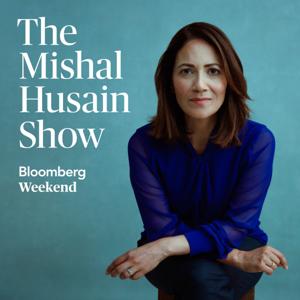
Make sense of the world with one essential conversation, every week. Mishal Husain, one of Britain's best interviewers, brings her signature blend of curiosity and tenacity to weekly conversations with world leaders, business titans, and cultural icons, revealing who they really are and how they see the world changing around them.
Subscribe today at Bloomberg.com/audio or on Apple Podcasts and Spotify. For annotated transcripts of Mishal's conversations head to Bloomberg.com/latest/weekend-interview
Ranked by our users in the last 21 days

404 Listeners

2,175 Listeners

421 Listeners
152 Listeners

123 Listeners

969 Listeners
109 Listeners

683 Listeners

193 Listeners

30 Listeners

706 Listeners

4 Listeners

58 Listeners

3,062 Listeners

233 Listeners

229 Listeners

1,138 Listeners

61 Listeners

836 Listeners

394 Listeners

178 Listeners

71 Listeners

50 Listeners

84 Listeners

402 Listeners
191 Listeners

147 Listeners

19 Listeners

29 Listeners

2,247 Listeners

12 Listeners

7 Listeners

2 Listeners

116 Listeners