
Sign up to save your podcasts
Or

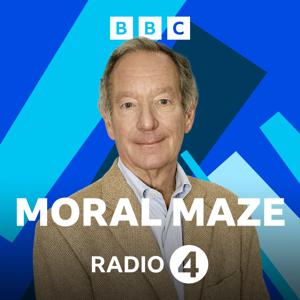

Strong swear words are becoming an increasing part of everyday life, according to research from the British Board of Film Classification. Six in ten of us are now comfortable cursing. A third of us have a greater propensity for profanity than five years ago. What has not changed is the desire to censor swearing in age-restricted cinema and DVD releases. This seems almost quaint in an internet age where almost no content has a gatekeeper. It does, however, point to contradictory attitudes to bad language. Those who dislike swearing think it is vulgar, morally corrupting and intellectually base; the words themselves can be seen an aggressive act, unacceptable in any context. Some see swear words as morally neutral, where any real or perceived harm is entirely dependent upon the intent of the speaker. Others think they can even have a moral power as an expression of strong sentiment and solidarity. Others still, see the creative influence of swear words as linguistically and culturally enriching. Have we become too complacent about bad language? What do generational attitudes to swearing reveal about wider social change? Why have some strong obscenities become more acceptable, while slurs have become less acceptable? How do we negotiate a public discourse in which everyone draws their own lines about the acceptability of swearing? Frankly, should we give a damn? With Peter Hitchens, Dr Rebecca Roache, Esther Rantzen and Simon Donald.
Producer: Dan Tierney.
 View all episodes
 By BBC Radio 4

4.6
5151 ratings
Strong swear words are becoming an increasing part of everyday life, according to research from the British Board of Film Classification. Six in ten of us are now comfortable cursing. A third of us have a greater propensity for profanity than five years ago. What has not changed is the desire to censor swearing in age-restricted cinema and DVD releases. This seems almost quaint in an internet age where almost no content has a gatekeeper. It does, however, point to contradictory attitudes to bad language. Those who dislike swearing think it is vulgar, morally corrupting and intellectually base; the words themselves can be seen an aggressive act, unacceptable in any context. Some see swear words as morally neutral, where any real or perceived harm is entirely dependent upon the intent of the speaker. Others think they can even have a moral power as an expression of strong sentiment and solidarity. Others still, see the creative influence of swear words as linguistically and culturally enriching. Have we become too complacent about bad language? What do generational attitudes to swearing reveal about wider social change? Why have some strong obscenities become more acceptable, while slurs have become less acceptable? How do we negotiate a public discourse in which everyone draws their own lines about the acceptability of swearing? Frankly, should we give a damn? With Peter Hitchens, Dr Rebecca Roache, Esther Rantzen and Simon Donald.
Producer: Dan Tierney.

7,913 Listeners

863 Listeners

1,067 Listeners
159 Listeners

5,576 Listeners

1,808 Listeners

1,729 Listeners

1,018 Listeners
2,113 Listeners
1,952 Listeners
32 Listeners
38 Listeners
428 Listeners
159 Listeners
43 Listeners
75 Listeners
108 Listeners
745 Listeners

3,245 Listeners
779 Listeners
1,010 Listeners
3,858 Listeners

1,314 Listeners
851 Listeners
48 Listeners