
Sign up to save your podcasts
Or



Based on Podcast App listening data
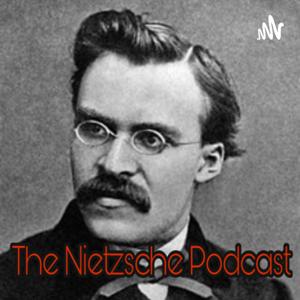
Today, I'm speaking with independent scholar, translator, and lecturer, Stuart Kendall. Stuart is responsible for helping to bring new translations of Georges Bataille's work into English, and he joined me for a conversation about Georges Bataille and his influence from Friedrich Nietzsche. We discussed the notion of expenditure, the metaphor of the potlach, the will to chance, war as an object of meditation, and the enigmatic work, On Nietzsche. Future episode's on Bataille's On Nietzsche will soon arrive as regular episodes of the podcast (in fact, as the two-part conclusion to season six), but here I was interested in introducing Bataille and the background of this text, which will hopefully be of help to any prospective reader who opens its pages and wonders just what the hell is going on. This conversation was intended to be accessible to all those who have never read Bataille or encountered his ideas, and thus to provide an entrypoint for the listeners before we tackle the book in earnest. Enjoy, and may your hearts overflow with generosity.
In this episode we're going to explore three very different thinkers who nonetheless converge on their theories of language. We're going to see if we can't extract an intelligible whole out of the ideas generated by this trio: the Nietzschean theory of language as command, the view of Cassirer that man is a symbolic animal, and Wittgenstein's concept of the language-game.
In this episode, we're venturing into the life and thought of Ernst Cassirer, the last humanist of the Enlightenment tradition. Cassirer is widely known today for his debate with Heidegger at Davos, in which Cassirer appeared as the old style philosopher against the new world signified by Heidegger's radical existentialism. And yet, the very fact that this debate was taking as symbolic of the broader trends in philosophy is in some sense a vindication of Cassirer, who believed that mankind was properly undertsood as animale symbolicum: the animal who symbolizes. Thinking in the Neo-Kantian tradition, Cassirer doesn't seem the symbolic world as approximating a "ready-made" world of objects, but as the conceptual organ for experiencing and thinking about the world at all. From this framework, Cassirer advances a remarkable notion: that language and myth are two shoots from the same stem, and if we want to understand language, we should look to the phases of mythic thinking. The central mystery we shall explore is how the "metaphorical transference" can take place, in which a sound comes to stand for an image, and the specific for the general category. At the root of all this, Cassirer raises an intriguing possibility: perhaps all of language originates in magical thinking and spiritual excitement.
This is an audio version of the first two sections of a planned series of political writings, gathered under the name Antipolitik: I. The Birth of the State at the End of Warre, and II. Anti-Schmitt. I've grouped them under the name Anti-Schmitt because these two sections form a polemical unity, against the philosophy of Carl Schmitt and his friend-enemy distinction. Enjoy!
I spoke with Nick Nielsen (Geopolicraticus), who publishes a regular newsletter, and the series, Today in the Philosophy of History. We discussed Augustine's theory of history; the differing views of history of Hegel and Schopenhauer; the Renaissance and the Reformation; textual gaps in the Middle Ages; Nietzsche's "On the Use and Abuse of History for Life"; Nietzsche & Machiavelli as the monumental role models of our time; ideographic versus nomothetic knowledge; Peter Turchin's Cliodynamics. This was my first conversation with Nick, but it was lovely to meet him and I had a nice time talking to him. I very much enjoy his Youtube channel and would recommend it to those among the Patrons who enjoy history, and speculations about history.
Chris joined me for a conversation on Friedrich Schelling & German Idealism! In spite of his prominence, Schelling tends to be underdiscussed in popular philosophy circles when it comes to the German Idealist tradition. In this episode, we talk about his essay Philosophical Inquiries into the Essence of Human Freedom, the dialectic of potencies that develops out of nature-philosophy, and the relation of Schelling's ideas to those of his school friends at Tubingen - two gentlemen you may or may not have heard of, named Hegel and Holderlin. The three of them were enthusiastic about the French Revolution, and planted a "freedom tree", around which they danced and sang "Hen Kai Pain" - "One and All" - the watchword of Hellenistic pantheists. Schelling's late lectures were attended by everyone from Kierkegaard to Burckhardt to Engels to Bakunin; his views on myth (centering on Apollo and Dionysus) likely influenced Nietzsche, and his notion of the dark ground as a ceaseless impulsive striving echoes in the work of Schopenhauer. At the end of the episode, we have a brief discussion about Chris' thoughts on Deleuze, a philosopher he has drifted away from, and some of the pitfalls of post-structuralist thinking.
Christopher, on how to read Schelling's Freedom Essay: https://epochemagazine.org/77/freedom-god-and-ground-an-introduction-to-schellings-1809-freedom-essay/
Papers Referenced: Exceeding Reason: Freedom and Religion in Schelling and Nietzsche by Dennis Vanden Auweele
Nietzsche, German Idealism and Its Critics (DeGruyter)
In our continuation of Wittgenstein's Philosophical Investigations, we'll discuss Wittgenstein's arguments against the possibility of a private language, which culminates in the position that all subjective experiences of sensations are not communicable. Thus, language must be doing something else, other than communicating inner experiences, with its words that seem to refer to these experiences. Of particular interest to Wittgenstein is the communication of pain, and sense perceptions. Finally, we'll consider Wittgenstein's arguments as concern meaning: presumably there is an inner experience of "meaning something" by one's words, which is different from how the words may be perceived - or the individual may even intend to deceive. Is it therefore sensible to speak about an "inner meaning" separate from common use? Join me as we explore my favorite ideas from Wittgenstein!
In this episode, we're finally talking about a book near and dear to my heart, Wittgenstein's "Philosophical Investigations" (this book took second place in a Patreon poll, and I decided it was time). What is language? How is the meaning of words determined? Wittgenstein initially proposed a pictorial theory of the meaning of sentences, but after his return to philosophy, Wittgenstein II put forward a new theory of language, as the "language-game". We will discuss Wittgenstein's life and career, and then focus on Philosophical Investigations, a work assembled from notes written over the span of 16 years, covering a wide variety of topics and approaching philosophy through thought-experiments, and reflections on the varied uses of words. Wittgenstein's method is to describe rather than explain, and to take our understanding of words from the metaphysical down to the everyday. "Don't think, but look!"
Joe Folley joins me for a conversation on Albert Camus and the absurdist response to the death of God. We begin by comparing and contrasting Camus and Nietzsche, and their differing approaches to the devaluation of values. Taking inspiration from Nietzsche, Camus searches for an attitude to life akin to amor fati, but defined by a defiance against dogmatic certainties and nihilistic abandonment of life's struggles. We also consider the influence from Descartes, the Stoics, and Schopenhauer on Camus' thought. In the latter half of the conversation, we explore the meaning behind philosophy's attempts at consolation; the question of the suspension of judgment versus the affirmation of certainties; the arguments between analytic and continental philosophers; the philosophers who have bridged the divide; the classical versus romantic worldviews; and the value of truths of a vague or emotional nature that can only be conveyed through art.
The longest Q&A so far! The beginning has a number of Patreon updates, most of which involve things that have already transpired on the podcast. If you want to be involved with asking Q&A questions, or voting in polls to decide future material for the podcast, join the Patreon!
From the publisher's feed
Ranked by our users in the last 21 days

15,233 Listeners

2,111 Listeners

2,675 Listeners

868 Listeners
1,606 Listeners

1,542 Listeners
316 Listeners

511 Listeners
583 Listeners
595 Listeners

355 Listeners
383 Listeners

202 Listeners

286 Listeners
43 Listeners