
Sign up to save your podcasts
Or

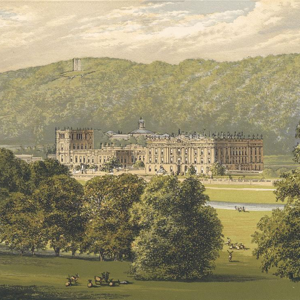


After the Maryland campaign and bloody draw at Antietam, the Army of Northern Virginia rested and refitted in the Shenandoah Valley before returning to the Rappahannock. During this pause, Robert E. Lee refitted, disciplined, and reorganized his army to reflect his faith in Jackson while the Union Army moved to strike at Fredericksburg, eventually doing so at the cost of an astounding 13,000 casualties.
During the winter at Moss Neck and nearby camps, Lee and Jackson spent time in close consultation, discussing the next campaigns, refining their strategy as their bond grew all the closer. Then, when Joseph Hooker struck at Chancellorsville, the time to test their developed beliefs came and Lee, despite being outnumbered, split his force again and sent Jackson on a flank march through the Wilderness.
Jackson's march led to the surprise attack on the Union XI Corps on May 2. The Federal flank collapsed in confusion, and the Confederates drove them back in a major tactical victory. That night, while reconnoitering in the dark, Jackson was mistakenly fired upon by Confederate soldiers and severely wounded.
Jackson's arm was amputated, but he later developed pneumonia and died on May 10, 1863. Lee mourned his death deeply and reorganized the army without him. The episode ends by marking Jackson's death at Chancellorsville as a turning point, and by looking ahead to Gettysburg and the later campaigns.
Check out our sponsor, the Classical Society, here, and tell them that Will sent you: https://theclassicalsociety.com/
CHAPTERS:
0:00 Lee Rebuilds His Army, and Burnside Takes Command
7:14 Fredericksburg Under Fire
16:38 The Last Great Winter: Recuperation at Moss Neck
19:50 Hooker Rises to Challenge Lee
24:26 The Last Meeting of Lee and Jackson: Preparing the Thunderclap
28:29 Jackson Flanks the Union
32:18 Lee Loses Jackson
Sources Referenced in this Episode:
I am an Amazon Affiliate. If you would like to support the show at no added cost to yourself, you can do so by using the links below to order and read the sources I used to create this episode. Thanks!
Armes, Ethel, Stratford Hall: The Great House of the Lees, https://amzn.to/4wxAAfl
Burt, Nathaniel, First Families: The Making of an American Aristocracy, https://amzn.to/4r0KLYG
Cole, Ryan, Light-Horse Harry Lee: The Rise and Fall of a Revolutionary Hero, https://amzn.to/4wiZOy3
Connelly, Thomas L., The Marble Man: Robert E. Lee and His Image in American Idea, https://amzn.to/4ywRf4j
Crocker, H. W., III, Robert E. Lee on Leadership: Executive Lessons in Management, https://amzn.to/4gvXpds
Dabney, Virginius, Virginia: The New Dominion, https://amzn.to/46gVW69
Dowdey, Clifford, Lee: A Biography, https://amzn.to/46lDf14
Fleming, Thomas, A Disease in the Public Mind: A New Understanding of Why We Fought the Civil War, https://amzn.to/4yzbiix
Flood, Charles Bracelen, Lee: The Last Years, https://amzn.to/4gDcA4I
Freeman, Douglas Southall, R. E. Lee: A Biography, https://amzn.to/4gkaqrx
Hendrick, Burton J., The Lees of Virginia, https://amzn.to/4xshjNe
Lee, Cazenove Gardner, Jr., Lee Chronicle: Studies of the Early Generations of the Lees, https://amzn.to/4q7GiTI
Longacre, Edward G., Fitz Lee: A Military Biography of Major General Fitzhugh Lee, https://amzn.to/4xkLNAu
Nagel, Paul C., The Lees of Virginia: Seven Generations of an American Family, https://amzn.to/4wUxkfi
Nichols, James L., General Fitzhugh Lee: A Biography, https://amzn.to/4qeURoz
Royster, Charles, Light-Horse Harry Lee and the Legacy of the American Revolution, https://amzn.to/3TKWspX
Sanborn, Margaret, Robert E. Lee: A Portrait, https://amzn.to/3SA6EkN
Thomas, Emory M., Robert E. Lee: A Biography, https://amzn.to/46qVL8c
This episode traces the incredible, glorious partnership between Robert E. Lee and Stonewall Jackson during the American Civil War. It begins with their contrasting backgrounds and temperaments, explaining why they together formed an especially effective command team for the Army of Northern Virginia.
The story then moves to the Shenandoah Valley campaign of 1862, noting how Jackson's rapid movements and attacks fulfilled Lee's wishes perfectly, and built Lee's confidence in Jackson to the point that the two men could work closely together.
The episode next covers Second Manassas, showing how faith in Jackson allowed Lee to divide his army in an attempt to crush Pope. He sent Jackson on a long flank march behind John Pope's forces, leading to the capture and destruction of Union supplies at Manassas Junction. Jackson then held a strong defensive position while Lee and Longstreet struck Pope's exposed flank, forcing a Union retreat and giving the Confederates a major victory.
After that, the focus shifts to Lee's decision to invade Maryland, and how a lost order led to tragedy at Antietam, setting up the next year's great victory at Chancellorsville, and the World WarI-like butchery at Fredericksburg
Check out our sponsor, the Classical Society, here, and tell them that Will sent you: https://theclassicalsociety.com/
CHAPTERS:
0:00 Lee and Jackson United: The Great Partnership Begins
5:57 Seven Days Setback
9:21 Lee Regroups and Attacks Northward as Pope Threatens Virginia
15:42 Lee's Great Gamble, Jackson's Flank March
24:28 Lee, Jackson, and Longstreet at Second Manassas
33:41 Why Lee Invaded Maryland, and Why It Went Wrong
45:48 Antietam: America's Bloody Day
Sources Referenced in this Episode:
I am an Amazon Affiliate. If you would like to support the show at no added cost to yourself, you can do so by using the links below to order and read the sources I used to create this episode. Thanks!
Armes, Ethel, Stratford Hall: The Great House of the Lees, https://amzn.to/4wxAAfl
Burt, Nathaniel, First Families: The Making of an American Aristocracy, https://amzn.to/4r0KLYG
Cole, Ryan, Light-Horse Harry Lee: The Rise and Fall of a Revolutionary Hero, https://amzn.to/4wiZOy3
Connelly, Thomas L., The Marble Man: Robert E. Lee and His Image in American Idea, https://amzn.to/4ywRf4j
Crocker, H. W., III, Robert E. Lee on Leadership: Executive Lessons in Management, https://amzn.to/4gvXpds
Dabney, Virginius, Virginia: The New Dominion, https://amzn.to/46gVW69
Dowdey, Clifford, Lee: A Biography, https://amzn.to/46lDf14
Fleming, Thomas, A Disease in the Public Mind: A New Understanding of Why We Fought the Civil War, https://amzn.to/4yzbiix
Flood, Charles Bracelen, Lee: The Last Years, https://amzn.to/4gDcA4I
Freeman, Douglas Southall, R. E. Lee: A Biography, https://amzn.to/4gkaqrx
Hendrick, Burton J., The Lees of Virginia, https://amzn.to/4xshjNe
Lee, Cazenove Gardner, Jr., Lee Chronicle: Studies of the Early Generations of the Lees, https://amzn.to/4q7GiTI
Longacre, Edward G., Fitz Lee: A Military Biography of Major General Fitzhugh Lee, https://amzn.to/4xkLNAu
Nagel, Paul C., The Lees of Virginia: Seven Generations of an American Family, https://amzn.to/4wUxkfi
Nichols, James L., General Fitzhugh Lee: A Biography, https://amzn.to/4qeURoz
Royster, Charles, Light-Horse Harry Lee and the Legacy of the American Revolution, https://amzn.to/3TKWspX
Sanborn, Margaret, Robert E. Lee: A Portrait, https://amzn.to/3SA6EkN
Thomas, Emory M., Robert E. Lee: A Biography, https://amzn.to/46qVL8c
In the late 19th century, the British landed elite still seemed secure. A small group of aristocratic and gentry families owned the supermajority of the land, much of the best urban property, and many mineral rights, while also holding political office and shaping society through cultural dominance, business investments, and social prestige. Their wealth supported a life of leisure used to fulfill the duty to govern, not for private indulgence in indolence.
That system began to break down with the repeal of the Corn Laws in 1846 and the agricultural depression of the 1870s as cheap grain from the United States, carried by rail and steamship, drove down British agricultural prices and rents. At the same time, the Third Reform Act expanded the electorate and weakened the old rural political structure.
As incomes fell, many landowners were burdened by debt, mortgages, and family settlements. Some sold land, houses, art, and other assets; others tried to shift into business, finance, or colonial ventures. The People's Budget and the Parliament Act then increased taxes and reduced the power of the House of Lords, making the old order even less secure.
World War I accelerated the decline. Many aristocrats served and died in unusually high numbers, and wartime requisitioning damaged or destroyed country houses. After the war, the class remained visible in local life, but it lost national political influence and much of its confidence.
After describing the decline of the class, I articulate what lessons we should draw from its demise.
Check out our sponsor, the Classical Society, here, and tell them that Will sent you: https://theclassicalsociety.com/
Sources Referenced in this Episode:
I am an Amazon Affiliate. If you would like to support the show at no added cost to yourself, you can do so by using the links below to order and read the sources I used to create this episode. Thanks!
The Decline and Fall of the British Aristocracy, https://link.amazon/B08at3udq
Aspects of Aristocracy, https://link.amazon/B0hs1ny41
The Gentry, https://link.amazon/B004Qxd5v
Aristocrats, https://link.amazon/B0bhdsxet
The Iron Duke, https://link.amazon/B0bWhIY77
American Colossus, https://link.amazon/B01aFOKhP
English Landed Society in the Nineteenth Century, https://link.amazon/B0c6eSxVo
European Landed Elites in the 19th Century, https://link.amazon/B0eQ9UGUY
The Conservative Mind, https://link.amazon/B0bDdEBuS
The Serpent and the Stag, https://link.amazon/B03VrFQ8J
This episode examines the rise, dominance, and disappearance of the WASPs, the old American families from the Northeast who dominated business, society, and politics for much of the late 19th and early 20th centuries. It distinguishes them from the Southern gentry, and defines them as an upper class formed by intermarriage, inherited wealth, and shared institutions rather than just a group of rich individuals.
It then describes how the WASPs were economically and culturally powerful at their height. They funded railroads, industry, banking, museums, libraries, and opera houses, while shaping high society through prep schools, Ivy League colleges, clubs, debutante events, and church life. Their influence also extended into politics, largely through the Republican Party and through journals, donations, and private networks rather than direct office-holding.
I argue that the class declined because of three main factors: an addiction to leisure, inflation, and taxation. Many families came to prefer yachting, travel, parties, and passive investing over active oversight of businesses and fortunes. It also explains that their preference for bonds left them vulnerable when inflation rose after the gold standard weakened, reducing both the real value of their income and the value of their capital. Further, income taxes and death taxes made it difficult to preserve wealth, and many families tried risky investing or leverage instead of adapting. A few families, such as the Mellons and the Golets, survived by holding better assets, using trusts, and remaining attentive to their wealth, but most of the New York 400 that was so dominant in the Gilded Age had faded near-entirely away within a century.
This episode ends by drawing lessons from this history: the importance of duty, long-term thinking, solid assets, keeping fortunes consolidated, and staying involved in family and business affairs. The episode says the WASPs disappeared as a class because they stopped doing the work required to remain an upper class.
Read my article on this here: https://www.theamericantribune.news/p/how-the-old-american-wasp-aristocracy
Check out our sponsor, the Classical Society, here, and tell them that Will sent you: https://theclassicalsociety.com/
Sources Referenced in this Episode:
I am an Amazon Affiliate. If you would like to support the show at no added cost to yourself, you can do so by using the links below to order and read the sources I used to create this episode. Thanks!
First Families: The Making of an American Aristocracy, https://link.amazon/B0bZphqPQ
The House of Morgan: An American Banking Dynasty and the Rise of Modern Finance, https://link.amazon/B0e5P2nOQ
Leaving a Legacy: Inheritance, Charity, & Thousand-Year Families, https://link.amazon/B0b0BGNIR
Philadelphia Gentlemen: The Making of a National Upper Class, https://link.amazon/B08kDcLPA
The Landed Gentry: Passions and Personalities Inside America's Propertied Class, https://link.amazon/B0hQrndQ6
Mellon: An American Life, https://link.amazon/B0eSSuT2R
An American Aristocracy: The Livingstons, https://link.amazon/B04RHm2G7
Dynasties: Fortunes and Misfortunes of the World's Great Family Businesses, https://link.amazon/B02JEw2t3
The Education of Henry Adams, https://link.amazon/B03AmIXkQ
The Managerial Revolution, https://link.amazon/B0iR5SahH
The Proud Tower: A Portrait of the World Before the War, https://link.amazon/B01ZmV6Hk
1913: In Search of the World Before the Great War, https://link.amazon/B0eVAW0k8
American Colossus: The Triumph of Capitalism, 1865-1900, https://link.amazon/B01dz8Ad1
Class: A Guide Through the American Status System, https://link.amazon/B07zwq4Q9
This is the retold story of the life of Captain John Smith, the military hero who saved Virginia, with a focus on how he represents the model American in many ways. I tell the tales of his upbringing, his Crusade against the Ottomans, his escape from slavery, his feuds with the Virginia Company, his mapping of the Chesapeake, and his grand adventures in the New World, altogether showing how he's a man who created a model for the New World based on the best of the old.
Read my article on this here: https://www.theamericantribune.news/p/how-john-smith-defined-the-american
Check out our sponsor, the Classical Society, here, and tell them that Will sent you: https://theclassicalsociety.com/
This is the story of how Robert E. Lee came to command the Army of Northern Virginia, and then used it to save Richmond while almost crushing McClellan in the Seven Days Battles. It is a story of early war debacles and embarrassments, prudent decision-making behind the scenes that led to Confederate successes, and then immense risk-taking and courage in the face of seemingly certain defeat. It is a tale of Stuart's dashing ride around McClellan, the near-total victory in the Seven Days Battles.
The Seven Days Battles began on June 26 with Mechanicsville, where A.P. Hill attacked too early and was repulsed. Jackson's delayed arrival later forced Porter to withdraw to Gaines' Mill, where Lee concentrated his forces and won a major victory on June 27. McClellan then abandoned his siege and began retreating toward the James River.
Lee pursued, but repeated delays and confusion prevented complete destruction of the Union army at Savage's Station, Glendale, and White Oak Swamp. On July 1 at Malvern Hill, Confederate attacks were shattered by strong Union artillery and naval gunfire. The Union army withdrew again on July 2, ending the Peninsula Campaign and leaving Richmond secure.
The campaign cost heavy casualties on both sides, but Lee's army and reputation were transformed. He had driven McClellan away from Richmond, gained the confidence of his soldiers and the Confederate government, and established the Army of Northern Virginia as his command, one he could use to win the war.
Check out our sponsor, the Classical Society, here, and tell them that Will sent you: https://theclassicalsociety.com/
Get our mug of Gen. Lee here: https://wbsapparel.shop/product/general-lee-coffee-mug/
Sources Referenced in this Episode:
I am an Amazon Affiliate. If you would like to support the show at no added cost to yourself, you can do so by using the links below to order and read the sources I used to create this episode. Thanks!
Armes, Ethel, Stratford Hall: The Great House of the Lees, https://amzn.to/4wxAAfl
Burt, Nathaniel, First Families: The Making of an American Aristocracy, https://amzn.to/4r0KLYG
Cole, Ryan, Light-Horse Harry Lee: The Rise and Fall of a Revolutionary Hero, https://amzn.to/4wiZOy3
Connelly, Thomas L., The Marble Man: Robert E. Lee and His Image in American Idea, https://amzn.to/4ywRf4j
Crocker, H. W., III, Robert E. Lee on Leadership: Executive Lessons in Management, https://amzn.to/4gvXpds
Dabney, Virginius, Virginia: The New Dominion, https://amzn.to/46gVW69
Dowdey, Clifford, Lee: A Biography, https://amzn.to/46lDf14
Fleming, Thomas, A Disease in the Public Mind: A New Understanding of Why We Fought the Civil War, https://amzn.to/4yzbiix
Flood, Charles Bracelen, Lee: The Last Years, https://amzn.to/4gDcA4I
Freeman, Douglas Southall, R. E. Lee: A Biography, https://amzn.to/4gkaqrx
Hendrick, Burton J., The Lees of Virginia, https://amzn.to/4xshjNe
Lee, Cazenove Gardner, Jr., Lee Chronicle: Studies of the Early Generations of the Lees, https://amzn.to/4q7GiTI
Longacre, Edward G., Fitz Lee: A Military Biography of Major General Fitzhugh Lee, https://amzn.to/4xkLNAu
Nagel, Paul C., The Lees of Virginia: Seven Generations of an American Family, https://amzn.to/4wUxkfi
Nichols, James L., General Fitzhugh Lee: A Biography, https://amzn.to/4qeURoz
Royster, Charles, Light-Horse Harry Lee and the Legacy of the American Revolution, https://amzn.to/3TKWspX
Sanborn, Margaret, Robert E. Lee: A Portrait, https://amzn.to/3SA6EkN
Thomas, Emory M., Robert E. Lee: A Biography, https://amzn.to/46qVL8c
This is the in-depth story of how the Virginia gentry built itself into a true ruling class. Focusing in particular on "American Revolutionaries in the Making," this explores how the planter class of Old Virginia used a system of obligation, duty, and cultivated excellence to go from being Virginia gentlemen to Founding Fathers. Particularly, it explores the role of the tobacco plantation, parish vestry, county court, and House of Burgesses in this process, describing their progression as a cursus honorum that created a political aristocracy unlike any other.
Listen ad-free here: https://www.theamericantribune.news/p/how-the-virginia-gentry-became-a
Read the article on which this video is based here, for the full set of lessons: https://www.theamericantribune.news/p/equality-and-the-only-political-question
Read my article on what we can learn about building a new elite from them here: https://www.theamericantribune.news/p/how-to-build-a-durable-counter-elite
Read my article on what they can teach us about developing personal excellence here: https://www.theamericantribune.news/p/embodying-aristocratic-excellence
Check out our sponsor, the Classical Society, here, and tell them that Will sent you: https://theclassicalsociety.com/
CHAPTERS
0:00 Virginia's Excellent Aristocracy
4:48 Plantation Management as Training for Politics
14:51 The Parish Vestry Nursery of Government
24:43 Justice of the Peace: A Ladder to Achievement
32:14 Burgess Elections and Political Selection
38:50 Training for Greatness
46:42 Democracy and Aristocracy Combined
Sources Referenced in this Episode:
I am an Amazon Affiliate. If you would like to support the show at no added cost to yourself, you can do so by using the links below to order and read the sources I used to create this episode. Thanks!
Sydnor, Charles S., Gentlemen Freeholders: Political Practices in Washington's Virginia (published also as American Revolutionaries in the Making), https://link.amazon/B02HL4Fy1
Andrews, Matthew Page, Virginia: The Old Dominion, https://link.amazon/B0cJFsEsu
Breen, T. H., Tobacco Culture: The Mentality of the Great Tidewater Planters on the Eve of Revolution, https://link.amazon/B05hVviv7
Bridenbaugh, Carl, Seat of Empire: The Political Role of Eighteenth-Century Williamsburg, https://link.amazon/B0gSTbbv4
Bruce, Philip Alexander, Institutional History of Virginia in the Seventeenth Century, https://link.amazon/B0ahxJuCL
Ellis, Joseph J., His Excellency: George Washington, https://link.amazon/B0i9vFMQc
Evans, Emory G., "A Topping People": The Rise and Decline of Virginia's Old Political Elite, 1680–1790, https://link.amazon/B0edgPGMV
Fischer, David Hackett, Albion's Seed: Four British Folkways in America, https://link.amazon/B01m4dJnu
Flournoy, Mary, Twin Patriots, https://link.amazon/B0998i1j1
Middlekauff, Robert, The Glorious Cause: The American Revolution, 1763–1789, https://link.amazon/B0h1qfajq
Morton, Louis, Robert Carter of Nomini Hall: A Virginia Tobacco Planter of the Eighteenth Century, https://link.amazon/B0eE8BLfY
This episode explains what Henry Adams called the "habit of command" in the Virginia gentry, showing how Virginia planter families developed a quiet assumption of leadership, public duty, and authority that helped define them from the colonial period through the 19th century.
In it, I show how this attitude developed out of plantation life: on large estates, young Virginians learned to manage people, make decisions, and handle practical affairs, all of which was also shaped by a sense of noblesse oblige, service, and a sense of obligation rather than mere arrogance. Critical to this was how the Virginia gentry raised its sons. Fathers were central figures in a patriarchal household, but children were not raised under constant repression. Boys especially were given freedom, outdoor activity, and room to develop independence, while still being expected to respect parental authority. That freedom was linked to self-reliance, self-control, and financial independence. Sons were encouraged to emulate their fathers, avoid debt and dissipation, and use education, family schools, tutors, and later college or professional training to prepare for leadership.
Listen ad-free here: https://www.theamericantribune.news/p/the-habit-of-command-how-the-virginia
Read the article on which this video is based here, for the full set of lessons: https://www.theamericantribune.news/p/building-the-habit-of-command-how
Read my article on the Virginia cursus honorum here: https://www.theamericantribune.news/p/equality-and-the-only-political-question
Read my article on what we can learn about building a new elite from them here: https://www.theamericantribune.news/p/how-to-build-a-durable-counter-elite
Read my article on what they can teach us about developing personal excellence here: https://www.theamericantribune.news/p/embodying-aristocratic-excellence
CHAPTERS
0:00 The Habit of Command: What it Was, and How It Was Built
7:37 More to the Habit of Command than the Plantation
10:05 Patriarchal Households and Free-Range Sons
15:22 Lessons in Self-Reliance
17:46 The Virginia Gentry's Love of Self-Government
24:29 Why the Gentry Abhorred Debt
28:14 How Education Helped Create Excellence
34:52 Strong But Limited Families and Government
Sources Referenced in this Episode:
I am an Amazon Affiliate. If you would like to support the show at no added cost to yourself, you can do so by using the links below to order and read the sources I used to create this episode. Thanks!
Smith, Daniel Blake, Inside the Great House: Planter Family Life in Eighteenth-Century Chesapeake Society, https://amzn.to/4yADh1h
Adams, Henry, The Education of Henry Adams, https://amzn.to/4ingEZl
Bridenbaugh, Carl, Seat Of Empire: The Political Role Of Eighteenth Century Williamsburg, https://amzn.to/4dCPvhF
Bridenbaugh, Carl, Myths and Realities: Societies of the Colonial South, https://amzn.to/4yBA0Pb
Dowdey, Clifford, The Great Plantation, https://amzn.to/3TxKFvn
Holton, Woody, Forced Founders: Indians, Debtors, Slaves, and the Making of the American Revolution in Virginia, https://amzn.to/4xVyHLd
Wertenbaker, Thomas Jefferson, Patrician and Plebeian in Virginia, https://amzn.to/4yAMvKH
After his Mexican-American War triumph and success at Fort Carroll, Robert E Lee faced a decade of frustration that culminated in his being the man who stopped John Brown at Harper's Ferry, and soon faced the impossible choice between leading the armies of his nation or his native state when tensions spiralled to war in the wake of the Brown raid. In this episode, we discuss Robert E Lee's time as superintendent of the US Military Academy at West Point, his commandership of the Comanche-hunting cavalry in the sun-baked plains of Texas, his management of the debacle at Arlington following the death of George Washington Parke Custis, his defeat of John Brown, and his decision to side with Virginia. We focus in particular on the antics of his nephew Fitz Lee at West Point, the tediousness of life on the Texas frontier, the slander he faced from the Northern abolitionist press, the madness of Brown's raid, and Lee's last discussion with General Winfield Scott.
Listen ad-free here: https://www.theamericantribune.news/p/virginia-warrior-robert-e-lees-agonizing
Check out our sponsor, the Classical Society, here, and tell them that Will sent you: https://theclassicalsociety.com/
Get our mug of Gen. Lee here: https://wbsapparel.shop/product/general-lee-coffee-mug/
0:00 When Lee Defeated John Brown at Harper's Ferry
4:52 Lee the Burdened Superintendent of West Point
17:17 Dull Duty on the Texas Frontier
27:05 George Washington Parke Custis's Disastrous Will
33:49 Managing Arlington, Slandered by the Press
39:25 Lee Is Called to the Rescue to Stop John Brown's Raid On Harper's Ferry
43:48 Stopping John Brown: The Engine House Assault
51:45 Texas and Secession
54:02 Lee Chooses Virginia
Sources Referenced in this Episode:
I am an Amazon Affiliate. If you would like to support the show at no added cost to yourself, you can do so by using the links below to order and read the sources I used to create this episode. Thanks!
Armes, Ethel, Stratford Hall: The Great House of the Lees, https://amzn.to/4wxAAfl
Burt, Nathaniel, First Families: The Making of an American Aristocracy, https://amzn.to/4r0KLYG
Cole, Ryan, Light-Horse Harry Lee: The Rise and Fall of a Revolutionary Hero, https://amzn.to/4wiZOy3
Connelly, Thomas L., The Marble Man: Robert E. Lee and His Image in American Idea, https://amzn.to/4ywRf4j
Crocker, H. W., III, Robert E. Lee on Leadership: Executive Lessons in Management, https://amzn.to/4gvXpds
Dabney, Virginius, Virginia: The New Dominion, https://amzn.to/46gVW69
Dowdey, Clifford, Lee: A Biography, https://amzn.to/46lDf14
Fleming, Thomas, A Disease in the Public Mind: A New Understanding of Why We Fought the Civil War, https://amzn.to/4yzbiix
Flood, Charles Bracelen, Lee: The Last Years, https://amzn.to/4gDcA4I
Freeman, Douglas Southall, R. E. Lee: A Biography, https://amzn.to/4gkaqrx
Hendrick, Burton J., The Lees of Virginia, https://amzn.to/4xshjNe
Lee, Cazenove Gardner, Jr., Lee Chronicle: Studies of the Early Generations of the Lees, https://amzn.to/4q7GiTI
Longacre, Edward G., Fitz Lee: A Military Biography of Major General Fitzhugh Lee, https://amzn.to/4xkLNAu
Nagel, Paul C., The Lees of Virginia: Seven Generations of an American Family, https://amzn.to/4wUxkfi
Nichols, James L., General Fitzhugh Lee: A Biography, https://amzn.to/4qeURoz
Royster, Charles, Light-Horse Harry Lee and the Legacy of the American Revolution, https://amzn.to/3TKWspX
Sanborn, Margaret, Robert E. Lee: A Portrait, https://amzn.to/3SA6EkN
Thomas, Emory M., Robert E. Lee: A Biography, https://amzn.to/46qVL8c
After watching him perform so valiantly as an officer in the Mexican-American War, General Winfield Scott would publicly declare Robert E. Lee to be "the very best soldier that I ever saw in the field." This is the story of what Lee accomplished as a middle-aged scout and engineer in the Mexican campaign. From his role in securing victory during Winfield Scott's Veracruz campaign by perfectly siting and building batteries to helping scout and lead assaults at Cerro Gordo, Contreras, Churubusco, and Chapultepec, Lee's Mexican War record is one of heroics, immense skill, and indefatigable energy. We discuss all his heroics, and how what he learned during the Mexican-American War shaped his Civil War generalship, from his audacious assaults with split-up forces to his reliance on talented scouts and improvised field works. We also cover Lee's heroic feats in depth, from when he hid under a log as Mexican soldiers sat nearby in the Cerro Gordo, to when he crossed the deadly Pedregal thrice in a night to save 3500 Americans, a feat Gen. Scott called "the greatest feat of physical and moral courage performed by any individual, to my knowledge, pending the campaign."
Listen ad-free here: https://www.theamericantribune.news/p/the-best-soldier-robert-e-lees-mexican
Check out our sponsor, the Classical Society, here, and tell them that Will sent you: https://theclassicalsociety.com/
Get our mug of Gen. Lee here: https://wbsapparel.shop/product/general-lee-coffee-mug/
0:00 Lee's Mexican War Baptism in Leadership
3:41 Lee Gets The Call to War
8:01 The Texas Coast Landing
11:18 The Sheep Scout
18:03 Scott's Veracruz Gamble
30:25 Into the Mountain Pass: Cerro Gordo Heroics
39:08 The Pedregal Crossings
48:13 Chapultepec Assault
55:29 Occupied Mexico City
58:49 Home to Arlington
1:01:27 What Robert E Lee Learned in Mexico
Sources Referenced in this Episode:
I am an Amazon Affiliate. If you would like to support the show at no added cost to yourself, you can do so by using the links below to order and read the sources I used to create this episode. Thanks!
Armes, Ethel, Stratford Hall: The Great House of the Lees, https://amzn.to/4wxAAfl
Cole, Ryan, Light-Horse Harry Lee: The Rise and Fall of a Revolutionary Hero, https://amzn.to/4wiZOy3
Crocker, H. W., III, Robert E. Lee on Leadership: Executive Lessons in Management, https://amzn.to/4gvXpds
Dowdey, Clifford, Lee: A Biography, https://amzn.to/46lDf14
Flood, Charles Bracelen, Lee: The Last Years, https://amzn.to/4gDcA4I
Freeman, Douglas Southall, R. E. Lee: A Biography, https://amzn.to/4gkaqrx
Hendrick, Burton J., The Lees of Virginia, https://amzn.to/4xshjNe
Lee, Cazenove Gardner, Jr., Lee Chronicle: Studies of the Early Generations of the Lees, https://amzn.to/4q7GiTI
Nagel, Paul C., The Lees of Virginia: Seven Generations of an American Family, https://amzn.to/4wUxkfi
Nichols, James L., General Fitzhugh Lee: A Biography, https://amzn.to/4qeURoz
Royster, Charles, Light-Horse Harry Lee and the Legacy of the American Revolution, https://amzn.to/3TKWspX
Sanborn, Margaret, Robert E. Lee: A Portrait, https://amzn.to/3SA6EkN
Thomas, Emory M., Robert E. Lee: A Biography, https://amzn.to/46qVL8c
Marie-Lan Taÿ Pamart, CC BY 4.0 https://creativecommons.org/licenses/by/4.0, via Wikimedia Commons
From the publisher's feed
Ranked by our users in the last 21 days
3,356 Listeners
993 Listeners

32 Listeners
327 Listeners

1,092 Listeners
376 Listeners
47 Listeners
1,388 Listeners
983 Listeners
982 Listeners
1,186 Listeners

498 Listeners

3,796 Listeners
168 Listeners
542 Listeners