
Sign up to save your podcasts
Or

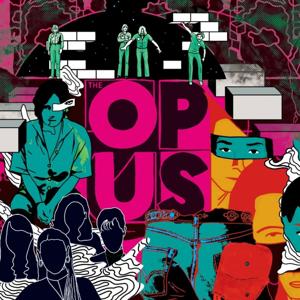


While Season 16 of the Consequence Podcast Network and Sony’s The Opus focuses on the unparalleled musical legacy Ten, it's important to note of Pearl Jam has been defined as much by their visuals as their sound. On Episode 2, we explore how bassist Jeff Ament not only contributed to the band's sonics, but their imagery as well.
Subscribe now so you can listen to all episodes of Season 16 of The Opus. Also, pick yourself up one of our official Opus hoodies or T-shirts at the Consequence Shop.
Original music by Tony Piazza.
The series of events that had to happen to have Ten even exist is wild.
Jeff Ament and Stone Gossard were in Green River, but they broke up. Then, they were in a pysch-garage band called Mother Love Bone, whose singer, Andrew Wood, died right before their first album was released. The two of them, and a couple of members of Soundgarden put out a tribute album for Andrew, and this singer they’d heard about from Jack Irons, - the drummer from the Red Hot Chili Peppers - guested on one of the tracks. He’d gotten a copy of some demos Stone and Jeff were working on, wrote lyrics for it, sang over it, and sent it back. The guys liked it, so they hired him to sing in their new band.
That song was “Hunger Strike”, that tribute was Temple of the Dog, that guest singer was Eddie Vedder, and that new band was Pearl Jam.
This is all only scratching the surface of the strange series of events that had to occur for Ten to come into existence. In this debut episode of The Opus: Pearl Jam's Ten, host Jill Hopkins is joined by The Gaslight Anthem's Brian Fallon, AllMusic's Stephen Thomas Erlewine, and Museum of Pop Culture curator Jacob McMurray to trace the unlikely origins of one of the biggest bands of all time.
Subscribe now so you can check out all episodes of Season 16 of The Opus. Also, grab yourself an official Opus hoodie or T-Shirt at the Consequence Shop.
Original music by Tony Piazza.
Season 15 of Consequence Podcast Network and Sony’s The Opus comes to its conclusion on a high point as we explore how Cypress Hill put weed rap on the map.
On the previous episode of Consequence Podcast Network and Sony's The Opus Season 15, we explored the chemistry between the voices of Cypress Hill’s B-Real and Sen Dog. In Episode 3, we look at the unique alchemy of their beats.
The place where rock and metal meet has always been a part of Cypress Hill's sonic and cultural identity. Sen Dog's first concert was thrash-metal band Slayer; that band's drummer, Dave Lombardo (who, like Sen, is Cuban-American), was his high-school friend. At the end of "How I Could Just Kill a Man," someone quotes Suicidal Tendencies' "Institutionalized."
Cypress Hill's sound had its origins as much in hard rock as it did with Latin funk. The group put their guitar-based influences under every one of their raps.
In this episode, host Jill Hopkins and her guests talk about that intersection between rock and hip-hop, and examine how other artists found themselves at the center of the Venn diagram Cypress Hill first drew.
Original music by Tony Piazza.
Subscribe now so you can keep up on all the new Opus episodes. Also, keep an eye out for a special giveaway in the coming weeks to continue the celebration of the 30th anniversary of Cypress Hill.
Also, grab yourself an official Opus hoodie or T-Shirt at the Consequence Shop or using the buy-now buttons below.
Consequence Podcast Network and Sony’s The Opus Season 15 continues as we explore the unparalleled chemistry between Cypress Hill’s B-Real and Sen Dog. B-Real’s high-pitched, nasal rap style played off the boom of Sen Dog’s authoritative baritone for a sound unlike anyone else.
In Episode 2 of The Opus: Cypress Hill, the two rappers discuss finding their voices, while the legendary Chuck D (Public Enemy, Prophets of Rage) heaps praise on the group’s unique sound.
Season 15 of The Opus, presented by the Consequence Podcast Network and Sony, travels back to the Southern California in which Cypress Hill’s sound exploded onto the scene.
The sonic sense of urgency in the hip-hop group's self-titled debut album was a time-and-place thing -- a product of late '80s/early '90s Los Angeles that was swept up in the tension just before the Rodney King verdict and the uprising that followed.
Cypress Hill's lyrics and beats were tailor made for the subwoofers in the trunks of the low riders that played them, and would echo around rap's landscape in the years to come. And it served as representative for the Black and brown voices who felt the need to protest as much as they felt the desire to party in the face of a community that would soon be national news.
In this first episode of The Opus: Cypress Hill, we venture into Cypress Hill’s Southern California, and the powder keg that made their debut album important, necessary, and seemingly ubiquitous. And who better to give host Jill Hopkins a tour of this era than the members of Cypress Hill themselves, as B-Real, Sen Dog, and DJ Muggs guest on Episode 1.
The production on Just As I Am is just as tight as you’d expect an album made with Booker T Jones to be. Bill Withers may have been a rookie singer/songwriter, but the plates on this album were definitely not.
Amir “Questlove” Thompson, in Rolling Stone in 2015, called Bill Withers the “last African-American Everyman … the closest thing black people have to a Bruce Springsteen.”
Withers’ Just As I Am was once referred to as “middlebrow soul.” That is to say, it was easily accessible at a time when music was becoming increasingly complex.
In this episode, we find out what it means to be a populist musician when popular music was quickly turning its eye to more complicated compositions.
In September of 1972, after having been nominated for three Grammys and winning one, Bill Withers spoke with The New York Times, and declared that the whole music thing was simply a phase for him.
In 1985, Bill Withers, walked away from the music industry, deciding to not record or re-sign to a record label. He wanted to return to his “regular guy” life, and be a husband and father.
When Bill Withers began making “Just As I Am,” he was employed as a factory worker at Weber Aircraft in California. The picture of him on the cover of the album was taken while he was on his lunch break. His “regular guy” life and point of view provided his music with a spectacular simplicity and relatability that eventually earned him four more Grammy nominations and two more trophies.
In this episode, we’ll look Withers' protest music and how he remains a major figure of fighting the powers that be.
Guests:
Aloe Blacc
Season 14 of The Opus focuses on Bill Withers' landmark debut album, Just as I Am. In episode one, host Jill Hopkins and special guests Jon Batiste, José James, Aloe Blacc, and Phil Cook discuss how a blue-collar everyman became a soul music legend.
From the publisher's feed
Consequence and Sony bring you an exploration of iconic albums and their ongoing legacy. Join host Adam Unze as he examines how masterpieces continue to evolve: shaping lives, shaking rafters,…

21 Listeners

38 Listeners
71 Listeners
72 Listeners

1,680 Listeners

29 Listeners

248 Listeners
35 Listeners
18 Listeners