
Sign up to save your podcasts
Or

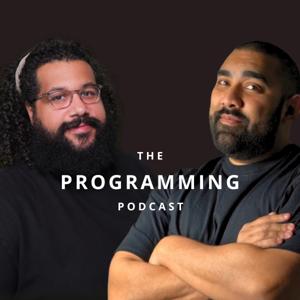


AI is writing more code than anyone expected. Some of it is great. A lot of it is just okay. In this episode, Danny Thompson and Leon sit down with Matt DeBergalis, CEO of Apollo GraphQL, to unpack what it will take to move from a gold rush of mediocrity to production-grade agentic experiences that users can trust.
Guest Co-Host: Matt DeBergalis
https://www.linkedin.com/in/debergalis/
https://www.apollographql.com/
@ApolloGraphQL
SITE https://www.programmingpodcast.com/
Stay in Touch:
📧 Have ideas or questions for the show? Or are you a business that wants to talk business?
Email us at [email protected]!
Danny Thompson
https://x.com/DThompsonDev
https://www.linkedin.com/in/DThompsonDev
www.DThompsonDev.com
Leon Noel
https://x.com/leonnoel
https://www.linkedin.com/in/leonnoel/
https://100devs.org/
📧 Have ideas or questions for the show? Or are you a business that wants to talk business?
Email us at [email protected]!
We dig into the real gap behind AI project failures and it is not the models. Matt explains why agentic development stalls inside enterprises, how microservice sprawl blocks useful AI, and where GraphQL functions as the control plane that unifies data, streaming, and context so agents can actually do work. We cover the early hype around MCP servers, why many of them ship without OAuth, and a concrete checklist for securing costs and credentials before you flip the switch.
You will hear where shopping, search, and SEO are headed as prompt boxes replace search boxes. We get into the gravity that pulls models toward stacks with the most public code, what that means for React, Rust, Python, and the long tail, and how developers can future proof their careers by mastering fundamentals like orchestration, context control, and system design instead of chasing every weekly model benchmark.
We wrap with a practical path for job seekers. Breadth over tool loyalty. Weekly small projects. Use AI for the first 75 percent, then own the last 25 percent with clear prompts and better workflows.
Who this episode is for
- Engineering leaders trying to turn AI prototypes into products
- Senior and staff engineers learning agent orchestration
- Devs curious about MCP, GraphOS, and secure tool calling
You will learn
- Why 95 percent of agentic projects fail and what capability is missing
- How GraphQL unifies fragmented systems for agents, including streaming and precise context selection
- A security and cost control checklist for MCP style tool calling
- How hiring rubrics are shifting toward communication, systems thinking, and curiosity
- A weekly practice plan to build portfolio proof fast
Highlights
Gold rush of mediocrity and what to do about it
From REST to stateful agents and why the old web stack creaks
Every search box becomes a prompt box
The 75 and 25 rule for productive AI assisted coding
Tool breadth over tool loyalty for career advantage
Chapters
00:00 Cold open. Why most agentic projects fail
01:00 Theme setup. The gold rush of mediocrity
01:30 Host and guest introductions
03:00 MCP excitement vs reality. From laptop tools to real products
06:15 Security and spend. OAuth gaps, scoped keys, rate limits, audit logs
09:00 Distribution shift. Generative SEO and agentic checkout
13:10 Centralization gravity. Why models favor stacks with more public code
18:00 Foundations. Unifying services with GraphQL and streaming tokens
24:10 Controlling the context window with field selection
26:30 Should developers learn this now
31:30 Fundamentals over benchmarks. MCP, RAG, evals
42:00 Hiring in the agent era. Communication, systems thinking, curiosity
48:00 Prompt quality and the last mile
53:00 Audience question. Tools to explore and a weekly practice plan
59:30 Closing recap and CTA
Senior engineers don’t “wing it.” They use mental models to turn plans into production—faster, safer, and with less drama. Danny Thompson, Leon Noel, and Kent C. Dodds break down the exact models they use: decision docs, second-order thinking, reducing cognitive load, Occam’s Razor, leaky abstractions, feature flags vs. staging, chaos engineering, AI context windows (and rot), MCP, onboarding docs, blind code reviews, and more. If you’re pushing from mid → senior (or trying to sound senior in interviews), steal these.
Guest: Kent C. Dodds!
https://kentcdodds.com/
https://x.com/kentcdodds
@KentCDodds-vids
SITE https://www.programmingpodcast.com/
Stay in Touch:
📧 Have ideas or questions for the show? Or are you a business that wants to talk business?
Email us at [email protected]!
Danny Thompson
https://x.com/DThompsonDev
https://www.linkedin.com/in/DThompsonDev
www.DThompsonDev.com
Leon Noel
https://x.com/leonnoel
https://www.linkedin.com/in/leonnoel/
https://100devs.org/
📧 Have ideas or questions for the show? Or are you a business that wants to talk business?
Email us at [email protected]!
You’ll learn
→ How to communicate invisible work like a senior (impact vs activity)
→ Decision documents: making tradeoffs explicit
→ Second-order thinking to prevent “future bugs”
→ When to ship fast with flags vs. slow with staging
→ Designing for onboarding—humans and AI assistants
→ Using AI without nuking your circle of competence
→ Local job tactics (Memphis example), recruiters, and “entry-level” framing
If this helped, hit 👍 and subscribe. Drop your favorite mental model in the comments
Chapters
00:00 Cold open — “When plans break in prod”
00:36 Why mental models matter for seniors
02:45 Define “mental model” (map vs. territory)
05:22 Intros + episode setup
07:05 Decision documents & guiding principles
10:48 Coaching moments: easy vs. right solutions
12:56 Second-order thinking (caching, short links, spam)
15:58 Occam’s Razor in real engineering decisions
18:12 Onboarding for Future-You (and your AI)
20:44 Tests as guardrails for humans + LLMs
22:18 AI context windows, “context rot,” and structure
24:55 Circle of competence in the AI era
27:18 Should juniors use AI? The real risks
30:06 Shipping fast vs. learning deep: when to limit AI
31:55 Interviews are changing: system design vs LeetCode
33:42 Confidence traps: getting gaslit by your prompts
36:00 Too many abstractions → leaky abstractions
38:40 Blind code reviews & cross-team learning
41:20 Google-style anonymous reviews (tradeoffs)
44:00 Feature flags vs. staging (the spicy debate)
46:52 Chaos engineering & safe rollouts in prod
49:10 Pragmatism over dogma: what actually ships
50:58 Kent’s Epic AI cohort & MCP primer
54:20 Listener Q&A: local vs. remote, .NET vs. Node
1:00:45 Ask Danny, Leon, And Kent!
Are you studying for hours but still not retaining anything? 🧠 It's probably not your fault, you've likely been taught to learn all wrong.
In this landmark episode, we sit down with the legendary Dr. Barbara Oakley, a Distinguished Professor of Engineering at Oakland University, a globally recognized expert on the science of learning, and the creator of the world's most popular online course, "Learning How to Learn," which has reached millions worldwide. Dr. Oakley shares her incredible journey from flunking math and hating school to becoming a world-renowned expert on the neuroscience of learning.
Get ready to have your mind blown as Dr. Oakley debunks the biggest myths about studying, reveals the simple, science-backed secrets to mastering any subject, and explains how to beat procrastination for good. You'll walk away with actionable techniques to unlock your brain's true potential.
She is best known for making complex concepts from neuroscience and cognitive psychology accessible to a mass audience, empowering millions to learn more effectively. Her own life story is a testament to her core message: anyone can learn anything.
Dr. Oakley is most famous as the co-creator of "Learning How to Learn: Powerful Mental Tools to Help You Master Tough Subjects," one of the most popular massive open online courses (MOOCs) in the world. Hosted on Coursera, the course has enrolled millions of learners from every country, teaching them practical, science-backed strategies for learning.
Her work has been featured in major publications like The New York Times and The Wall Street Journal. She is also the author of several books, including the bestseller "A Mind for Numbers," which serves as a companion to her course.
Places you can follow Dr. Barbara Oakley
📚 Dr. Oakley's Book | A Mind for Numbers: https://barbaraoakley.com/books/a-mind-for-numbers/
🎓 The "Learning How to Learn" Course: https://www.coursera.org/learn/learning-how-to-learn
Stay in Touch:
📧 Have ideas or questions for the show? Or are you a business that wants to talk business?
Email us at [email protected]!
Danny Thompson
https://x.com/DThompsonDev
https://www.linkedin.com/in/DThompsonDev
www.DThompsonDev.com
Leon Noel
https://x.com/leonnoel
https://www.linkedin.com/in/leonnoel/
https://100devs.org/
📧 Have ideas or questions for the show? Or are you a business that wants to talk business?
Email us at [email protected]!
Chapters
0:00 - A Teacher's Powerful Introduction to Dr. Barb Oakley
4:05 - From "I Will Never Learn Mathematics" to Distinguished Professor
5:42 - The Single Most Critical Skill in the Age of AI
8:12 - How Learning a Language Unlocks Your Brain for Math & Science
9:58 - The #1 Mistake We All Make When Learning a Difficult Subject
14:30 - The Unconventional Path to Becoming a Professor
23:11 - The 2 Brain Modes You MUST Understand (Focused vs. Diffuse) 🤯
29:22 - A Modern, Scientific Twist on the Pomodoro Technique
32:38 - WARNING: This Popular Study Method is a Waste of Your Time
34:18 - The Surprising Problem with "Student-Centered" Classrooms
40:12 - Proof That Your Phone is Destroying Your Ability to Focus
45:35 - The Neuroscience of Dyslexia & Autism: Your Brain's Secret Superpower
51:11 - The Emotional Side of Learning: Dealing with Fear, Shame & Procrastination
56:33 - Why Impostor Syndrome is Actually a GOOD Thing
1:07:28 - How to Use Sleep to Supercharge Your Memory 😴
1:15:17 - The Future of Learning: How AI Will Change Everything
1:23:36 - How to Use AI to Learn (Without Cheating Yourself)
1:32:32 - Q&A: The Best Way to Create a Daily Structure for Learning
1:44:52 - Dr. Oakley's Final Inspiring Message
What do JSON and conversational AI have in common? They are the glue behind ordering coffee, booking flights, and talking to support. In our tests, about 1 out of 3 replies missed the intent until we enforced structured JSON outputs. In this episode, Danny Thompson and Leon Noel break down how to move from “cool demo” to production systems that route, escalate, and self-audit reliably.
SITE https://www.programmingpodcast.com/
💡 Sponsor: Level Up Financial Planning
Changing careers or increasing your income? Get financial clarity with Level Up Financial Planning—helping early and mid-career tech professionals secure their financial future. Visit LevelUpFinancialPlanning.com for a free consultation!
https://www.levelupfinancialplanning.com/
Stay in Touch:
📧 Have ideas or questions for the show? Or are you a business that wants to talk business?
Email us at [email protected]!
Danny Thompson
https://x.com/DThompsonDev
https://www.linkedin.com/in/DThompsonDev
www.DThompsonDev.com
Leon Noel
https://x.com/leonnoel
https://www.linkedin.com/in/leonnoel/
https://100devs.org/
📧 Have ideas or questions for the show? Or are you a business that wants to talk business?
Email us at [email protected]!
What you’ll learn
- Why freeform paragraphs fail backends and how JSON fields fix routing
- A simple schema pattern: department, sentiment, confidence, reply
- Confidence floors that trigger automatic retries before users ever see a response
- Context windows: why rules are read every call while context gets dropped
- MCP basics and how domain context avoids bad translations and metaphors
- Where voice agents work today (predictable conversations) and where they do not
- Practical tool choices for text, code, and voice workflows
- Real labor impacts, retention insights, and reskill advice
- Salary negotiation quick hits: the two lines that matter
Chapters
0:00 JSON as the glue + the 1-in-3 miss
0:30 Intro & episode promise
1:10 Quick defs — JSON / NLG / NLU / MCP
3:00 Why structured JSON beats paragraphs
7:36 Confidence scores & auto-retries
9:02 Sponsor
11:34 Prompts for image/video models that actually work
15:01 Context windows & durable rules
16:32 Repo trees, PRDs & dev logs to reduce spin
20:02 MCP in practice, local dialects & domain knowledge
26:03 Voice agents, predictable vs unpredictable conversations
32:43 Voice mode as a research partner & model picks
33:01 Jobs impact, retention stories & reskilling
37:10 Conversational AI 101, coffee shop flow to backend
40:05 Connectors & phone/drive-thru stacks (Agora, 11 Labs)
46:04 Real-world rollouts, employee retention boost
48:13 Call centers & debt collection case study
51:27 Predictable vs messy conversations — where AI fails
53:24 Career CTA, learn JSON, MCP, voice stacks
57:01 Ask Danny And Leon A Question
1:07:10 The Developer's Guide To AI
Stop leaving tech conferences with just a free t-shirt and some stickers. It's time to leave with a job offer. 🚀
The difference between a successful conference and a waste of money isn't luck, it's strategy. In this episode, we break down the ultimate conference survival guide for software developers and tech professionals. Learn how to shift from a passive "Tourist Mindset" to a proactive "Architect Mindset" to build real opportunities.
SITE https://www.programmingpodcast.com/
💡 Sponsor: Level Up Financial Planning
Changing careers or increasing your income? Get financial clarity with Level Up Financial Planning—helping early and mid-career tech professionals secure their financial future. Visit LevelUpFinancialPlanning.com for a free consultation!
https://www.levelupfinancialplanning.com/
Stay in Touch:
📧 Have ideas or questions for the show? Or are you a business that wants to talk business?
Email us at [email protected]!
Danny Thompson
https://x.com/DThompsonDev
https://www.linkedin.com/in/DThompsonDev
www.DThompsonDev.com
Leon Noel
https://x.com/leonnoel
https://www.linkedin.com/in/leonnoel/
https://100devs.org/
📧 Have ideas or questions for the show? Or are you a business that wants to talk business?
Email us at [email protected]!
We cover everything you need to know to turn your next conference badge into a massive career investment, including:
✅ The pre-conference blueprint: How to research, set measurable goals, and connect with speakers before you even arrive.
✅ On-site execution: Master the art of the three-minute conversation, ask questions that make you memorable, and build genuine connections.
✅ The follow-up formula that actually gets you a response and leads to interviews.
✅ Actionable advice for both extroverts and introverts to network with confidence.
Whether you're looking for your first tech job or your tenth, this is the playbook you'll want to reference time and time again.
YouTube Chapters
00:00 - Job Offer vs. Free T-Shirt: The Real Difference
01:41 - Turning Online Connections into Real Relationships
03:22 - What is Your "Why"? Defining Your Conference Goal
04:25 - The #1 Mistake: Don't Get Lost in the Hallway Track
05:52 - A Simple Trick to Connect With Any Speaker
07:32 - It's Not Luck, It's Strategy
08:15 - The "Tourist" vs. "Architect" Mindset
09:13 - Sponsor: Level Up Financial Planning
10:18 - The True Cost of Attending a Conference ($2,200?!)
12:27 - The Pre-Conference Blueprint for Job Seekers
13:40 - The Genius "Coffee Chat" Calendar Invite Strategy
15:25 - Champions Are Made in the Pre-Season
17:13 - How to Research Attendees (Not Just Speakers)
18:20 - Mastering the 3-Minute Conversation
20:04 - The Secret Magic of Tech Conferences
22:34 - Setting Measurable Goals for Your Conference
25:22 - How (and When) to Bravely Ask for a Referral
28:26 - The Psychology of Asking for a Favor
30:38 - How to Talk About Yourself Without Being Salesy
33:27 - The Long-Tail Game of Networking
34:26 - A Counterintuitive Tip: Don't Introduce Yourself First
35:22 - Questions That Make You Unforgettable
40:48 - Networking Tips for Introverts
43:51 - Pro Tip: Never Eat Alone
46:36 - The Most Valuable Part of a Conference: The Follow-Up
49:03 - Ask Us Anything: Following Up With a VIP You Met
One phishy email to an npm maintainer set off a supply-chain scare that could’ve torched the web—yet the real on-chain damage was… cents. In this episode, we break down how a fake npm 2FA reset (from npmjs.help) led to malicious releases of popular packages like chalk and debug, how the payload hijacked browser crypto flows (monkey-patching window.ethereum, fetch, and XHR), why the blast radius stayed small, and what teams did right (shoutout to Aikido & Vercel).We finish with a rapid “Career Corner” on how to follow up after an interview—with copy-ready lines you can use.SITE https://www.programmingpodcast.com/Stay in Touch:📧 Have ideas or questions for the show? Or are you a business that wants to talk business?Email us at [email protected]!Danny Thompsonhttps://x.com/DThompsonDevhttps://www.linkedin.com/in/DThompsonDevwww.DThompsonDev.comLeon Noelhttps://x.com/leonnoelhttps://www.linkedin.com/in/leonnoel/https://100devs.org/📧 Have ideas or questions for the show? Or are you a business that wants to talk business?Email us at [email protected]!You’ll learn:- Spotting modern phishing (look-alike TLDs, urgency cues)- What the malware did and why front-end focus limited impact- The minute-by-minute timeline from phish → publish → takedown- Practical defenses: pin versions, lockfiles, audits, password managers, least-privilege tokens- How to write a follow-up email that closesIf this helps, hit 👍 and share with a teammate.Chapters0:00 – The phish that “almost destroyed the internet” (cold open)0:24 – Who clicked: maintainer behind big OSS (chalk, debug)0:44 – Payload in plain English (browser wallet-drainer)1:04 – Actual impact vs. potential blast radius1:20 – Intro + what we’ll cover2:23 – Why this story is everywhere & our plan3:43 – What you’ll know by the end (safety + lessons)4:20 – Act 1: The Email — npmjs.help and urgency tactics6:08 – Phishing 101: quick checks before you click8:25 – Psychology of scams (filtering + anecdotes)12:17 – Act 2: The Payload — monkey-patching fetch/XHR/window.ethereum14:44 – Why front-end focus limited the damage16:41 – How it was caught (Node fetch ReferenceErrors)17:52 – Six–eight hours to fix: containment recap20:04 – Magic links & password managers (practical wins)22:15 – Act 3: The Timeline — 18 packages, what happened when23:39 – Minutes matter: publish → detection → takedown25:12 – Community/GitHub issues light up; npm intervenes26:48 – Root-cause analysis & related accounts28:32 – “System worked” takeaways (+ why that’s good)31:18 – Dev hygiene: pin versions, audits, reduce deps33:10 – Myths debunked (no, every machine wasn’t “fully owned”)35:04 – Shout-outs: Aikido, Vercel, others that responded fast38:22 – Career Corner: following up after interviews (templates)53:22 – Wrap-up & next stepsHelpful links (add your URLs)Aikido write-up / detection notesVercel incident summary + cache purge notesnpm/GitHub advisories for affected packagesPassword manager recommendations / setup guide
Two devs. Same stack. Same years in. One gets three on-sites a week; the other gets ghosted. The difference isn’t talent—it’s process. We audit your job hunt like production: inputs & controls, bottlenecks, scripts that actually get replies, and the one KPI (MC/W) that predicts interviews.
SITE https://www.programmingpodcast.com/
Stay in Touch:
📧 Have ideas or questions for the show? Or are you a business that wants to talk business?
Email us at [email protected]!
Danny Thompson
https://x.com/DThompsonDev
https://www.linkedin.com/in/DThompsonDev
www.DThompsonDev.com
Leon Noel
https://x.com/leonnoel
https://www.linkedin.com/in/leonnoel/
https://100devs.org/
📧 Have ideas or questions for the show? Or are you a business that wants to talk business?
Email us at [email protected]!
What you’ll learn:
- Build a targeted, local-first company list (even if there’s no open req)
- Warm outreach that prints: one-to-many LinkedIn, comments → DMs, “6-minute call” & 11:02 invites
- Remove bottlenecks: Resume → Recruiter, Phone screen → Behavioral (STAR/CAR), Recruiter → Manager
- The THRIVE framework to turn interrogations into conversations
- Why proof vs promises (and why you shouldn’t sign exclusive recruiter agreements)
- The audit loop: track MC/W, notes, weekly reviews, tiny improvements
- If this helped, drop MC/W in the comments so others find it. 👇
Chapters
00:00 Two devs, same stack—process beats talent
02:13 Act I: Inputs & Control (ideal companies, local-first, research, coffee chat prep)
05:15 Activity vs quality (don’t just click apply)
08:00 Burnout fix: focus on controllables
09:35 Don’t sign exclusive recruiter agreements
10:48 Warm vs cold outreach; break the pattern
14:02 One-to-many on LinkedIn (comments that warm leads)
15:54 DM makeovers that get replies
17:58 Pattern breakers: 6-minute call, 11:02 invite
21:03 Comment → DM handoff without bait-and-switch
22:41 Great question → instant referral story
24:54 Anti-DMs to avoid (“pick your brain?”, resume dump)
27:34 Act II: Bottlenecks in your pipeline
28:44 Resume → Recruiter (lead with outcomes, not fluff)
33:03 Cut jargon the recruiter can’t repeat
34:22 Phone screen → Behavioral (STAR/CAR)
37:28 Recruiter → Manager (narrative + “tell me about yourself”)
40:32 Act III: The Metric—MC/W (meaningful conversations per week)
43:32 Networking beats blind applying
45:10 Act IV: Playbook & Audit (THRIVE recap)
47:26 Practice w/ AI voice role-play (recruiter, EM, meetup)
50:27 Small improvements compound
51:04 Tracking system: spreadsheet, notes, weekly reviews
53:02 Systems vs motivation (James Clear callback)
55:38 Listener Q: “The Chosen One” progress explained
1:02:01 Technical skills ≠ job-getting skills
1:04:13 Wrap
49,000 developers just crowned Full-Stack the #1 software developer role of 2025. We dig into the Stack Overflow Developer Survey (2025) and turn the data into an actionable career roadmap: what to learn, what to ignore, and how AI actually fits into your workflow.
NEW SITE https://www.programmingpodcast.com/
Stay in Touch:
📧 Have ideas or questions for the show? Or are you a business that wants to talk business?
Email us at [email protected]!
💡 Sponsor: Level Up Financial Planning
Changing careers or increasing your income? Get financial clarity with Level Up Financial Planning—helping early and mid-career tech professionals secure their financial future. Visit LevelUpFinancialPlanning.com for a free consultation!
https://www.levelupfinancialplanning.com/
Danny Thompson
https://x.com/DThompsonDev
https://www.linkedin.com/in/DThompsonDev
www.DThompsonDev.com
Leon Noel
https://x.com/leonnoel
https://www.linkedin.com/in/leonnoel/
https://100devs.org/
📧 Have ideas or questions for the show? Or are you a business that wants to talk business?
Email us at [email protected]!
We break down:
- Why Full-Stack leads (and what skills to stack to stay hireable)
- The SQL vs NoSQL reality (Postgres on top) and how to pivot if you’re Mongo-first
- Languages & frameworks that matter in 2025 (JS/TS, React/Next, .NET/Spring)
- Tools to master: Docker (near-universal) + AWS (still the gap)
- IDE reality: VS Code dominance, Cursor surge, where JetBrains fits
- LLMs in practice: GPT usage, Claude’s rise, and smart model-routing
- Agents, “vibe coding,” and where AI saves real time (tests, data, docs)
- Pay & jobs snapshot + a blunt Q&A: CSS fundamentals vs Tailwind
Chapters
00:00 Cold open — the #1 role reveal
00:36 Why this survey still matters (and its biases)
01:55 Intros + Commit Your Code plug
03:14 Who answered: 49k respondents, pros, age, country
07:03 How devs learn in 2025: docs, AI tools, videos, bootcamps
11:07 The reveal: Full-Stack is #1
12:42 What that means for careers (front-end-only is shrinking)
14:28 Languages: JS/TS, Python, C#/Java — what to prioritize
17:29 Sponsor — Level Up Financial Planning (levelupfinancialplanning.com)
18:34 Databases: SQL dominance (Postgres first) + Mongo in context
20:27 Cloud & dev tools: Docker as default, the AWS gap
21:41 Web frameworks: React/Next, jQuery still huge, .NET & Spring
23:11 IDEs: VS Code, Cursor surge, JetBrains, Vim/Neovim
24:42 LLMs in practice: GPT vs Claude + model routing
29:00 Team tools: GitHub/Jira/Miro + new Git alternatives
30:24 OS choices: Windows vs macOS, WSL split
31:16 Admired vs used: Rust/Elixir, Supabase, reality check
37:02 AI adoption & where it helps most (search, tests, data, docs)
41:41 Accuracy, complex tasks, and human-in-the-loop
44:20 Dealing with “almost right” outputs (mindset shift)
46:40 Agents & “vibe coding” + the Goose demo story
50:32 Jobs, remote, US pay snapshot
51:34 Q&A: CSS fundamentals → then Tailwind
55:12 Outro
On this episode of The Programming Podcast, Danny Thompson and Leon Noel unpack the biggest programming myths that confuse developers at every level. From “AI will take all dev jobs” to “DRY at all costs,” they separate hype from reality and share hard-won lessons from real teams in production.You will hear why paper Big-O is not the whole story, how cache behavior and data size impact real performance, and why map/reduce vs for loops is a wash on modern engines. We get into testing culture too: why E2E does not replace unit tests, how to use AI for test scaffolding without losing your engineering brain, and what actually improves product reliability. Danny also tackles the myths that Java is slow and GC is always bad, and both hosts talk about the cost curve where cloud is not cheaper than on-prem.The conversation closes with an “Ask Danny and Leon” mailbag on what really separates junior, mid, and senior engineers: independence, guardrails, impact, and the quality of questions you ask.If this helped, drop a comment with a myth you want us to tackle next, and subscribe for more practical, no-fluff engineering talk.Topics include:AI as a productivity tool vs one-click magicBig-O vs real-world performance and memory behaviorjQuery, Deno, Bun, and the hype cycleJavaScript the language vs browser APIsmap/reduce vs for loops on modern enginesUnit tests, integration tests, E2E, and using AI wiselyJava performance and garbage collection tuningDRY vs duplication and over-abstractionAccessibility as a defaultCloud costs vs on-prem at scaleCareer ladder: junior, mid, senior traitsHosts: Danny Thompson (Director of Technology, This Dot Labs; Commit Your Code Conference) and Leon Noel (Managing Director of Engineering, Resilient Coders; instructor at 100Devs)Chapters00:00 Intro and why myths still persist00:58 Host intros and setup for “Gem City” episode02:00 Myth 1: “AI is taking all dev jobs”03:33 When AI image gen goes sideways and why it is a tool, not a replacement06:03 Leon’s motion-blur trick for more believable AI images07:08 Myth 2: Big-O vs real performance in the wild09:52 Cache misses, allocation, data size, and why paper math can mislead11:30 Myth 3: “jQuery is dead” and the reality in legacy estates12:23 Deno and Bun hype vs actual employer adoption13:32 Why jQuery still ships and what we lost chasing complexity15:30 JavaScript the language vs DOM and host environment APIs16:58 Myth 4: “map/reduce are slower than for loops” on modern engines18:11 Myth 5: “E2E replaces unit tests”20:57 When testing cultures go wrong and how to course-correct22:46 Using AI for tests without losing critical thinking25:03 The 80-20 way to use AI on tickets and test suites27:01 Danny gets baited, Leon laughs28:01 Myth 6: “Java is slow” and “GC is always bad”30:30 Region and concurrent collectors, and why allocation patterns matter31:02 Engine differences and mental models across stacks31:58 Myth 7: “Everything must be DRY” vs useful duplication33:01 Strong opinions held weekly and leaving dogma behind34:22 How dev opinions evolve with experience34:52 Accessibility as a default, not a later task36:29 Myth 8: “Cloud is always cheaper than on-prem”37:17 Real-world cost surprises and pulling workloads back38:30 Hype cycles, Jamstack memories, and maintenance pain41:56 On-prem done right and budget realities43:49 Mailbag: junior vs mid vs senior, company variance45:25 Danny’s framework for levels: guardrails, impact, and ownership51:10 The power of high-quality questions at senior and staff levels52:10 Leveling up from mid: own initiatives and become the firefighter53:31 Wrap-up and sign-off
6,000 Applications. 0 Jobs. What Went Wrong?
In this episode, Danny & Leon break down the recent New York Times article about the collapse of $165,000 tech jobs — and why so many new computer science graduates are struggling to find work.
This one gets personal. We dig into salary expectations, the rise of AI coding tools, offshoring, and the real reasons grads are stuck. Plus, we share how bad advice keeps job seekers trapped, and why networking + projects matter more than ever.
⚠️ Disclaimer: This episode is heavier than usual. We felt deeply for the people featured in this article — so much so that we reached out to one of them, Zach, who applied to nearly 6,000 jobs, and spent 90 minutes helping him reframe his job search strategy. Our goal isn’t to mock, but to help anyone who feels stuck right now.
If you’re in the middle of the job hunt, or just want to understand what’s happening in tech careers in 2025 — this is a must-listen.
NEW SITE https://www.programmingpodcast.com/
Stay in Touch:
📧 Have ideas or questions for the show? Or are you a business that wants to talk business?
Email us at [email protected]!
Danny Thompson
https://x.com/DThompsonDev
https://www.linkedin.com/in/DThompsonDev
www.DThompsonDev.com
Leon Noel
https://x.com/leonnoel
https://www.linkedin.com/in/leonnoel/
https://100devs.org/
📧 Have ideas or questions for the show? Or are you a business that wants to talk business?
Email us at [email protected]!
⏱️ Chapters
00:00 – Disclaimer & why this episode is different
03:19 – Why we reacted to the NYT article live
05:25 – Setting the stage: “Goodbye $165K tech jobs”
06:59 – The salary inflation problem
08:03 – Networking: why tech is no longer a free pass
10:10 – Purdue grad struggles despite strong background
15:23 – The promise (and failure) of the CS degree
18:18 – The “learn to code = six figures” myth
20:22 – FANG vs. reality: most jobs aren’t like that
22:01 – Is AI really taking developer jobs? (spoiler: no)
23:53 – Offshoring is the real threat
25:39 – Headcount growth vs. layoff panic
26:32 – Unemployment rates: myth vs. reality
29:20 – The hidden flaw in applying to 6,000 jobs
32:21 – “Clickers” & why mass-applying doesn’t work
34:02 – Bootcamps & the cycle of bad advice
35:38 – Ghosting, coding assessments & job search burnout
39:02 – Zach’s story: 5,762 applications, 0 jobs
41:01 – Why customizing your resume matters
43:08 – The wrong vs. right way to job hunt
46:13 – Reddit resumes & bad job hunt advice
47:23 – Misreporting AI tools (CodeRabbit example)
49:24 – The AI doom loop in job search
52:12 – Government jobs, hiring freezes & policy shifts
53:00 – The Purdue grad pivots to tech sales
55:03 – Why the article fails its own subjects
57:22 – Offshoring vs. AI (the real culprit)
58:00 – What job seekers should be doing now
59:32 – Listener Q&A: networking while still learning
01:03:46 – The power of small, intentional networking
01:06:11 – Balancing a non-tech job & coding journey
01:09:49 – Final advice & episode wrap-up
From the publisher's feed

31,973 Listeners

43,320 Listeners

8,754 Listeners
275 Listeners
286 Listeners

622 Listeners
581 Listeners
983 Listeners
484 Listeners

188 Listeners
205 Listeners

2,645 Listeners
62 Listeners
211 Listeners
681 Listeners