
Sign up to save your podcasts
Or

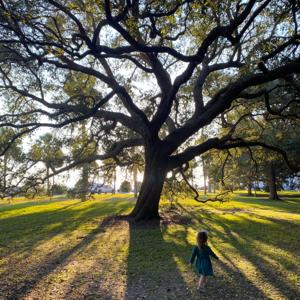


In this in-depth conversation, Father Pimen Simon of the Old Rite Church of the Nativity of Christ in Erie, Pennsylvania, joins Matthew Wilkinson to discuss the history, theology, and music of the Old Believers within the Russian Orthodox tradition. He explains how the Old Rite preserved ancient liturgical forms, theology, and chant after Patriarch Nikon’s 17th-century reforms divided the Russian Church. (Pursuit of Beauty Podcast Episode 28)Fr. Pimen describes the rise of the priested and priestless Old Believers, their centuries of persecution, and the later process of reconciliation with the Russian Orthodox Church Outside Russia (ROCOR). He recounts how his own community—once priestless—voted to reunite with ROCOR after the anathemas against the Old Rite were lifted in the 1970s at the urging of Aleksandr Solzhenitsyn, opening the way for a new generation of Old Ritualist parishes in America, Oregon, Alaska, and beyond.The discussion explores the difference between ritual and dogma, the meaning of liturgical continuity, and how Old Believers maintained their faith through exile and hardship. Fr. Pimen explains the structure of priestless worship, the role of the nastavnik, and how communities survived without the Eucharist for generations while preserving the fullness of prayer and devotion.A major focus is the Znamenny Chant, the ancient melodic system that the Old Rite preserved when the rest of the Russian Church turned toward Western polyphony. Fr. Pimen traces its origins to early Byzantine influence, showing how Old Believers kept this music alive in its pure, unharmonized form. He demonstrates how they have adapted the chant into English while remaining faithful to its medieval notation, stressing that chant should elevate the text rather than overwhelm it with musical display.The conversation also touches on wider themes—the balance between tradition and adaptation, the problem of “watered-down Orthodoxy,” the renewal of fasting and liturgical life, and the spiritual meaning of beauty and simplicity in worship.For musicians, historians, and anyone drawn to sacred art and living tradition, this episode offers an extraordinary window into one of Christianity’s most ancient surviving liturgical lineages.
What happened to beauty in architecture? In this episode of The Pursuit of Beauty, host Matthew Wilkinson sits down with Michael Diamant, founder of The Architectural Uprising and creator of the Facebook group New Traditional Architecture, to explore how we lost our connection to form, harmony, and meaning in the modern world. From the sterile glass towers of contemporary cities to the rediscovery of timeless design, Diamant reveals why the future of architecture depends on reviving classical principles.
Diamant describes how The Architectural Uprising began as a movement across Scandinavia and Europe, uniting thousands who reject modernism’s soulless aesthetic in favor of beauty, truth, and goodness. He discusses the paradox of rebellion in a tradition-minded cause—how “uprising” means reclaiming the human spirit from ideology and bringing back craftsmanship, proportion, and the pursuit of the transcendent in the built environment.
The conversation dives into the philosophical foundations of classical architecture: why beauty is objective, why proportion and symbolism matter, and how the classical tradition is not a single style but a living framework that evolves with culture. Diamant contrasts the humility of the classical architect—who serves the street, the city, and the community—with the ego-driven modernist who builds for novelty’s sake, creating monuments to self rather than to truth.
Together they examine Frank Lloyd Wright, Art Nouveau, and Art Deco, exploring which modern movements successfully carried forward the classical spirit and which succumbed to utilitarianism. Diamant argues that early modernism once promised beauty and progress but was quickly replaced by what he calls “narcissistic modernism,” obsessed with innovation and ideology instead of human flourishing.
As the discussion turns toward urban design, Diamant explains why skyscrapers alienate people from one another, how courtyard urbanism creates livable cities, and why Europe’s most beloved neighborhoods work so well. He contrasts the community-focused city planning of the 19th century with today’s sterile mega-projects and defends the idea that small, cohesive cities of around half a million people represent the optimal scale for human life.
Matthew brings up the concept of the “Civium,” as proposed by Jordan Hall, to ask whether the internet era makes traditional cities obsolete. Diamant agrees that technology allows decentralization but insists that smaller, well-designed cities—built around beauty, family, and walkable neighborhoods—are the key to a sane civilization. Real progress, he says, means scaling down, not building higher.
The two also explore the moral and spiritual dimensions of architecture. Diamant suggests that beauty is an act of love—a way of manifesting transcendence in stone. Together they discuss why societies that lose beauty also lose social cohesion, why middle-class families are essential to civic life, and how classical design naturally nurtures order, belonging, and gratitude.
In the final moments, the conversation turns personal and cultural: why Charleston, SC represents one of the last living examples of urban beauty in America, and how taxation, zoning, and civic will could either revive or destroy that legacy. The result is a profound meditation on architecture, civilization, and what it means to build for eternity—a call to rediscover beauty as resistance in an age of concrete conformity.
In this episode of The Pursuit of Beauty Podcast, host Matthew Wilkinson sits down with thinker and entrepreneur Jordan Hall for a wide-ranging conversation about beauty, truth, goodness, and the challenges of modern civilization. Hall, co-founder of mp3.com and a key figure in the early internet streaming revolution, brings his unique background in technology, philosophy, and faith to a dialogue that touches everything from Christian theology to the future of urban planning. Together they explore how the transcendentals—beauty, goodness, and truth—intersect with our personal lives, our politics, and the spiritual destiny of culture.
Early in the conversation, Wilkinson frames beauty not simply as an aesthetic category but as a divine name, drawing on the writings of Dionysius and Aquinas. Hall responds by questioning how truth-based discourse can limit our apprehension of the beautiful, and whether we must learn to “presence beauty” rather than merely analyze it. This sparks a deep reflection on how different art forms can all reveal aspects of the same transcendent essence, even while each medium brings forward different facets of reality.
The dialogue turns to the difficult question of what makes something beautiful versus ugly. From abstract modern art to glass-and-concrete high-rises, Wilkinson and Hall wrestle with the criteria by which one can render judgment. Hall suggests that beauty itself is a faculty capable of defending its judgments without needing to be laundered through truth or goodness. This leads to an illuminating exploration of how propaganda often disguises itself by borrowing from truth and beauty.
Politics and propaganda naturally enter the discussion, as both men consider how mass media and later the internet shape our understanding of truth and values. Hall provides a penetrating analysis of how twentieth-century propaganda techniques optimized for television are breaking down in the digital age, creating both dangers and opportunities. They compare Soviet and Western approaches to truth distortion, asking what happens when societies abandon shared standards of reality.
From there, the conversation broadens into urbanism, architecture, and the fate of cities. Wilkinson references conversations with architects like Michael Diamant, while Hall argues provocatively that the urban itself is a category in decline. They discuss whether it is possible to have a truly beautiful city or whether the urban form is inherently tied to scarcity, opulence, and spiritual distortion. This thread leads naturally into reflections on cathedrals, new urbanism, and the tension between monumental architecture and the simplicity of monastic cells.
Hall situates these questions within a larger framework: the transition from the third industrial revolution (the digital/communication age) to the fourth industrial revolution (decentralization, bespoke production, AI, and new community forms). He argues that society is moving from scarcity to abundance, though currently abundance is often distorted into mere opulence. The key challenge is learning how to inhabit abundance spiritually, not just materially.
Abundance, in their view, will not look like endless skyscrapers or gilded palaces, but like the everyday beauty of love, family, and community—a grandmother rocking her grandchild, or the intimacy of shared worship. Wilkinson and Hall emphasize that the future of civilization may rest in our ability to unify beauty, goodness, and truth in the spirit of love, creating societies marked not by opulence but by genuine harmony.
The theological dimension remains central throughout. From Eucharistic gratitude to the New Jerusalem, from Schmemann to David Bentley Hart, the discussion roots cultural renewal in the Christian vision of creation as fundamentally beautiful and good. For Hall, the New Jerusalem is not merely a future city but the living body of Christ, distributed wherever believers gather in the spirit of God.
Orthodox iconography, Rothko, sacred art, and the problem of propaganda in beauty—this second interview with Fr. Silouan Justiniano takes us deep into the intersection of faith, modern art, and the revival of Christian tradition. From Mark Rothko’s sublime color fields to the Byzantine legacy of iconography, Fr. Silouan explores how authentic art transcends ideology and points toward the divine, while kitsch and propaganda reduce beauty to mere sentimentality or political utility. For artists, theologians, and lovers of beauty alike, this conversation offers profound insight into the meaning of sacred creativity in a modern world. Fr. Silouan contrasts Rembrandt’s material richness with the chromatic delicacy of Persian and Indian miniatures, arguing that each tradition bears unique spiritual weight through the materials and techniques it employs. Beauty, he insists, cannot be reduced to mere skill or novelty; it is bound to the inner life of the artist and the contemplative power of form itself.The discussion moves to the avant-garde, as Fr. Silouan examines artists like Rothko, Pollock, and Kandinsky, showing how abstraction, when undertaken with depth and authenticity, opens paths to contemplation and the sublime. Rather than gimmickry or intellectual posturing, true abstraction leads the viewer into silence, mystery, and wonder—an experience he connects to the apophatic theology of the Christian East.Yet not all art elevates. Fr. Silouan critiques propaganda in both religious and secular art, distinguishing authentic sacred beauty from works that merely flatter ideology. Whether in political art, sentimental Christian films, or saccharine paintings, he warns against creations that refuse to confront the tragic and broken realities of human life, preferring a false prettiness over truth and transcendence.Even Orthodox iconography, he notes, can be misinterpreted as propaganda when viewed through a secular lens. But true iconography is not mere messaging—it is theology in color, an invitation to prayer and transformation. It exists not to manipulate but to reveal divine beauty, drawing the soul into contemplation rather than coercion.From here, the conversation turns to the revival of Orthodox and Coptic iconographic traditions, offering practical wisdom for artists seeking to recover or reimagine sacred forms. Fr. Silouan stresses the need to study the masters, imitate excellence, and only then begin to synthesize a personal voice rooted in reverence rather than rebellion or trend-seeking.Music and liturgy emerge as parallel concerns: can the innovations of modern music be baptized into the Orthodox tradition without compromising prayerful stillness or theological depth? Drawing on his monastery’s own experience with Byzantine chant in English, Fr. Silouan describes a living tradition capable of growth without surrendering its inner spirit.Innovation, he argues, should flow not from ego or novelty-seeking but from love—love for tradition and love for new influences encountered with discernment. When artists embody this love, their work naturally unites fidelity and freshness, producing art that is alive, prayerful, and enduring rather than clever, shallow, or fashionable.From Rothko’s abstraction to Puerto Rican church architecture, from Byzantine chant to the theology of beauty, this interview unfolds as a meditation on art’s highest calling: to reveal reality truthfully, beautifully, and reverently. Watch now to explore how sacred art can resist propaganda, transcend ideology, and lead the soul toward the mystery of God. Don’t forget to like, comment, and subscribe for more conversations on art, faith, and beauty.Fr. Silouan Justinano's sites: https://hieromonksilouan.org/aboutmy sites:Support me on Patreon: https://patreon.com/MatthewWilkinsonMusic?utm_medium=unknown&utm_source=join_link&utm_campaign=creatorshare_creator&utm_content=copyLink💻 Website and blog: https://matthewwilkinson.net/
Will beauty really save the world—or have we misunderstood what that phrase truly means? In this in-depth interview, Fr. Silouan Justiniano joins The Pursuit of Beauty Podcast to tackle some of the most pressing questions about beauty, sublimity, iconography, and Christian art. From Dostoevsky’s famous line to the challenges of modern aesthetics, this conversation digs into what beauty actually is, how it relates to God, and why our understanding of sacred art often misses the mark. (The Pursuit of Beauty Podcast Episode 24) (This is part 1 of that interview)Fr. Silouan begins by exploring the classical model of beauty and how Western art history—from the Renaissance to the Romantic era—shaped both Orthodox and Catholic approaches to sacred images. He examines how Byzantine iconography was dismissed for centuries in favor of naturalistic and sentimental styles before experiencing a revival in the 20th century, and why this tension still affects the way churches think about art today.The discussion turns to the difference between East and West in Christian aesthetics. Fr. Silouan explains why Orthodox iconography tends to resist the overly emotional or sensuous, while Western art often embraces dramatic realism and pathos. Yet he also argues against simplistic East vs. West narratives, noting that sacred art has always existed on a spectrum of expression, shaped by theology, culture, and history.One highlight of the conversation is the deep dive into beauty and sublimity as philosophical categories. Drawing on thinkers like Pseudo-Dionysius, Aquinas, Kant, and Edmund Burke, Fr. Silouan unpacks how beauty is both terrifying and glorious—how it attracts and comforts, yet can also overwhelm with divine mystery. This tension, he suggests, is essential to understanding why beauty in Christian art cannot be reduced to mere prettiness or sentimentality. The conversation also touches on tradition and creativity—how the Church can preserve the integrity of sacred art without turning it into a lifeless museum piece. Fr. Silouan warns against both extremes: rigid traditionalism that fears innovation and reckless modernism that abandons theological grounding. Instead, he calls for a discerning synthesis that keeps sacred art rooted in theology, liturgy, and prayer, while allowing for authentic, Spirit-filled creativity.Fr. Silouan and Matthew Wilkinson explore how Western Rite liturgy, the Philokalia, and the Palamite tradition all shape Orthodox spirituality and aesthetics. They also discuss whether Western Christian piety—with its focus on Christ’s suffering and the drama of salvation—offers insights that Orthodox theology sometimes neglects, or whether it risks distorting the Church’s understanding of beauty and holiness.A recurring theme is the relationship between beauty, goodness, and truth—the transcendentals. Fr. Silouan draws on both classical and modern sources to argue that these realities are ultimately united in God, and that sacred art must reflect this unity rather than collapsing beauty into mere aesthetic pleasure or sentimentality. He even engages the Romantic movement, showing how artists like Caspar David Friedrich and William Blake point toward the divine even outside explicitly liturgical settings.Throughout the interview, viewers will encounter a rich tapestry of ideas: iconography and abstraction, tradition and modernity, aesthetics and theology, East and West. Fr. Silouan insists that beauty in Christian art is never neutral; it shapes our imagination, our worship, and even our souls. Sacred art, rightly understood, participates in God’s own beauty, drawing us toward Him in love and awe.Whether you are an artist, theologian, or simply someone seeking to understand the role of beauty in the Christian life, this conversation offers profound insights. By the end, you will see why the question “Will beauty save the world?” is far more complex—and more urgent—than it first appears.
Join us for an in-depth conversation with Chris Hoyt, composer and church musician, as we explore the rich tradition of Anglican church music and the ongoing debate between traditional and contemporary worship styles. This comprehensive discussion covers everything from organ repertoire to hymn arrangements, making it essential viewing for church musicians, worship leaders, and anyone interested in Anglican liturgical music. (The Pursuit of Beauty Podcast Episode 23)Traditional Anglican Music Heritage and Cultural Continuity - Chris Hoyt emphasizes that being Anglican encompasses more than theology and church government - it means embracing 500 years of artistic and cultural tradition. He argues against the casual dismissal of this heritage in favor of personal musical preferences, highlighting how Anglican chant serves as a "tremendous gift to the church Catholic" and a flexible tool for singing scriptures. The discussion delves into what constitutes appropriate church music, with both speakers agreeing that context is crucial. Hoyt shares examples of using challenging repertoire like Messiaen's works in specific liturgical moments, emphasizing that music must serve the worship experience rather than showcase artistic expression. They explore how the Psalms provide a model for incorporating a wide range of human emotions - from joy to anguish - into liturgical music.A significant portion of the conversation addresses the practical reality facing the Anglican Church in North America (ACNA), where many parishes only have guitar players rather than organists. Hoyt advocates for gradually growing congregations toward traditional music while acknowledging the integrity of contemporary Christian music. The speakers discuss successful examples of churches incorporating hymnal repertoire with contemporary instrumentation.We explore the complexities of blended worship services, with both musicians sharing their experiences. They discuss the technical challenges of combining traditional and contemporary elements effectively, including the importance of keyboard-driven arrangements over guitar-driven ones for aesthetic continuity. Specific examples include incorporating brass ensembles with both traditional hymns and contemporary songs during major feast days.We share our approaches to challenging repertoire, from Duruflé's works to Bach's organ compositions. They emphasize the importance of preparation and giving one's best effort as an offering to God, rather than pursuing perfection for its own sake. The conversation touches on the balance between artistic excellence and pastoral sensitivity in choosing appropriate music for different congregational contexts.Hoyt discusses his published collections, including "20 Hymn Voluntaries" and "75 Hymn Tunes Reharmonized," explaining how these works arose from practical liturgical needs. He shares specific examples of reharmonizations that reflect the emotional content of different hymn verses, particularly those dealing with penitential themes or the Passion of Christ.We include examples from Ethiopian Orthodox, Syriac, and other Eastern Christian traditions, exploring how different cultures approach the balance between reverence and celebration in communion music. This includes fascinating insights into liturgical dancing and the use of drums during the Eucharist in some traditions, challenging Western assumptions about appropriate worship music.We conclude with deeper theological reflections on music's role in Christian formation. Hoyt argues that church music should be the "fountainhead" that flows out to transform community life, bringing back simple pleasures like communal singing and dancing. They discuss how authentic Christian culture can serve as an "oasis in a desert place" by recovering God's good gifts in creation, including music's role in the cosmic choir of worship.
Discover the fascinating world of Anglican hymnody, sacred music composition, and church tradition in this in-depth interview with composer, organist, and hymnal editor Chris Hoyt. As the lead editor of the Book of Common Praise 2017—the official hymnal of the Reformed Episcopal Church—Chris shares the story behind creating a modern hymnal that bridges ancient liturgical traditions with contemporary needs. From editing challenges to theological debates over hymn texts, this conversation offers a behind-the-scenes look at the making of a historic Anglican music resource.We also explore Chris’s musical journey—from studying composition at the University of North Texas and the Royal College of Music in London to his role as organist and choir director at Good Shepherd Church in Tyler, Texas. Chris discusses the challenges of writing music within a tradition, balancing beauty and craft, and drawing inspiration from legendary teachers like Joseph Horovitz and historical figures such as Nadia Boulanger. The conversation delves into the art of melody writing, the revival of Znamenny chant, and the influence of composers like Vaughan Williams, Rachmaninoff, and Tchaikovsky on church music.Whether you’re a church musician, composer, or lover of sacred music, this interview offers valuable insights into composition, hymnody, and the enduring beauty of traditional liturgy. Learn how melody, theology, and history intersect in the world of Anglican church music—and why projects like the Book of Common Praise 2017 matter for future generations.Chris Hoyt's sites: https://hoytcomposer.com/#:~:text=CHRISTOPHER%20HOYT%20(b.,of%20North%20Texas%20in%20Denton.the REC hymnal: https://anglicanhousepublishers.org/shop/the-book-of-common-praise-of-the-reformed-episcopal-church/#:~:text=Description,available%20to%20traditional%20Anglicans%20today.my sites: my sites:💻 Website and blog: https://matthewwilkinson.net/Spotify:https://open.spotify.com/album/24DSGAdbVt7by0JHEqTwMh?si=skyeFs1xQWCB6QtSNae23Ahttps://patreon.com/MatthewWilkinsonMusic?utm_medium=unknown&utm_source=join_link&utm_campaign=creatorshare_creator&utm_content=copyLinkmy intro is the Second Organ Sonata of Mendelssohn, played by myself00:00 Introduction to Chris Hoyt09:49 Navigating Composition Pedagogy27:42 Exploring Chant and Traditional Influences41:00 Exploring Ancient Musical Modes/Orthodox Octoechos47:44 The Hymnal Project Overview/Book of Common Praise 201754:48 Copyright Challenges in the REC Hymnal Production59:17 The Typesetting Journey01:04:53 The Role of the Jester in Society/Calvin Robinson01:14:05 Contemporary Christian Music in Worship01:24:22 Criteria for Evaluating Church Music
Chapters02:48 Interview begins - The Smuggling20:10 The Mission of Musica Russica26:41 Steinberg Passion Week32:14 The Legacy of Choral Music: A Call to Action39:22 Need for Sacred Music Programs and Conservatories46:59 Unknown Masters of Russian Choral Music55:23 Modern Composers57:40 Tchaikovsky and the Evolution of Liturgical Music01:06:18 Understanding Chant Traditions01:14:55 The Future of Orthodox Music01:26:29 Exploring Traditional Chant and Adaptations01:40:47 Scholarly Insights on Russian Polyphony - Strochnoy and Demestvenny01:45:42 Understanding the Polish Musical Influence01:55:31 The Polish Style in Bach's Era02:00:20 Creating New Modes in Contemporary Orthodox Music02:10:55 Appalachian Orthodox02:24:36 Perspectives on Western Rite Orthodoxy02:29:37 Challenges in Unifying Orthodox Music Traditions02:36:40 Incorporating Znameny Chant in Modern Worship02:43:19 The Future of Znameny Chant and Translation ChallengesIn this conversation with renowned musicologist and publisher Vlad Morosan, we uncover the fascinating story of how Russian Orthodox sacred music was preserved and revived during a time when it was nearly silenced. From photographing manuscripts in Soviet archives to founding Musica Russica, Vlad shares how clandestine efforts and scholarly dedication helped bring forgotten treasures of Orthodox chant and choral music into the modern era. Along the way, we hear about extraordinary figures like Gardner, Uspensky, and Yevgeny Yevets, as well as the remarkable rediscovery of Steinberg’s Passion Week—a work hidden for nearly a century.Beyond the dramatic tales of smuggling and preservation, this episode dives into the living tradition of Orthodox church music: the survival of chant, the artistry of composers like Tchaikovsky, Kastalsky, Chesnokov, and Gretchaninov, and the ongoing challenge of training and supporting Orthodox musicians today. Vlad explains the differences between Znamenny chant, Kievan chant, and the so-called “common chant”, and why recovering lost idiomela and model melodies is vital to restoring the fullness of the Orthodox liturgical tradition. These insights open a window into both the beauty and the struggles of maintaining authentic Orthodox worship in the modern world.We also explore the future of Orthodox music through projects like the Orthodox Sacred Music Reference Library and the new Orthodox Church Music Journal, which aim to make thousands of scores, articles, and recordings available for musicians, choirs, and scholars around the globe. Whether you are a choir director, a lover of Orthodox chant, or simply curious about how faith, culture, and history intertwine, this conversation sheds light on the profound legacy of Russian and Orthodox sacred music—and why its preservation matters for the Church today.#OrthodoxChristianity #OrthodoxChant #sacredmusic Vladimir Morosan's sites: https://www.musicarussica.com/https://www.orthodox-psalm.org/teamhttps://www.orthodoxchoral.org/welcomeThy Bridal Chamber, by Olivia Insignares Rehmet on the RightGlory YT Channel: https://youtu.be/Edof5mW6C30?si=To0Uj5vsV0igCTWShttps://www.youtube.com/ @RightGlory Evgeny Skurat and the Chronos Ensemble: https://www.youtube.com/ @EvgenySkuratChronos in partnership with https://orthodoxartsjournal.org/and https://newworldbyzantine.com/
Discover the fascinating world of Baroque organ improvisation with Dutch master Sietze de Vries, who can spontaneously create 45-minute fugal treatments in the style of Bach and Buxtehude. In this captivating conversation, Sietze reveals how he developed his extraordinary improvisational abilities by learning music as a "native language" from childhood, rather than starting with written notation. From growing up surrounded by 50 historic organs in the Netherlands to his international career performing on instruments dating back to Gothic times, Sietze shares insights that will transform how you think about musical education and creativity.
We explore why improvisation—once standard practice for Bach, Liszt, and César Franck—has virtually disappeared from modern conservatory training, and discuss the ongoing tension between traditional sacred music and contemporary worship styles. Sietze offers practical advice for developing improvisation skills, compares different European organ building traditions, and shares his philosophy on what makes truly effective church music. This episode is essential listening for musicians, music educators, church leaders, and anyone interested in the intersection of faith, tradition, and artistic excellence in our modern world.
#BaroqueMusic #OrganMusic #Improvisation #ChurchMusic #ClassicalMusic #MusicEducation #Bach #Netherlands #SacredMusic #MusicPodcast
In this conversation with renowned Georgian Orthodox chant expert Dr. John Graham, we discuss the origins, history, and preservation of Georgia’s ancient three-part polyphonic sacred music. Dr. Graham—widely regarded as the foremost English-speaking authority on Georgian Orthodox liturgical chant—explores the early development of this musical tradition, from the creation of the Georgian alphabet and the earliest neumed manuscripts to the spread of Christianity in the Caucasus. We examine how chant functioned as a prayer in music, the cultural and theological meaning behind its distinctive sound, and why this tradition remains unlike Byzantine chant, Gregorian chant, or any other form of Orthodox Christian music.We delve into the unique harmonic language of Georgian polyphony, including parallel fifths, stacked fourths, open intervals, and the influence of regional folk music on church repertoire. Dr. Graham explains the differences between the Gelati, Shemokhmedi, and Svetitskhoveli chant schools, revealing how ornamentation, melodic formulas, and harmonic style evolved within each. We also discuss the centuries-long mystery of when liturgical polyphony began in Georgia, its tenuous connections to Mount Athos and Byzantine liturgical music, and how political, cultural, and geographic isolation shaped its development.Finally, we address the urgent question of preservation: how this 1,500-year-old musical tradition was nearly lost during the Soviet era, and the revival efforts that followed. Dr. Graham shares insights into modern performance practice, oral transmission, and the challenges of keeping authentic Georgian Orthodox chant alive in a rapidly changing world. This interview is an essential resource for anyone interested in sacred music, Eastern Orthodox Christianity, Caucasus history, or the world’s oldest forms of polyphonic choral music.John Graham's sites:website: https://johnagraham.com/his amazing dissertation: https://johnagraham.com/dissertation/his youtube channel: https://www.youtube.com/@UCV0vT4n6QKcbk6lAS1CSO9Q Georgian chant website: https://www.georgianchant.org/about/my sites:💻 Website and blog: https://matthewwilkinson.net/🔒 BECOME A PATRON: https://www.patreon.com/c/MatthewWilkinsonMusicSpotify:https://open.spotify.com/album/24DSGAdbVt7by0JHEqTwMh?si=pWqSpiw4SNOa2PRlG1UpeA
From the publisher's feed

30,208 Listeners
720 Listeners
24 Listeners
867 Listeners
2,164 Listeners

2,074 Listeners
3,733 Listeners

18 Listeners

17 Listeners

15,896 Listeners
49 Listeners
16 Listeners
9 Listeners