
Sign up to save your podcasts
Or

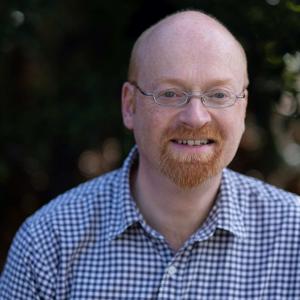


I was delighted to catch up with Matt Segall. Our interests much overlap when it comes to figures like Plato and Owen Barfield. We reflected on the radical insights of such generative thinkers, who were keen to link thought to experience, thereby expanding perception.
We asked why the cataphatic needs the apophatic in speculative and contemplative practices? Whether reality is ultimately personal? Was Barfield right about the evolution of language? What is the relationship between Plato and Whitehead? And more besides.
For more on Matt see - https://footnotes2plato.com/about-me/
For more on Mark see - https://www.markvernon.com/
For more on the Barfield conference we referenced - https://www.owenbarfieldsociety.org/events.html
Why is beauty so important to scientists, even those without religious convictions? And is that in some way connected to the failure of New Atheism, which began two decades ago this year?
In this Sheldrake-Vernon Dialogue, Rupert Sheldrake and Mark Vernon consider how trials of spiritual practices suggest that the spiritual element makes a measurable difference, which in turn suggests ways to answers questions about beauty and the persistence of a sense that the universe is enchanted.
Rupert’s two books on science and spiritual practices inform the conversation, as does research by Guy Hayward, Linda Woodhead, Simon Conway Morris, Micheal Levin and a team led by Fraser Watts.
Why is providence such a powerful intuition? And might related matters have anything to do with the extraordinary power of Large Language Models?
For more on the research considered:
https://www.sheldrake.org/books-by-rupert-sheldrake/science-and-spiritual-practices
https://www.markvernon.com/the-logos-in-the-data-centre-new-essay-at-my-substack-a-golden-string
https://www.issr.org.uk/projects/the-science-of-religious-and-spiritual-exercises-sorse/
https://guyhayward.com/singing-is-neither-good-nor-bad-but-thinking-makes-it-so
What if apocalyptic biblical literature is not best interpreted through historical events, though they certainly have a bearing, nor through the symbolic, as if the imagery should be decoded? Instead, these texts are educations in imagination, reorientating readers to the vision of God.
Such an understanding of the apocalyptic, which means “unveiling”, was certainly the view of William Blake and is a way to read the Book of Daniel, according to Professor Stephen Cook. His new commentary on Daniel brings Blake and others into conversation with the Old Testament book, which doubly makes sense as Blake was certainly in conversation with Daniel.
This approach treats Daniel as a profound theological and visionary work of hope, rather than a rigid end-times code or literal prediction of future historical events.
Dr. Stephen L. Cook is the Catherine N. McBurney Professor of Old Testament Language and Literature at Virginia Theological Seminary. His commentary is part of the Baker Commentary on the Old Testament Prophetic Books series.
Dr Mark Vernon is a writer and psychotherapist, who has written on Christianity and Owen Barfield, Dante as a spiritual journey, and most recently, on Blake as a guide for our times.
For more on Stephen - https://vts.edu/faculty/stephen-l-cook/
For more on Mark and his book "Awake! William Blake and the Power of the Imagination" - https://www.markvernon.com/
An ancient intuition is that plants have souls and even participate in the life of God by virtue of being alive. But what sense can be made of that today?
In this episode of the Sheldrake-Vernon Dialogues, Rupert Sheldrake and Mark Vernon consider the Neoplatonic understanding that all living creatures, and perhaps all self-organising things, have a soul as part of their existence.
But what does this imply about plant perception, plant intelligence, and plant awareness? Why do plants so inspire artists, mystics, and scientists - as well as worldwide activities such as the cut flower industry? Rupert has spend decades both studying plants and profoundly enjoying their presence in his life. Mark feels the inspiration that plants offer the contemplative life.
Considering the souls of plants is quite as generative of insights and questions as plants are themselves generative of beautiful forms of life.
For more on Rupert Sheldrake - www.rupertsheldrake.com
For more on Mark Vernon - www.markvernon.com
The Odyssey movie is brilliant. The combination of spectacle and seriousness that characterises Christopher Nolan’s film-making makes this one a must-see. I can wholeheartedly recommend it.
However, this telling is Nolan's telling. The opening title reads: “A time of apparent magic”, which is a clear signal. Throughout a psychological option is offered for the presence of gods, sorcery and monsters and, quite explicitly, a moral imperative provides coherence to the meandering story.
There are also, inevitably, elements from Homer’s original that are absent in the cinema epic and that gives me an entrée.
I discussion the significance of love, which matters because it is such a key part of the question of how, like them, we humans might live close to the gods.
I think about the significance of the blinding of Polyphemus, which is a dark awakening: human craftiness need no longer be tied to spiritual craft.
I recall the striking appearance of the Cave of the Nymphs on Ithaca, and the Neoplatonic understanding of its significance.
And then there’s the violence, which so much exceeds a moral response, as if hospitality, politeness and decency were enough.
Christianity has a different response, and the brilliance of Homer’s tale is implicit in that emergence.
For more on A Secret History of Christianity - https://www.markvernon.com/books/a-secret-history-of-christianity
Does art need to have a sacred dimension to be art at all? What are the sources of inspiration?
In this dialogue, which is the 102nd in the series, Rupert Sheldrake and Mark Vernon, explore how meaning and beauty, truth and connection might be manifested in the arts.
What is the role of reverence and empathy, place and intelligence? Conversely, what is lost when art loses a reference beyond the human and mechanical world?
If art energizes the human spirit, encourages awareness, and revitalises symbols, how might it speak to us today of what it is be human and to live in a more than human world?
The conversation took place in The Garrison Chapel, Chelsea, and was organised by The King’s Foundation.
For more on Mark see https://www.markvernon.com
For more on Rupert see https://rupertsheldrake.com
Susanne Sklar and Mark Vernon explore William Blake's late, great poem, "Jerusalem the Emanation of the Giant Albion"
"Of the Sleep of Ulro! and of the passage through Eternal Death! and of the awakening to Eternal Life," Blake tells us the epic is about.
Albion features, as does the heroine Jersualem, as well as Jesus.
So how did Blake weave together these figures? How can the poem be read? What is its message and theology? What insights does it offer today?
Susanne's book is "Blake's 'Jerusalem' As Visionary Theatre: Entering the Divine Body".
Mark's book is "Awake! William Blake and the Power of the Imagination."
www.markvernon.com
Many people report apparitions of their loved ones after death, and even of loved dogs and cats. But how do these after-death communications align with the Christian teaching of the resurrection of the body?
In this episode of the Sheldrake-Vernon Dialogues, Rupert Sheldrake and Mark Vernon explore the evidence for the post-mortem appearances of humans and non-humans, and ask how it fits with the accounts of Jesus’s resurrection in the Bible.
The appearance of Jesus to the disciples and others is often taken as evidence of a physical revival of Jesus after his crucifixion but a subtler, arguably more compelling interpretation is that after-death communications are relatively common - which is the experience the disciples had. Then, the resurrection of Jesus shows something about the nature of the spiritual body, as Saint Paul calls the body that awaits us.
But what to make of the empty tomb that had contained the body of Jesus and the variety of activities Jesus reportedly engaged in after his resurrection, and what this might mean for existence after death and the presence of other worlds that are also here and now?
Find 100 more conversations with myself and Rupert online.
For the 100th episode of The Sheldrake-Vernon Dialogues, Rupert Sheldrake and Mark Vernon considered the role of harmony, wholeness and hope in the modern world. The event was held in-person as well as streamed online.
The evening took as its inspiration the work of King Charles, who can be called a philosopher king. It follows the February 6 release on Amazon Prime of the documentary “Finding Harmony: A King’s Vision”. But what is this philosophy?
Rupert and Mark explore new ways that are old of looking at the world, aided by science, poetry, and perennial wisdom traditions. How is diversity transformed by awareness of unity? How might the unfolding of life aid transformation? Spirit, imagination and intelligence much matter.
The conversation was held in the Parish Church of St John-at-Hampstead.
For more of Mark and Rupert's conversations see - https://www.markvernon.com/talks
Christianity doesn’t do well with erotic love. The unease stems, in part, from the fact that the word “eros” doesn’t appear in the New Testament. The lacuna means that points of reference for discussions about sex are typically inadequate and thin. Command stands in for clear thinking.
Then, there is Saint Paul’s remark: “marry if you must” (1 Cor 7:8-9). His ambivalence has resulted in sexual relationships being hidden in marriage, hoping that there, they do less harm than good. Lady Hillingdon’s remark comes to mind, to lie back and think of England - the wit glossing oceans of suffering.
That said, there are remarkable exceptions to the handwashing, of which, in the Christian West, the shining example is The Divine Comedy. Dante’s understanding of the way romantic love can initiate a path to God is fearless, instructive and, because intrepid, transformative. We need it now for, as William Blake observed, “Our wars are wars of life & wounds of love.”
For more on Mark and his book about Dante's Divine Comedy - www.markvernon.com
From the publisher's feed
Reflections from Mark Vernon on soulful matters including spirituality and psychotherapy, science and religion, consciousness and the divine. For more on see www.markvernon.com

4,982 Listeners
572 Listeners
92 Listeners
1,286 Listeners
433 Listeners
33,477 Listeners

4,064 Listeners

1,662 Listeners
866 Listeners
85 Listeners

355 Listeners

15,605 Listeners
221 Listeners

2,443 Listeners
283 Listeners