
Sign up to save your podcasts
Or

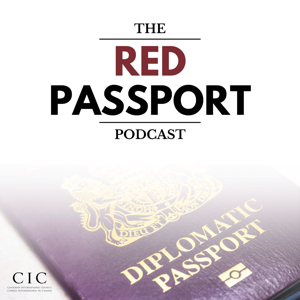


Military conflicts are easy to start and painfully difficult to end.
As Donald Trump's war with Iran enters its fourth month, Jon Allen joins Jeremy Kinsman and Peter Donolo to discuss how a conflict once promised to be short and decisive became a global crisis. The Strait of Hormuz remains closed, energy markets are under pressure and America's allies are reassessing what U.S. leadership now means.
Allen, Canada's former Ambassador to Israel, argues the conflict was shaped by the egos of both Trump and Benjamin Netanyahu, and by a miscalculation about how Iran would respond once attacked. The conversation turns to possible negotiations, the limits of Israeli and American leverage, the humanitarian catastrophe in Gaza and the wider fallout for NATO, the G7 and countries that once relied on American stability.
Louise Blais returns for a special episode on CUSMA, joining Peter Donolo and Jeremy Kinsman to unpack the next phase of North American trade negotiations.
Now serving as Québec's trade representative, Louise explains why the July 1 review date is not a cliff edge, but a critical moment to assess where the agreement is working and where pressure is building. The discussion turns to tariffs on steel, aluminum, vehicles and other key sectors, and why those measures may be hurting American competitiveness as much as Canadian exporters.
The three also look at Canada's leverage, the risks and opportunities of deeper North American economic integration, and what this week's Trump-Xi summit may mean for Canada as Washington and Beijing continue to shape the global trade and security environment.
Just days before Donald Trump is set to meet Xi Jinping in Beijing, Jeremy Kinsman and Peter Donolo welcome back Howard Balloch, Canada's former ambassador to China, to discuss the state of play heading into the summit and various scenarios that may emerge from it.
Balloch's view is that Xi arrives with a clear strategy, while Trump remains far harder to predict. The discussion turns to Taiwan, China's long game, the risks of a new G2-style world order, and what smaller powers like Canada can do when the two most powerful countries increasingly shape the rules around trade, security and global stability.
Canadians are unusually anxious about the world, polling suggests, but relatively confident about Canada.
Jeremy Kinsman and Peter Donolo welcome back former Canadian ambassador Jon Allen for a wide-ranging discussion on the Middle East, Cuba, U.S. power and Canada's place in a more volatile international order.
Meanwhile, to help with the Quebec government's efforts in trade, co-host Louise Blais has stepped away, for now, from her regular role on The Red Passport after being named the province's Special Envoy for the renegotiation of the Canada-United States-Mexico Agreement.
What do countries lose when they no longer have diplomats on the ground? Louise, Jeremy and Peter examine how the absence of embassies and diplomatic relations can distort judgment, weaken consular protection and leave governments relying on weaker intelligence, intermediaries and guesswork.
Using the long American absence from Iran and Canada's own experience closing missions abroad, they ask what is really lost when states withdraw their diplomatic presence, and whether a country that wants to matter in the world can afford to keep hollowing out its foreign service.
What could Trump's latest threats toward Cuba mean for a country already in deep economic and humanitarian crisis? Peter and Jeremy welcome former Canadian ambassador to Cuba Mark Entwistle to unpack the pressure now bearing down on the island: the long aftermath of COVID, the collapse of tourism and tightening US sanctions. Is Washington pursuing regime change, a transactional economic opening or some mix of the two? And if Cuba becomes another testing ground for the Donroe Doctrine, should Canada defend international law, sovereignty and its own long relationship with the Cuban people?
What will the American and Israeli strikes on Iran unleash? Peter and Jeremy welcome former diplomat and past Canadian International Council president Ben Rowswell to help unpack the cascading consequences of Donald Trump's latest military endeavour, and how it contrasts with his recent operation in Venezuela. Meanwhile, did Carney's initial support for the attack on Iran to destroy its nuclear weapons potentially contradict his messaging at Davos that middle powers should band together to resist superpower unilateralism?
The United Nations International Children's Emergency Fund is often in the background of global crises, but what does it deliver for children on the frontlines of war, displacement, and climate shocks? And where can't UNICEF go? Louise and Jeremy speak with Sevaun Palvetzian, CEO of UNICEF Canada, about the organization's work in 190+ countries, from emergency response in Ukraine and Gaza to long-term investments in health, education, water, and child protection.
Did the Prime Minister's Davos speech really shift Canada's place in the world, or just poke the bear? Jeremy, Louise and Peter unpack the Trump Administration's backlash, Mexico's alternate strategy and what a post‑USMCA Plan B could look like for Canada.
From the publisher's feed

4,057 Listeners

391 Listeners

213 Listeners
135 Listeners

60 Listeners

71 Listeners

15 Listeners

104 Listeners

45 Listeners

259 Listeners
30 Listeners

105 Listeners

40 Listeners
32 Listeners
35 Listeners