
Sign up to save your podcasts
Or



Send us Fan Mail
You can edit genes with CRISPR, but can you control it like a switch, turning it on only in one small part of the brain, at one exact moment, without surgery? We dig into a fascinating proof of concept study where researchers combine a photo activated CRISPR system with mechanoluminescent particles, then use focused ultrasound to trigger light emission inside the body. The ultrasound does not edit DNA itself, but it can precisely activate the editor where the beam is focused, which is the kind of spatiotemporal control gene therapy has been missing.
We also slow down and talk honestly about what this does and does not mean. The work is in mice, and it is not a cure for a specific disease yet. Safety, immune reactions, editing accuracy, and off target effects matter even more when the target is the brain. Still, the direction is clear: more targeted CRISPR therapeutics for neurological disease, and a lot more conversations about where treatment ends and enhancement begins.
Then we switch over to pet science and senior dog health. When an older dog starts having accidents in the house, most of us think UTI, kidney issues, diabetes, pain, or mobility problems. A study following 84 senior dogs suggests house soiling can also be associated with worse performance on certain cognitive tasks, raising the possibility that it can be one clue of canine cognitive dysfunction syndrome when medical causes are ruled out.
All our social links are here!
Support the show
For Science, Empathy, and Cuteness!
Being Kind is a Superpower.
All our social links are here!
Send us Fan Mail
Someone in your life has a special talent for raising your blood pressure in under 10 seconds. The uncomfortable question we chase today is whether those “hasslers” just ruin your mood or whether they might be linked to measurable changes in your body over time.
We break down a large study of 2,345 adults that mapped social networks and paired those reports with saliva-based DNA methylation data. That lets researchers estimate biological aging using epigenetic measures like DunedinPACE and GrimAge 2. The headline-worthy result: each additional hassler is associated with about 1.5% faster biological aging and roughly nine extra months of biological age. We also dig into the nuance, including why family hasslers show the strongest associations, why spouses do not show the same signal here, and what “association not causation” really means when stress, chronic health conditions, and perception can all feed into the same loop.
Then we pivot to lighter pet science with a small study from Turkey that filmed cat owners coming home and analyzed the first 100 seconds of greetings. Cats vocalize substantially more to male caregivers than female caregivers, which sounds like a punchline until you consider learning, attention, and how quickly humans respond to feline cues. If you have a cat, you will probably start replaying your own “you’re home” moment while you listen.
Subscribe for more science-and-pets deep dives, share this with a friend who has a hassler in their orbit, and leave us a review with your best theory: do cats “explain themselves” more to men, or is your household the exception?
All our social links are here!
Support the show
For Science, Empathy, and Cuteness!
Being Kind is a Superpower.
All our social links are here!
Send us Fan Mail
A pet medicine mishap kicks things off as we relive “Pilgate,” the moment Brik knocked arthritis meds off the counter and Bernoulli and Beaker ate a truly scary number of pills. Once everyone is safe, we shift to a bigger question that hits home for parents and teachers: are we asking kids to learn on devices that are built to distract them?
We break down the changing screen time recommendations in schools, including major limits like those adopted by Los Angeles Unified, and why the evidence keeps pointing in the same direction: excessive classroom screen use is linked with weaker attention, worse reading outcomes, less handwriting, and more off-task behavior. We’re careful about cause versus correlation, but we also get practical about what teachers see every day when an “entertainment machine” sits on a desk for hours. We talk about when technology actually helps, like targeted practice and the right science simulations, and why paper still wins so often.
Then it’s pet science time. A 2026 iScience study uses dog fMRI to test whether dogs can read emotion from human faces alone. The results are surprisingly sweet: happy faces light up reward-related brain regions, and dogs show different brain patterns for different negative expressions, even without voice, smell, or body language.
Finally, we welcome back Dr. Jen Golbeck, professor, social media and AI researcher, and author of Think Like a Dog. We explore positive psychology for dogs, whether dogs “laugh,” how scent work can give a dog purpose, and how understanding a dog’s perspective can improve behavior and well-being. If you like science, education, and pets, hit subscribe, share the episode with a friend, and leave us a review.
Dr. Golbeck's links:
Bio and Social Links
Think Like a Dog Links
The Science Pawdcast Links
All our social links are here!
Support the show
For Science, Empathy, and Cuteness!
Being Kind is a Superpower.
All our social links are here!
Send us Fan Mail
Smoke turns the sky orange and suddenly everyone wants a simple villain. We get why that’s tempting, but we care more about what the evidence says about Canadian wildfires, boreal forest fire behavior, and the real drivers behind those brutal smoke days that drift into the U.S. Midwest and East Coast. We walk through just how massive Canada’s boreal forest is, why so many ignitions happen far from roads and crews, and why lightning-caused wildfires account for so much of the total area burned. Once fires hit “extreme” size and intensity, the goal shifts from “put it out” to “protect people and infrastructure,” because the physics stops cooperating.
We also talk about the spooky side of mega fires: pyrocumulus clouds and fire thunderstorms that can generate their own lightning and spread. From there, we connect the dots to climate change and why hotter, drier conditions raise the likelihood of severe burn seasons, alongside knock-on effects like pest-killed trees adding fuel. And we don’t skip the health impacts either, because wildfire smoke and fine particulate matter are a serious air quality issue, not just an inconvenience.
Then we pivot to a different kind of public trust question: emotional support animals. ESAs can be meaningful, but they don’t always come with specialized training or consistent public access rules. We break down research on what shapes trust in ESA owners, why dogs are judged differently than snakes or tarantulas, and why the setting matters so much (a park feels different than a gym or a plane). If you like smart science with real-world stakes and a few laughs along the way, subscribe, share this with a friend, and leave us a review. What’s the most unexpected ESA you’ve ever heard of?
All our social links are here!
Support the show
For Science, Empathy, and Cuteness!
Being Kind is a Superpower.
All our social links are here!
Send us Fan Mail
The animal that causes the most aggressive wildlife incidents in Canada is probably not the one you’re picturing. We break down a Frontiers in Conservation Science study that tracks thousands of encounters and lands on a surprising culprit: elk, especially around campgrounds. We talk through why “cute” and “safe” are not the same thing, how seasonality can change animal behavior, and the simple hiking habits that lower the odds of a scary surprise on the trail, whether you’re camping, wildlife watching, or walking with your dog.
Then we shift into pet science with a study from Anthrozoos on snakes and kids. The key detail is not just what children think, but how fast a parent’s real-time comments can shape fear and “othering.” If you’ve ever wondered how to talk about animals you dislike without passing that fear on, this part will stick with you.
Finally, we’re joined by Kathy Plobloski, director of Lost Dogs of Wisconsin, for a practical, science-informed guide to finding missing pets. We cover Pet FBI, why centralized lost and found databases matter, why old-school flyers still reunite the most pets, and the concept of survival mode, where even a bonded dog may avoid you. We also dig into shelters, stray hold timelines, and microchip tips that only work if your info stays updated. If you’ve ever loved an animal, this conversation is worth saving and sharing. Subscribe, share the episode with a pet parent, and leave us a review so more families can find these tools when they need them.
Lost dogs website
All our social links are here!
Support the show
For Science, Empathy, and Cuteness!
Being Kind is a Superpower.
All our social links are here!
Send us Fan Mail
A space telescope is quietly slipping toward Earth, and the rescue plan sounds like science fiction: send up an autonomous robotic spacecraft, match speed in low Earth orbit, grab the aging observatory, and gently push it higher before it burns up. We walk through the attempted save of the Neil Gehrels Swift Observatory, why Swift is so important to astronomy, and how it acts like NASA’s first responder for gamma ray bursts that vanish in minutes but can outshine entire galaxies.
We also dig into the “why now” behind the crisis. Swift has lasted more than 20 years, but increased atmospheric drag tied to the Sun’s active solar cycle is pulling it down faster than expected. Then we break down the Link mission plan step by step: month-long approach, careful imaging, delicate latching at orbital speeds, and a slow reboost designed to protect an older spacecraft. If this works, it opens the door to satellite servicing, mission life extension, and even future ways to manage space debris and keep scientific work going longer without constantly launching replacements.
Then we shift into pet science with a serious question: does pet ownership protect against self-harm among teenagers and young adults with a history of self-harm? We summarize a study from the University of Manchester (published in Anthrozoos) and focus on the biggest takeaway: stronger emotional bonds with pets are linked with better outcomes, while simply having more pets is not. We also talk about what the study cannot prove, and why support systems are bigger than any single factor.
If you like smart space news and thoughtful evidence-based conversations about pets and mental health, subscribe, share the show, and leave a review so more curious listeners can find us.
All our social links are here!
Support the show
For Science, Empathy, and Cuteness!
Being Kind is a Superpower.
All our social links are here!
Send us Fan Mail
A kitten can look “a little off” on Sunday and be fighting for his life by Monday morning, and that reality changes how you read the science headlines. We breakdown Brix’s terrifying ICU stay, what we learned from the veterinary team, and why we’re still watching his recovery like a hawk.
First, we dig into a genuinely spooky health threat: Sporothrix brasiliensis, a cat-associated fungal disease that can spread to humans and other animals. We talk through what symptoms can look like, why experts are concerned about the fungus moving north, and how transmission differs from the usual “inhaled spores” narrative. We also cover the practical risk points for shelters, vet clinics, and rescue groups, including how long it can survive on surfaces and what disinfectants are effective when cleaning is done right.
Then we shift to FIP, feline infectious peritonitis, the diagnosis Bricks most likely has, even though his case is atypical. We explain how common feline coronavirus is, why cats don’t “catch FIP” directly from each other, and why wet FIP and dry FIP can look so different. Most importantly, we talk about the modern turning point: antiviral treatment like GS-441524, what monitoring looks like during recovery, and why starting early can move survival odds dramatically.
If you care about cat health, emerging zoonotic disease, and the newest breakthroughs in veterinary medicine, hit play, share this with a cat parent who needs it, and subscribe, rate, and review so more people can find the show.
Support the show
For Science, Empathy, and Cuteness!
Being Kind is a Superpower.
All our social links are here!
Send us Fan Mail
A parasite that lays eggs in wounds and eats living tissue sounds like something from a horror movie, but it is real and it is making headlines right now. We break down the New World screw worm outbreak in Texas, what it does to animals, and why ranchers and veterinarians treat it as an urgent livestock health emergency. We also talk through the bigger picture: how infestations spread through everyday cuts and bites, why wildlife can make control harder, and how trade disruptions can turn a regional outbreak into a North American economic shockwave.
Then we switch gears to pet science with a deceptively simple animal behavior study that asks a great question: will your pet help you without being asked? Researchers hid a boring object like a dish sponge, offered zero rewards, and watched what happened when a familiar human “struggled” to find it. Dogs often step in like toddlers, pointing out the location or retrieving it, while cats tend to watch closely and decide it is not their problem unless there is something in it for them. We unpack what that says about prosocial behavior, domestication, and why “helping” is not the same thing as intelligence.
Our guest is Dr. Laci Brock of Stellar Arts, an astrophysicist who turned her science communication skills into a full-time space art business. Lacey shares how she builds multispectral paintings using real telescope imagery across wavelengths (think Hubble plus James Webb Space Telescope), what it takes to produce high-quality limited edition fine art prints, and how viral moments like “Meteor Geese” and her Artemis mini paintings sparked real “moon joy” online. We also get candid about generative AI, artist consent, copyright, and why the conversation is bigger than just aesthetics.
Dr. Brock's Art Page!
Our Links!
Support the show
For Science, Empathy, and Cuteness!
Being Kind is a Superpower.
All our social links are here!
Send us Fan Mail
Your brain is way more flexible than your body. We start with a wild virtual reality study that asks a simple sci-fi question: could humans learn to fly if we had wings? After a week of VR training with motion tracking, participants don’t just get better at flying through rings and hovering over cliffs, their brains begin responding to wings the way they respond to arms. We unpack what that says about neuroplasticity, body perception, and why “embodiment” is the real magic behind great human-tech interfaces.
Then we shift to something you can try today with zero equipment: play with your dog for five extra minutes. A Royal Society study suggests short, focused interactive play like tug, chase, hide and seek, and rough-and-tumble can strengthen emotional closeness even more than adding extra training time. We share our own household chaos, the games that hype the dogs up, and why tiny daily interactions can matter more than you think.
Our guest, Melly Byrd (Melly The Science Geek), brings the big energy and the big brains. We talk about building a science communication audience on TikTok and Instagram, choosing topics that genuinely spark curiosity, and going deep on the biology of cannibalism, prion diseases like Kuru and Creutzfeldt-Jakob, and what mad cow disease taught the world about the food chain. We also get real about generational divides, phones in schools, and the growing push to limit generative AI so students can actually learn the skills they’re outsourcing.
Melly on Instagram
Melly's Website
All our social links are here!
Support the show
For Science, Empathy, and Cuteness!
Being Kind is a Superpower.
All our social links are here!
Send us Fan Mail
A cruise ship, a rare virus, and a big question: when you hear “hantavirus outbreak,” what’s the real risk and what’s just scary headlines? We start by unpacking the MV Hondius hantavirus story, why hantaviruses can be so dangerous, and how infections usually happen through rodent exposure in dusty enclosed spaces. We also talk through what public health officials look for during an outbreak, including long incubation windows, fast testing, and why person-to-person transmission is typically very limited.
Next, we shift into pet science and stress. We break down a meta-analysis on whether the presence of dogs reduces human stress responses during stressful tasks. We focus on what the data actually supports: heart rate reactivity and self-reported stress and anxiety show clearer benefits, while cortisol and blood pressure results are less consistent. If you care about therapy dogs, animal-assisted interventions, or just why your dog feels like a walking exhale, this section gives you a grounded, evidence-based take.
Then we have a fun curveball guest: Matt Koff, an Emmy-winning writer for The Daily Show and the comedian behind the new YouTube special Cat Man (not for children). We talk comedy writing as a collaborative process, what it feels like to chase a bigger laugh, and Matt’s very real cat stories, including pica, vet bills, and the weird stigma people still attach to men who love cats.
Matt's Comedy Special
Matt's Substack
Our links
Support the show
For Science, Empathy, and Cuteness!
Being Kind is a Superpower.
All our social links are here!
From the publisher's feed
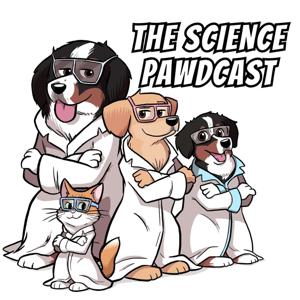
The Science Pawdcast breaks down the latest science happening in the human world AND the pet world.
Jason and Kris Zackowski break down a topical science news and pet science news every…
You'll also occasionally get a wonderful interview with a science expert about their area of knowledge, but ALSO some pet stories too!
It's the perfect blend of education and fun!

43,852 Listeners

38,016 Listeners
38,717 Listeners
5,663 Listeners
1,475 Listeners
3,937 Listeners
3,641 Listeners
12,188 Listeners
6,431 Listeners
1,245 Listeners
24,539 Listeners
2,180 Listeners

3,719 Listeners
3,415 Listeners
869 Listeners