
Sign up to save your podcasts
Or



We are taught over and over again that HASHEM is merciful and kind. We are taught that many times more that a Mother loves her child, HASHEM loves everyone one of his creations.
Yet when we look around the world we live in there are many features that just don't make sense. There is pain and suffering. There are hurricanes and tornadoes. There are diseases and ailments; there are orphans, widows and divorce.
If we also accept that HASHEM is all- knowing then we understand that all of these features are part of the design that HASHEM had for this world they weren't by accident- they were part of the plan.
How are we to understand all of the suffering and misfortune that seems to be deliberately designed into the world?
The question is why? Why does the very closeness and attachment we share with family bring out contention, and what can we do about it?
This Shmuz explores some of the forces that drive sibling rivalry, and offers strategies to deal with it, whether in the role of parents or sibling.
We hear a lot about the importance of good parenting techniques, and while these are essential to learn, it seems that there is more to being a great parent then being able to relate well to child. After all, there are many individuals who have good people skills yet make lousy parents.
In this Shmuz we are introduced to the amazing concept that Sarah Imanu wasn't ready to be a parent to Yitzchak until she was 90 years of age-- despite her personal greatness, she wasn't quite there yet. From this we come to understand that the true essence of great parenting is being a great person - the type of person that can guide a child on their path in life. Which then leads us to the critical question: how can I, a regular person, become that great person that my children and grandchildren will want to emulate?
Politicians lie, lawyers lie, salesmen lie -- but we are honest, moral people and we don't lie... Unfortunately, the reality is that the world we live in affects us, and lies - sometimes little ones, sometimes bigger ones, tend to seep into and become part of our lives.
Reb Yisroel Salanter defines lying as "Saying words with our mouth that our heart knows aren't true". Using this as our gauge of Emes, we may well find that we bend the truth a bit more often than we would care to admit.
This Shmuz introduces us to the Torah's definition of Emes, and aids us in becoming more honest in all of our dealings.
As we come close to Rosh Hashanah and Yom Kippur,
we focus on the idea that Torah expects us to do
Teshuva. Yet for most of us, while in a theoretical
sense we understand that there are areas in which
we could improve, in our real mode of being, we
don't seem to feel that we really sin. When we go to
Shul on Yom Kippur morning, it is rare to find the
person who walks in with this sense of the magnitude
of his sins and the fierce determination to get rid of
them. For most of us, we come to daven, we try to
focus on what we can do to improve, but the idea of
heart felt remorse and repentance just doesn't seem
to fit in.
In this Shmuz we are brought to focus on the
severity of a sin and its grave consequences, and
our ability to use the system of Teshuva to rid them
from our essence.
From the publisher's feed
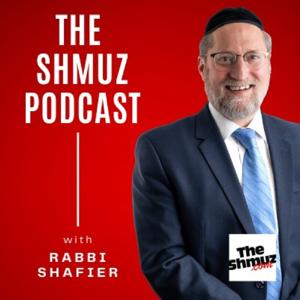
Welcome to The Shmuz Podcast! Here’s your chance to
infuse an inspiring dose of ruchnius, encouragement and positivity into your
day. But don’t just stop here. Go to TheShmuz.com and gain…

152,887 Listeners
556 Listeners
310 Listeners

1,985 Listeners
234 Listeners

3,181 Listeners

1,062 Listeners

818 Listeners
232 Listeners

399 Listeners

1,120 Listeners

373 Listeners
146 Listeners

321 Listeners

910 Listeners