
Sign up to save your podcasts
Or


Send me a message
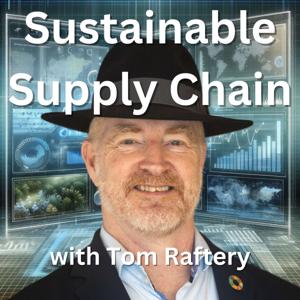
In this week’s episode of the Sustainable Supply Chain podcast, I’m bringing you a replay of my conversation with Rhea Rakshit, VP of Product at Sayari. While I’m away on holidays, it felt like the perfect time to revisit one of the most insightful discussions we’ve had this year, on ESG, supply chain transparency, and the shift from “tick-the-box” CSR to something far more strategic and impactful.
Rhea and I unpack how regulation is reshaping corporate behaviour, forcing ESG out of the sidelines and into the core of business strategy. She explains why ownership of ESG can’t sit in a silo, it needs cross-functional alignment, from procurement to compliance to operations. A key theme we explore is the balance between scope and scale: start small, win trust, then expand. Trying to boil the ocean from day one is a recipe for inertia.
We also dive into what true visibility looks like in supply chains. It’s not just about mapping suppliers, it’s about tracing to raw materials, exposing risks like forced labour, deforestation, and climate impacts, and most importantly, creating data that is decision-ready. Rhea argues that the real test of ESG isn’t reporting, it’s remediation. If a supplier is found to be linked to harmful practices, what happens next? Do companies walk away, or work to improve conditions? That’s where the real impact lies.
We bring in perspectives from the Global South too, where the social dimension of ESG is often most acute, and Rhea shares why, despite the challenges, she’s optimistic about the ability of businesses to build resilient, transparent, and ethical supply chains.
If you’re looking to understand how ESG in supply chains is evolving, from compliance headache to strategic advantage, this episode is well worth your time.
Listen now and let me know what you think.
#SustainableSupplyChain #ESG #SupplyChainTransparency #ForcedLabour #Deforestation #Sustainability
Support the show
Podcast supporters
I'd like to sincerely thank this podcast's generous Subscribers:
And remember you too can become a Resilient Supply Chain+ subscriber - it is really easy and hugely important as it will enable me to continue to create more excellent episodes like this one and give you access to bonus episodes of topical, timely supply chain resilience analysis.
Podcast Sponsorship Opportunities:
If you/your organisation is interested in sponsoring this podcast - I have several options available. Let's talk!
Finally
If you have any comments/suggestions or questions for the podcast - feel free to just send me a direct message on LinkedIn, or send me a text message using this link.
If you liked this show, please don't forget to rate and/or review it. It makes a big difference to help new people discover it.
Thanks for listening.
 View all episodes
 By Tom Raftery
5
2323 ratings
Send me a message
In this week’s episode of the Sustainable Supply Chain podcast, I’m bringing you a replay of my conversation with Rhea Rakshit, VP of Product at Sayari. While I’m away on holidays, it felt like the perfect time to revisit one of the most insightful discussions we’ve had this year, on ESG, supply chain transparency, and the shift from “tick-the-box” CSR to something far more strategic and impactful.
Rhea and I unpack how regulation is reshaping corporate behaviour, forcing ESG out of the sidelines and into the core of business strategy. She explains why ownership of ESG can’t sit in a silo, it needs cross-functional alignment, from procurement to compliance to operations. A key theme we explore is the balance between scope and scale: start small, win trust, then expand. Trying to boil the ocean from day one is a recipe for inertia.
We also dive into what true visibility looks like in supply chains. It’s not just about mapping suppliers, it’s about tracing to raw materials, exposing risks like forced labour, deforestation, and climate impacts, and most importantly, creating data that is decision-ready. Rhea argues that the real test of ESG isn’t reporting, it’s remediation. If a supplier is found to be linked to harmful practices, what happens next? Do companies walk away, or work to improve conditions? That’s where the real impact lies.
We bring in perspectives from the Global South too, where the social dimension of ESG is often most acute, and Rhea shares why, despite the challenges, she’s optimistic about the ability of businesses to build resilient, transparent, and ethical supply chains.
If you’re looking to understand how ESG in supply chains is evolving, from compliance headache to strategic advantage, this episode is well worth your time.
Listen now and let me know what you think.
#SustainableSupplyChain #ESG #SupplyChainTransparency #ForcedLabour #Deforestation #Sustainability
Support the show
Podcast supporters
I'd like to sincerely thank this podcast's generous Subscribers:
And remember you too can become a Resilient Supply Chain+ subscriber - it is really easy and hugely important as it will enable me to continue to create more excellent episodes like this one and give you access to bonus episodes of topical, timely supply chain resilience analysis.
Podcast Sponsorship Opportunities:
If you/your organisation is interested in sponsoring this podcast - I have several options available. Let's talk!
Finally
If you have any comments/suggestions or questions for the podcast - feel free to just send me a direct message on LinkedIn, or send me a text message using this link.
If you liked this show, please don't forget to rate and/or review it. It makes a big difference to help new people discover it.
Thanks for listening.
4,230 Listeners

4,417 Listeners
384 Listeners

152 Listeners
309 Listeners
18 Listeners
505 Listeners
116 Listeners

8,821 Listeners

210 Listeners

672 Listeners

10,246 Listeners

108 Listeners
32 Listeners

682 Listeners