
Sign up to save your podcasts
Or

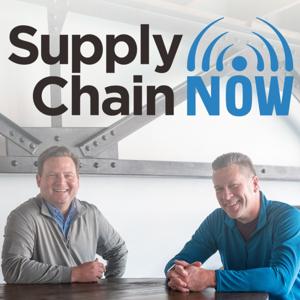


Anyone can buy a plane. What sets a logistics company apart in Latin America is whether the people on the ground trust it with their cargo. Earning that trust takes time, local knowledge, and a commitment to understanding what makes each market different.
In this episode of Supply Chain Now, Scott Luton and Scott DeGroot speak with Jorge Bayona, Vice President for Latin America at Apex Logistics International, about how companies can incorporate the region into their supply chain strategies to improve agility, diversify risk, and unlock growth.
Jorge shares his journey from ADM to Deutsche Post and DHL, through leading the expansion of FEMSA Group’s logistics division, Solistica, to building Apex’s Latin American footprint across 18 countries in about two and a half years. Drawing on that experience, he explains why the region can’t be measured by a single average, why the right to play and the right to win are two different things, and why each market rewards a different approach.
The conversation explores nearshoring opportunities, emerging trade corridors, regional challenges, and the roles of Miami, Panama, and Mexico as key logistics gateways. Jorge also shares what businesses should look for in a logistics partner, why complementarity matters more than size, and how strong local relationships help companies navigate the region with confidence and build more resilient supply chains.
Jump into the conversation:
(00:00) Introduction
(03:39) Jorge Bayona on growing up on the island of San Andres, Colombia
(04:44) The grandmother who ran a gas station and the grandfather who was a general
(07:59) From ADM to DHL to Solistica: Jorge's career path
(13:34) What Apex Logistics International does and how it grew in Latin America
(22:47) The opportunities and weaknesses shaping supply chains in the region
(28:55) The most common mistake: the right to play vs. the right to win
(34:03) Four landscapes to evaluate before entering a market
(39:43) Why patience and talent matter when entering a new region
(45:15) Country by country: gateways and key markets across Latin America
(53:17) What to look for in a logistics and supply chain partner
Additional Links & Resources:
This episode was hosted by Scott Luton and Scott DeGroot and produced by Trisha Cordes, Joshua Miranda, and Amanda Luton. For additional information, please visit our dedicated show page at: https://supplychainnow.com/apex-building-supply-chain-strategy-latin-america-1647
The content in this episode, including all audio, videos, visuals, and graphics, is the property of Supply Chain Now and is protected by copyright law. Unauthorized use, reproduction, distribution, modification, or re-uploading of this content in any form is strictly prohibited without explicit written permission from Supply Chain Now.
For licensing inquiries or permissions, please contact us at [email protected]
© 2026 Supply Chain Now. All rights reserved.
Hosted by Simplecast, an AdsWizz company. See pcm.adswizz.com for information about our collection and use of personal data for advertising.
A single overlooked component can stop an entire product from shipping. Justin Sears explains why supply chain risk now has to shape design decisions from day one, not after engineering hands the design off to procurement.
In this episode of Supply Chain Now, Scott Luton and Jake Barr speak with Justin Sears, Head of Product Marketing for SaaS at Altium, about rising component risk, hidden supplier dependencies, and why engineering and procurement teams need better visibility into supply conditions earlier in the product development process.
They also explore how AI can help teams surface risks, strengthen requirements, and evaluate alternatives while human judgment remains essential. The conversation highlights how better data, earlier collaboration, and stronger lifecycle thinking can help manufacturers build more resilient products.
Jump into the conversation:
(00:00) Introduction
(02:24) Meet Justin Sears, Head of Product Marketing for SaaS at Altium
(04:18) Justin's lifelong running passion and how it clears his head
(05:35) Justin's background and the Altium family of supply chain solutions
(10:23) Three structural risks: tariffs, global conflict, and AI data center demand
(14:59) The Digi case study: why manual sourcing doesn't work anymore"
(17:43) "Shift left": making supply chain a design input, not an afterthought
(22:52) The postage stamp problem: when a cheap part stops a $30K GPU shipment
(27:30) Two tiers down: hidden supply chain failures you can't see
(29:52) AI and human judgment in hardware design: who asks the questions?
(42:31) Counterfeit parts: why fraudsters chase volume, not scarcity
(53:57) Three takeaways: what hardware teams should start doing today
Additional Links & Resources:
This episode was hosted by Scott Luton and Jake Barr and produced by Trisha Cordes, Joshua Miranda, and Amanda Luton. For additional information, please visit our dedicated show page at: https://supplychainnow.com/got-chips-managing-electronic-component-supply-chain-risk-face-global-instability-1646
The content in this episode, including all audio, videos, visuals, and graphics, is the property of Supply Chain Now and is protected by copyright law. Unauthorized use, reproduction, distribution, modification, or re-uploading of this content in any form is strictly prohibited without explicit written permission from Supply Chain Now.
For licensing inquiries or permissions, please contact us at [email protected]
© 2026 Supply Chain Now. All rights reserved.
Hosted by Simplecast, an AdsWizz company. See pcm.adswizz.com for information about our collection and use of personal data for advertising.
Technology may be advancing faster than ever, but people, resilience, and smart decision-making remain at the center of supply chain success. In this episode of The Buzz, powered by Altium, Scott Luton and Maithili Shenoy are joined by cybersecurity experts Andrew Alston and Bob Carver to unpack some of the biggest issues shaping supply chain and business, from manufacturing pressures and technology talent gaps to AI-enabled cyberattacks and growing third-party risk.
The conversation begins with a look at the latest U.S. manufacturing activity, rising input costs, and the supply chain challenges surrounding the rapidly growing humanoid robotics industry. The panel also explores the widening technology skills gap and why organizations need people who can combine critical thinking with emerging AI capabilities.
Then, in recognition of Cybersecurity Awareness Month, Andrew and Bob break down how AI is changing the cyber threat landscape. They discuss ransomware-as-a-service, faster exploitation of vulnerabilities, third-party exposure, governance, business continuity, and why traditional cybersecurity approaches are no longer enough. The group also explores why supply chain leaders need to think beyond their own organizations and build cyber resilience across the entire supplier ecosystem.
Key TakeawaysSupply chain leaders can't afford to treat cybersecurity, AI, talent, and resilience as separate issues. They are increasingly interconnected, and the risks extend far beyond the four walls of any single organization. Tune in to hear practical perspectives on where the biggest vulnerabilities are emerging, why third-party risk deserves greater attention, and what leaders can do now to build stronger, more resilient supply chain ecosystems.
Additional Links & Resources:
This episode was hosted by Scott Luton and Maithili Shenoy, and produced by Trisha Cordes, Joshua Miranda, and Amanda Luton. For additional information, please visit our dedicated episode page at: https://supplychainnow.com/buzz-ai-cybersecurity-new-risks-reshaping-supply-chain-1645
The content in this episode, including all audio, videos, visuals, and graphics, is the property of Supply Chain Now and is protected by copyright law. Unauthorized use, reproduction, distribution, modification, or re-uploading of this content in any form is strictly prohibited without explicit written permission from Supply Chain Now.
For licensing inquiries or permissions, please contact us at [email protected]
© 2026 Supply Chain Now. All rights reserved.
Hosted by Simplecast, an AdsWizz company. See pcm.adswizz.com for information about our collection and use of personal data for advertising.
Shipping teams often don’t discover wasted spend until the invoice arrives. By then, the opportunity is already gone. John Wharff explains why hidden surcharges, outdated shipping rules, and overlooked shipment outliers can quietly drive up costs, and why the best savings opportunities often come from rethinking the decisions teams already make every day.
In this episode of Supply Chain Now, Scott Luton and Tevon Taylor speak with John Wharff, Senior Director of Product Management at EasyPost, about how shippers can uncover hidden costs and build more adaptable shipping strategies. They discuss why base rates only tell part of the story, how service levels and carrier choices impact total cost, and why teams need to look beyond average shipments to find where money is being lost.
John and Tevon also explore the role of pressure testing in shipping decisions, using real shipment data to identify gaps before they become expensive problems. From improving cost per package to using AI for analysis and simulation, the conversation highlights how supply chain teams can make smarter decisions, strengthen their processes, and stay ahead of a constantly changing shipping environment.
Jump into the conversation:
(00:00) Introduction
(01:31) Meet John Wharff, Senior Director of Product Management at EasyPost
(02:33) Warm-up: John's motorcycle passion and first Harley Davidson
(06:40) Why carrier bills still surprise experienced shippers
(08:27) The trap of static rules in a dynamic shipping environment
(11:10) Bell curves and outliers: where shipping costs really hide
(15:15) Carrier mix and service levels: building your roster for peak season
(23:22) Why your master spreadsheet falls apart in real-world shipping
(32:43) Pressure testing explained: John's methodology for finding hidden costs
(37:13) AI in logistics: where it genuinely helps and where it's hot air
(46:41) Call to action: what shippers should do right now before peak season
Additional Links & Resources:
This episode was hosted by Scott Luton and Tevon Taylor, and produced by Trisha Cordes, Joshua Miranda, and Amanda Luton. For additional information, please visit our dedicated show page at: https://supplychainnow.com/pressure-test-your-shipping-decision-before-they-cost-you-thousands-1644
The content in this episode, including all audio, videos, visuals, and graphics, is the property of Supply Chain Now and is protected by copyright law. Unauthorized use, reproduction, distribution, modification, or re-uploading of this content in any form is strictly prohibited without explicit written permission from Supply Chain Now.
For licensing inquiries or permissions, please contact us at [email protected]
© 2026 Supply Chain Now. All rights reserved.
Hosted by Simplecast, an AdsWizz company. See pcm.adswizz.com for information about our collection and use of personal data for advertising.
Enterprise transformation does not start with technology. It starts with understanding the business problem you are trying to solve. John Cusick explains why organizations often struggle with implementations when they focus on selecting systems before defining outcomes, and why successful transformation requires rethinking processes, improving data foundations, and designing technology around the way the business needs to operate.
In this episode of Supply Chain Now, Scott Luton speaks with Wiley Jones, Co-Founder and CEO of DOSS, and John Cusick, President of Echo Park Consulting, about how AI-native solutions are changing enterprise implementations and why companies need a new playbook for transformation. They explore why traditional ERP approaches often fail, how best-of-breed technology strategies are becoming more practical, and why organizations should focus on business outcomes instead of forcing their processes into rigid platforms. John and Wiley discuss how companies can use flexible architectures, better data management, and AI-enabled capabilities to create systems that evolve alongside the business.
John also explains how agentic implementation is changing the role of technology teams and consultants by accelerating tasks like data mapping, configuration, integration, and testing while allowing humans to focus on validation, judgment, and process design. The conversation explores why AI agents require strong context, clean data, and clear sources of truth to make reliable decisions, and why the future of enterprise technology will depend on combining automation with human expertise.
Jump into the conversation:
(00:00) Introduction
(02:13) Meet Wiley Jones, Co-Founder and CEO of Doss, and John Cusick, President of Echo Park Consulting
(06:11) Why transformation projects succeed or fail
(09:24) Why organizations start with technology instead of business problems
(12:44) The biggest challenges in enterprise implementations
(20:20) Why best-of-breed technology strategies are gaining momentum
(25:25) How AI agents are changing implementation processes
(31:05) Why process design must come before automation
(32:05) Rethinking the ERP implementation playbook with Doss
(37:05) How AI is changing the human role in implementations
(42:13) Building trust, context, and governance for AI agents
(45:21) What the future of enterprise technology looks like
(53:15) Wiley Jones' key takeaway on outcome-driven transformation
Additional Links & Resources:
This episode was hosted by Scott Luton and Wiley Jones and produced by Trisha Cordes, Joshua Miranda, and Amanda Luton. For additional information, please visit our dedicated show page at: https://supplychainnow.com/enterprise-unleashed-rethinking-transformation-playbook-1643
The content in this episode, including all audio, videos, visuals, and graphics, is the property of Supply Chain Now and is protected by copyright law. Unauthorized use, reproduction, distribution, modification, or re-uploading of this content in any form is strictly prohibited without explicit written permission from Supply Chain Now.
For licensing inquiries or permissions, please contact us at [email protected]
© 2026 Supply Chain Now. All rights reserved.
Hosted by Simplecast, an AdsWizz company. See pcm.adswizz.com for information about our collection and use of personal data for advertising.
What if every product came with a digital story, one that followed it from raw materials and manufacturing through use, repair, reuse, and ultimately its next life?
In this episode of The Buzz, powered by MFG.inc, Scott Luton and Marty Parker welcome Marion Rouzeaud, founder of DiPPa and author of DiPPa: Rethinking the Way We Buy Things with Digital Product Passports, for a timely conversation about digital product passports (DPPs), circularity, and the future of manufacturing.
Scott, Marty, and Marion explore why digital product passports have the potential to become far more than another compliance requirement. Marion explains how DPPs can create a living digital record for products, giving manufacturers, consumers, repairers, recyclers, and other stakeholders access to trusted information throughout the product lifecycle.
The conversation also examines the growing role of AI and automation in manufacturing, how companies are navigating cost pressures and supply chain complexity, and why collecting customer feedback means little without action. Marion walks through her DEPA framework and explains how organizations can connect product strategy, sustainability, data, and circularity to rethink not only how products are made but what happens to them after they enter the market.
Key TakeawaysDigital product passports may be driven partly by regulation, but their potential reaches much further. Tune in to hear how organizations can use DPPs as a strategic tool to connect product design, manufacturing, sustainability, customer needs, and the circular economy. You’ll also hear practical perspectives on AI, automation, customer experience, and the evolving manufacturing landscape, and why the companies that get the most value from new technology will be the ones that turn information into action.
Additional Links & Resources:
This episode was hosted by Scott Luton and Marty Parker, and produced by Trisha Cordes, Joshua Miranda, and Amanda Luton. For additional information, please visit our dedicated episode page at: https://supplychainnow.com/thebuzz-unlocking-potential-digital-product-passports-1642
The content in this episode, including all audio, videos, visuals, and graphics, is the property of Supply Chain Now and is protected by copyright law. Unauthorized use, reproduction, distribution, modification, or re-uploading of this content in any form is strictly prohibited without explicit written permission from Supply Chain Now.
For licensing inquiries or permissions, please contact us at [email protected]
© 2026 Supply Chain Now. All rights reserved.
Hosted by Simplecast, an AdsWizz company. See pcm.adswizz.com for information about our collection and use of personal data for advertising.
AI, tariffs, shifting consumer expectations, and new delivery models are creating fresh challenges and opportunities for supply chain leaders. In this episode of Supply Chain Now, Scott Luton and Jake Barr sit down with Gartner’s Noha Samara to bust some of the biggest myths surrounding AI in supply chain planning. Then, Scott talks with Wall Street Journal reporter Liz Young about the forces reshaping retail and logistics, from product assortment and tariffs to trucking, last-mile delivery, drones, and returns.
Noha challenges the idea that AI success is simply about doing the same work faster, emphasizing instead the need to redesign jobs, rethink processes, build trust with planners, and focus AI investments on a smaller number of high-impact use cases. She also explains why productivity gains should be measured by the higher-value work AI enables, not simply by workforce reduction.
Later, Liz brings a reporter’s perspective to the rapidly changing retail supply chain. She shares how companies are reducing product variety to manage tariffs and complexity, building greater flexibility and resilience into their networks, and navigating increasingly diverse consumer expectations around delivery. The conversation also explores rising trucking costs, the potential of drone delivery, generational shifts in shopping behavior, and the costly challenge of product returns.
Key TakeawaysTune in for a wide-ranging look at what supply chain leaders should be thinking about now and what may matter even more in the years ahead. From separating AI reality from hype to preparing for tariffs, transportation shifts, changing consumer behavior, and new fulfillment models, this episode offers practical perspectives for building supply chains that are more adaptable, focused, and prepared for the unexpected.
Additional Links & Resources:
This episode was hosted by Scott Luton and Jake Barr, and produced by Trisha Cordes, Joshua Miranda, and Amanda Luton. For additional information, please visit our dedicated episode page at: https://supplychainnow.com/from-planning-retail-where-supply-chain-heading-1641
The content in this episode, including all audio, videos, visuals, and graphics, is the property of Supply Chain Now and is protected by copyright law. Unauthorized use, reproduction, distribution, modification, or re-uploading of this content in any form is strictly prohibited without explicit written permission from Supply Chain Now.
For licensing inquiries or permissions, please contact us at [email protected]
© 2026 Supply Chain Now. All rights reserved.
Hosted by Simplecast, an AdsWizz company. See pcm.adswizz.com for information about our collection and use of personal data for advertising.
Supply chain planning is changing fast, but technology is only part of the story. As AI capabilities expand, procurement becomes more strategic, and planners face an accelerating pace of change, organizations must determine how to embrace innovation without losing sight of the people who make supply chains work.
In this episode of Supply Chain Today and Tomorrow, Scott Luton sits down with Mike Griswold, Vice President Analyst at Gartner, to explore some of the biggest trends shaping supply chain planning and leadership. Mike breaks down the top barriers preventing planners from performing at their best, including the pace of change, digital skills gaps, and the continued need for strong communication and collaboration skills. They also discuss the debate around slowing AI development, the emerging role of AI agents, procurement's growing strategic influence, and how automation can give employees valuable time back. Plus, Mike shares what makes the Gartner Supply Chain Planning Summit a valuable opportunity for planning professionals.
Key TakeawaysThe future of supply chain isn't simply about adopting more technology; it's about figuring out how people and technology can work together more effectively. Tune in to hear Scott and Mike unpack practical ways leaders can support planners, approach AI thoughtfully, rethink repetitive work, and prepare their organizations for what's coming next.
Additional Links & Resources:
This episode was hosted by Scott Luton and produced by Trisha Cordes, Joshua Miranda, and Amanda Luton. For additional information, please visit our dedicated episode page at: https://supplychainnow.com/think-different-planning-challenges-ai-procurement-leadership-1640
The content in this episode, including all audio, videos, visuals, and graphics, is the property of Supply Chain Now and is protected by copyright law. Unauthorized use, reproduction, distribution, modification, or re-uploading of this content in any form is strictly prohibited without explicit written permission from Supply Chain Now.
For licensing inquiries or permissions, please contact us at [email protected]
© 2026 Supply Chain Now. All rights reserved.
Hosted by Simplecast, an AdsWizz company. See pcm.adswizz.com for information about our collection and use of personal data for advertising.
AI, robotics, and automation are advancing quickly, but successful transformation takes more than adopting the latest technology. It requires the right strategy, the right people, and a clear understanding of the business outcomes you're trying to achieve.
In this episode of The Buzz, powered by MFG.inc, Scott Luton is joined by guest co-host Dr. Muddassir Ahmed and Christine Bush, Director of the Robotic and Motion Center of Excellence at Schneider Electric, to explore how AI and robotics are changing manufacturing and the workforce. They discuss the growing debate around AI safety and speed, why companies should focus on augmenting people rather than simply replacing them, and how manufacturers are using robotics to address skilled labor shortages and create more flexible operations. Christine also shares insights into IT/OT convergence, open software-defined automation, and what separates organizations that successfully scale automation from those that remain stuck in pilot mode.
Key Takeaways
AI and robotics offer enormous potential, but technology alone won't transform manufacturing. Tune in to hear practical perspectives on how manufacturers can combine human expertise with smarter automation, build more adaptable operations, and turn promising technology investments into real business value.
Additional Resources & Links:
This episode was hosted by Scott Luton and Dr. Muddassir Ahmed, and produced by Trisha Cordes, Joshua Miranda, and Amanda Luton. For additional information, please visit our dedicated episode page at: https://supplychainnow.com/thebuzz-smarter-automation-reshaping-manufacturing-1639
The content in this episode, including all audio, videos, visuals, and graphics, is the property of Supply Chain Now and is protected by copyright law. Unauthorized use, reproduction, distribution, modification, or re-uploading of this content in any form is strictly prohibited without explicit written permission from Supply Chain Now.
For licensing inquiries or permissions, please contact us at [email protected]
© 2026 Supply Chain Now. All rights reserved.
Hosted by Simplecast, an AdsWizz company. See pcm.adswizz.com for information about our collection and use of personal data for advertising.
The yard may be one of the most overlooked areas of the supply chain, but its impact extends across transportation, warehousing, customer service, safety, and the bottom line.
In this episode of Supply Chain Now, Scott Luton sits down with Adam Newsome, CEO of Lazer Logistics, to explore how greater visibility, intelligence, and action can transform yard operations into a strategic advantage.
Adam shares how Lazer Logistics combines connected technology, operational data, AI, and decades of institutional knowledge to improve decision-making across hundreds of locations. He explains why visibility alone is not enough, how AI can help teams identify the “next right thing” to do, and why technology must solve real operational problems.
The conversation also introduces “Uncle Phil,” Lazer’s AI coaching tool designed to capture the experience of longtime operations leaders and make that knowledge available to managers at scale.
Key Takeaways:
Tune in to learn how Lazer Logistics is moving beyond visibility, scaling decades of expertise with AI, and creating a more connected, efficient, and human-centered approach to yard management.
Additional Links & Resources:
This episode was hosted by Scott Luton and produced by Trisha Cordes, Joshua Miranda, and Amanda Luton. For additional information, please visit our dedicated episode page at: https://supplychainnow.com/from-overlooked-optimized-rethinking-yard-management-1638
The content in this episode, including all audio, videos, visuals, and graphics, is the property of Supply Chain Now and is protected by copyright law. Unauthorized use, reproduction, distribution, modification, or re-uploading of this content in any form is strictly prohibited without explicit written permission from Supply Chain Now.
For licensing inquiries or permissions, please contact us at [email protected]
© 2026 Supply Chain Now. All rights reserved.
Hosted by Simplecast, an AdsWizz company. See pcm.adswizz.com for information about our collection and use of personal data for advertising.
From the publisher's feed
Ranked by our users in the last 21 days

10,910 Listeners

1,289 Listeners

4,345 Listeners

1,644 Listeners

150 Listeners
60 Listeners
26 Listeners

9,058 Listeners

6,057 Listeners

8 Listeners

10,177 Listeners

160 Listeners
7 Listeners
10 Listeners

12 Listeners
7 Listeners

10 Listeners

3 Listeners

66 Listeners

89 Listeners

155 Listeners
4 Listeners
4 Listeners

0 Listeners