
Sign up to save your podcasts
Or

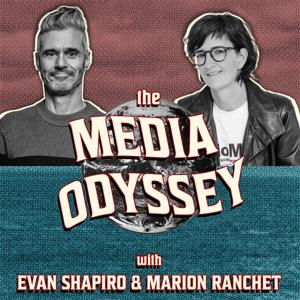

Archive content finds new life on YouTube while broadcast TV is officially "a blip in history." Welcome to The Media Odyssey Podcast live from MIP London!
In this special live episode from MIP London, Evan Shapiro sits down with Martin Trickey, who runs Zoo 55, ITV Studios' digital distribution arm that launched just over a year ago. The conversation reveals how traditional broadcasters are finally waking up to the massive untapped value in their archives, how YouTube is television for older demographics as well as younger people, and why the broadcast era was just a temporary moment in human storytelling.
Rather than defending the traditional TV model, Martin makes a compelling case for why broadcasters must radically transform or become irrelevant. The episode is a reality check on how quickly the media landscape is changing, with 55% of the British population now millennials and younger who never developed traditional broadcast habits. Success now requires mastering social video alongside streaming not instead of it.
Key Takeaways:
1. Archive Content Unlocks New Value on YouTube
ITV's Zoo 55 is finding massive value in archive content that was gathering dust on shelves. Old episodes of shows like Hell's Kitchen and River Monsters are discovering entirely new audiences on YouTube who never saw them during their original broadcast runs. This represents a significant new revenue stream from content that had no previous monetization path.
2. YouTube Audiences Span All Demographics, Not Just Young People
The biggest demographic watching full episodes of Coronation Street on YouTube is 65+, and they're watching mostly on TV devices. Everybody is watching content on YouTube regardless of age. The assumption that it's only for younger audiences is false. Archive content attracts both younger viewers discovering shows for the first time and older viewers who are now consuming familiar content on YouTube instead of traditional broadcast.
3. Broadcast Television Was "A Blip in History"
The monopolies that free-to-air broadcasters had in the 1960s-1980s are gone and never coming back. Peer-to-peer and social communication is how people have told stories since cave painting, and we've returned to that model. In 1985, shows on BBC One or ITV at 8pm guaranteed audiences because there was nothing else on. That era is over.
4. No Traditional Viewing Habits Means Streaming Will Not Fully Replace Broadcast
55% of the British population are millennials and younger who did not grow up with the same broadcast habits as their parents and grandparents. The time previous generations spent on television has been replaced by a combination of streaming AND social video—not just streaming. Younger generations actually watch less streaming than older generations. The idea that 100% of the TV audience will migrate to streaming alone is false.
5. Building Communities on Social Video Requires Significantly More Work
Cutting through on social platforms is incredibly difficult compared to traditional broadcast. It requires great content plus discoverability work (thumbnails, titles, metadata), engagement with super fans and influencers, and constant optimization. Broadcasters must work far harder to build communities on social video than they ever did building TV audiences, but it's essential for survival.
6. 2026 Is the Year for Brand Direct Deals on YouTube
ITV expects 2026 to be the year they move significantly into brand direct deals beyond programmatic advertising. YouTube is expected to launch dynamic brand insertion in the second half of 2026, allowing creators to swap out sponsored segments without taking down and re-uploading entire videos. This will allow creators and partners to keep a larger share of revenue, and ITV plans to offer brands the ability to co-create content and distribute it across their network of social channels.
Thank you to Martin Trickey for joining the pod!
Martin Trickey - https://www.linkedin.com/in/martintrickey/
Zoo 55 - https://www.linkedin.com/company/zoo-55/
Interested in sponsorship? https://forms.gle/2LCWfX2HBNT8mtpx8
Connect with us on Linkedin:
Evan Shapiro - https://www.linkedin.com/in/eshap-media-cartographer/
Marion Ranchet - https://www.linkedin.com/in/marionranchet/
The Media Odyssey Podcast - https://www.linkedin.com/company/the-media-odyssey-podcast
 View all episodes
 By Evan Shapiro & Marion Ranchet

4.6
99 ratings
Archive content finds new life on YouTube while broadcast TV is officially "a blip in history." Welcome to The Media Odyssey Podcast live from MIP London!
In this special live episode from MIP London, Evan Shapiro sits down with Martin Trickey, who runs Zoo 55, ITV Studios' digital distribution arm that launched just over a year ago. The conversation reveals how traditional broadcasters are finally waking up to the massive untapped value in their archives, how YouTube is television for older demographics as well as younger people, and why the broadcast era was just a temporary moment in human storytelling.
Rather than defending the traditional TV model, Martin makes a compelling case for why broadcasters must radically transform or become irrelevant. The episode is a reality check on how quickly the media landscape is changing, with 55% of the British population now millennials and younger who never developed traditional broadcast habits. Success now requires mastering social video alongside streaming not instead of it.
Key Takeaways:
1. Archive Content Unlocks New Value on YouTube
ITV's Zoo 55 is finding massive value in archive content that was gathering dust on shelves. Old episodes of shows like Hell's Kitchen and River Monsters are discovering entirely new audiences on YouTube who never saw them during their original broadcast runs. This represents a significant new revenue stream from content that had no previous monetization path.
2. YouTube Audiences Span All Demographics, Not Just Young People
The biggest demographic watching full episodes of Coronation Street on YouTube is 65+, and they're watching mostly on TV devices. Everybody is watching content on YouTube regardless of age. The assumption that it's only for younger audiences is false. Archive content attracts both younger viewers discovering shows for the first time and older viewers who are now consuming familiar content on YouTube instead of traditional broadcast.
3. Broadcast Television Was "A Blip in History"
The monopolies that free-to-air broadcasters had in the 1960s-1980s are gone and never coming back. Peer-to-peer and social communication is how people have told stories since cave painting, and we've returned to that model. In 1985, shows on BBC One or ITV at 8pm guaranteed audiences because there was nothing else on. That era is over.
4. No Traditional Viewing Habits Means Streaming Will Not Fully Replace Broadcast
55% of the British population are millennials and younger who did not grow up with the same broadcast habits as their parents and grandparents. The time previous generations spent on television has been replaced by a combination of streaming AND social video—not just streaming. Younger generations actually watch less streaming than older generations. The idea that 100% of the TV audience will migrate to streaming alone is false.
5. Building Communities on Social Video Requires Significantly More Work
Cutting through on social platforms is incredibly difficult compared to traditional broadcast. It requires great content plus discoverability work (thumbnails, titles, metadata), engagement with super fans and influencers, and constant optimization. Broadcasters must work far harder to build communities on social video than they ever did building TV audiences, but it's essential for survival.
6. 2026 Is the Year for Brand Direct Deals on YouTube
ITV expects 2026 to be the year they move significantly into brand direct deals beyond programmatic advertising. YouTube is expected to launch dynamic brand insertion in the second half of 2026, allowing creators to swap out sponsored segments without taking down and re-uploading entire videos. This will allow creators and partners to keep a larger share of revenue, and ITV plans to offer brands the ability to co-create content and distribute it across their network of social channels.
Thank you to Martin Trickey for joining the pod!
Martin Trickey - https://www.linkedin.com/in/martintrickey/
Zoo 55 - https://www.linkedin.com/company/zoo-55/
Interested in sponsorship? https://forms.gle/2LCWfX2HBNT8mtpx8
Connect with us on Linkedin:
Evan Shapiro - https://www.linkedin.com/in/eshap-media-cartographer/
Marion Ranchet - https://www.linkedin.com/in/marionranchet/
The Media Odyssey Podcast - https://www.linkedin.com/company/the-media-odyssey-podcast
9,724 Listeners
555 Listeners
1,033 Listeners
33 Listeners
5,610 Listeners
375 Listeners
3,858 Listeners
1,132 Listeners

119 Listeners

907 Listeners
2,536 Listeners

1,480 Listeners
201 Listeners
64 Listeners
61 Listeners