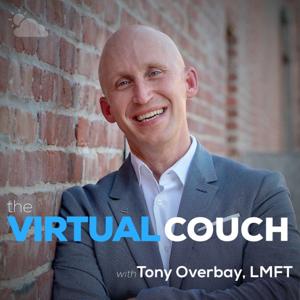
The Virtual Couch

The Virtual Couch

Download on the App Store
  • Favorites

    196

    Followers

  • Latest release

    9 days ago

  • Typical duration

    72 min

    per episode

Based on Podcast App listening data

All The Virtual Couch episodes

  • The Evolutionary Superpower of Highly Sensitive People: How HSP Differs from Autism (and Does it Matter?)
    Have you ever been told you're 'too sensitive' or that you need to ‘get over it,’ or ‘don’t worry about it,’ but that only causes you to worry more, or feel less connected to others, or even yourself? Or have you been told that your sensitivity must mean you're on the autism spectrum? Or are you on the autisim spectrum and can you also identify with many of the characteristics of Highly Sensitive People? With over 2.2 million views and hundreds of comments on recent viral videos about Highly Sensitive People (HSPs), it's clear this topic strikes a nerve. Drawing from his experience working with both HSPs and individuals with ASD, Tony dives deep into why these distinct experiences are often confused - and why understanding the difference isn't just interesting, it's essential for creating a more empathetic world.
    Through viral video statistics, personal anecdotes, and real-world examples, he breaks down how HSPs (representing 15-20% of the population) and individuals with ASD navigate life differently. From sensory processing to social dynamics, discover why that deep emotional processing might actually be an evolutionary advantage rather than a disorder. Along the way, the discussion explores how ADHD and NPD (Narcissistic Personality Disorder) intersect with these experiences.
    This episode provides crucial insights into recognizing, understanding, and supporting both HSPs and individuals with ASD. Whether questioning your own experiences or trying to better understand someone else's, listeners will find the clarity and validation they've been seeking. Perfect for anyone who's ever felt misunderstood about their sensitivity or confused about where they fit in the neurodiversity spectrum. Join Tony for an eye-opening discussion that might just change how you see yourself - or someone you love."
    00:00 Welcome and Introduction
    00:30 The Viral Video on Highly Sensitive People
    01:04 Behind the Scenes: Social Media Stats
    02:05 Addressing Misconceptions and Personal Insights
    03:26 A Personal Anecdote: The Butterfly Bandage
    04:12 Responding to Drive-By Comments
    04:29 Understanding Highly Sensitive People (HSP) vs Autism Spectrum Disorder (ASD)
    07:27 Story Time: Sarah and Michael's Interaction
    18:57 The Evolutionary Purpose of High Sensitivity
    21:39 Traits and Characteristics of Highly Sensitive People
    29:17 Challenges Faced by Highly Sensitive People
    33:59 The Importance of Curiosity and Understanding
    35:30 Understanding Human Uniqueness
    36:22 Fascinating Facts About Human Preferences
    37:22 The Complexity of Sensitivity
    39:20 Exploring Autism Spectrum Disorder (ASD)
    40:49 Comparing HSP and ASD Sensory Experiences
    54:50 Social Interactions: HSP vs. ASD
    01:00:47 Nonverbal Communication Differences
    01:04:26 Emotional Energy and Social Fatigue
    01:08:05 Final Thoughts and Listener Engagement
    1 hr 10 min
  • Trisha Jamison, Host of the Q&A Files Podcast on Overcoming Emotional Immaturity for Better Relationships
    Have you ever tried selling a grand piano on Facebook Marketplace? Our latest episode of the Q&A Files kicks off with some personal tales of downsizing and the hilarious adventures that come with it. Join us as Trisha Jamison, a board-certified functional nutritionist, and Tony Overbay, a licensed marriage and family therapist and seasoned podcaster from The Virtual Couch, and Waking Up To Narcissism, discuss these issues for Tony's podcast, The Virtual Couch.
    Trisha and Tony discuss emotional immaturity and narcissistic traits and offer a path to healthier relationships. We share our own journeys of growth and healing to show how. This episode delves into the challenges of navigating emotionally complex relationships and the power of validation. Whether dealing with resistance from a partner or unlocking the transformative potential of self-awareness, our candid discussions aim to provide fresh perspectives and practical strategies for listeners who might be walking similar paths.
    Join us next time as we discuss how to keep your relationships fresh by talking to a newlywed couple who are just as cute as can be! Follow the Q&A Files Podcast on Spotify https://open.spotify.com/show/1k2Oh4rY9VCp1tVeu14dxk?si=a39537613900475b Apple Podcasts https://podcasts.apple.com/us/podcast/the-q-a-files/id1730736061 or wherever you listen to podcasts.
    52 min
  • Anxious or Avoidant? Why Your Relationship Patterns Repeat & How to Change Them (Part 1)
    Are you tired of repeating the same relationship patterns? Whether it's constant worry about abandonment or a tendency to keep people at arm's length, these behaviors - known as attachment styles - aren't set in stone.
    In part one of this two-part series, therapist Tony Overbay examines the science of attachment theory, tracing its development from John Bowlby and Mary Ainsworth's pioneering "Strange Situation" experiment to current research demonstrating how people can actually change their relationship patterns. Through clinical examples and accessible explanations, Tony breaks down how early experiences with caregivers create blueprints that influence adult relationships - and more importantly, why these patterns can evolve.
    Tony explains how understanding attachment style connects to emotional maturity and self-awareness. Listeners will learn about different attachment patterns, how they manifest in daily life, and why these early-developed patterns aren't a reflection of personal failure - they emerged before conscious choice was possible.
    This episode provides the foundation for a deeper exploration of attachment style change and relationship transformation. For anyone dealing with trust issues, abandonment fears, or struggles with emotional intimacy, the discussion offers concrete insights into becoming more secure in relationships.
    Part 2 will delve into specific strategies for building secure attachments and showing up differently in relationships. As Tony often says, "You're not broken, you're human" - and humans have a remarkable capacity for growth.
    00:00 Welcome Back and New Beginnings
    00:28 Understanding Narcissism and Emotional Maturity
    02:05 Personal Struggles and Emotional Growth
    04:40 Podcast Updates and Future Plans
    06:59 Introduction to Attachment Theory
    10:06 The Strange Situation Experiment
    12:28 Attachment Styles and Their Impact
    17:25 Early Childhood and Relationship Templates
    21:04 Avoidant Attachment in Adulthood
    22:07 The Painful Dance of Intimacy
    23:52 The Role of Fathers in Attachment
    24:37 Presence and Radiance: A Father's Influence
    26:18 Emotional Safety and Consistency
    29:31 Navigating Emotions and Independence
    39:53 Challenges of Absent Fathers
    44:12 Healing Attachment Wounds
    44:33 Conclusion and Next Steps
    Find more from Tony Overbay:
    TikTok: https://www.tiktok.com/@virtualcouch
    Instagram: https://www.instagram.com/virtual.couch/
    Facebook: https://www.facebook.com/tonyoverbaylmft/
    Apple Podcast: https://podcasts.apple.com/us/podcast/the-virtual-couch/id1275153998
    Website: https://www.tonyoverbay.com/
    Patreon: https://www.patreon.com/virtualcouch
    To learn more about Tony's upcoming re-release of the Magnetic Marriage course, his Pathback Recovery course, and more, sign up for his newsletter through the link at https://linktr.ee/virtualcouch
    Available NOW: Tony's "Magnetic Marriage Mini-Course" is only $25. https://magneticmarriage.mykajabi.com/magnetic-marriage-mini-course
    Subscribe to Tony's latest podcast, "Waking Up to Narcissism Q&A - Premium Podcast," on the Apple Podcast App. https://podcasts.apple.com/us/podcast/waking-up-to-narcissism-q-a/id1667287384
    Go to http://tonyoverbay.com/workshop to sign up for Tony's "Magnetize Your Marriage" virtual workshop. The cost is only $19, and you'll learn the top 3 things you can do NOW to create a Magnetic Marriage.
    You can learn more about Tony's pornography recovery program, The Path Back, by visiting http://pathbackrecovery.com And visit
    Tony mentioned a product that he used to take out all of the "uh's" and "um's" that, in his words, "must be created by wizards and magic!" because it's that good! To learn more about Descript, click here https://descript.com?lmref=bSWcEQ

    47 min
  • Live Q&A with Tony and Sydney - Navigating Mental Health: Highly Sensitive People, Narcissism, Emotional Immaturity, ADHD, and “Good Therapy”
    In this special bonus episode of The Virtual Couch, host Tony Overbay, a licensed marriage and family therapist, is joined by his daughter Sydney for a live Q&A session originally aired on TikTok. The duo addresses a variety of mental health topics, including ADHD management, the importance of setting realistic New Year's resolutions, and how to navigate emotional boundaries in relationships. Listeners can learn about the differences between CBT and ACT therapy, how to handle emotional immaturity and narcissism in relationships, and practical strategies for dealing with ADHD, such as medication and increasing emotional tolerance. Tony and Sydney also discuss complex emotional topics like disassociation, rejection sensitivity, and the impact of childhood defense mechanisms on adult behaviors. For those unable to join live, the episode is available on Tony's Virtual Couch YouTube channel. Viewers are encouraged to submit their mental health questions for future episodes.
    00:00 Welcome to The Virtual Couch
    01:18 Live Q&A Introduction
    02:37 Discussing New Year's Resolutions
    03:36 Understanding Socially Compliant Goals
    04:44 Experiential Avoidance Explained
    05:31 Setting Realistic Goals
    08:06 Addressing ADHD and Rejection Sensitivity
    12:02 Navigating Emotional Immaturity in Relationships
    18:08 Falling in Love Outside of Marriage
    21:15 ADHD and Attachment Styles
    23:35 Gaslighting: A Childhood Defense Mechanism
    28:41 The Impact of ADHD Medication
    42:10 Addressing Basic Needs
    42:22 Exploring Non-Stimulant ADHD Medications
    43:53 Understanding the Window of Tolerance
    46:10 Thoughts on TMS Therapy
    47:49 Discussing DPDR Disorder
    49:25 Cognitive Behavioral Therapy vs. Acceptance and Commitment Therapy
    52:36 Navigating Emotional Sensitivity and Boundaries
    57:00 Understanding Borderline Personality Disorder
    01:00:00 The Role of Therapy and Validation
    01:11:07 Highly Sensitive Person (HSP) Traits
    01:20:33 Concluding Thoughts and Q&A
    Find more from Tony Overbay:
    TikTok: https://www.tiktok.com/@virtualcouch
    Instagram: https://www.instagram.com/virtual.couch/
    Facebook: https://www.facebook.com/tonyoverbaylmft/
    Apple Podcast: https://podcasts.apple.com/us/podcast/the-virtual-couch/id1275153998
    Website: https://www.tonyoverbay.com/
    Patreon: https://www.patreon.com/virtualcouch
    1 hr 22 min
  • I Feel Like... No, Wait, Actually I Think That… The Hidden Language of Emotions
    Tony exposes something that will forever change how you hear conversations - including your own. That moment when someone says, 'I feel like you don't care' might not actually be about feelings at all..."
    Have you ever said "I feel like this isn't working," when what you really meant was, "I think this isn't working - and I'm scared"? In this eye-opening episode, Tony delves into the subtle but powerful difference between thoughts and feelings, revealing how this common confusion shapes our relationships in unexpected ways.
    Through engaging stories from his therapy practice, Tony shows how something as simple as saying "I feel like" when we mean "I think" can accidentally put others on the defensive and hide our true emotions. You'll discover why that matters more than you might think - especially in your closest relationships.
    Drawing from both clinical experience and relatable examples (including a story about forgotten tacos at a dinner party), Tony explores:
    - Why we often mask our true feelings behind thoughts
    - How childhood experiences shape our comfort with emotional expression
    - The surprising reason self-compassion feels threatening to many people
    - Practical ways to build a richer emotional vocabulary
    Once you understand this pattern, you'll start noticing it everywhere - in your conversations, in others' speech, and maybe even in your own internal dialogue. Visit Tony's new website https://tonyoverbay.com for additional resources on emotional intelligence and join his Patreon community at https://patreon.com/virtualcouch for exclusive content and Q&A sessions where you can dive deeper into these insights.
    This isn't just another episode about communication - it's about understanding why we hide our true feelings and how to finally express what we really mean.
    Find more from Tony Overbay:
    TikTok: https://www.tiktok.com/@virtualcouch
    Instagram: https://www.instagram.com/virtual.couch/
    Facebook: https://www.facebook.com/tonyoverbaylmft/
    Apple Podcast: https://podcasts.apple.com/us/podcast/the-virtual-couch/id1275153998
    Website: https://www.tonyoverbay.com/
    Patreon: https://www.patreon.com/virtualcouch
    00:00 Welcome to The Virtual Couch
    00:52 Understanding Unhealthy Coping Mechanisms
    01:20 Exciting Announcements and Facial Hair
    03:07 Unseen Patterns and Hidden Meanings
    05:49 The Power of Confirmation Bias
    08:58 Thoughts vs. Feelings: A Therapy Insight
    17:33 Emotional Vocabulary and Childhood Influences
    23:20 Separating Observations from Judgments
    24:03 Witness vs. Lawyer: A Car Accident Case
    24:44 Applying the Concept to Relationships
    25:39 Curiosity Over Judgment
    27:15 Workplace Communication
    29:37 The Taco Story: A Lesson in Self-Compassion
    34:56 The Impact of Self-Criticism
    39:13 Embracing Psychological Flexibility
    40:57 Conclusion and Final Thoughts
    43 min
  • The Balancing Act: Self-Esteem vs. Self-Compassion
    Are you tired of the endless pursuit of perfection? Do you question why your self-esteem seems more tied to others' opinions than your own self-worth? In this transformative episode, Tony explores the crucial difference between self-esteem and self-compassion, drawing from Dr. Kristin Neff's groundbreaking research. Through personal experiences and scientific insights, Tony challenges our cultural obsession with self-esteem, revealing why the constant pressure to be "above average" creates an impossible and unhealthy standard for well-being.
    Learn how self-compassion offers a more sustainable path to genuine self-acceptance through its three core components: self-kindness, common humanity, and mindfulness. Tony delves into the fascinating neuroscience behind mindfulness practices, explaining how they physically rewire our brain for greater emotional regulation and self-awareness. Drawing from Viktor Frankl's profound insights as a Holocaust survivor and author of "Man's Search for Meaning," Tony illustrates how finding meaning in our struggles can transform our relationship with ourselves and others.
    This episode provides both the scientific framework and practical tools needed to develop self-compassion in daily life. Whether you struggle with perfectionism, find yourself caught in comparison traps, or simply want to develop a more stable sense of self-worth, you'll discover why self-compassion offers all the benefits of high self-esteem without its potential downsides. Join Tony as he shares actionable strategies for transforming your relationship with yourself and finding peace in the simple truth that you're not broken - you're human.
    00:00 Introduction and Personal Story
    01:46 The Therapist's Dilemma: Hope vs. Reality
    04:33 Exploring Self-Esteem and Self-Compassion
    07:01 The Impact of Comparison and External Validation
    11:02 Value-Based Goal Setting and Radical Acceptance
    13:08 Parental Support and Secure Attachment
    15:25 Listener Insights on Self-Esteem
    16:32 Embracing Self-Compassion
    23:22 Seeking Validation and Self-Compassion
    24:16 Confessions of an Ultramarathoner
    26:18 Accepting Mediocrity in Running
    29:19 The Power of Self-Compassion
    33:25 Mindfulness and Self-Kindness
    35:19 A Personal Podcasting Challenge
    39:21 Viktor Frankl's Wisdom on Meaning
    45:23 The Journey of Self-Compassion
    48 min
  • Smiling But Sad: Decoding Persistent Depressive Disorder, Dysthymia, “Eeyore Syndrome” w/BONUS Medication Analogy and Thanksgiving Talk Topics
    Tony delves into smiling depression, medication, and natural ways to improve brain chemistry, Persistent Depressive Disorder (PDD), formerly known as dysthymia- and much more! NOTE - Tony is not a doctor, and he shares a helpful way of how medications work that was explained to him, including what neurotransmitters are. What roles do serotonin, dopamine, norepinephrine, GABA, and glutamate play in one's mental health, and why do so many of the medications involve “reuptaking,” and what does that mean? Tony’s advice is not to be viewed as a replacement for medical advice; he strongly recommends that people meet regularly with their doctor for medical advice.
    Tony explores the differences between various mental health conditions like PDD, OCD, NPD, and more. He also explores the historical context of dysthymia, the changes in diagnostic criteria with the release of DSM-5, the significance of moving the diagnosis from a personality disorder to a mood disorder, and how the two differ.
    Additionally, we will discuss treatment options, including therapy and medication, and more practical advice for those struggling with chronic low-grade depression.
    This episode is packed with insights and is a perfect listen before Thanksgiving for some psychological fun facts to share around the family table.
    Find more from Tony Overbay:
    TikTok: https://www.tiktok.com/@virtualcouch
    Instagram: https://www.instagram.com/virtual.couch/
    Facebook: https://www.facebook.com/tonyoverbaylmft/
    Apple Podcast: https://podcasts.apple.com/us/podcast/the-virtual-couch/id1275153998
    Website: https://www.tonyoverbay.com/
    Link Tree: https://linktr.ee/virtualcouch
    Chapters:
    00:00 Decoding the Alphabet Soup of Mental Health
    02:12 Introduction to the Podcast and Host
    02:38 Understanding Dysthymia & Persistent Depressive Disorder
    04:44 DSM & ICD: Mental Health Diagnostic Tools
    15:54 Personality Disorders vs. Mood Disorders
    22:51 Exploring the History & Impact of Dysthymia
    25:41 Causes and Management of Persistent Depressive Disorder
    28:24 Role of a Muse in Self-Discovery
    29:02 Impact of Stress on Mental Health
    29:13 Acceptance and Commitment Therapy
    29:33 Understanding Your Emotions
    30:28 Treating Persistent Depressive Disorder
    31:36 Science Behind Neurotransmitters
    33:43 How Reuptake Inhibitors Work
    45:50 Natural Ways to Improve Brain Chemistry
    47:17 Understanding Dysthymia
    51:07 Your Journey of Personal Growth
    54 min
  • From Self-Judgment to Self-Compassion: A Guide to Emotional Resilience w/Nate and Marla Christensen
    Tony welcomes guests Nate and Marla Christensen to discuss the concept of self-compassion. Nate is an ALPC, and Marla is an ALPC and AMFT. They delve into the groundbreaking research of Kristen Neff, who has spent 20 years studying the benefits of self-compassion, including its effects on PTSD, anxiety, depression, and overall mental health. The episode explores the three main components of self-compassion—mindfulness, self-kindness, and common humanity—and addresses common misconceptions such as self-compassion being viewed as weakness, self-indulgence, or selfishness. They share personal insights and clinical experiences, making a compelling case for incorporating self-compassion into daily life and therapy. Nate and Marla are both currently working under Tony's license, and both currently have openings in their schedule. To reach Nate, email him at [email protected], and for Marla, email [email protected], or you can contact them through Tony at [email protected]. You can view Nate and Marla's episode on LeadingSaints.org here: https://www.youtube.com/watch?app=desktop&v=0f9P-Xk5ZaE
    00:00 Introduction and Episode Overview
    02:46 Guest Introduction: Nate and Marla Christensen
    02:53 Discussing Self-Compassion
    03:45 Nate and Marla's Professional Background
    08:16 The Importance of Self-Compassion
    14:25 Common Misconceptions About Self-Compassion
    17:04 Scientific Insights on Self-Compassion
    25:25 Historical Context and Recent Research
    27:27 Exploring Self-Compassion
    28:32 Understanding Mindfulness
    30:59 Practicing Self-Kindness
    32:52 Embracing Common Humanity
    34:58 Motivation Through Self-Compassion
    35:53 Challenges in Self-Compassion
    39:14 Cultural Perspectives on Compassion
    41:11 Reparenting and Emotional Maturity
    45:52 Final Thoughts and Reflections
    53 min
  • Anxiety, Aging, and Emotional Autonomy: I Was "This Many Years Old" When I Learned My Parents Were Regular People
    Have you ever wondered why your aging parent suddenly needs to arrive an hour early for everything? Or why, after knowing them your entire life, they suddenly appear to be trying to exert control and order at a level that you’ve never experienced? In today’s episode of The Virtual Couch podcast, Tony Overbay, LMFT, takes us on a fascinating journey through the human brain, starting with the incredible story of Phineas Gage - the man who survived an iron rod through his head and lived to tell the tale (though he wasn't quite the same person afterward).
    From there, he dives into something most all of us are impacted by, either directly or through someone that we care about - anxiety. But not just any anxiety - we're talking about why our caveman's brains are still trying to protect us from tigers in the parking lot and how this shows up differently as we age. Tony breaks down the fundamental differences between normal aging, dementia, and Alzheimer's in a way that finally makes sense.
    Tony then breaks down a listener's email about their father’s increasingly anxious behaviors. Tony unpacks powerful tools for handling these delicate family situations. Tony introduces the acceptance and commitment therapy (ACT) principle of psychological flexibility (think yoga for your emotions) and shares David Schnarch's “4 Points of Balance” to becoming more differentiated, which helps you maintain your sanity while staying connected to those you love.
    Tony explains Schnarch’s 'crucible' as the transformative space where relationships grow or crack under pressure. Whether you're dealing with an aging parent, a challenging relationship, or just trying to understand why people do what they do, this episode offers the “why” behind our anxious and controlling behaviors and practical ways to navigate life's complicated relationships without losing yourself.
    00:00 The Incredible Story of Phineas Gage
    04:04 Introduction to the Virtual Couch
    05:38 Listener's Email: Concerns About Aging Parent
    07:40 Understanding Anxiety and Its Evolution
    14:57 Distinguishing Dementia and Alzheimer's
    17:33 Coping with Aging and Anxiety
    24:50 Practical Advice for Managing Anxiety
    24:59 Reframing Perspectives
    25:09 Empathy and Understanding
    25:25 Intentional Conversations
    25:55 Meeting Halfway
    26:12 Choosing Your Battles
    26:54 Boundaries vs Ultimatums
    27:12 Psychological Reactance
    30:22 Differentiation and Emotional Autonomy
    32:57 Four Points of Balance
    38:30 Constructing Your Crucible
    44:43 Final Thoughts and Takeaways
    To learn more about Tony's upcoming re-release of the Magnetic Marriage course, his Pathback Recovery course, and more, sign up for his newsletter through the link at https://linktr.ee/virtualcouch
    Available NOW: Tony's "Magnetic Marriage Mini-Course" is only $25. https://magneticmarriage.mykajabi.com/magnetic-marriage-mini-course
    Please follow Tony’s newest Instagram account for the Waking Up to Narcissism podcast https://www.instagram.com/wutnpod/ as well as Tony’s account https://www.instagram.com/tonyoverbay_lmft/
    Subscribe to Tony's latest podcast, "Waking Up to Narcissism Q&A - Premium Podcast," on the Apple Podcast App. https://podcasts.apple.com/us/podcast/waking-up-to-narcissism-q-a/id1667287384
    Go to http://tonyoverbay.com/workshop to sign up for Tony's "Magnetize Your Marriage" virtual workshop. The cost is only $19, and you'll learn the top 3 things you can do NOW to create a Magnetic Marriage.
    You can learn more about Tony's pornography recovery program, The Path Back, by visiting http://pathbackrecovery.com And visit
    Tony mentioned a product that he used to take out all of the "uh's" and "um's" that, in his words, "must be created by wizards and magic!" because it's that good! To learn more about Descript, click here https://descript.com?lmref=bSWcEQ
    49 min
  • Navigating Societal Expectations, Faith Crisis and Personal Growth - the Allegory “Off the Beaten Path”
    Tony Overbay, LMFT explores themes of faith journeys, parental expectations, communication, differentiation, and self-discovery through an allegorical story titled 'Off the Beaten Path: Finding Love and Self in a World of Conformity.' The narrative follows a young man named Ansel, who grapples with societal expectations, familial pressures, and his journey toward self-acceptance. Through meaningful encounters and introspection, Ansel learns to embrace his individuality amidst traditional, religious, and cultural norms. This episode also highlights the importance of personal integrity the challenges of navigating faith and family systems, and encourages listeners to explore their unique talents and values. Tony invites the audience to share their stories and questions about their own faith and family journeys for future episodes.
    00:00 Welcome and Introduction
    01:17 “Not My Job” song by: Riley Hope
    02:48 The Power of Writing and Poetry
    05:26 Exploring Allegories
    06:44 Off the Beaten Path: Ansul's Journey Begins
    12:14 Ansul's Struggles and Self-Discovery
    16:17 Meeting Maris: A New Connection
    17:52 Seeking Guidance: Ansul's Dilemma
    18:31 Ansul's Realization and Self-Acceptance
    19:00 Building a Relationship with Maris
    20:42 Themes of the Allegory: Individuality vs. Conformity
    22:32 Exploring Faith and Doubt
    22:53 Coming of Age and Self-Discovery
    23:30 Truth, Knowledge, and Intergenerational Expectations
    25:34 Curiosity, Love, and Acceptance
    26:38 Personal Growth Through Discomfort
    27:19 Diversity of Thought and Self-Acceptance
    29:24 Navigating Difficult Journeys of Faith and Family
    31:00 Encouragement for Personal Growth and Authenticity
    33:02 Conclusion and Call to Action
    To learn more about Tony's upcoming re-release of the Magnetic Marriage course, his Pathback Recovery course, and more, sign up for his newsletter through the link at https://linktr.ee/virtualcouch
    Available NOW: Tony's "Magnetic Marriage Mini-Course" is only $25. https://magneticmarriage.mykajabi.com/magnetic-marriage-mini-course
    Please follow Tony’s newest Instagram account for the Waking Up to Narcissism podcast https://www.instagram.com/wutnpod/ as well as Tony’s account https://www.instagram.com/tonyoverbay_lmft/
    Subscribe to Tony's latest podcast, "Waking Up to Narcissism Q&A - Premium Podcast," on the Apple Podcast App. https://podcasts.apple.com/us/podcast/waking-up-to-narcissism-q-a/id1667287384
    Go to http://tonyoverbay.com/workshop to sign up for Tony's "Magnetize Your Marriage" virtual workshop. The cost is only $19, and you'll learn the top 3 things you can do NOW to create a Magnetic Marriage.
    You can learn more about Tony's pornography recovery program, The Path Back, by visiting http://pathbackrecovery.com And visit
    Tony mentioned a product that he used to take out all of the "uh's" and "um's" that, in his words, "must be created by wizards and magic!" because it's that good! To learn more about Descript, click here https://descript.com?lmref=bSWcEQ
    36 min