
Sign up to save your podcasts
Or



Based on Podcast App listening data
A handful of votes can flip a legislature, and a handful of courageous pastors can flip the script. We’re fresh off a Northeast swing—Maine, New Hampshire, and beyond—where young pastors are packing rooms, voter ID is on the ballot, and churches are waking up to how close margins really are. One state rep told us Maine missed a legislative majority by just 200 votes. Opponents of voter ID admitted they could lose 13,000 “reliable” votes if it passes. Those numbers aren’t abstract; they’re a roadmap for how a dormant church vote can change outcomes.
We share the heart behind the math, too. A nephew who once wore 666 on his forehead bought a Bible, found a church in Waco through a multi-state pastor text thread, and gave his life to Christ. That story captures a larger shift we’re seeing since Charlie Kirk’s assassination: grief turning into courage, and curiosity turning into commitment. It’s why we’re pushing for discipleship over slogans—pastors teaching whole-life faith that speaks to family, work, justice, and civic stewardship. When people are formed, they show up. When they show up, districts move. And when districts move, statewide races follow.
Virginia offers the blueprint. Last time, turnout in about ten delegate districts helped carry the governor’s race. The same targeted approach is back—focused on a handful of House districts where church engagement can block bad policy and lift strong candidates. Michigan is in play, too, despite a long drought for Republicans in the Senate. We’re seeing hunger for clarity, practical training, and lawful election integrity efforts that rebuild trust. Our tour continues through Ohio and Michigan with a seed-planting mindset for 2026 and 2028—because habits made in the off-years win the on-years.
If you care about voter ID, fair play in women’s sports, and the difference between a short-lived revival and a culture-shaping great awakening, this conversation lays out the plan and the why behind it. Listen, share with your pastor or small group, and help us expand the network. Subscribe, leave a review to boost visibility, and tell us: which state should we target next and why?
Support the show
AWMI.com
A nation expected a funeral and walked into a revival. From the first songs before sunrise to the final benediction, we witnessed worship that felt disarmingly honest, political leaders speaking the name of Jesus without hedging, and thousands responding to a clear gospel. Andrew Wommack joins us to unpack what happened in that room—and why so many people, including skeptics, sensed something they couldn’t easily explain.
We talk candidly about courage rising in unexpected places. JD Vance described shedding his reluctance to speak openly about faith. Worship leaders like Brandon Lake, Kari Jobe, Phil Wickham, Cody Carnes, and Chris Tomlin showed up when it would have been safer to stay home. And then came the moment that stunned the arena: Erica Kirk forgiving her husband’s killer, live and unguarded. That act of mercy didn’t erase grief; it transfigured it. The ripple was immediate—public figures and everyday people confessing old grudges and finally letting them go.
Andrew offers a wide-angle view: prophetic markers that a Great Awakening began years ago, why spiritual renewal usually meets fierce resistance, and how discipleship—not hype—turns a surge of faith into lasting cultural change. We explore the difference between performative religion and practiced obedience, and we point to concrete ways to grow deeper roots: biblical formation, constitutional literacy, and vocational courage that shows up in city halls, classrooms, studios, and neighborhoods.
If you’ve felt a shift in the air but weren’t sure what to call it, this conversation names the moment and maps the next steps. Share this with a friend who needs hope, and leave a review with your biggest takeaway—we want to hear how you’re stepping forward.
Support the show
The Nazarene Fund
Mercy can move a mountain. We unpack how a single act of public forgiveness—offered to a killer on a global livestream—ignited a wave of healing and curiosity that’s drawing young people back to church, rekindling faith in unexpected places, and reminding all of us that grace is stronger than grievance. Along the way, we share Tim Allen’s surprisingly tender turn toward Scripture after decades of unresolved grief and talk about why forgiving doesn’t erase the past—it unchains the heart to face the future.
That surge of interest isn’t an illusion. Pastors are reporting a rise in attendance, especially among young men who are asking the big questions: What is my purpose? How do I build a life that lasts? We lean into practical guidance—marriage, children, legacy, and a pursuit of the eternal—that grounds zeal in wisdom and turns moments into movements. It’s a quiet revolution powered by meaning, not marketing.
The conversation widens to the hard reality of global Christian persecution. We walk through the numbers most Americans never see, spotlight rescue work that relocates vulnerable believers, and describe on-the-ground operations that dismantle trafficking and organ harvesting. We also highlight a rare moment of transparency at the UN, where New Zealand released its cabinet papers to defend a controversial stance—inviting citizens to weigh evidence, not slogans.
If you’ve been carrying bitterness, consider this your nudge to lay it down. If you’ve been searching for purpose, you’re not alone—there’s room for you here. Share this episode with someone who needs hope, and leave a review to help others find these stories. Your voice helps the signal of truth and grace carry farther.
Support the show
What if “ruler over ten cities” isn’t a cautionary tale but a reward for faithfulness? We open the door between faith and public life and keep it open, laying out a biblical and historical case that Christians not only can participate in government—they’re needed there. From Hebrews 11 to Romans 13 and the parable in Luke 19, we trace a throughline: God cares about how communities are led, and Scripture applies to every sphere, including policy.
We get practical fast. We share where to find reliable voter information (pro-family voter guides, state resources, Library of Congress records) and why the right to life serves as a powerful predictor of a candidate’s full philosophy. Decades of data reveal a pattern: when believers vote—and vote their values—freshman classes in Congress tilt toward protecting life, religious liberty, family, self-defense, and property rights, with measurable downstream effects. We unpack exit polls, turnout trends from 1992 to 2010, and the legislative results that followed: the Born-Alive Infant Protection Act, the Unborn Victims of Violence Act, the partial-birth abortion ban, and more.
We also tackle the myth of the “insignificant vote.” A lost race by 20 ballots and a win by 36 prove how thin the margins can be. More importantly, apathy scales; so does conviction. When Christians show up but leave their values at the door, the laws mirror that vacuum. When they bring those convictions, reforms follow, and the culture steadies. Our message is simple and urgent: register, research, and vote with first principles in mind—life first, then liberty and property. Righteousness, not raw economics, exalts a nation, and leaders who honor the first right tend to steward the rest.
Join us as we connect Scripture, history, and hard numbers to show how faithful citizenship preserves freedom. If this resonates, share the episode with a friend.
Support the show
Run To The Roar
This Precarious Moment
Culture rarely changes overnight, and that’s exactly why we talk about revival as a process—local, practical, and measured in decades. We share how old American sermons connected scripture to real life, from business ethics to criminal justice, and why adopting a kingdom mindset moves faith beyond the pews into our neighborhoods, schools, and city halls. Along the way, we explore the surprising data on younger Americans and life, and why mentorship might be the most underrated lever for long-term change.
You’ll hear vivid stories of transgenerational influence: Samuel Cooper investing in a young John Quincy Adams; Gilbert Tennent shaping Benjamin Rush; Samuel Davies forming Patrick Henry’s voice; and Adams, in turn, inspiring a young legislator named Abraham Lincoln to persevere against slavery. These aren’t just history lessons—they’re blueprints. Pick one person. Pour in. Let wisdom travel farther than you will.
We also get honest about the cost. George Whitefield’s horseback circuits, opposition from within the church, and preaching that literally spent his life remind us that real renewal requires grit. The takeaway is simple and demanding: act locally, disciple deeply, think in decades, invest across generations, and work hard because it’s right. If we run to the roar with truth and grace, we can be the salt and light that push back decay and darkness, one faithful step at a time.
Support the show
Run To The Roar
Tired of feeling powerless while headlines rage and nothing changes on your street? We make a blunt case for shifting attention from distant drama to local duty—and we back it with history, data, and a practical path you can start today. Drawing on the opening battles of the American War for Independence, we show how ordinary people, often led by their pastors, protected their towns and created national momentum without waiting for a central command. Then we trace the same pattern through the First Great Awakening, where revival spread because leaders invested in communities, not crowds. The takeaway is simple and demanding: bottom‑up beats top‑down, every time.
We challenge the modern obsession with scale—bigger churches, bigger budgets, bigger platforms—and explain why those metrics often dilute responsibility. Jesus drew massive crowds, but the world turned on twelve men who were deeply formed. That’s why we put discipleship back at the center: teaching people to obey everything Jesus commanded and applying those teachings to real life. We walk through concrete examples—marriage and family stability, stewardship and profit, honest work and contracts, due process and justice—showing how biblical principles built durable social trust and can rebuild it now.
You’ll leave with a map, not just a pep talk: pick one person to mentor this year; learn your school board’s agenda; attend one council meeting; ask one informed question; offer one practical solution. Small steps multiply fast when they’re focused and faithful. If you’re ready to trade outrage for ownership and spectacle for substance, this conversation will give you tools and courage to run toward the roar—right where you live.
Support the show
Run To The Roar
Are you running from the battles you're meant to fight? David Barton's compelling presentation "Running to the Roar" challenges believers to reconsider their approach to cultural engagement through powerful biblical imagery.
When a male lion roars on the African savannah, animals instinctively flee—directly into the waiting teeth of female lions who do the actual hunting. This natural phenomenon reveals a counterintuitive truth: sometimes safety lies in running toward the very thing that frightens us, not away from it. Barton skillfully applies this principle to spiritual warfare, showing how Satan operates as a "roaring lion" precisely to make believers retreat when they should advance.
Barton draws from fascinating passages throughout Scripture, including God's description of the war horse in Job 39 that "laughs at fear" and "cannot stand still when the trumpet sounds." This divinely designed creature exemplifies the temperament believers should cultivate—eager for righteous engagement rather than fearful of conflict. Most provocatively, Barton highlights Revelation 21's sobering revelation that the list of those destined for judgment begins with "the cowardly and fearful"—suggesting that inaction and silence represent serious spiritual failures.
The practical applications are immediately relevant to today's challenges, from social media censorship of faith-based content to the alarming removal of foundational American history from educational curricula. Rather than viewing these as insurmountable obstacles, Barton reminds us that "a wise man attacks the city of the mighty and pulls down the stronghold in which they trust."
As we pray for revival in America, Barton offers wisdom on recognizing when those prayers are being answered and how to break free from the paralysis that comes from focusing exclusively on national issues while neglecting local engagement. This message will equip you with biblical courage to stand firm when others retreat, speak truth when others are silent, and advance God's kingdom when the cultural roars grow loudest.
Support the show
The assassination of Charlie Kirk has sparked an unexpected movement of courage and faith across America and around the world. Rather than silencing his message, this tragedy has amplified it, demonstrating how what enemies intend for evil can be transformed for good.
We're witnessing remarkable ripple effects from Kirk's martyrdom. In South Korea, Dr. Young Hoon Kim—documented as having the world's highest IQ at 276—has publicly committed to planting churches worldwide in Kirk's honor. Meanwhile, Oklahoma's education commissioner announced plans to establish Turning Point USA chapters in every high school across the state, creating spaces where students can engage in meaningful dialogue about American values and civic engagement. These chapters will counter what many parents see as the "woke indoctrination" pushed in public schools.
The impact extends to political leadership as well. JD Vance stepped in to host Kirk's podcast following his death and made a striking admission at the memorial service: "Since Charlie's death, I've talked about Jesus Christ more over the last two weeks than my entire political career." This transformation signals a potential shift in how faith intersects with public service. We're also seeing everyday Americans finding their voices—like the news anchor who resigned after being suspended for paying tribute to Kirk on air.
Even on university campuses, the tide is turning. Pro-life advocate Lila Rose, initially reluctant to debate at Yale University, reconsidered after Kirk's death. Despite facing a skewed format, Rose's arguments convinced Yale students, who voted 60-31 in favor of the pro-life position. This outcome challenges the assumption that conservative voices cannot make inroads in liberal academic settings.
As satisfaction with public education plummets to record lows (only 7% of Americans completely satisfied), there's an unprecedented opportunity for educational reform and alternatives. The courage we're witnessing across America shows how one person's bold stand for their convictions can inspire countless others to do the same.
Want to find your voice and speak with confidence on today's important issues? Visit wallbuilders.com for educational resources or patriotacademy.com to sign up for leadership training that will equip you to stand for truth in your sphere of influence.
Support the show
Ever wonder how the Constitution actually distributes power between government branches? Today's episode dives into this question with a fascinating exploration of presidential authority versus judicial oversight. When a listener asks about Trump's foreign aid policies, we unpack how courts increasingly function as referees in political disputes—a role never intended by our founders.
The conversation shifts to education when we examine Benjamin Rush, the "father of education under the Constitution." Though frequently misunderstood, Rush never advocated for federal control of education. Instead, this founding father and education pioneer wrote powerful essays in 1790-91 arguing for Bible-centered moral education in state-run schools. His warnings about removing religious instruction from classrooms seem eerily prophetic when viewed through the lens of today's educational challenges.
Perhaps most practically, we tackle a question many conscientious voters face: how to stay informed about local candidates without established voting records. Rather than offering a quick fix, we provide actionable steps for citizen engagement—creating voter guides, interviewing candidates, and coordinating with neighbors. This grassroots approach embodies the founding spirit of civic responsibility that built America.
We close by examining the often-misquoted Treaty of Tripoli from 1797, particularly its statement that "the government of the United States is not in any sense founded on the Christian religion." When read in full context, this diplomatic language was designed to distinguish America from European powers engaged in religious wars while establishing peaceful relations with Muslim nations.
Ready to deepen your understanding of constitutional principles and take meaningful civic action? Listen now, then visit wallbuilders.com for more resources on applying timeless wisdom to today's challenges.
Support the show
The sacred duty of a shepherd is to protect the flock – a responsibility that extends beyond spiritual guidance to physical safety. When New York state tried to prevent churches from allowing concealed carry on their premises while granting this freedom to businesses, one pastor stood firmly for both religious liberty and self-defense rights.
Jeremy Dys from First Liberty Institute joins us to share the remarkable victory they achieved in New York, where they successfully challenged discriminatory legislation that denied churches the same security options available to secular businesses. What makes this case particularly significant is that while multiple challenges were filed on Second Amendment grounds alone, First Liberty's approach combining First and Second Amendment arguments proved decisively successful.
The historical foundation for this victory runs deep in American tradition. From colonial Pilgrims walking to worship with armed guards to protect their community, to early American laws that sometimes required churchgoers to carry weapons, our nation has long recognized the legitimate need for houses of worship to ensure their security. First Liberty brilliantly incorporated this historical perspective, showing how today's church security teams stand in a long line of American tradition dating back to before the founding.
Beyond winning the case itself, the federal court awarded First Liberty approximately $817,000 in attorney fees – a powerful statement that government overreach into religious liberty carries significant consequences. As Jeremy explains, this victory represents far more than a single case outcome; it establishes a crucial precedent for religious organizations nationwide seeking to protect their congregations while remaining faithful to their spiritual calling.
The conversation also touches on another critical First Liberty case headed to the Supreme Court, where two Christian schools were prohibited from praying over the loudspeaker before their championship football game despite this being their tradition. This pattern of forcing religious expression out of public spaces contradicts both America's founding principles and constitutional protections.
Discover how these landmark cases are reshaping the landscape of religious liberty and why the intersection of faith and self-defense represents one of the most important constitutional battlegrounds today.
Support the show
From the publisher's feed
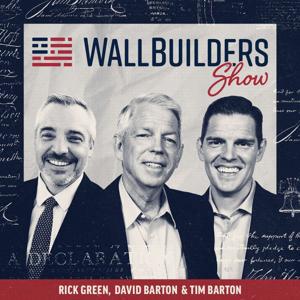
The WallBuilders Show is a daily journey to examine today's issues from a Biblical, Historical and Constitutional perspective. Featured guests include elected officials, experts, activists,…
Ranked by our users in the last 21 days
1,402 Listeners

2,561 Listeners
25,986 Listeners

165 Listeners
1,022 Listeners
5,422 Listeners

2,177 Listeners
65,453 Listeners
1,564 Listeners
1,549 Listeners
2,441 Listeners
691 Listeners
385 Listeners
13,157 Listeners
892 Listeners