
Sign up to save your podcasts
Or



Based on Podcast App listening data
British generals feared their sermons, and John Adams credited them by name. We open the door to a forgotten story: how American pastors shaped the ideas that fueled independence, guided legislators, and ultimately informed the First Amendment’s protections—then connect that legacy to the questions pastors and voters face today.
We walk through the tangible links from pulpit to policy: reprinted sermons that taught equality under God, consent of the governed, and taxation limits long before 1776; clergy who counseled governors, served in congresses, and even held the Speaker’s gavel. From there, we cut through modern confusion about “separation of church and state,” clarifying that the First Amendment restrains Congress, not churches, and was never meant to secularize society. Along the way, we explore why early state bans on clergy in office were short-lived, how Jefferson and Witherspoon defended ministers’ civil rights, and why free exercise means robust moral teaching in public life.
Grounding the conversation in Scripture, we show how Romans 13 names civil rulers as “ministers of God,” how prophets confronted kings with truth, and how Jesus addressed issues we’d now call policy—contracts, marriage, justice. We offer a practical hierarchy for conscience-driven citizenship: public acknowledgment of God, protection of innocent life, preservation of marriage, and respect for private property, with additional biblical guidance on taxes, labor, and courts. We also tackle the IRS chill effect with facts and legal strategy that protect pulpit freedom, encouraging pastors to disciple believers for Monday—not just Sunday.
If you value clear thinking where faith meets freedom, press play and share this with a friend. Tell us which topic your pastor should tackle next.
Support the show
Seven million in the streets—or a narrative that outran the facts? We unpack the “No Kings” rallies with a clear-eyed look at turnout claims, media framing, and the surprising historical flubs that turned Boston Tea Party lore into prop work. From there, we trace a bigger thread: how redefining loaded words like fascism isn’t just sloppy, it’s strategic. When a term once reserved for Mussolini and Hitler gets reduced to shorthand for “policies I dislike,” the debate tilts from evidence to emotion, and the public loses its compass.
We walk through what fascism actually meant historically—authoritarian one-party rule, suppression of dissent, cult-of-leader nationalism—and measure today’s accusations against that yardstick. The presence of permitted protests and noisy opposition doesn’t fit the totalist mold. So why does the label stick? Projection. Calling your opponents what you fear in your own camp blunts accountability. We explore how that tactic shapes voter behavior, including why polls in places like Virginia can swing without voters switching sides; fatigue can make people sit out rather than cross the aisle.
The conversation also draws a hard line between protected speech and incitement. Protest is core to a free republic; urging violence is not. If you hate a law, the constitutional fix is representation and reform, not threatening agents who enforce statutes. That civic clarity connects to a deeper foundation: rights rooted in God, not government, and a culture capable of self-control. Without a moral backbone, rhetoric escalates, definitions melt, and the center cannot hold.
If you’re hungry for grounded history, honest terms, and a roadmap for principled civic action, this one’s for you. Listen, share with a friend who’s wrestling with the headlines. Your voice keeps this conversation honest and alive.
Support the show
Headlines keep telling one story about chaos, division, and decline. We bring you another: a steady pushback against lawlessness, a break with weaponized labels, and a surprising rise in faith—from tech boardrooms to college arenas.
We start with the hard civic piece. Labeling Antifa as a terrorist organization was controversial, but we dig into why targeting violence instead of peaceful protest can reset norms and protect communities. From empty storefronts to higher insurance costs, the ripple effects of street anarchy are real. We then unpack a turning point for the Southern Poverty Law Center: the FBI has officially cut ties with the SPLC and its “hate map,” a move that matters for anyone concerned about free speech, religious liberty, and the integrity of public institutions. When labels replace evidence, the public square corrodes; when institutions step back from politicized sorting, trust gets a chance to recover.
The cultural current is shifting too. Elon Musk, who once dismissed religion, now praises the teachings of Jesus and even amplifies calls to go to church. We share a powerful testimony of a young man who stripped off anti-Christian symbols, picked up a Bible, and found a local church. Pair that with 8,000 students gathered at the University of Tennessee and hundreds baptized in one night, and you see a pattern: Gen Z is hungry for meaning, community, and hope. Even Bill Maher, a longtime critic of religion, is calling out the world’s neglect of persecuted Christians in Nigeria—proof that truth can cut across ideology when the stakes are human lives.
If you care about public safety, free expression, and genuine spiritual renewal, this conversation connects the dots. We weave together policy, media accountability, and stories of personal change to show why a moral reset is not only possible—it’s already underway.
Support the show
FBI goes to Glenn Beck's home after he helped expose Antifa's terror network
https://www.theblaze.com/news/deadass-serious-fbi-goes-to-glenn-becks-home-after-he-helped-expose-antifas-terror-network
Key Figures Linked to Antifa Leave the US After Group’s Terrorist Designation
https://www.theepochtimes.com/us/top-antifa-figures-left-the-us-after-terrorist-designation-5927102
FBI cuts ties with far-left Southern Poverty Law Center famous for its 'hate map'
https://www.christianpost.com/news/fbi-cuts-ties-with-southern-poverty-law-center.html
Elon Musk shares Erika Kirk's call to 'go to church'
https://www.christianpost.com/news/elon-musk-shares-erika-kirks-call-to-go-to-church.html
8,000 Students Gather for UniteUS Revival at University of Tennessee, 500 Make Decisions for Christ
https://www.worthynews.com/109157-8000-students-gather-for-uniteus-revival-at-university-of-tennessee-500-make-decisions-for-christ
Bill Maher rebukes media for silence on genocide of Christians in Nigeria
https://www.christianpost.com/news/bill-maher-rebukes-media-silence-genocide-christians-nigeria.html
What if your presidential vote is actually a vote for thousands of voices who shape culture from the inside? We unpack how appointees carry worldview into agencies, the military, and public life—and why a single, striking moment at a national memorial revealed how courage at the top emboldens a team to speak plainly about faith.
From there, we dig into the machinery of power. The Constitution leans on simple majorities, yet the modern Senate stalls under a filibuster born from internal rules, not founding design. We lay out how the rule works, why both parties cling to it, and exactly how it could be scrapped with 51 votes at the start of a session. More importantly, we share how to engage your senators: show up at town halls, cite Washington and Jefferson on majority rule, ask for clear commitments, and keep the tone calm but firm so accountability replaces gridlock.
We then turn to schools and the Supreme Court’s tradition-and-history standard. That shift has reopened doors many assumed were locked: Ten Commandments displays advancing in multiple states, Texas creating space for prayer and Bible time, release-time programs for religious instruction, and after-school Good News Clubs led by teachers on their own time. With 1,400 districts offering for-credit Bible courses to 200,000 students, the bottleneck isn’t law—it’s awareness. We point to practical resources and steps you can take to brief school boards, support teachers, and write policies that reflect current legal protections.
If you care about how values translate into policy, how rules shape results, and how local action changes the map, this conversation is your field guide.
Support the show
The 1916 Project
The post‑Roe fight didn’t end at the clinic door—it moved to the mailbox, the browser, and the bathroom. We sit down with Seth Gruber to confront the gap between what pro‑life laws claim and what they actually do, especially as chemical abortions surge and many states punish providers while giving parents legal immunity. If law is a teacher, what lesson are we sending when the same act is criminal for one set of hands and consequence‑free for another?
We unpack the uncomfortable numbers around abortion pills, the supply chains that route through overseas vendors, and the limits of a clinic‑only strategy. Seth argues for coherence: if the unborn child is human, equal protection should not shift with setting or instrument. That means pairing supply‑side enforcement—against distributors, telehealth brokers, and professional violators—with clear statutes that align penalties with the value we claim to defend. Along the way, we trace the civilizational stakes, from J.D. Unwin’s research on sexual culture and social energy to the way legal norms shape public conscience. Deterrence matters; history shows how quickly behavior follows the signal of law.
We also spotlight a growing cultural front: The 1916 Project’s wide church screenings and new Daily Wire streaming date, the Life or Death Con in D.C. ahead of the March for Life, and a forthcoming documentary, The Last Stand, telling a history of Christian resistance and the rebuilding of moral foundations. Some states can move fast; others must work incrementally. But settling for contradictions leaves the most common abortion method untouched and teaches the wrong lesson about human dignity.
If you value clear thinking, principled strategy, and courageous storytelling, this conversation will sharpen your view of what genuine protection for the unborn requires.
Support the show
A public honor for Charlie sets the stage for a bigger reckoning: awakening without courage fades, and courage without discipleship burns out. We open with a careful look at contested history—why context matters for Columbus Day, Indigenous heritage, and how easy it is to trade nuance for slogans. Then we lean into a groundswell that’s hard to ignore: young people are flocking to messages that don’t dodge hard topics. They’re finding a way to connect faith with everyday decisions—family, school, work, and yes, the public square.
Pastor Rob McCoy joins us to trace a line from the Jesus Movement to today’s moment. Calvary Chapel exploded by teaching scripture clearly and welcoming the disillusioned, but California’s civic reality moved the other way. That gap is the challenge: if discipleship avoids politics, who defends the policies that shape our neighbors’ lives? Rob shares how Charlie treated politics as an on-ramp to the gospel, modeling a style that thinks biblically and speaks plainly. The result is a surge of practical faith—young adults starting families, serving their communities, and asking pastors for straight answers about law, liberty, and responsibility.
The urgency comes into sharp focus in South Korea. Rob tells the story of Build Up Korea, Mina Kim’s fearless organizing, and the arrest of Pastor Son under a government that’s raiding churches, intimidating opposition leaders, and packing courts. Before he died, Charlie promised to elevate their case. Rob flew back to keep that promise—preaching hope, visiting the prison, and urging leaders to stand firm while allies rally. We explore a concrete path forward: awaken the church to speak clearly, and use leverage—like targeted tariffs tied to religious freedom and rule of law—to make liberty the better bargain. It’s a sobering, actionable picture of how faith can serve the common good at home and abroad.
If this conversation resonates, share it with a friend, subscribe for future episodes, and leave a review with your biggest takeaway so we can keep amplifying stories that matter.
Support the show
A pastor jailed, newsrooms warned, and global power pressing in—when we sat down with Bill Federer, the story out of South Korea sounded less like headlines and more like a playbook. We walk through raids on churches, lawfare against dissent, and how technology vendors, rare earths, and diplomatic gaps create a pressure cooker most outlets won’t touch. The pattern will feel familiar: intimidate the press, criminalize opponents, and move fast before anyone can organize a response. That’s why we talk openly about leadership pipelines and why equipping young people and citizens with constitutional literacy and moral courage isn’t optional—it’s survival.
From there, we pivot to a Columbus most people have never met. Not a caricature, but a navigator shaped by Marco Polo’s Travels, a misread of Arabic miles, and the closing of overland routes after 1453. Bill takes us from the Mongol court to a Genoese prison cell, from hurricanes that destroyed fleets to a slow gold ship that changed a reputation, from Arawak hospitality to Carib cannibalism, from political jealousy to chains, from the naming of Trinidad to a predicted lunar eclipse on a stranded beach that bought another chance. It’s vivid, human history—messy, consequential, and resistant to propaganda.
What ties Seoul’s silence to the fight over Columbus Day is the struggle for narrative power. If you can sour a people on their past, you can sell them any future. We push past the one-note takes to hold competing truths at once: genuine indigenous suffering, undeniable transformation across hemispheres, and the constant tension between greed and the gospel. Listen, share with a friend who loves real history, and if the conversation moves you, leave a review and subscribe so we can keep bringing you candid, well-sourced stories that sharpen your mind and steady your heart.
Support the show
Politics gets messy when your values and your ballot don’t line up. We dive straight into Virginia’s statewide races to unpack a real voter’s dilemma: a controversial AG candidate whose private texts ignited a public storm, a lieutenant governor race clouded by identity-over-policy branding, and a base deciding whether to split tickets, write in, or hold their nose. Along the way, we tackle the questions that keep serious voters up at night: When does conscience say “no,” and when does prudence say “lesser evil”? How much power does each office actually wield, and how should that change your vote?
We also zoom out to the system that produces these choices. If a party keeps offering candidates misaligned with its own voters, the answer isn’t apathy—it’s leadership. We share a practical blueprint for taking back party machinery at the precinct level, recruiting early, and building a bench so the next four-year cycle looks different. Because ballots are cast in November, but candidates are built in March meetings, county committees, and quiet planning rooms where rules and platforms are forged.
For a needed dose of good news, we spotlight a brand’s swift course correction: Cracker Barrel tried to abandon its core identity, faced a backlash, and reversed. It’s a reminder that institutions—business or political—survive by listening, not lecturing. We close by framing border security statistics that claim historic reductions, modeling how to interrogate outcomes without falling for easy headlines. If you care about faith-informed citizenship, electoral strategy, and practical steps that actually change results, this conversation gives you tools and the courage to use them. If it resonates, subscribe, share with a friend, and tell us: where do you draw your voting line?
Support the show
Ever wondered whether America’s promise of religious liberty was designed to be wide open—or tethered to a shared moral code? We tackle a pointed listener question about the founders’ intent and explore why the early American consensus protected the rights of conscience while expecting public behavior to align with Judeo-Christian ethics. That balance—pluralism with guardrails—helped secure inalienable rights under a common rule of law without policing private theology.
We dig into John Adams’s claim that the “general principles of Christianity” united the generation of independence, then look at early state constitutions and their broad theistic oaths for office. The thread is accountability: leaders and citizens who believe they’ll answer to God tend to tell the truth, keep their word, and respect others’ rights. From there, we draw lines around pluralism: a neighbor’s faith is welcome, but practices that infringe on life, liberty, or equal justice are not. It’s the Declaration’s architecture in action—rights from God, government to secure them, law to restrain harm.
Then we pivot to the present with the high-stakes governor’s race in Virginia to show how worldview drives policy—and why short bursts of mobilization aren’t enough. If you’re tired of the one-step-forward, two-steps-back cycle, this conversation lays out a practical playbook: recruit strong candidates early, train year-round teams, shore up election processes, and cultivate civic discipleship that restores moral clarity on issues culture calls “political.” Small, steady work between election days is how communities build durable freedom.
If this resonates, share the episode with a friend. Your voice helps shape a freer, wiser public square.
Support the show
If you’ve ever looked at a general election ballot and wondered, “Why are these my only choices?” this conversation is a map back to the moment where better options are made. We’re on the road ahead of early primaries, working with pastors, meeting potential candidates, and pushing past the noise so voters can actually hear the truth before the smear machine defines it for them.
We dig into why the recruiting phase matters so much, how big money and early ads try to frame candidates long before most people are paying attention, and what kind of backbone it takes to run and serve in today’s polarized climate. Then we tackle the big claim that “we shouldn’t legislate morality” and flip it on its head: every law already reflects someone’s moral code. The real question is whose values will guide issues like life, courts, public safety, and education—and why Christians shouldn’t be the only people told to leave their convictions at the door. Along the way, we draw from history—Washington, Lincoln, Eisenhower—to show how faith can inform freedom without flirting with theocracy.
We also unpack a timely Supreme Court case out of Colorado that touches counseling, speech, and viewpoint discrimination. Should the state be able to punish a Christian counselor for offering a biologically grounded or faith-based perspective that a client seeks? The legal winds aren’t as predictable as headlines suggest, and court dynamics can shift late in the game—remember the Obamacare ruling pivot. Finally, we zoom back out to crime and constitutional authority, asking whether leaders care more about outcomes than optics when cities reject help that measurably reduces violence.
If you care about better candidates, clearer arguments, and policies that actually work, hit play and join us. Share with someone who cares about faith and public life, and send us your toughest questions—we’ll tackle them on air.
Support the show
From the publisher's feed
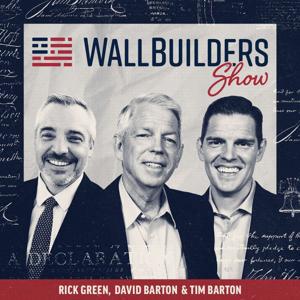
The WallBuilders Show is a daily journey to examine today's issues from a Biblical, Historical and Constitutional perspective. Featured guests include elected officials, experts, activists,…
Ranked by our users in the last 21 days
1,402 Listeners

2,561 Listeners
25,986 Listeners

165 Listeners
1,022 Listeners
5,422 Listeners

2,177 Listeners
65,453 Listeners

1,564 Listeners
1,549 Listeners

2,441 Listeners
691 Listeners
385 Listeners
13,157 Listeners
892 Listeners