
Sign up to save your podcasts
Or



Based on Podcast App listening data
Texas Makes Strategic Move to Strengthen Conservative Representation
Fresh from the Texas Legislature, Senator Phil King joins The WallBuilders Show to discuss the newly passed congressional redistricting plan that reflects the Lone Star State's increasingly conservative voting trends. After Democrats fled the state in an attempt to block the process, Texas Republicans successfully passed legislation that could shift five districts from blue to red, potentially adding crucial seats to the Republican majority in Congress.
The Constitutional Process in Action
This redistricting effort follows proper constitutional procedures, utilizing updated population data and voting patterns to create districts that better represent Texas voters' preferences. As Senator King explains, this isn't about manipulating boundaries—it's about accurately reflecting the political reality of a state that has been trending more conservative in recent elections. The process aligns districts with communities of interest while ensuring compliance with all legal requirements, including the Voting Rights Act.
National Implications for Conservative Governance
With President Trump's leadership moving forward and a narrow Republican majority in the House, these potential five additional seats could be the difference between maintaining effective conservative leadership and facing two years of progressive obstruction. As King notes, "if we wake up after the next November election and Republicans have a three or four seat majority, then Texas with its five new seats will have saved America." The timing couldn't be more critical as other red states consider similar constitutional redistricting efforts.
Faith, Constitution, and the Future
This episode exemplifies WallBuilders' mission of examining current events through biblical, historical, and constitutional principles. The discussion highlights how proper redistricting serves justice by ensuring equal representation while respecting both the rule of law and the will of the people. Despite ongoing legal challenges from Democrats, this redistricting plan represents a victory for constitutional governance and could help secure the conservative gains America has experienced under Republican leadership.
Support the show
https://www.savearmenia.us/
https://mercuryone.org/
Armenia stands as the world's first Christian nation—an ancient beacon of faith surrounded by hostility on all sides. When the Armenian king was miraculously healed by St. Gregory the Illuminator in 301 AD, Christianity became the state religion, creating a legacy that has endured for over 1,700 years despite relentless persecution.
The spiritual roots of Armenia run astonishingly deep. Three of Jesus' own apostles—Jude (Thaddeus), Bartholomew, and likely Thomas—brought the Gospel to this land. Mount Ararat, where Noah's Ark came to rest after the flood, dominates the skyline of Armenia's capital. This nation literally connects us to the foundations of biblical history and the early spread of Christianity.
Today, Armenia faces existential threats from its neighbors. To the west lies Turkey, perpetrator of the Armenian genocide that slaughtered 1.5 million Christians a century ago. To the east is Azerbaijan, which recently ethnically cleansed 120,000 Armenians from the historic region of Artsakh, reducing the population to single digits in one of the most complete ethnic cleansings in recent history. When your "best" neighbor is Iran, you know you're in a tough spot—the next closest Western-aligned nation is thousands of miles away in South Korea.
Former President Trump recently brokered a peace agreement between Armenia and Azerbaijan, creating the framework for what's called TRIP (Trump Route for International Peace and Prosperity). This economic corridor bypasses both Russia and Iran while offering Armenia vital development opportunities. American companies are already investing, with NVIDIA committing $500 million to Armenian artificial intelligence projects.
For American Christians, Armenia represents both our spiritual heritage and our present responsibility. With more Armenians living in America than in Armenia itself, this connection bridges continents. The Armenian Church has given more martyrs to Christianity than any other tradition, yet their faith endures against overwhelming odds.
Join us in supporting our Armenian brothers and sisters through prayer, advocacy, and practical assistance. Visit savearmenia.us to learn how you can help protect this ancient Christian lighthouse in one of the world's most dangerous neighborhoods.
Support the show
The cultural battle for America's soul plays out daily across our institutions, and today we're celebrating significant victories on multiple fronts that honor biblical, historical, and constitutional principles.
President Trump has issued a bold directive to reshape how American history is presented across the Smithsonian museum system. Far from erasing difficult chapters like slavery, as critics claim, the initiative aims to restore balance to historical narratives that have become dominated by divisive, race-centered ideologies. David and Tim Barton unpack how many government-run museums have adopted a Marxist framework that categorizes all of history through the lens of oppressors versus oppressed, while deliberately omitting America's exceptional anti-slavery leadership. The directive calls for assessing "the tone, historical framing, and alignment with American ideals" to ensure visitors receive the complete story—acknowledging both America's flaws and its remarkable achievements.
In the corporate sphere, Costco has made the principled decision not to sell abortion pills, joining other major retailers like Walmart and Kroger. This stand values human life over potential profits, influenced partly by faith-based shareholders with $172 million invested across these companies. The decision represents a powerful counterforce to the growing distribution of mifepristone, which has replaced brick-and-mortar clinics as the primary method of abortion in America.
The show concludes with an uplifting story about New York Jets quarterback Justin Fields, who candidly shared his growing relationship with God and newfound "addiction" to daily Bible reading. His public testimony about finding wisdom in Scripture and seeking God's approval above all else offers a refreshing example of faith in professional sports.
These developments signal encouraging shifts toward traditional values across different sectors of American society. When truthful narratives are restored, life is protected, and faith is celebrated publicly, we glimpse what genuine cultural renewal might look like.
Support the show
The fundamental tension between constitutional limitations and citizen self-governance takes center stage in this thought-provoking episode exploring questions that strike at the heart of American liberty.
When 22-year-old Janessa from Missouri asks about presidential term limits, the conversation ignites a friendly yet passionate debate. David Barton argues that term limits fundamentally don't trust citizens to make good decisions: "You want term limits because the people aren't doing what they're supposed to do." Meanwhile, Rick Green counters that term limits serve as an essential separation of powers mechanism, preventing the dangerous accumulation of influence that comes with decades-long incumbency.
This tension—between trusting voters completely and acknowledging human nature's susceptibility to power—mirrors the founders' own careful constitutional balancing act. The discussion highlights how Washington's voluntary two-term precedent sufficed until FDR's unprecedented four terms triggered constitutional amendment, demonstrating how America's governance evolves through both formal changes and informal traditions.
The conversation takes a fascinating turn when exploring whether government should withdraw from sectors where private enterprise now excels. Using the constitutionally-authorized postal service as a case study, the hosts examine how this once-essential government function has become "a dinosaur" compared to private alternatives, raising profound questions about when federal powers should contract rather than expand.
Perhaps most timely is the examination of presidential immunity and its constitutional boundaries. The hosts carefully distinguish between the constitutional definition of treason (taking up arms with enemies against the nation) and other serious misconduct that might warrant impeachment or criminal prosecution. This nuanced explanation demonstrates how preserving precise constitutional terms protects the rule of law while still allowing accountability for wrongdoing.
Throughout this wide-ranging discussion, one principle remains constant: power ultimately belongs to an informed, engaged citizenry. Whether you're passionate about constitutional structures, concerned about government overreach, or simply seeking to understand America's founding principles better, this episode offers clarity on how our constitutional republic was designed to function—and how we might preserve it for generations to come.
Support the show
Freedom isn't free—and the approaching 250th anniversary of American independence presents both a challenge and an opportunity for those who cherish liberty. As civic literacy declines and founding principles fade from public consciousness, we face a critical moment where everyday citizens must become the architects of restoration.
Drawing from the biblical story of Nehemiah rebuilding Jerusalem's walls, the Rebuilding Liberty course offers a blueprint for restoring our nation's foundations through local, practical action. The power lies not in grand gestures from Washington, but in the cumulative effect of citizens working "near their own homes" to rebuild what has been damaged.
Most striking is the hunger among young Americans for authentic truth. While only 16% of Gen Z expresses pride in their country, many are actively searching for meaning and purpose beyond the shallow narratives they've been fed. As one young participant notes, "Our generation knows they've been robbed, and we are truth-seekers." This hunger represents fertile ground for revival if we can effectively communicate America's founding wisdom.
The 12-step recovery program outlined in this final session provides concrete actions anyone can take: hosting liberty courses, planning 250th anniversary celebrations, engaging with schools on Constitution Day, restoring religious expressions in public spaces, and advocating for constitutional amendments that limit government overreach, etc.. The commitment asked is manageable yet meaningful—two hours weekly, two percent of your resources, and two social media posts weekly.
Thomas Paine's words from America's darkest hour in 1776 resonate powerfully today: "What we obtain too cheap, we esteem too lightly." For too long, we've taken freedom for granted. Now we must reject the selfish notion of "peace in my day" and instead embrace the patriot's creed: "If there is to be sacrifice, let it be in MY day so my children may live in freedom."
Ready to become a master bricklayer in liberty's restoration? Visit patriotacademy.com today to download the free course and gather friends and neighbors for this crucial conversation. The walls won't rebuild themselves—but together, we can ensure America's flame of freedom burns brighter for the next generation than it did when passed to us.
Support the show
Lance Wallnau delivers a powerful message on destiny and divine calling that will transform how you view your role in America's restoration. Drawing from his decades of teaching on cultural influence, Wallnau introduces the concept of "convergence" – the science of fulfilling your God-given purpose – and explains why your attraction to rebuilding liberty is no coincidence but evidence of a calling.
The magnetic pull you feel toward constitutional principles and cultural restoration? That's divine orchestration. Your unique background, family history, and even life's contradictions? All part of God's sovereign preparation for this moment. Wallnau masterfully unpacks the five stages of destiny fulfillment and explains why only 20% of believers ever reach the convergence phase where they step into their divine blueprint.
What sets this teaching apart is Wallnau's unflinching challenge to the comfort-seeking mentality that has silenced truth-tellers. "Truth shouldn't make you comfortable—it should make you change," he declares, confronting the cultural conditioning that has taught conservatives to censor themselves rather than risk appearing judgmental. This refreshing directness explains why younger generations are increasingly drawn to authentic voices who deliver unvarnished truth.
Perhaps most compelling is Wallnau's urgent call to action: "There's no one coming—it's you." This powerful reality check dismantles the comforting fiction that someone more qualified will eventually arise to save the republic. For those wrestling with potential professional consequences for speaking out, his reframing of "HR" as "Heaven's Resources" provides a spiritual framework for trusting God's provision when standing for truth costs something.
As America approaches its 250th anniversary, discover how your personal story converges with this pivotal historical moment, and why the contradictions you've faced might be the very preparation you need to help restore America's founding principles. This isn't just about politics—it's about fulfilling the purpose God had in mind for you before you were born.
Support the show
Tim Barton takes us on a riveting journey through America's forgotten faith foundation in this eye-opening episode of the Rebuilding Liberty course. With startling clarity, he reveals how Christianity was the atmosphere that birthed American freedom—not merely a cultural backdrop but the essential foundation for our constitutional republic.
The evidence is hiding in plain sight. When examining the famous painting of the Constitutional Convention, most overlook the Bible open to Matthew 5 in the corner. This visual detail reflects a deeper historical reality: the Bible was the founding fathers' most quoted source by far. Even Benjamin Franklin, often characterized as America's least religious founder, delivered a passionate speech calling for prayer during a critical impasse at the Constitutional Convention, reminding delegates that divine intervention had sustained them through the Revolution.
Barton powerfully connects America's earliest beginnings with its founding principles. From John Winthrop's 1630 covenant establishing America as "a city upon a hill" to John Quincy Adams explicitly stating that the Declaration of Independence "laid the cornerstone of human government upon the first precepts of Christianity," the evidence is overwhelming. These weren't merely religious sentiments but fundamental convictions about governance—that without faith and morality, republican freedom cannot survive.
The implications for today are profound. As George Washington declared, religion and morality are the "indispensable supports" of political prosperity. Without this foundation, our economic plans, immigration reforms, and policy solutions ultimately stand on shifting sand. Barton challenges us to first rebuild America's moral infrastructure before tackling other pressing issues—drawing from Nehemiah's biblical call to rebuild Jerusalem's walls.
Whether you're concerned about government overreach, declining civic virtue, or the erosion of constitutional principles, this episode offers both historical insight and practical action steps. Discover how restoring parental rights, property rights, and proper jurisdictional boundaries can renew America's founding vision as we approach the nation's 250th birthday. This isn't just about understanding history—it's about reclaiming the biblical foundation that makes liberty possible.
Support the show
Ever wonder why we wave the flag on July 4th? As America approaches its 250th birthday in 2026, understanding the true foundations of our liberty has never been more critical.
The evidence is hiding in plain sight, yet rarely taught. When America's founding fathers first gathered in 1774, they didn't immediately dive into politics—they spent two hours in prayer and Bible study. By the revolution's end, the Continental Congress had called for national prayer 15 times. Even the Peace Treaty of Paris that secured our independence begins with "In the name of the most holy and undivided Trinity."
George Washington himself witnessed so many miraculous interventions during the Revolution that he joked he'd "seen enough miracles to become a preacher." In his Farewell Address, he declared religion and morality "indispensable supports" to America's success, while John Adams insisted our Constitution "was made only for a moral and religious people."
This episode of "Rebuilding Liberty" featuring Tim Barton reveals the forgotten Christian foundations of American independence through primary sources and historical documents. You'll discover how the biblical principles that unified our founders remain essential for preserving freedom today. The founding fathers understood that liberty requires virtue, and virtue flows from faith—a truth as relevant now as it was in 1776.
As we approach America's semiquincentennial, join us in rediscovering the atmosphere of Christianity that breathed life into our nation's birth. Share this eye-opening perspective with others who need to understand why America's flag is worthy of being waved—not just on July 4th, but every day we cherish freedom.
Listen to the full "Rebuilding Liberty" course at wallbuilders.com or sign up as a host at patriotacademy.com to share these essential truths with your community.
Support the show
What if everything you thought you knew about religion in American education was wrong? Dive into the eye-opening reality of how deeply the Bible was woven into the fabric of public education throughout most of American history.
Our journey through forgotten educational practices reveals that in 1816 New Jersey, first and second-grade students in public schools didn't just learn about the Bible—they memorized entire books of scripture. One particularly diligent student had committed to memory the Gospel of John, 30 Psalms, and Psalm 119. This wasn't happening in private religious schools, but in taxpayer-funded public education.
The evidence continues with Noah Webster's original 1828 dictionary, where 27% of word definitions included Bible verse references. Presidents from Zachary Taylor to Ulysses S. Grant publicly declared the Bible "the best school book in the world" and encouraged American youth to "hold fast to the Bible as the sheet anchor of your liberties." As late as 1947, public schools across major American cities offered Bible courses for credit.
This episode doesn't just uncover forgotten history—it provides a practical roadmap forward. Recent Supreme Court decisions, particularly the Coach Kennedy case, have established a "history and tradition test" that creates new opportunities for constitutional religious expression in schools. Today, Bible curriculum is taught in 4,000 public schools reaching 600,000 students nationwide.
You'll learn actionable steps to restore religious liberty in your community: displaying the national motto "In God We Trust" in government buildings, advocating for Ten Commandments displays in schools, implementing chaplain programs, and introducing constitutional Bible curriculum.
The religious liberty landscape is changing dramatically. The walls that once seemed impenetrable now have openings—but walking through them requires knowledge and courage. Join us in this mission to rebuild liberty by understanding our past and creating a future where America's educational system once again embraces its full constitutional heritage.
Support the show
The battle for religious liberty in America has reached a historic turning point, with implications that reach into every community and classroom across the nation. In this powerful episode of Rebuilding Liberty, David Barton uncovers the dramatic transformation in how courts interpret religious expression in public life.
For half a century, the "Lemon test" served as the legal standard that systematically pushed faith out of public spaces—cited over 7,000 times to justify removing prayers, crosses, Ten Commandments displays, and religious references from schools and government property. But in a stunning reversal, recent Supreme Court decisions have completely abandoned this approach, replacing it with a "history and tradition test" that presumes constitutional protection for religious expressions with historical precedent in American life.
Barton takes listeners on a fascinating journey through America's educational history, revealing startling facts about our nation's religious foundations. Did you know America's first public school law was called "The Old Deluder Satan Act," explicitly created to ensure biblical literacy? Or that the first English-language Bible printed in America was officially recommended by Congress for use in schools? These historical revelations dismantle the modern myth that America's founders intended education to be secular.
From the New England Primer that taught colonial children their ABCs through Bible verses to founding father Benjamin Rush's insistence that "the only foundation for a useful education in a republic is to be laid in religion," this episode reconstructs the authentic American understanding of faith in public life.
This isn't just history—it's a roadmap for restoring religious liberty today. As crosses return to veterans' memorials and expressions of faith re-enter the public square, we're witnessing the constitutional correction that reconnects America with its founding principles. For anyone concerned about religious freedom, education, or constitutional rights, this episode provides both the historical context and practical hope for rebuilding liberty in our time.
Support the show
From the publisher's feed
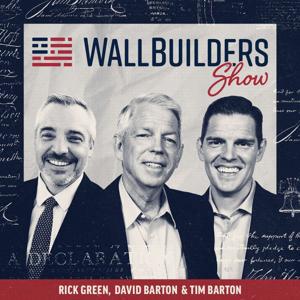
The WallBuilders Show is a daily journey to examine today's issues from a Biblical, Historical and Constitutional perspective. Featured guests include elected officials, experts, activists,…
Ranked by our users in the last 21 days
1,402 Listeners
2,561 Listeners
25,986 Listeners

165 Listeners
1,022 Listeners
5,422 Listeners

2,177 Listeners
65,453 Listeners
1,564 Listeners
1,549 Listeners
2,441 Listeners
691 Listeners
385 Listeners
13,157 Listeners
892 Listeners