
Sign up to save your podcasts
Or



Based on Podcast App listening data
The political and cultural landscape in Washington D.C. has undergone remarkable transformation according to David and Tim Barton, who share their firsthand observations from a recent pastor's briefing in the nation's capital. Their conversations with congressional representatives reveal a refreshing shift in attitude and purpose among newly elected officials who arrive with clear intentions rather than simply occupying office space.
A significant revelation emerged from multiple congressional sources: America has dramatically altered its approach to international relations. Previous administrations had effectively coerced foreign nations into adopting controversial positions on gender, sexuality, and abortion by threatening to withhold financial aid—essentially exporting values that many Americans themselves find troubling. The current administration has halted this practice, no longer using American power to force ideological compliance from countries that often maintain stronger moral positions than our own.
The administration's targeted immigration enforcement strategy showcases another area of meaningful change. Recent deportation efforts have focused specifically on removing violent criminals and gang members from American communities. In just 50 days, immigration authorities have made arrests equivalent to the previous administration's entire final year, with over 14,000 convicted criminals and more than 1,100 gang members among those detained. This strategic prioritization has received judicial support from the Supreme Court, which recently rejected attempts by lower courts to halt deportations.
Equally noteworthy is the administration's approach to international trade. Facing a monthly trade deficit of approximately $130 billion, the president has implemented a straightforward strategy of matching tariffs imposed by other nations. Despite criticism, this approach has already prompted over 50 countries to initiate negotiations, with several immediately dropping all tariffs on American goods—potentially opening markets for U.S. products and creating domestic jobs.
Ready to dive deeper into these issues? Join us for more insights on faith, culture, and the policies shaping America's future. Visit wallbuilders.com to learn how you can participate in upcoming events.
Support the show
Two pressing questions converge in this thought-provoking episode: What role did faith actually play in America's founding, and is there really gold in Fort Knox? David and Tim Barton call in from Washington DC, where they're conducting a pastor's briefing that reveals the forgotten Christian foundations woven throughout our Capitol's history, from the first English Bible printed in America with Congressional approval to church services held in the Capitol building itself.
The conversation takes a fascinating turn when we explore President Trump and Elon Musk's recent statements about verifying the gold reserves at Fort Knox. Financial journalist Andrew Moran joins to explain why this isn't just idle curiosity—if the reported $500 billion in gold reserves aren't actually there, the economic consequences could be catastrophic for every American. Moran traces the controversial history of Fort Knox's gold, much of which came from FDR's confiscation of citizens' private gold holdings in the 1930s, and explains why even Kentucky's own Senator Rand Paul hasn't been allowed to tour the facility.
This episode illuminates how government transparency (or lack thereof) affects both our spiritual and economic foundations. When institutions hide truth and manipulate history—whether about America's Christian heritage or its gold reserves—public trust erodes and conspiracy theories flourish. The solution? Leaders committed to transparency and truth-telling, even when the news isn't what we want to hear. As the team points out, this aligns perfectly with biblical principles of leadership: "able men such as fear God, men of truth, hating covetousness."
Subscribe now to join us at the intersection of faith, culture, and current events as we work to restore America's constitutional foundations.
Support the show
A quiet revolution in higher education is underway, and Stanley Kurtz has been at the forefront of making it happen. On this episode, we dive deep into Utah's groundbreaking Senate Bill 334 – legislation that requires university students to complete three semesters studying Western civilization and one semester on American civics. But this isn't just another curriculum mandate.
What makes this bill revolutionary is how it ensures implementation. Rather than allowing faculty to subvert legislative intent (as has happened countless times before), these courses will be taught under the supervision of an independent academic unit led by educators who genuinely value traditional education. The bill also mandates full transparency – syllabi, required reading, lecture topics, and discussion themes must all be posted online for public viewing.
Stanley explains why this represents "as big a breakthrough in higher education reform as we've ever seen." We explore how universities have drifted from teaching the origins of ideas to promoting ideologies divorced from their historical consequences. This approach leaves students without the context needed to evaluate contemporary proposals against historical precedent.
David Barton describes this educational reform as "the antidote to wokeness," while Tim Barton highlights how transparency creates accountability that's been missing in academia. We discuss examples of previous educational requirements being undermined by faculty who taught courses like "LGBTQ American History" to fulfill basic civics requirements – something this new approach specifically prevents.
The implications extend far beyond Utah. This legislative model could spread nationwide, potentially transforming how universities approach education. While college isn't necessary for everyone, ensuring quality education for those who attend remains crucial. Whether you're a parent, educator, legislator, or concerned citizen, this conversation will change how you think about higher education reform. Share this episode with someone who cares about the future of education in America.
Support the show
The signs of America's renewal are becoming increasingly apparent as we approach our nation's 250th birthday. From Wisconsin's overwhelming support for election integrity to Arkansas' groundbreaking civics education reforms, citizens across political divides are finding common ground on fundamental principles.
The latest polling reveals a remarkable shift in public sentiment. Even CNN's own data analyst reported that President Trump's approval ratings have reached historic highs—surpassing Obama's numbers for seven of his eight years in office. With 42% of Americans believing the country is moving in the right direction (the highest since George W. Bush's presidency), there's a growing consensus that transcends partisan divisions.
In Arkansas, a visionary "Founding Fathers bill" will soon require students to understand not just what the Founders created, but why they created it. This deeper exploration of phrases like "the Laws of Nature and Nature's God" and concepts such as inalienable rights provides the foundation for a renewed appreciation of America's exceptional system of government.
Meanwhile, the Supreme Court appears poised to deliver another victory for religious liberty in a Wisconsin case where tax authorities attempted to define religious organizations so narrowly that even Catholic charities were excluded. This continues the Court's consistent pattern of strengthening First Amendment protections in recent years.
President Trump's executive order addressing crime and homeless encampments in Washington DC demonstrates practical leadership on issues affecting our nation's capital. When even DC's mayor described their meeting as "great," it suggests the possibility for cooperation across political divides on matters of governance and public safety.
As we prepare for America's semiquincentennial celebration, now is the perfect time to deepen your understanding of our founding principles. Join us at WallBuilders as we work to restore appreciation for the constitutional values that have made America the most successful republic in world history.
Support the show
Drawing the line between constitutional authority and overreach is more crucial than ever in today's political landscape. Our deep dive into government's proper role reveals how far we've strayed from the founders' vision of limited federal power - constrained to just a handful of specific responsibilities outlined in the Constitution.
The conversation pivots on a fundamental question: who bears responsibility for caring for the vulnerable in society? When Jesus spoke about caring for "the least of these," He wasn't addressing government institutions but individual believers. This distinction matters profoundly. Biblical teachings clearly separate institutional roles: government administers justice while individuals, families, and churches demonstrate compassion. The blurring of these boundaries hasn't improved outcomes - it's diminished both freedom and genuine charity.
We explore the stark contrast between socialistic and free-market approaches to employment and welfare. History demonstrates without exception that expanded government power correlates directly with diminished personal liberty. Our founders understood this principle, which is why they carefully crafted a system protecting the pursuit - not the guarantee - of happiness.
The discussion extends to practical applications, from the growing movement of states eliminating income taxes to efforts across multiple legislatures to restore the Ten Commandments in public education. These initiatives represent a return to founding principles rather than religious imposition.
Throughout, we emphasize effective communication strategies for discussing these controversial topics. Rather than confrontation, asking thoughtful questions opens doors to meaningful dialogue about our constitutional heritage and biblical foundations. This approach allows us to win people, not just arguments.
Ready to become part of the solution? Visit WallBuilders.com to learn how you can help restore these foundational principles in your community and state.
Support the show
truthandliberty.net
The battle for America's soul is being waged in our museums, national parks, and historical institutions. In this compelling episode, we expose how "woke" historical revisionism is systematically distorting our national narrative, and explore the efforts to reclaim truthful accounts of our past.
We dive deep into troubling examples like the Smithsonian's African American Museum erasing white anti-slavery advocates before the 1820s—effectively eliminating the contributions of founding fathers, Pennsylvania Quakers, and Northern colonies that legislated against slavery decades earlier. From Independence Hall tours that distract from constitutional history to Monticello presentations that vilify Thomas Jefferson, we examine how ideological agendas are reshaping American heritage sites.
Trump's recent executive order mandating a return to factual historical presentations in federally-funded institutions offers a promising path forward. Just as major universities are abandoning DEI programs to maintain federal funding, there's hope our historical institutions might similarly return to accuracy and balance.
Richard Harris joins us to discuss Truth and Liberty's upcoming awards banquet featuring Seth Gruber (creator of the 1916 Project) and honoring courageous individuals like Abby Johnson and Lt. Colonel Theresa Long. This event exemplifies the growing counter-movement dedicated to historical truth and constitutional education.
We wrap with a fascinating discussion of presidential term limits, analyzing Trump's provocative "third term" comments as a masterful example of political trolling that's actually driving Americans back to studying the Constitution. Join us as we explore how reclaiming our historical narrative is essential to preserving our republic's future.
Support the show
simonslaw.org
Sheryl Crosier never expected to become an advocate for parental rights in medical decision-making. Then she discovered that doctors had placed a Do Not Resuscitate order on her infant son Simon without her knowledge or consent after diagnosing him with trisomy 18. The medical staff had decided his life wasn't worth saving simply because of his chromosomal condition.
This heartbreaking revelation launched Cheryl on a mission to ensure no other parent would be stripped of their right to make critical medical decisions for their children. The result was Simon's Law—groundbreaking legislation requiring healthcare providers to obtain explicit parental permission before placing DNR orders in a minor child's medical chart.
Joined by fellow advocate Sandi Enzminger, whose daughter Tabitha also has trisomy 18 but is thriving at six and a half years old, Cheryl shares the painful details of discovering how medical professionals quietly withheld treatment from her son. "Once he was diagnosed, we started hearing 'not for Simon,'" she explains, revealing how certain lives are deemed less worthy of standard medical interventions.
The implications extend far beyond children with genetic conditions. As Sandy powerfully articulates, any child could find themselves in a situation where doctors might make unilateral end-of-life decisions—whether after a bicycle accident or car crash. The fundamental question becomes: "Do you want a stranger making that life or death decision, or you?"
Currently passed in twelve states with federal legislation pending, Simon's Law represents a critical protection for parental authority in an era where medical "experts" increasingly override family wishes. For those looking to support this vital cause or bring Simon's Law to their state, visit SimonsLaw.org to connect with advocates and learn how to protect the most vulnerable patients and their families from unauthorized end-of-life decisions.
Support the show
Has America abandoned belief in God? George Barna's groundbreaking research reveals a startling spiritual transformation sweeping across our nation. Once a country where over 90% professed belief in the God of the Bible, today that number has plummeted to just 40% - a seismic shift with profound implications for our culture and future.
The data paints a fascinating yet concerning picture. While 71% of Americans acknowledge some form of deity or supreme being, they worship more than two dozen different gods. Even more revealing, many who claim Christianity simultaneously embrace contradictory spiritual beliefs, creating a "mix-and-match theology" that places personal preference above biblical truth.
This spiritual confusion extends beyond belief into practice. Of those who believe in the God of the Bible, surprisingly few consider Him "the most important element" in their lives. Many view their relationship with God as a partnership where they retain significant autonomy rather than submitting to His authority. The consequence? A nation where biblical values no longer form the foundation for decision-making.
Yet within this troubling landscape, Barna identifies a powerful source of hope: the 4% of Americans who qualify as "integrated disciples" with a biblical worldview. Throughout history, God has worked through such committed minorities to transform cultures. The key to expanding this remnant lies in motivation and modeling - disciples who both understand biblical truth and demonstrate its application in everyday life.
What does this mean for believers today? The path forward requires intentional discipleship - not just knowing biblical principles but living them out visibly so others can follow. As Barna explains, "You reproduce who you are." Cultural transformation begins not with winning arguments but with embodying truth in ways that inspire others to do the same.
How will you respond to these findings? Will you deepen your own discipleship and then deliberately reproduce it in others? The future of faith in America may well depend on your answer.
Support the show
A revival of America's founding principles is underway, and we're celebrating the good news of this cultural shift back toward our historical roots. The 250th anniversary of Patrick Henry's iconic "Give me liberty or give me death" speech provides a perfect backdrop for examining the deep Christian influences that shaped our nation's beginnings.
The proclamation honoring this milestone highlights a renewed appreciation for our founding fathers after years of neglect. Most Americans aren't aware that Patrick Henry's famous speech contains dozens of biblical references - revealing how thoroughly Scripture informed his thinking and that of his audience. When we analyze these historical texts today, we discover our founders weren't merely giving lip service to faith but had deeply internalized biblical knowledge that naturally flowed into their rhetoric and reasoning.
Even Benjamin Franklin, often portrayed as the least religious founding father, demonstrates this pattern. A deep dive into his 1753 letter reveals passage after passage of Scripture woven seamlessly into his arguments. Without search engines or reference materials, Franklin quoted biblical texts from memory, raising compelling questions about the religious influences on all our founders. If the "least religious" founder was this biblically literate, what does that tell us about the others?
This historical understanding matters today as we see encouraging signs of cultural renewal. Kentucky is returning their Ten Commandments monument to the capitol after decades of controversy. Bible sales have surged dramatically - up 87% in the UK and 30% in the US over recent years. Perhaps most surprisingly, young Britons are now less likely than older generations to identify as atheist, suggesting a spiritual hunger emerging in the next generation.
Join us as we explore these developments and celebrate the good news that America's Christian heritage is being rediscovered and embraced by a new generation hungry for truth and meaning.
Support the show
When divine rights collide with state laws, which should prevail? That's the question we tackle head-on in this provocative exploration of concealed carry reciprocity and the constitutional foundations of self-defense.
The heart of our discussion centers on a fascinating philosophical distinction: rights that come from God versus privileges granted by government. David Barton frames this perfectly: "Government can mess with what government gives, but it can't mess with what God gives." This powerful premise challenges us to reconsider how we view the Second Amendment—not as a legal permission slip, but as recognition of an inherent natural right to self-preservation.
Tim Barton offers a compelling natural law perspective, pointing out how God built self-preservation instincts into all creation. "How ridiculous would it be," he asks, "if we told grizzly bears their claws can only be half an inch long?" This vivid analogy illuminates the absurdity of having your constitutional rights diminished simply by crossing an imaginary state line.
We also explore the historical context of gun regulations in early America, distinguishing between the limited restrictions in frontier towns and today's more comprehensive anti-gun movements. Those old Western settlements weren't attempting to eliminate firearms—they were creating reasonable boundaries in specific contexts while maintaining a fundamentally pro-gun culture.
Perhaps most valuable is our discussion on responsible gun ownership. While we firmly defend the constitutional right to bear arms, we also emphasize the wisdom in proper training and education. As John Quincy Adams observed centuries ago, accidents happen most often when people unfamiliar with firearms handle them.
Whether you're a constitutional scholar, firearms enthusiast, or simply someone concerned about the intersection of faith and public policy, this episode offers fresh insights into one of America's most enduring debates. Listen, learn, and join the conversation about preserving our God-given liberties.
Support the show
From the publisher's feed
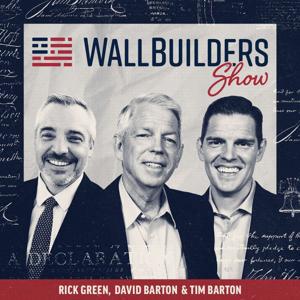
The WallBuilders Show is a daily journey to examine today's issues from a Biblical, Historical and Constitutional perspective. Featured guests include elected officials, experts, activists,…
Ranked by our users in the last 21 days
1,400 Listeners
2,562 Listeners
25,978 Listeners

167 Listeners

1,022 Listeners
5,418 Listeners

2,179 Listeners
65,461 Listeners

1,562 Listeners
1,549 Listeners

2,442 Listeners

691 Listeners
385 Listeners
13,155 Listeners
891 Listeners