
Sign up to save your podcasts
Or

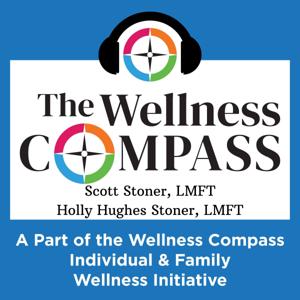


Continuing their series on proactively caring for our wellbeing during the holidays, Holly and Scott talk about how we can take the opportunity this time of year to strenghten our relationships. Few things affect our wellbeing more than the state of our relationships.
The pressure around the holiday season to have the "best holiday ever" can cause us to ignore the full range of complicated emotions we often feel this time of year. In this episode, Holly and Scott discuss the importance of caring for our emotional wellbeing this time of year.
They also reflect on a poignant commercial they saw recently that helps bring to life what they are talking about. You can find that commercial at: https://www.youtube.com/watch?v=xnZGEUA4oBk
Small daily habits make a difference. For example, every morning, we both clean our glasses. It's just something we do as part of our morning routine. Doing so allows us to see the world a little more clearly. If we miss a day, we probably won't notice it that much, but if missing a day turned into missing a week, our view of things would undoubtedly become a bit clouded.
Practicing gratitude is like this. Practicing it each day allows us to see the world more clearly. Neglecting to do so over time clouds our vision, and we may wonder why the world looks a bit dull or dark.
There are several ways we can practice an "attitude of gratitude." Some people find it helpful to keep a regular gratitude journal. We have several friends who are doing this as a practice for the entire month of November. In honor of Thanksgiving being this month, they started on the first of the month by writing down and/or posting on social media three to five things for which they are grateful. Their practice deepens as they commit to not repeating anything the whole month, instead naming three to five new things each day. This discipline reminds them, and those of us who are seeing these daily posts, to notice and name the little things that happen each day that are so easy to take for granted.
As marriage and family therapists, we know how crucial it is to practice gratitude in our relationships with family, friends, and colleagues. Each expression of gratitude puts a little air in the tires of the person receiving our appreciation and enhances our connection as well. When relationships are distant or conflicted, all parties usually report that they no longer feel loved and appreciated by the other person. At some point, they realize that the lenses through which they view the other person have become clouded with hurt and resentment.
It takes awareness and intention to begin to change this cycle, but it is possible. Often, the best way to start the change is to acknowledge one's own part in the pattern.
Nurturing our spirituality is another way to enhance our practice of gratitude. All spiritual traditions focus on the importance of regularly offering gratitude for the many gifts of this life and of the created world.
To focus on gratitude is not to ignore the incredible suffering of the world. In fact, a mature spirituality contains both the capacity to acknowledge and commit to the relief of suffering, and, at the same time, to committing to recognize and share gratitude.
We are grateful to be able to take some time off starting next week, and so this column, and the podcast that accompanies it, will return right after Thanksgiving. Until then, let's all work to keep our glasses clean so we can see all that we have to be grateful for.
In this episode Holly and Scott talk about the power of being kind.
If you ever doubt the power of kindness, you can quickly become reassured of the difference it makes by trying it. Make an effort to say a kind word to someone today. You might call someone who could use a kind word, send an email, or text to someone who could use some encouragement. Or you could make a meal for a friend, help a neighbor with a chore, or volunteer your time to a cause that is important to you. Create some words or acts of kindness, and then notice the difference you make as you see the look of gratitude and joy in the other person's eyes. You will discover that kindness truly is your superpower.
This superpower can also be extended to ourselves. Self-compassion is sometimes the most challenging kind of compassion to express, as many of us are our own worst critics. So, when it comes to spreading kindness, remember to offer some to yourself, as well.
Random acts of kindness are also a great way to put positive energy into the world. Give up your seat for a stranger. Help a person carry their bags. Offer an unexpected compliment to someone. Let someone go ahead of you in line. Hold an elevator door for someone. Speak up for someone who is marginalized. Go for a walk and pick up any litter you encounter.
In a world where we can be anything, let's always remember to be kind.
Most likely, we have all had the experience of negatively judging someone else's behavior and then wholly changing our opinion after we later learned more about the context or background of the person and the behavior we had judged. Maybe we regarded someone as being rude for coming late or unprepared to a meeting, only to find out later that they are a caregiver for a loved one and are overwhelmed in ways that we had no idea about when we formed our opinion. When we are willing to slow our initial reactions long enough to be curious, we can often subsequently enhance the wellbeing of ourselves and others.
Forming judgments is necessary, but creating conclusions prematurely and being unwilling to examine them over time is rarely helpful. Next time, for example, you discover someone has a different view than you have on an important issue, rather than immediately dismissing them, try being curious and ask them how they came to form their perspective. Ask what experiences in their lives and what people influenced their views. Ask whether they have consistently held that view or if their opinions have changed over their lifetime and why. The simple act of being curious will deepen the conversation and the relationship. You may still disagree in the end, but if you both share in this way, you will have a much fuller understanding of each other and how and why you view the world the ways you do.
Last week, we wrote about "practicing the pause." Many of you responded by telling us how much you needed to be reminded of that essential practice. One of the benefits of pausing is that it provides the space for curiosity and civil discourse to occur.
As family therapists, we help families do this by creating space and time for pausing, allowing them to listen more deeply to each other. Empathy and curiosity can help break the cycle of hurt and judgment, granting a glimpse into the circumstances and experiences that have shaped another's viewpoint and behavior.
Too often, changing one's mind is seen as a weakness. However, we view the capacity and openness to change one's mind with new information or new experiences as a strength. Scientists continually do this and thus revise their theories as they pause to learn more; we can evolve, too, by being open-minded and embracing curiosity. By remaining open and curious about ourselves and others, we can navigate the changes and challenges in our lives, fostering greater wellbeing and personal growth.
Practice the Pause
Have you ever sent a text message or email when you were upset, only to regret doing so? If so, you know firsthand how important it can be to remember to "practice the pause."
The word we are focusing on in this week's column and podcast is "pause." We like concentrating on a single word because that makes it easy for us to carry it with us throughout our week, reminding us to pause, reflect, and make more deliberate decisions.
This simple yet profound concept is at the core of enhancing well-being and making intentional choices in your life. We often stress the importance of "awareness" and "intention" in our work. However, these concepts are incomplete without the pivotal element of "pause."
We need to pause from our hectic life to reflect, much like sharpening an ax. If we're too busy chopping down trees (our daily tasks), we may easily forget to pause and sharpen our emotional, physical, spiritual, and relational well-being.
A pause is like a personal time-out, something parents sometimes try to teach children and something adults can embrace as well. It's about taking a moment to step back from a situation, take a deep breath, and choose our next steps deliberately. Whether we're making a decision about how to spend money, whether to watch a particular TV show, or whether to have another drink, pausing helps us make more thoughtful choices.
The Space Between Stimulus and Response
Viktor Frankl, a renowned psychiatrist and concentration camp survivor, wrote, "Between stimulus and response, there is a space. In that space is our power to choose our response. And in our response lies our growth and our freedom." This quote perfectly encapsulates the essence of pausing. It's about finding that space, that pause, in order to make a choice instead of reacting mindlessly.
Pausing in Our Relationships
As marriage and family therapists, we work extensively with relationships. Pausing becomes crucial in preventing and managing emotional flooding, which is when people become reactive in highly charged situations. In emotionally flooded moments, people often escalate conflicts because they're not pausing to reflect and choose a better response.
Proactive and Preventative Pausing
Mindfulness, meditation, journaling, and gratitude are forms of "preventative" pausing that help us reset and center ourselves. Taking retreats or Sabbath time is essential for nurturing our spiritual and emotional well-being.
Physical wellness also benefits from pausing. It's about knowing when to take time for rest and recovery, whether we are an athlete or simply someone seeking a healthier lifestyle.
We encourage you to apply the concept of pausing to various aspects of your life. Incorporating a pause can make a profound difference, whether it's physical wellness, spirituality, emotional well-being, relationships, or even email and text communication. Remember to carry the word "pause" with you throughout the week, practice it, and watch how it enhances your well-being.
What follows is a transcription of this week's Wellness Compass podcast episode. Listening gives the full experience of the emotions and tone of what is being said, which is difficult to capture in a transcription. The spoken word is different than the written word. We are happy to provide this transcript for those who prefer to read rather than listen.
Holly: Welcome to the Wellness Compass podcast. I'm Holly Hughes Stoner, and I'm here today with my husband Scott. And we are the co-directors of the Wellness Compass Initiative. You can find out more at WellnessCompass.org. We create all kinds of materials, this podcast being one of those. The goal of all our resources is to help people become a little bit more aware and intentional as they live their lives, in the hopes that they can create greater wellness for themselves.
Scott: We are both marriage and family therapists and we have four decades of experience each, helping families and individuals in one capacity or another. We also have four decades of experience in our own marriage and our own family. And while we have a professional background, we really host this podcast and this whole initiative as fellow travelers.
We love talking about these topics because it gets us thinking about them too.
And so, as Holly said, our tagline is that we are here every week to help you navigate your life with awareness and intention. So we're going to talk about that second word today. Last week, in the previous episode, we talked about awareness. This week we will be talking and thinking about intention and how important that is in our lives.
And I'm going to share with you what might be a groaner, but I think it applies.
The next time, in your life, you find yourself in tension, it might be a good time to stop and reflect on your intentions.
One cause of tension in my life is when my actions, my choices, my patterns or habits are out of alignment with my intentions. So if I say I intend to get more rest, if I intend to spend more time with the most important people in my life, I intend to do a better job of budgeting my food intake or my finances, but then I don't do that I'm going to experience tension. This is because there is a discrepancy between my actions and my intention. So it's helpful to think about the importance of intention and how intention can help us understand tension.
As a therapist and coach, when I see people, in a sense, they're there, they're showing up, they're reaching out to us for help because they've ended up where they didn't intend to be. There's tension because they're experiencing something that is out of alignment with where they had hoped or intended to be.
Holly: Right. We talked about awareness last week. And frankly, when somebody comes in, they are usually aware that there is some problem in their life, but they're not quite sure what to do about it. And they haven't set an intention yet, as to what they want to do differently going forward and they want to explore that.
They maybe know that their health isn't so great or they know that their relationship with someone in their family isn't so great. They may know something about their job is making them unhappy and they're bringing it home and complaining there, or whatever it is.
So their awareness is great, but then they have to start figuring out what they intend to do differently going forward. "What am I going to do differently about it?"
As they figure out what to do differently, they may also need to examine their intentions, and decide if they are serving the good in their life. Sometimes they'll say, " I want to talk to my teenager and let them know who is who in this family." This reaction might seem to serve well a little bit in the beginning, but it will hurt that relationship in the long run.
We don't usually realize that we have these kind of underlying or hidden intentions, things like, "I'm going to get even, or I'm going to do this to protect myself, or I have to prove to them my point, because I am right." Any of us can have some underlying intentions that's not so healthy. There are things that are kind of unspoken that can get in the way of our greater intentions.
Scott: That is always such a turning point when I'm working with any relationship, whether it's business consulting, or nonprofit consulting, or marriage or family counseling. When the both of the two parties that are in conflict realize, "Oh my gosh, I have I've not really been trying to resolve this conflict. I've been trying to win an argument. My real intention has been to score points. My intention has been to put the other person down, or demonize the other side. Actually my intention really hasn't been to resolve this, or to show up as my best self, and to work towards resolution.
So, right, sometimes we can get caught up in unintended intentions, we can get knocked off our true north, without even recognizing it. We talk about our values in my couple's work a lot. It's a good thing to really stop and examine them and then align your choices more with what your intentions are. You might wonder, "What are my true intentions here?" Am I really trying to better this relationship?" for instance.
That's really why we offer this whole initiative. It's why we offer this podcast, as it is a chance for us every week to pause and reflect on the choices we're making. It's a chance to check our bearings and to be proactive.
Imagine if you owned a house and you chose to not do any of the maintenance on it because, you know, it was easier not to do that. You didn't need to spend any money. It didn't take any of your Saturdays or your time, your evenings. And it would be like, "I'm not experiencing any tension. This is great."
Well, of course we know what's going to happen. After X number of years, things are going to fall apart and all of a sudden you're going to have all of these crises, right? The gutters are falling off, the roofs leak, cracks in the foundations, whatever. And now you're going to have real tension because you never had the intention of being proactive about it.
The same is true in all wellness. You know, we have people reach out to us because their houses are falling apart or, you know, they realize it's time to do some deferred maintenance. And we are glad to help people in this situation.
But you know, my favorite thing I would say is when I can help an individual, a couple, a family, or organization, not only patch up or repair the deferred maintenance, but then they learn from that experience and work to make a new maintenance plan.
They then create a preventative maintenance plan going forward, committing to do a regular check in and a regular check up. They commit to noticing as soon as tension is beginning to arise and addressing things early. They work to make sure their actions and their choices stay aligned with their intentions.
Holly: Exactly. But some people even come in when they're not in a crisis, when they're in a good place, but they want to make sure that their wellness is growing, as a preventative measure. They might set an intention, you'd say, "I am going to quit smoking so I can have a healthier life," or "I'm going to call my brother, who I haven't talked to in a long time, because I want to create a more connected family," or whatever. All those are preventative measures so that when or if something big comes along, you've a little bit some gas in your tank for the long ride ahead.
Scott: I was at the farmer's market the other day and a person was sharing that they were so proud of themselves. They were really kind of celebrating that they had set a gardening intention for the first time. We live in Wisconsin in the northern climates, so we are well into fall now and gardens are starting to be a thing of the past this time of year. This person said she had set an intention this year for the first time to grow tomatoes, and she had done all the work through out the summer to care for them. She had bought the plants from this farmer at the farmer's market and had come back for more advice.
And she was just celebrating how proud she was that she had set an intention and that she had done the work to make the tomatoes plants so productive. And so this that's just an example of something someone intended to do, and now four or five months later, she was feeling so good about her accomplishment.
And, you know, in all of our materials and our wellness programs we help people set intentions in some area of their life, and then help them find the support they need to do the hard work to make the change happen. It is hard work to set a new intention and to create new habits. Habit formation, forming new habits, getting rid of old habits is difficult work.
And that's why our whole initiative exists, it is why we are here to support people and walk alongside people and give them resources and support.
Holly: And as we get close to the end of the show here, I just want to say I really like the word intention as it is a hopeful word. It's in the present moment like, "This is what I want. I intend to make such and such happen." It gives you a roadmap like, "I have to do this to get it, to get there." It's a future focused sort of word. You know, it means you're focused. It's, you know, "What do I want to make happen in my life, that's a little different from what's happening right now?"
Scott: We heard from a listener last week about how she used our word of the week, awareness. She said she really valued and benefited from kind of walking around with that word for the week.
Holly: Yeah, she said. "I put it on a piece of paper and stuck it in my pocket. I walked around with that all week and I kept thinking about it "Awareness, awareness," I kept noticing what was getting my attention.
Scott: Why not walk around with the word intention this week? Have the word intention in your mind and especially if you find any tension places in your life. Maybe pause and think about your intentions and what you might in the future focus on, what you might want to be different.
We're so glad that you intended to listen to this podcast today, and we're so glad that you're here and hope you…..
Holly: ….intend to listen next week.
Scott: Yes, we hope you intend to listen next week and and might give us your feedback. Like us on our Facebook page Wellness Compass Initiative. If you listen in the podcast app, you can subscribe and please leave us a review. That would be great. Or email us through our website wellnesscompass.org.
Well, we intend to be with you again next week and we will look forward to that. Until then, may you be well, may you be happy, may you be healthy, and may you navigate the week ahead with intention.
What follows is a transcription of this week's 10-minute Wellness Compass podcast episode.
Listening gives the full experience of the emotions and tone of what is being said, which is difficult to capture in a transcription. The spoken word is different than the written word. We are happy to provide this transcript for those who prefer to read rather than listen.
Holly: Welcome back to the Wellness Compass podcast. I am Holly Hughes Stoner, and I'm here with my husband, Scott Stoner. We're here each and every week to help all of us think about what we can do differently to help create greater well-being and happiness in our lives. Every week we choose a different concept. This week we're going to talk about "awareness" because we always lead off with this podcast saying we want to help people create greater awareness and intention in their life. But you might be wondering, "Awareness about what? What are you talking about?" So we're going to delve into that a little bit today and hopefully give everybody a little food for thought.
Scott, do you want to go ahead and tell us what we mean by it? To help our listeners, I should say, talk about what awareness means to us, what we're talking about?
Scott: Hi, everyone. First of all, welcome to you if this is your first episode, we especially welcome you. But if you're a regular listener, welcome back to the journey that we're on.
Now, back to your question. Maybe this is overstating it, but I think so much of wellness is based on, or begins with self-awareness because we can't change anything if we're not aware of the problem. I was trying to think of that expression when we often say, "Oh, gosh, I wasn't aware of that. I wasn't aware that you were going through that. I wasn't aware that this was happening. I wasn't aware of that. I had this, you know, something happening inside, but I wasn't aware, and now I have this health issue."
It's usually not a good idea. I'm trying to think if anything positive ever flows from somebody saying they're not aware of something. Usually this is followed by, "Oh, I wish I had been more aware of that. If I had been more aware, I might have made a different decision. I might have responded differently."
And so, with wellness, we invite people to enhance their self-awareness so that they can have greater control of their choices. You know, all of our images, obviously, because we're called the wellness compass, navigational. We like the idea of navigating. We say to use your compass to check your bearings and see if you're on the course that you want to be on in some area of wellness. And then, make a choice if you want to do something different or head in another direction. But it all starts with being aware of what you're experiencing and being able to just observe that.
Holly: And being aware, actually is a decisn that you're making to be a little more aware, to not be on autopilot. I think a lot of us, we're not really paying attention to the choices we make each day in all eight areas of our life. It could be in our relationships, it could be in the way organize our finances. It could be anything. But we just kind of do it. We get in a habit of having a certain way of operating that may be, or may not be serving ourselves well. So being aware is actually just observing. It's not judging. It's not being critical of.
Scott: I think that is so key because I think when we talk about being more self-aware, the first thought often is to bring judgment or criticisms upon themselves.
Holly: It is, it's all, it's usually very judgmental. It's like people think they should look for good or bad. Am I doing a good job at this or bad job at this or that? Looking for flaws isn't really very helpful.
What is helpful is when you can just observe. You might say, "When I'm sad, I go out and spend money." That's just an observation. It's not a judgment at all. It's just like I notice this or that about myself or I notice that when I'm afraid, I cry or I avoid such and such. It's just a pure observation. No judgment involved.
Scott: Or for me, not to stereotype, but for me, certainly as a man, for me, when I am sad, it often comes out as criticism or negative energy or anger, when what I'm really feeling is sadness. So just to observe that is helpful. If I'm unaware of that, then I'm missing the deeper insight that I'm actually feeling scared or sad or vulnerable, something that's going to require a different choice for me, a different response.
You may know I've used the image many times of The Wizard of Oz. The Wizard of Oz was really quite scared and insecure, but we never realized this until the curtain got pulled back. Then everyone realized he had been manifesting all this puffed up kind of anger and, command and control or power.
Holly: I like what I think you just said. Or maybe this was just in my mind. You said that you could miss an "opportunity" if you're not aware of the fact that you, for instance, always go shopping on Saturday because you're lonely or something. You go and do something that's not productive when you are lonely. You pull away or whatever you do.
If you're aware of it, though, you may say, "Oh my gosh, I need to go do something else other than just going out and spending money or eating or whatever you do in response to those feelings. When you are aware then you can make a choice, a different choice, like you know, "I need to call a friend. Maybe we can go do something together because what I'm really feeling is lonely, and I need company.
Scott: You use the word response several times. I think that's the key. I think that's what awareness gives us. It increases our capacity to be able to respond rather than react.
When I'm in my reactive self. I'm often not aware of it, except the next day. Right? Who amongst us hasn't said, "Oh gosh, I regret what I said or didn't say, or how I acted or the choice I made last night, last week." See, that's our observing self. That's the more self aware self. We have a reactive self, we have an experiencing self, and we have an observing self. So strengthening that observing self and shortening that time between our reactive self and our responsive self is a key to wellness, I think.
Holly: Sometimes, I'll hear a couple or two people at least talking about something that happened. Maybe they've been drinking too much or something and they've done or said something, and then the next day or week they're feeling regret. Then they may realize, "Actually, we had been drinking. That was part of what was going on. I wonder why we were doing that?" This can lead to a deeper conversation.
So it's just being aware and observing, "Oh, when I drink I do such and such, which in retrospect I don't like." That is observing the situation. Just being aware can create a space, space to begin to make a change in how people either interact, or how they think about themselves, or think about their lives. It really puts them in more control, so that they can make choices about how they want to live their life.
Scott: That's the key. That's the key to our whole Wellness Compass initiative. It's the whole key to this podcast. Again, we speak as fellow travelers here, sure we have some years and actually decades of experience of helping people, but we are also on this journey. That's really what we do. I mean, we create a space, whether we're doing therapy, whether we're doing coaching or simply creating a space where people can become more aware.
We're so privileged to do this work because the people that are coming into our space are seeking greater self-awareness. If you wanted to become a better swimmer, or a better tennis player, or a better musician, you might hire a coach, someone to help you become more aware of things you're doing or not doing that are impeding your ability to be a better swimmer, or a better tennis player.
And so if you want to show up differently as a parent or as a spouse or just in your own life, you put yourself in that vulnerable space of being willing to learn and change. There's great vulnerability in awareness. That's why we want to create safe spaces in everything we do. Everything we do in our Wellness Compass Initiative is to invite people to more awareness in a space that is loving and kind and never shame based or judgment based.
Holly: Right. We're very good as a culture, it seems very good at evaluating somebody else or a situation. But sometimes when we think about evaluating ourselves, that's sort of scary because we tend to be critical. People tend to be kind of critical of themselves. But we encourage you, as you're observing yourself, also notice your strengths.
Scott: Glad you said that because so often in coaching, that's what we're looking for. I often say in a coaching session, "Do you realize that when you just started talking about that, or that person, or this activity, or this desire, this wish, your whole face lit up? You just came to life and all of a sudden the energy in the whole room shifted?"
Holly: So you're helping them observe themselves, helping them see that whatever you are talking about excites them.
Scott: That's blowing on the spark. So be aware of where your challenges are and maybe where things are hard, but also be aware of the the things that are beautiful in your life, things that you want more of, the things you're grateful for, the sparks in your life that you want to blow more on.
Holly: I like that.
Scott: We are honored to be on this journey towards wholeness and oneness with you, and Holly, thank you for choosing this topic of awareness today. It is, you know, something that is so integral to everything we do that sometimes we forget to really unpack it.
So we hope this discussion has been helpful for you, in helping you to become more aware of maybe something that you want to pay more attention to. Either because it's something you want to change, or some spark of energy and vitality you want to blow on.
Stay in touch with us through The Wellness Compass Initiative Facebook page. Anything else? Did I leave something out?
Holly: Our emails.
Scoot: Yes, absolutely, at WellnessCompass.org, that is Holly or Scott at WellnessCompass.org.
So until we gather again next week here on the Wellness Compass podcast…
May you be well, may you be happy, and may you live with greater awareness.
What follows is a transcription of this week's 10-minute Wellness Compass podcast episode. We invite you to listen to this ten-minute episode by clicking the player graphic above or by clicking HERE to listen to it on our website. (You can also listen in any podcast app, Apple, Google, Spotify, by searing for Wellness Compass--and be sure to subscribe.)
Holly: Welcome back to the The Wellness Compass podcast. My name is Holly Hughes Stoner and I'm here today with my husband, Scott Stoner. We are both marriage and family therapists and we spend our time both in our offices and working on this Wellness Compass Initiative. Our goal is to help people make choices and changes in their lives that will help them create more well-being for themselves.
Scott: This podcast is part of the overall Wellness Compass Initiative, and it is a non-profit initiative that has been around since 2008, and we were fortunate to reach tens of thousands of people. You can learn about us on our Facebook page, The Wellness Compass Initiative.
And yes, we're talking about initiative today, as it is our word for the week. Not our initiative so much, but helping people initiate positive and proactive changes for themselves. Or in their relationships, their families, or even their organizations. And you know it's as easy as that, and as hard as that, as initiating change is difficult.
So we're going to talk today about some of the things that people can do when trying to initiate a change of some sort. We have a four step process that we have learned through the years and in our professional training. We're going to go through four stages or four steps that will guide you when there's a change that you want to initiate, one that will maximize your chances of that change being successful. What's the first step?
Holly: Well, let me tell you all four of them and then we'll delve in. The first one is to engage, and then focus, evoke, and finally plan.
Scott: Say that again. What are the four steps/
Holly: Engage, focus, evoke and plan.
So the first one, engage, means you have to engage with the problem. You have to acknowledge it. You have to recognize it. You have to become aware of it. We have this self-assessment on our website that a lot of people use, and that really helps them recognize an area of life they think needs more of their attention. Then they say, "Oh, that's something I might want to change."
Scott: I love that you point out that we have to acknowledge that there is a change that we want to make. You need to engage it, and how you engage it is also important. We have strived to make all of our materials around change strength based, and love based, and based on self-compassion. So it's important that when we identify what change we want to initiate, we do it with self-compassion, and with love, and positive energy.
Think about it in a relationship. When you want to engage in a conversation or make a change in a relationship, if you lead with criticism and anger, sure, you're engaging the challenge that you have, but you're pretty much dooming the initiative from the from the beginning. If you engage it instead with love, understanding, compassion, and forgiveness, we have a much greater chance of being successful.
Okay. So, the first thing to do is to engage the change we want to make, to acknowledge there's a change we need to make and want to make, and we decide that we want to do it.
Holly: Or we can think of that aspect of our life as a part of our garden we haven't been tending to and now I'm going to change that. Then you're talking about your relationship to the problem like this, "I just haven't been paying attention to it yet. I recognize that I haven't been watering this part of my life. I'm going to change that."
Scott: And in just doing that, it's going to begin to change the process. We also want to make sure we want to engage it from the inside out, not because everybody's telling us we should do this or that.
Holly: You have to have some desire yourself.
Scott: So engaging is first, next is focusing.
Holly: So you might say, I don't take care of myself very well. I want to change that. Well, that's not going to help because it's not focused.
Scott: So why is it not going to help?
Holly: Well, it's just too big. I mean, from listening to that statement, does a person not sleep well? Do they not eat well? Do they never get up and move? But focusing it is narrowing it down. What specifically are they doing and not doing to care for their body?
Or think about these examples. What specifically is their concern about their finances? What is the concern about a relationship? If we focus in on it, what would we say is the core problem?
Scott: A common question we ask in our counseling/coaching practices and in our Wellness Circle programs is, "What's one thing I can do this week?" That's a focusing question. People that are listeners to this podcast know that I struggle with organization, organizing my time, my stuff, and so I need to focus all the time. I need to say, "Okay, I'm going to clean my desk. I'm going to organize my email inbox. I'm going to organize my calendar for this week." Focusing up-close on organization will make me much more likely to be successful than my merely saying, " I need to get more organized."
Holly: That general kind of thing is not really helpful. Yeah, people have to focus in on exactly what is the problem and what they need to do differently. Now, our third step is evoke.
Scott: What does evoke mean in this context?
Holly: To, you know, kind of pull towards yourself, you evoke it, kind of pulling an idea into your mind. It's also goes with inspiring in my mind, you know, like what about this change I'm considering inspires me? Why would I even want to do this? I mean, what's the end goal?
Scott: What's your why?
Holly: What's your why? That's a great way of saying it. Because any change actually requires a lot of work. It maybe doesn't seem like it would be, but just organizing your stuff or your finances or whatever it is is going to take a lot of intention, and awareness, and work. And so you've got to be inspired to do this. And so to evoke the reason for putting forth the effort is important.
Scott: Exactly, because that that's what we're going to hold on to when making the change gets hard. Even changes that we want and that we choose and that we are initiating. Changes have a way of getting hard. For example, I might want to be closer in my relationships. I might want to resolve conflict that is holding me, all of us, back from being our best. Or I might want to get a better sense of my finances so that I can I can save for some things that are that are really important to me.
Holly: Or so I can sleep at night.
Scott: Yeah, absolutely. Yeah. So evoking is really important. Yeah. And then what's the last step?
Holly: The last thing you can do is to plan. Now is the time to plan. This means literally naming what you want to do. You plan for action. I mean, literally, what are what am I going to do? For example, "I'm going to call my friend who plays paddle and she loves it. She's made all kinds of new friends. That might be the thing that I might want to do this week to enhance my rest and play. That would help me have more fun, meet new people, if that's the thing I'm trying to do. I'm going to call her and find out more about it." Planning literally means planning something concrete.
And you also need to plan for support when you are trying to make some sort of a change. Support really does help because there will be ups and downs and forwards and backwards. So you're going to need support from someone else.
Scott: Another thing we need to plan for is turbulence. If you've flown recently, any time really, you know, that sometimes the captain or the steward comes on the speaker and says, "You just need to know there's going to be some turbulence about 20 minutes into the flight or 20 minutes from now. It looks like we're going to be in some turbulence for a few minutes." So now you know what's coming and then when it comes you say, "Oh, yeah, they predicted this." I notice with a warning that I don't feel so anxious about it.
So plan for your own turbulence, as change is disruptive. That's why change is hard, and is why taking initiative is hard. And staying with it is hard. So part of the planning is knowing that this is not going to be a linear process. This is not going to be a straight up every day kind of a thing. You're going to make progress but it's not going to be easy. It's going to be challenging.
You know, we're family therapists, so we talk about, you know, families making changes. You know, somebody comes in and talks about the fact that they want to make a change in the way dinner is done or the way maybe screen time is managed. They know they're gonna get a lot of rolling eyes, they are probably going to get a lot of resistance when initiating these changes. They are not going to get, "Yes. We're so happy about this change. We love change." And you know giving up bad habits or making changes is difficult.
So that's why you said we need to plan for support. We need to plan for disruptions, for turbulence, for kind of a back and forth process at times, and then work to normalize it.
And so these four steps (engaging, focusing, evoking, and planning) are important to remember as you go through changing something. Whether we name them exactly like this or not, they're throughout all models of change They will help you if you're in the midst of a change, or if there's a change that you're wanting to make. They will help you take initiative.
Holly: Yeah, that's our word for the week, initiative. I really like this because it's, it's what gets things going. It's like if you've been sitting on the seat thinking, "Maybe I should make a change." The initiative part is like, "Okay, now I'm going to get up and I'm going to do something concrete." Initiative is where it starts. I mean, if you don't take initiative, nothing will change. So it's an exciting word to me.
Scott: Thank you for that summary again. Part of planning is planning for imperfection, because one of the barriers to initiating change, is that we want it to, you know, just be perfect. We want it to go exactly the way we think it's going to go. But it's important to remember that instead it's really progress, not perfection.
We engage, we focus, we evolve, and we plan. And then we do it all over again. It's a cycle that we keep going through, learning all the time.
Holly: That's a very important point.
Scott: We're so honored to be on this journey with you. Again, we speak out of our expertise, and as fellow travelers. Thanks for joining us on The Wellness Compass podcast this week. You can be in touch with us through our website or on our Facebook page, The Wellness Compass Initiative. And until we gather again, may be healthy, you may be happy and may you feel a little more confident in initiating change for yourself, for your relationships, your family, or your organization.
What follows is a transcription of this week's 10-minute Wellness Compass podcast episode. We invite you to listen to this ten-minute episode by clicking the player graphic above or by clicking HERE to listen to it on our website. (You can also listen in any podcast app, Apple, Google, Spotify, by searing for Wellness Compass--and be sure to subscribe.)
Scott: Welcome back to the Wellness Compass podcast. My name is Scott Stoner, and you'll be hearing from Holly, my partner in life and work, in just a moment. This is episode three of season three, Episode 79 since we started this podcast, if you're keeping score at home. We're here each and every week to help you navigate the week ahead with greater awareness and greater intention, which is one of our main objectives for the larger Wellness Compass Initiative and in our work as marriage and family therapists.
Learn more about our other offerings at wellnesscompass.org. This year during each episode we're choosing a word to build the episode around. And Holly, what is that word for this week and why do we choose it?
Holly: Well, it's compass. Last week we did wellness. We thought it made sense as that's the name of our podcast, Wellness Compass. So we thought we'd kind of explain what we think about when we refer to a compass.
I decided I wanted to look up a little bit about the history of compasses because I like history. And my research reveals that it's still considered one of the greatest technological advances in the history of humankind! Apparently long ago, thousands and thousands of years ago, people were getting lost every time it was foggy, or it was windy and raining, and people couldn't see the landmarks. People would get lost and out at sea and they'd end up in places where they had not planned on going at all.
So in about the 11th or 12th century in China, somebody figured out that they could use a magnetic spoon placed in a bowl of water, and it would always point the same direction. Eventually they figured out a way to use this a navigational tool. This compass could be used to help them know which way they were headed, even in the fog and rain. And it really changed everything.
If you know anything about world history, you know, right around that time is when a lot of important discoveries were being made. And this one was a huge one as it helped explorers and travelers everywhere to navigate their way more efficiently.
But we're not really interested in ancient navigation tools. What we're interested in is tools that help us navigate our lives today. And so when we talk about Compass, we're talking about the compasses we have available to us that help us decide where we're going, so that we don't get lost along the way as well. And one of the main things that we consider or think of as a compass is our core values, because those help us figure out which way to go.
Scott: Our core values are like our true north, right? Yeah, True North doesn't change. If I'm out in the wilderness and I have a compass and I know I want to go, let's say east. My compass will help me identify the direction I need to head, but it won't give me the path. I'm going to have to start walking in the path and I may come up against a river. I may come up against a cliff, and I'm going to have to maybe go south for a little bit and then, you know, go around it until I'm going east again. But east doesn't change and north doesn't change. The compass gives me my direction but I've got to figure out how to make my path. So our core values are like that, they help us identify which direction to go.
I think of it, for example, being applicable in family life. Being marriage and family therapists we work with lots with couples and families around communication and having difficult conversations. As an example, if someone needs to have an important conversation with someone they love and care about, you know, or let's say there's a conflict and let's say there's, been some injury or some misunderstanding, we need to be reminded of our compass, of our core values as a to orient ourselves in that conversation.
My core values are things like love and compassion, humility, forgiveness. Those are my core values. And if I can keep those in mind they will guide me on the path and will guide how I approach the conversation. If I don't keep those in mind, I may get hooked and I may all of a sudden be acting out, or fall into defending my ego. I may want to score points and to be right.
Those are not my core values, to defend my ego and to be right or to put another person down. That's not my best self. Certainly that's my reactive self. That's my injured self. That's my emotionally flooded self. So our compasses or values, function you know, as guides for us. As you were saying before, in the ancient days, the storms would come in bringing fog and clouds, people couldn't use the stars, they couldn't use their landmarks and they would get lost. Once the compass was invented though, they had help even in those stormy conditions. And that's the same with our core values, when stormy things are going on in their lives, when there's change, when there's loss, our core values can help us determine which way to go.
Now, I just want to say quickly that also the word compass is in the word encompass. It can also mean to surround like a circle. In our Wellness Compass Model of Well-being, we encompass eight areas of wellness. If you go on our website and look at our compass and our eight areas of wellness, you'll see it as a holistic all encompassing approach. So we're really using both meanings of compass. Our tools and our resources help you navigate your journey of wholeness and wellness. And we encompass a holistic approach of eight areas of wellness.
Holly: You know, I was thinking when we were talking about the landmarks, about a conversation I had recently with two women who are recent widows, and they were saying that it feels like there are no landmarks for them to orient themselves. Their children are grown up, their spouses are not there, and they are retired so they don't quite know where to live. They know the homes they're living in currently aren't really suited for just one person, but they don't know where to go. I talk to other people where there's an illness of their own, or a child is sick or something. They're just people who are not sure where to turn. You've heard that phrase, "I'm not sure where to turn? Which direction should I go? What should I do?"
And so these women were trying to slow themselves down a little bit and think about, "What's most important to me at this point in my life?" In other words, what's their compass? What are their values that will help them decide?
You know, they both agreed they wanted to be stay in the local area, but even then there was a lot of uncertainty about exactly where to go and what should they do with their time. And so their values were coming up. The things that they really cared about were the things that they were going to start spending their time on.
So, you know, I am talking about these ancient navigators, which is fine. It's interesting to me, but we are all kind of without a compass a birth. You come into life, you grow up and then often you don't know exactly where you're supposed to go. Eventually we figure out our skills and talents and passions. Those things can help us figure out where to go and what kind of life we want to create.
Scott: And for those individuals and for me, for any of us, when we do have big life changes it, it can be overwhelming. When that happens one of the things that's important to come back to is, again, our core values, our true North, because that doesn't change. What what has changed is how we express that. So if a core values are love and community and connection, and then we lose a spouse or we lose a relationship or someone moves away, we lose a dear friend, lose a job, we must try to nurture those things in new ways.
I remember working with a man who had retired and he was feeling a sense of being lost because his work had been so important to him. He began to realize that one of the things he loved most about his work was mentoring younger people. You see, as he achieved some seniority in his field, he did a lot of mentoring. That gave him the clue about what he wanted to do in retirement. He decided he would find some volunteer opportunities that would allow him to still be a mentor, but in a different way. So he got involved in a local after school program, helping students with homework and reading. This man's core values didn't change, but how he expressed them did. Our direction is always changing and determining where we are going is an ongoing journey.
And sometime we have to along the journey see if we are still letting our values guide us and leading us in the right direction and if not recalculate our route. Sometimes we get off track, but our core values can help us to recalculate how we want to get back on track.
Holly: I was going to say the other thing besides our core values are our core passions. You know, what are the things that we're kind of good at? Everybody's got different gifts. Everybody has different things that are really interesting to them, things that they might want to do more of. So it's core values your passions and talents. What can you contribute or do in the now that might help you find your way through the times of fog and and rainy days.
Scott: I love that core values as well as core passions are important compasses. That is so very true.
We are so honored to be on this journey of wholeness with you all. Even though we have some expertise and decades of experience, we're also fellow travelers trying to continue to use our core values as our compass, and to the practice the same thing we're teaching here, navigating our lives with awareness and intention.
Again, you can reach out to us on our Facebook page, just search for Wellness Compass and our website is wellnesscompass.org and you can email us there as well.
Until we gather again, may you be healthy, may you be happy, may you be clear about your compass and how it can help you navigate your journey of wholeness and wellness.
From the publisher's feed

91,022 Listeners

38,016 Listeners

43,359 Listeners

38,717 Listeners

26,831 Listeners
12,884 Listeners
2,087 Listeners

186 Listeners

56,447 Listeners
31,730 Listeners

14,199 Listeners
5,108 Listeners

10,532 Listeners
21 Listeners

223 Listeners