
Sign up to save your podcasts
Or



2026 has been quite a year for the entertainment industry.
Audiences are changing, traditional gatekeepers are being challenged, and the systems that once supported middle-class acting careers are struggling to keep up.
So where does that leave working actors?
As we head into 2027, it's time to ask some difficult questions. What's working? What's not? And what are we prepared to do differently?
In this special LIVE episode of The Working Actor NYC Podcast, we're talking about three possible paths forward:
✊ ADVOCATE — Get involved and fight for a better industry.
🎯 ADAPT — Rethink your career strategy for the industry that actually exists.
❤️ RESTORE — Step away, recharge, or reconsider what a sustainable creative life looks like.
Or maybe you need a little of all three!
What's haunting your acting career?
This Halloween, Benjamin Howes and Patrick Richwood are confronting the monsters that can quietly derail an actor's career—and we're not just talking about the things that go bump in the theatre.
Meet the Imposter Vampire, who whispers, “Who do you think you are?” every time you dare to imagine yourself achieving something bigger.
And the Good Enough Ghoul, who convinces you that you're doing enough, even when you might be capable of so much more.
We're sharing our own encounters with these demons, along with some genuinely frightening backstage stories—including the night a lighting cable caught fire during a performance of A Christmas Story!
But we're not just here to tell horror stories. We're talking about practical ways to recognise self-doubt, confront complacency, develop greater self-awareness, and turn uncomfortable truths into meaningful progress.
Because sometimes the biggest obstacle to building the career you want is the story you're telling yourself about what you're capable of.
One monster tells you you're not good enough. The other tells you you're good enough already. Neither one wants you to grow.
Join us for a spooky, funny, and hopefully useful conversation about the fears, habits, and insecurities that follow actors through their careers—and how to stop letting them make our decisions.
Whatever happened to those wonderful little characters who made movies feel so alive?
In this LIVE recording of The Working Actor NYC Podcast, Benjamin Howes and Patrick Richwood explore a provocative theory: that Hollywood has been cutting small speaking roles from film and television to save money — and that both audiences and working actors are paying the price.
Patrick made some of his most memorable appearances playing exactly those kinds of characters in Pretty Woman, The Princess Diaries and Beaches.
We'll talk about what these roles contribute to storytelling, whether they're really disappearing, and what it means for actors trying to build sustainable careers.
Are actors ever satisfied?
We want the job — then we get the job and complain that we’re exhausted. We want more auditions — until one arrives with twelve pages due tomorrow. We want people to love our work — and when they do, somehow we’re still thinking, “Yeah… B-minus.”
So what is it about being an artist that keeps us perpetually looking toward the thing we haven’t achieved yet?
Flying solo this week, Benjamin turns to the live audience to explore the tension between ambition, gratitude and dissatisfaction — with some unexpected perspective from trailblazing performer and Tony nominee L Morgan Lee, who happened to join the conversation.
We talk about Martha Graham’s idea of the artist’s “blessed unrest,” the difference between useful self-examination and simply beating yourself up, and whether dissatisfaction can actually be a tool: if it gives you somewhere to go, it has value.
Plus, we put the audience through the Actor Satisfaction Test: Would you rather have five auditions and book none, or no auditions at all? Steady work that’s creatively fine, or less work that’s extraordinary? And if you could make a comfortable living as an actor for the rest of your career — but your career never got substantially bigger — would that be enough?
Maybe the goal isn’t to stop wanting more.
Maybe it’s learning to recognize what we’ve already built while still letting that “blessed unrest” point us toward what comes next.
What happened to the working actor?
Self-tapes made auditioning more convenient — but shifted much of the cost and infrastructure of auditioning onto actors. Streaming created enormous amounts of content — but changed the residual model that once helped performers sustain a career between jobs. Seasons have gotten shorter. Roles are being compressed. And some of the television jobs that once represented the next rung on the ladder for working actors are now attracting major movie stars.
So Benjamin Howes and Patrick Richwood ask a bigger question: Is the traditional working-actor career becoming harder to sustain?
And if it is, where should actors be looking for opportunity?
As Hollywood increasingly operates with the financial priorities of a technology business, commercially successful entertainment is also beginning to emerge in unexpected ways outside the traditional studio pipeline. Films like “Obsession” and “Backrooms” suggest that creators may no longer need to wait for the legacy system to give them permission to start building something valuable.
This isn’t a conversation about giving up on Hollywood or declaring the traditional system dead. It’s about recognizing that the structure is changing — and asking whether actors need to change the way we think about building a career along with it.
Maybe the question isn’t how we recreate the working-actor career of twenty years ago.
Maybe it’s: What does a sustainable working-actor career look like for the next twenty?
What does "success" actually mean to you — and are you sure you'd recognize it if you had it?
This week, Benjamin Howes and Patrick Richwood get real about the messy, moving target that is "making it" as an actor. Benjamin kicks things off fresh from a Bhangra boot camp (yes, at 55, and yes, his body survived), then the conversation turns to the big question: what does success actually feel like, and why do we so rarely say out loud what we're really chasing?
They talk fame vs. simply being "recognizable," the surreal experience of being stopped in a park by a stranger who's seen your work, the financial milestones that quietly redefine what success means, and why turning down work doesn't always feel as good as you'd think. Plus: opening night party survival tactics (bring a sandwich), the "divine dissatisfaction" that never really goes away no matter how far you climb, and why comparing yourself to your past self might be the only comparison worth making.
By the end, they land somewhere neither of them expected: maybe success was never about the external markers at all — maybe it's just happiness, in disguise.
What happens when acting and life both need you at the same time?
Actors spend a lot of time worrying about life derailing our careers. We get sick on the day of an audition. A family emergency happens during a run. An important event collides with a callback. And somewhere in our heads is that old rule: the show must go on.
But sometimes there isn't a choice where everybody wins. There are just two things that matter to you competing for the same space on the calendar.
In this episode of The Working Actor NYC Podcast, Benjamin Howes and Patrick Richwood talk about calling out of shows, performing when you probably shouldn't, the particular agony of missing an audition you'll never get back, and the "coulda, shoulda, if only" thinking that follows. We dig into where the "never miss a show" mythology actually comes from (it's older than Ethel Merman), the real story behind "break a leg," and what it's like when an entire cast gets sick and the understudies aren't ready.
And then we turn the question around: What weddings, birthdays, trips and other pieces of our lives have we missed because we were protecting our careers — or simply protecting our availability in case an opportunity came along? Benjamin shares a personal story about a career-altering moment he almost missed, and how he's had to make peace with the calendar all over again this week, as he heads to a family funeral while a new show waits for him.
There isn't an easy answer. Acting matters to us. So do the people and experiences that make up our lives. Maybe building a sustainable acting career means accepting that sometimes acting and life are going to compete for the calendar — and deciding which one gets the date.
What happens when actors stop waiting for the industry to give them permission to be creative?
Actors spend so much of their careers waiting: waiting for the audition, the callback, the offer, the next opportunity to actually do the thing we trained to do. But casting gets to decide when we get hired — it doesn't get to decide when we get to be artists.
In this episode of The Working Actor NYC Podcast, Benjamin Howes and Patrick Richwood explore what it means to take radical ownership of your creative life — and why “creating your own work” is only one small part of that.
🎨 Creativity as play
💡 Creativity as expression
🛠️ Creativity as practice
✍️ Creativity as authorship
🚀 Creativity as career strategy
From acting and writing to making content, cooking, painting, building things — does it matter what you're creating if you're exercising your imagination?
And perhaps the bigger question: Have actors given the industry too much power over when we're allowed to feel like artists?
Ever wondered what it's actually like to make a living as an actor?
This episode starts with a Field Report on the early closing announcement of Cats: The Jellicle Ball on Broadway, and what it says about the economics of producing theatre today. But from there, Patrick Richwood and I head down a rabbit hole of stories that only working actors seem to collect.
We talk about performing musicals in 100-degree heat, wearing costumes that feel like ovens, surviving outdoor productions, passing out on set, backstage bears, collapsing theatre walls, performing for audiences smaller than the cast, and the strange psychology of sitting in the front row. We even finish with some of the wonderfully awkward realities of filming intimate scenes.
It's funny. It's ridiculous. And it's an honest look behind the curtain at a profession that audiences rarely get to see.
Whether you're an actor, a theatre lover, or you're simply curious about what really happens behind the scenes, I think you'll enjoy this one.
Stop waiting for permission to own the parts of your career that already belong to you.
What does it really mean to be in control of your acting career?
In this Independence Day episode of The Working Actor NYC Podcast, Benjamin Howes and Patrick Richwood unpack the difference between control, ownership and true creative independence. Using real comments from actors in the community, they explore what belongs to you, what belongs to your team, and what nobody gets to control at all.
From agents, auditions and financial independence to craft, confidence, self-sufficiency and the work you do before anyone gives you permission, this conversation is a practical and honest look at how actors can take more ownership of their careers without pretending they control the entire industry.
Because the more clearly you know what belongs to you, the less time you waste worrying about what doesn’t.
From the publisher's feed
🎭 Being a working actor in New York City isn’t easy. Maybe you’re hustling to book better roles, or you’re just starting out and trying to break into show business. Auditions,…
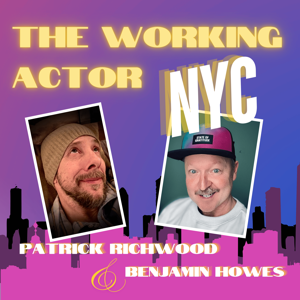
With decades on stage and screen, Patrick Richwood (Hollywood films, TV, national tours) and Benjamin Howes (Broadway, Off-Broadway, national tours, TV and film) share candid conversations that are honest, often hilarious, and always grounded in real experience.
From backstage stories and industry secrets to practical tips and coping strategies, The Working Actor NYC podcast gives you the inside scoop on what it really takes to build, maintain, and love your acting career.
Whether your dream is Broadway, the big screen, or anything in between, join us for weekly episodes designed to help you work smarter, laugh louder, and stay in the game.