
Sign up to save your podcasts
Or

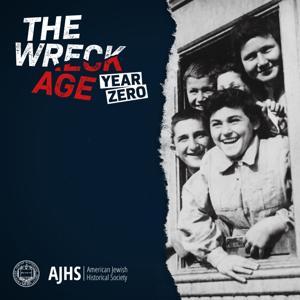


From the American Jewish Historical Society comes a new series, The World in Front of Me, hosted by Ruth Andrew Ellenson in conversation with her lifelong friend, renowned photographer of Jewish life, Bill Aron. In this incredible episode, Bill travels to the USSR to document the lives of Refuseniks -- and encounters some KGB opposition along the way. Featuring expert commentary from The Wreckage: Open Up the Gates co-writer Shaul Kelner.
Please enjoy this very special episode, and head over to The World in Front of Me, now available on all podcast platforms, to hear more incredible stories from Bill Aron.
On Apple Podcasts: https://podcasts.apple.com/us/podcast/the-wreckage/id1743434835
On Spotify: https://open.spotify.com/show/7LeJU4dPEqlMuncZcuLNtJ
The World in Front of Me is presented by Jay and Gretchen Stein, with generous support from the Knapp Family Foundation, the Philip and Muriel Berman Foundation in Honor of Alan Bloch, Scott and Dianne Einhorn, The Karetsky Family, and Michael and Corie Koss.
Taped live in front of a limited studio audience at Sound Lounge in NYC, our series finale welcomes back author and critic Julie Salamon to host special guests Gal Beckerman, staff writer at The Atlantic and author of "When They Come for Us, We'll Be Gone: The Epic Struggle to Save Soviet Jewry," Shaul Kelner, professor of of Jewish Studies and sociology at Vanderbilt University and author of "A Cold War Exodus: How American Activists Mobilized to Free Soviet Jews," and Gemma R. Birnbaum, executive director of the American Jewish Historical Society and creator/producer of The Wreckage.
Image: Scholars discuss cultural genocide in the USSR, from the collection of the Bay Area Council for Soviet Jews at AJHS, I-505.
The Wreckage is made possible by funding from the Ford Foundation.
Additional funding is provided through the American Jewish Education Program, generously supported by Sid and Ruth Lapidus.
Throughout the movement to free Soviet Jews, American Jewish aid organizations deployed caseworkers around the world to help resettle Jewish emigres. Beginning in the 1960s, NGOs like HIAS (the Hebrew Immigrant Aid Society) helped hundreds of thousands of Soviet Jews find new homes in the United States, Israel, Canada, and other nations, just as they had done after World War II. By the late 1980s, tensions emerged far beyond Cold War politics, as American Jewish organizations and the Israeli government came to proverbial blows over where Refuseniks who obtained exit visas would go. Narrated by Rebecca Naomi Jones, featuring Jonathan Dekel-Chen, the Rabbi Edward Sandrow Chair in Soviet & East European Jewry at the Hebrew University; and Mark Hetfield, former caseworker and current President of HIAS.
Image: Meeting of the Hebrew Immigrant Aid Society in Winter 1993, from the Hebrew Immigrant Aid Society (HIAS Collections), I-363.
The Wreckage is made possible by funding from the Ford Foundation. Additional funding is provided through the American Jewish Education Program, generously supported by Sid and Ruth Lapidus.In addition to advocacy at home, including through efforts like the twinning program, a number of activists working on behalf of Soviet Jewry traveled to the USSR, arranging meetings with Jews living behind the Iron Curtain in an effort to provide support and gain access to information to bring back to the United States. The journey was dangerous, and entailed a great deal of risk as the KGB enacted tighter and tighter restrictions on foreign visitors, and looked at each traveler with intense suspicion. Narrated by Rebecca Naomi Jones and featuring Dr. Shaul Kelner, author of A Cold War Exodus: How American Activists Mobilized to Free Soviet Jews.
Image: In October of 1985, American travelers Cheryl Pollman and Mark Werbner meet with the Pevzner family in Odessa, from the National Conference on Soviet Jewry Records, I-181.
The Wreckage is made possible by funding from the Ford Foundation.
Additional funding is provided through the American Jewish Education Program, generously supported by Sid and Ruth Lapidus.
The American movement for Soviet Jewry was composed of a number of organizations, both Jewish and non-Jewish, and ranging from grassroots organizations to larger, internationally established nonprofits. Established Jewish organizations dedicated significant staff time and effort to the cause, and worked to coordinate with both regional and national grassroots organizations that quickly became instrumental in the fight for freedom. While tensions over methods and priorities would arise, coalition-building between the various organizations was critical to saving hundreds of thousands of Soviet Jewish lives. Narrated by Rebecca Naomi Jones and featuring Dr. Shaul Kelner, professor of Jewish Studies and sociology at Vanderbilt University and author of A Cold War Exodus: How American Activists Mobilized to Free Soviet Jews.
Image: from the Greater New York Conference on Soviet Jewry Collection (I-362), Box 118
The Wreckage is made possible by funding from the Ford Foundation.
Additional funding is provided through the American Jewish Education Program, generously supported by Sid and Ruth Lapidus.
One of the driving forces behind the American Soviet Jewry freedom movement were college students. In 1964, the activist Jacob Birnbaum arrived in New York City, and soon became inspired by the Student Nonviolent Coordinating Committee to start his own student group dedicated to the plight of Soviet Jews. Birnbaum, who had himself fled persecution as a child when the Nazis rose to power in his native Germany, convened a group of concerned students from Columbia University, Queens College, Yeshiva University, and the Jewish Theological Seminary to help organize a rally in support of the refuseniks. He named the group the Student Struggle for Soviet Jewry, which became instrumental in igniting a nationwide movement. Narrated by Rebecca Naomi Jones and featuring Dr. Amy Fedeski.
Image: Union of Councils for Soviet Jews Bumper Stickers, Buttons, Prisoner of Conscience Medals, P-906.
The Wreckage is made possible by funding from the Ford Foundation.
Additional funding is provided through the American Jewish Education Program, generously supported by Sid and Ruth Lapidus.
In the summer of 1970, Soviet Jewish dissidents Eduard Kuznetsov and Mark Dymshits organized a group of 16 refuseniks to take over a small, 12-seater airplane and escape from the USSR. Dubbed "Operation Wedding," the group booked their tickets on the small civilian aircraft under the guise of attending a wedding. Their plan: to board the flight, forcibly remove the pilots during a stop, and continue on to Israel. But on the morning of June 15, as they arrived to board their flight, KGB agents intercepted the group. The accused were charged with high treason, and the trial drew international attention - and shined a light on the human rights violations the Soviet government was committing, igniting the Soviet Jewry movement as we know it. Narrated by Rebecca Naomi Jones and featuring Anat Zalmanson-Kuznetsov.
Image: Prisoner of the Soviet Secret Police Eduard Kuznetsov poster produced by the Student Struggle for Soviet Jewry, from the Records of Action for Soviet Jewry at the American Jewish Historical Society, I-487.
The Wreckage is made possible by funding from the Ford Foundation.
Additional funding is provided through the American Jewish Education Program, generously supported by Sid and Ruth Lapidus.
As hostilities behind the Iron Curtain worsened, a large number of Soviet Jews began to apply for exit visas, most commonly to Israel. Most of these applications came from Jews living in territories in the Western part of the Soviet Union, including regions annexed during World War II. The vast majority of these applications were denied, giving rise to the plight of the Refuseniks. Narrated by Rebecca Naomi Jones and featuring Gemma R. Birnbaum, executive director of the American Jewish Historical Society.
Image: From the Union of Councils for Soviet Jews collection at AJHS, P-906.
The Wreckage is made possible by funding from the Ford Foundation.
Additional funding is provided through the American Jewish Education Program, generously supported by Sid and Ruth Lapidus.
From the publisher's feed

37,993 Listeners

6,754 Listeners

3,930 Listeners

4,048 Listeners
1,372 Listeners

649 Listeners

197 Listeners

450 Listeners

3,196 Listeners

1,065 Listeners

15,893 Listeners

10,550 Listeners

10,521 Listeners

655 Listeners

910 Listeners