
Sign up to save your podcasts
Or



Based on Podcast App listening data
Legends of King Aśoka (3rd century BCE), have long guided and inspired Buddhists, particularly rulers. In this 2nd episode of two, I continue the story of Aśoka's exploits: sending missionaries to spread the Dhamma, building a large number of stupas, and sponsoring the Third Buddhist Council. I also discuss the debate about whether Aśoka championed Buddhism as a religion, or kept his public life non-sectarian and used the term "Dhamma" to refer to general principles of morality and righteousness.
King Aśoka was an Indian emperor in the 3rd century BCE. According to legend, he was a devout Buddhist who explicitly and publicly governed in accord with the Dhamma, or Buddhist teachings. Aśoka has been important to Buddhists – particularly Buddhist rulers – ever since his reign. In this episode I tell you the story of Aśoka according to legend, and then contrast that with what we know from his extant rock edicts (deciphered in the 19th century). In the next episode I'll continue with the stories of Aśoka's exploits.
In this second episode of two on "How to Guide Your Own Meditation," I illustrate the process by sharing four first-person narratives about meditation experiences. In each story, someone turns their attention toward their meditative experience itself, and finds a way to adjust their effort in order to improve it.
We sometimes get stuck in simplistic meditation instructions and therefore sell our meditation short. It's valuable to learn how to guide your own meditation - being mindful of your experience, arousing determination to do your best, and then being creative and diligent in finding ways to stay alert and focused. In this episode I explain this approach to meditation, and in the next episode I'll offer first-person stories about meditative experiences to illustrate the process.
In this episode we finish up the Genjokoan, focusing first on the rather long passage comparing our path of practice to the way a fish swims in the water, or a bird flies in the sky. Then I'll talk about the story at the end of the essay, where a monk asks a Zen master why he uses a fan when the nature of wind permeates everywhere, which is really a question about why we practice if reality ultimately lacks nothing.
In this 3rd episode of three on Buddhist prayer, I talk about how prayer for personal transformation and change. I discuss why change is so hard, how both Buddhism and science suggest "executive control" is an illusion, and how prayer can be a skillful "end run" around our internal resistance.
I continue our exploration of Buddhist prayer with a discussion of "aid-seeking" prayer, or prayer for a positive result. In particular, in this episode I cover the long-established traditions of Buddhist prayer for positive physical or external results, such as protection from danger, recovery from illness, or plentiful rain for crops. (In the next episode I'll talk about prayer to affect change in our own practice, experience, or behavior.)
You might be surprised to know many Buddhists pray, given that Buddhism is fundamentally a nontheistic religion. It's possible to be an avowed atheist and a devout Buddhist at the same time. In fact, such a Buddhist might even pray! I'll explain more about how this works in this episode, which will be the first of two. I'll introduce you to three basic reasons Buddhists pray, take you through the first two reasons, and then finish up next week by going into more detail about the third type of prayer.
Right speech is an essential part of Shakyamuni Buddha's very first teaching of the Noble Eightfold Path, his prescription for spiritual liberation and insight. This teaching can be very useful to us in daily life, and recommends we avoid lying, divisive speech, abusive speech, and idle (unmindful) chatter. The Buddha also gave us five things to consider before speaking: Is what we're about to say factual, helpful, kind (spoken with good-will), pleasant ("endearing"), and timely?
In this 4th episode of 5 on Zen master Dogen's Genjokoan (written in 1233), I discuss the image of the moon reflected in a dewdrop (ultimate reality reflected/realized by a limited person), and the metaphor of different experiences of the ocean (the nature of relative and absolute truths).
From the publisher's feed
Ranked by our users in the last 21 days
489 Listeners
264 Listeners
2,641 Listeners
361 Listeners
326 Listeners
1,476 Listeners
691 Listeners
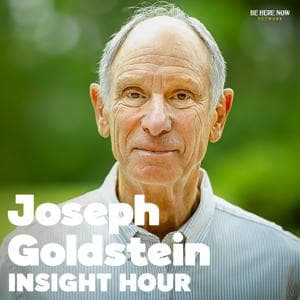
945 Listeners
866 Listeners
262 Listeners
277 Listeners
228 Listeners

798 Listeners
1,374 Listeners

61 Listeners