https://vimeo.com/447969239
The increased tensions with China are explained by the Pentagon's need to justify its budget. The worst thing that ever happened to the Pentagon was the demise of the Soviet Union. MG Dennis Laich (ret.) joins Paul Jay on theAnalysis.news podcast.
Transcript
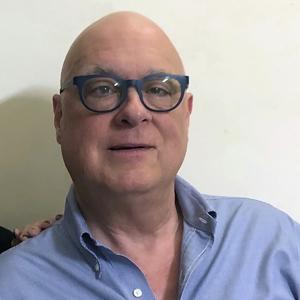
Paul JayHi, my name is Paul Jay, and welcome to theAnalysis.news podcast.It's not often I get a chance to talk to an American general, okay, I've never had a chance to talk to an American general. I have interviewed a Canadian general, General Lewis Mackenzie, who told me armies need soldiers that don't know much about history or the world, because if they did, they wouldn't want to go off to war, to kill or be killed.We'll be talking about the recruitment of soldiers for the US armed forces today, including the debate over the all-volunteer army. My guest wants to return to the draft.First, we will assess what we should expect from a Biden-Harris foreign policy and what we've seen so far from Trump, especially the growing confrontation with China.Now joining us is Major General Dennis Laich, retired from the United States Army in 2006 after more than 35 years of service. His last assignment was commander of the 94th Regional Readiness Command at Fort Devens, Massachusetts, where he commanded all Army Reserve soldiers in the six New England states. For the last 14 consecutive years of his career, he served in command positions. He has served in Iraq, Kuwait, Germany, and the Netherlands and Honduras. He's a graduate of the Army War College, the Command and General Staff College and the National Security Management Program. He's also completed postgraduate studies in national and international security at Harvard University's Kennedy School of Government. His military awards include the Defense Distinguished Service Medal, the Legion of Merit and the Meritorious Service Medal. He currently serves as the director of the Patriots program at Ohio Dominican University and is the author of the book, 'Skin in the Game: Poor Kids and Patriots'. Major General Laich opposed the Iraq war while he was still in active service. Welcome, Major General.
Dennis LaichGreat to be with you.
Paul JayAnd if it's OK, can I call you Denis?
Dennis LaichI'm retired now, so go ahead. Whatever you feel most comfortable with.
Paul JayOK, so before we get into some of the more current issues, talk about your experience when you were serving as a general, at the time, I believe, and you opposed the Iraq war, publicly, and got into quite a confrontation with the Secretary of Defense, Rumsfeld. Why did you speak out publicly when you were in the service and why did you oppose the war?
Dennis LaichWell, when you say publicly, I spoke out in an open military forum, which was unheard of at that time, I thought that the war in Iraq was ill-advised and became a war, not necessarily that we could win, but I thought that the predicate for the war was set years ago by Rumsfeld, Cheney, and Wolfowitz, and it was ill-advised. We had Saddam Hussein pretty much bottled up. And whether we won or lost the war, we opened up the Middle East for Iranian influence. So I thought it was a bad move on our part. And it, in fact, did open up Iran to greater influence both in Iraq and other parts of the Middle East.
Paul JayWhen you say the predicate for the war was established before, are you talking about their involvement in this project for the New American Century and the whole strategy of regime change?
Dennis LaichI think the regime change and also the first Gulf War, I think there was some lingering sense among Wolfowitz and Cheney and Rumsfeld that, "we should have finished the job", notwithstanding the public statements that Cheney made. And I think that the Bush administration was misserved by Cheney, Wolfowitz, and others, Rumsfeld primarily,