
Sign up to save your podcasts
Or

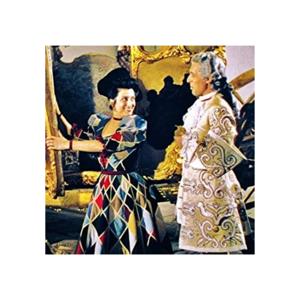


This week's studio is RKO, 1940, and we have two great movies: Vigil in the Night, starring Carole Lombard as a saintly nurse and Anne Shirley as her flawed sister in George Stevens' noirish medical drama; and Abe Lincoln in Illinois, based on Robert E. Sherwood's play, with Raymond Massey reprising his stage role of Abraham Lincoln. We discuss the latter as an anti-fascist film and argue for both films as examples of RKO's particular brand of progressivism, which continues even after the departure of Pandro S. Berman.
Time Codes:
0h 01m 00s: VIGIL IN THE NIGHT [dir. George Stevens]
0h 47m 01s: ABE LINCOLN IN ILLINOIS [dir. John Cromwell]
Studio Film Capsules provided by The RKO Story by Richard B. Jewell & Vernon Harbin
Additional studio information from: The Hollywood Story by Joel W. Finler
+++
* Marvel at our meticulously ridiculous Complete Viewing Schedule for the 2020s
* Intro Song: "Sunday" by Jean Goldkette Orchestra with the Keller Sisters (courtesy of The Internet Archive)
* Read Elise's latest film piece on Preston Sturges, Unfaithfully Yours, and the Narrative role of comedic scapegoating.
* Check out Dave's new Robert Benchley blog – an attempt to annotate and reflect upon as many of the master humorist's 2000+ pieces as he can locate – Benchley Data: A Wayward Annotation Project!
Follow us on Twitter at @therebuggy
Write to us at [email protected]
We now have a Discord server - just drop us a line if you'd like to join!
Our Special Subject for August is also our first look at German filmmaking under the Nazis, with two mid-1930s films by left-wing director and future Hollywood auteur Douglas Sirk: The Girl from the Marsh Croft, based on the novel by Selma Lagerlöf, and Pillars of Society, based on the play by Henrik Ibsen. We consider the question of how it was possible to make liberal films under these circumstances and find early evidence of Sirk's interest in "split characters" and unconventional protagonists.
Time Codes:
0h 1m 00s: Introductory discussion on Sirk at UFA during the 1933 to 1937 period
0h 13m 15s: THE GIRL FROM THE MARSH CROFT (1935) [dir. Douglas Sirk]
0h 38m 15s: PILLARS OF SOCIETY (1936) [dir. Douglas Sirk]
+++
* Listen to our guest episode on The Criterion Project – a discussion of Late Spring
* Marvel at our meticulously ridiculous Complete Viewing Schedule for the 2020s
* Intro Song: "Sunday" by Jean Goldkette Orchestra with the Keller Sisters (courtesy of The Internet Archive)
* Read Elise's piece on Gangs of New York – "Making America Strange Again"
* Check out Dave's Robert Benchley blog – an attempt to annotate and reflect upon as many of the master humorist's 2000+ pieces as he can locate – Benchley Data: A Wayward Annotation Project!
Follow us on Twitter at @therebuggy
Write to us at [email protected]
We now have a Discord server - just drop us a line if you'd like to join!
In this week's Acteurist Oeuvre-view episode, we look at 3 Jean Arthur movies: The Defense Rests (1934), an excellent corrupt lawyer drama that we were previously unable to find; and from 1935, two very different romantic comedies featuring real or pretend marriages of convenience, The Public Menace and If You Could Only Cook. The simultaneously idealistic and pragmatic young lawyer, screwball liar, and Depression comedy heroine she plays in each of these films respectively give us several aspects of Arthur's emerging screen persona to discuss in this last moment before she finds true fame.
Time Codes:
0h 1m 00s: THE DEFENSE RESTS (1934) [dir. Lambert Hillyer]
0h 35m 56s: THE PUBLIC MENACE (1935) [dir. Erle C. Kenton]
0h 46m 09s: IF YOU COULD ONLY COOK (1935) [dir. William A. Seiter]
+++
* Listen to our guest episode on The Criterion Project – a discussion of Late Spring
* Marvel at our meticulously ridiculous Complete Viewing Schedule for the 2020s
* Intro Song: "Sunday" by Jean Goldkette Orchestra with the Keller Sisters (courtesy of The Internet Archive)
* Read Elise's piece on Gangs of New York – "Making America Strange Again"
* Check out Dave's Robert Benchley blog – an attempt to annotate and reflect upon as many of the master humorist's 2000+ pieces as he can locate – Benchley Data: A Wayward Annotation Project!
Follow us on Twitter at @therebuggy
Write to us at [email protected]
We now have a Discord server - just drop us a line if you'd like to join!
For this Fox 1940 episode, we look at a couple of films with the same director (Henry Hathaway), same cinematographer (Arthur Miller), and same nominal star (Tyrone Power), but radically different stories. Brigham Young tells the story of the persecution of the Mormons and their journey westward from Illinois to the Great Salt Lake, recasting this American epic as an implicit anti-Nazi tale with progressive values. Then we shift from Fox's traditional sophisticated "rural" storytelling to their new urban focus with the crime drama Johnny Apollo, which casts a cool eye on the American system in this moment of transition from Great Depression to WWII.
Time Codes:
0h 01m 00s: BRIGHAM YOUNG [dir. Henry Hathaway]
0h 42m 50s: JOHNNY APOLLO [dir. Henry Hathaway]
Studio Film Capsules provided by The Films of 20th Century Fox by Tony Thomas & Aubrey Solomon
Additional studio information from: The Hollywood Story by Joel W. Finler
+++
* Marvel at our meticulously ridiculous Complete Viewing Schedule for the 2020s
* Intro Song: "Sunday" by Jean Goldkette Orchestra with the Keller Sisters (courtesy of The Internet Archive)
* Read Elise's latest film piece on Preston Sturges, Unfaithfully Yours, and the Narrative role of comedic scapegoating.
* Check out Dave's new Robert Benchley blog – an attempt to annotate and reflect upon as many of the master humorist's 2000+ pieces as he can locate – Benchley Data: A Wayward Annotation Project!
Follow us on Twitter at @therebuggy
Write to us at [email protected]
We now have a Discord server - just drop us a line if you'd like to join!
In this week's Jean Arthur Acteurist Oeuvre-view episode, we look at two more movies from 1935, Public Hero No. 1 (directed by J. Walter Ruben for MGM) and Diamond Jim (directed by A. Edward Sutherland for Universal, with a screenplay by Preston Sturges). In the first, Arthur injects some screwball swagger into a Code-era gangster drama with an FBI agent hero; in the second, she has a dual role as the love(s) of Edward Arnold's life. We consider the qualities Arthur brings to these films, for which she was loaned out by Columbia, and marvel at the dark oddity of Diamond Jim, made not long before the advent of the post-Laemmle banker regime at Universal that thwarted Preston Sturges' first shot at directing.
Time Codes:
0h 01m 00s: PUBLIC HERO NO. 1 (1935) [dir. J. Walter Ruben]
0h 30m 17s: DIAMOND JIM (1935) {dir. A. Edward Sutherland]
+++
* Listen to our guest episode on The Criterion Project – a discussion of Late Spring
* Marvel at our meticulously ridiculous Complete Viewing Schedule for the 2020s
* Intro Song: "Sunday" by Jean Goldkette Orchestra with the Keller Sisters (courtesy of The Internet Archive)
* Read Elise's piece on Gangs of New York – "Making America Strange Again"
* Check out Dave's Robert Benchley blog – an attempt to annotate and reflect upon as many of the master humorist's 2000+ pieces as he can locate – Benchley Data: A Wayward Annotation Project!
Follow us on Twitter at @therebuggy
Write to us at [email protected]
We now have a Discord server - just drop us a line if you'd like to join!
Our Special Subject for this month, Duels in Max Ophüls, covers films from all three decades of the itinerant filmmaker's career: Liebelei (1933), made in Germany; Letter from an Unknown Woman (1948), made in Hollywood; and Madame de... (1953), made in France. We consider the proposition that Ophüls' films are about superficially superficial people, and examine the evolution of a certain set of characters and scenarios in these three films dealing with the subject of tragic love and its (futile?) transformative effects.
Time Codes:
0h 01m 00s: LIEBELEI (1934) [dir. Max Ophüls]
0h 37m 18s: LETTER FROM AN UNKOWN WOMAN (1948) [dir. Max Ophüls]
0h 59m 41s: THE EARRINGS OF MADAME DE… (1953) [dir. Max Ophüls]
+++
* Listen to our guest episode on The Criterion Project – a discussion of Late Spring
* Marvel at our meticulously ridiculous Complete Viewing Schedule for the 2020s
* Intro Song: "Sunday" by Jean Goldkette Orchestra with the Keller Sisters (courtesy of The Internet Archive)
* Read Elise's piece on Gangs of New York – "Making America Strange Again"
* Check out Dave's Robert Benchley blog – an attempt to annotate and reflect upon as many of the master humorist's 2000+ pieces as he can locate – Benchley Data: A Wayward Annotation Project!
Follow us on Twitter at @therebuggy
Write to us at [email protected]
We now have a Discord server - just drop us a line if you'd like to join!
Our Warner Bros. 1940 episode this time is a Bette Davis double feature in which Bette plays the Other Woman in two melodramas based on real-life sex-and-murder scandals, but the Wronged Woman in only one. We discuss the combination of sexual repression and critique of colonialism in William Wyler's The Letter and Anatole Litvak's study of societal constraints and thwarted romance with the very different setting of the last years of the Orléans monarchy in mid-19th century Paris, All This, and Heaven Too. Then, in a quick and dirty Fear and Moviegoing in Toronto segment, we evaluate David Cronenberg's mind-fuck gaming movie, eXistenZ, from 1999 (with spoilers, so skip it if you want your mind to be a virgin for the experience).
Time Codes:
0h 01m 00s: THE LETTER [dir. William Wyler]
0h 41m 01s: ALL THIS, AND HEAVEN TOO [dir. Anatole Litvak]
1h 10m 09s: Fear & Moviegoing in Toronto – eXistenZ (1999) by David Cronenberg
Studio Film Capsules provided by The Warner Brothers Story by Clive Hirschhorn
Additional studio information from: The Hollywood Story by Joel W. Finler
+++
* Marvel at our meticulously ridiculous Complete Viewing Schedule for the 2020s
* Intro Song: "Sunday" by Jean Goldkette Orchestra with the Keller Sisters (courtesy of The Internet Archive)
* Read Elise's latest film piece on Preston Sturges, Unfaithfully Yours, and the Narrative role of comedic scapegoating.
* Check out Dave's new Robert Benchley blog – an attempt to annotate and reflect upon as many of the master humorist's 2000+ pieces as he can locate – Benchley Data: A Wayward Annotation Project!
Follow us on Twitter at @therebuggy
Write to us at [email protected]
We now have a Discord server - just drop us a line if you'd like to join!
In our second Jean Arthur Acteurist Oeuvre-view episode, Arthur moves into her A-picture period at Columbia with John Ford's curious comedy/crime melodrama, The Whole Town's Talking, starring Edward G. Robinson in a dual role, and Erle C. Kenton's Children's Hour-reminiscent Party Wire. While we see more of the familiar Arthur comedy persona emerge in The Whole Town's Talking, she gets to show off her quiet moral authority and perspicacity in Party Wire, playing a woman who becomes the victim of town gossip. We make the case for Party Wire as a small-town satire worthy of standing alongside Stevens' Alice Adams, Sturges' The Miracle of Morgan's Creek, and Billy Wilder's Kiss Me, Stupid, and find more evidence for the secret feminism of Harry Cohn.
Time Codes:
0h 01m 00s: THE WHOLE TOWN'S TALKING (1935) [dir. John Ford]
0h 25m 41s: PARTY WIRE (1935) [dir. Erle C. Kenton]
0h 55m 31s: Fear and Moviegoing in Toronto - THE RED DETACHMENT OF WOMEN (1961) [dir. Xie Jin]
+++
* Listen to our guest episode on The Criterion Project – a discussion of Late Spring
* Marvel at our meticulously ridiculous Complete Viewing Schedule for the 2020s
* Intro Song: "Sunday" by Jean Goldkette Orchestra with the Keller Sisters (courtesy of The Internet Archive)
* Read Elise's piece on Gangs of New York – "Making America Strange Again"
* Check out Dave's Robert Benchley blog – an attempt to annotate and reflect upon as many of the master humorist's 2000+ pieces as he can locate – Benchley Data: A Wayward Annotation Project!
Follow us on Twitter at @therebuggy
Write to us at [email protected]
We now have a Discord server - just drop us a line if you'd like to join!
An odd pairing for this MGM 1940 episode: King Vidor's Northwest Passage, which is not about finding the Northwest Passage at all but about an attack on an Abenaki village by an independent ranger company attached to the British Army; and Frank Borzage's mystical prison break movie, Strange Cargo. We make the argument for a Starship Troopers reading of Northwest Passage before grappling with the many issues of Strange Cargo, from Borzage's use of Crawford and Gable's star personas, to the movie's theodicy, to the many Code-defying topics it deals with. We find a tonal similarity with the poetic realism movement in French cinema of the 1930s, and consider Borzage's treatment of love, salvation and gender.
Time Codes:
0h 01m 00s: NORTHWEST PASSAGE [dir. King Vidor]
0h 30m 24s: STRANGE CARGO [dir. Frank Borzage]
1h 17m 11s: Fear & Moviegoing in Toronto – Kinuyo Tanaka's Love Under the Crucifix (1962)
Studio Film Capsules provided by The MGM Story by John Douglas Eames
Additional studio information from: The Hollywood Story by Joel W. Finler
+++
* Marvel at our meticulously ridiculous Complete Viewing Schedule for the 2020s
* Intro Song: "Sunday" by Jean Goldkette Orchestra with the Keller Sisters (courtesy of The Internet Archive)
* Read Elise's latest film piece on Preston Sturges, Unfaithfully Yours, and the Narrative role of comedic scapegoating.
* Check out Dave's new Robert Benchley blog – an attempt to annotate and reflect upon as many of the master humorist's 2000+ pieces as he can locate – Benchley Data: A Wayward Annotation Project!
Follow us on Twitter at @therebuggy
Write to us at [email protected]
We now have a Discord server - just drop us a line if you'd like to join!
This Week's Special Subject is a look at the early silent cinema of Danish master Carl Theodor Dreyer, during the years preceding The Passion of Joan of Arc. We discuss Michael (1924), about the relationship between a famous painter and his male model, and Master of the House (1925), a comedy about the taming of a tyrannical patriarch. Subjects include Dreyer's unique take on the visionary possibilities of love, which can allow you to transcend ordinary human experience in one way or another; and the interrelationship of patriarchy, matriarchy, and the use of violence and fear in maintaining domestic discipline. And in our Fear and Moviegoing in Toronto segment, we briefly discuss Carné's romantic epic Children of Paradise (1945), generally considered one of the great masterpieces of French cinema, and another Kinuyo Tanaka film, Girls of the Night (1961), about the consequences for sex workers when prostitution was proscribed by law in mid-1950s Japan.
Time Codes:
0h 01m 00s: Brief Intro. Carl Theodor Dreyer
0h 10m 29s: MICHAEL (1924) [Dir. Carl Th. Dreyer]
0h 31m 35s: MASTER OF THE HOUSE (1925) [Dir. Carl Th. Dreyer]
0h 49m 19s: Fear and Moviegoing in Toronto – Carné's ENFANTS DU PARADIS & Tanaka's GIRLS OF THE NIGHT
+++
* Listen to our guest episode on The Criterion Project (coming next week!) – a discussion of Late Spring
* Marvel at our meticulously ridiculous Complete Viewing Schedule for the 2020s
* Intro Song: "Sunday" by Jean Goldkette Orchestra with the Keller Sisters (courtesy of The Internet Archive)
* Read Elise's piece on Gangs of New York – "Making America Strange Again"
* Check out Dave's Robert Benchley blog – an attempt to annotate and reflect upon as many of the master humorist's 2000+ pieces as he can locate – Benchley Data: A Wayward Annotation Project!
Follow us on Twitter at @therebuggy
Write to us at [email protected]
We now have a Discord server - just drop us a line if you'd like to join!
From the publisher's feed

1,536 Listeners

1,077 Listeners

273 Listeners