
Sign up to save your podcasts
Or

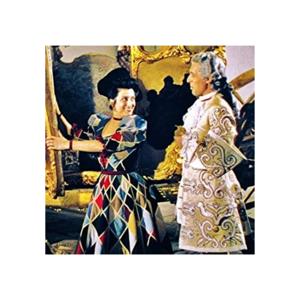


In this Daniel Day-Lewis Acteurist Oeuvre-view episode we look at two movies from 1993: Jim Sheridan's In the Name of the Father, about mid-70s English-Irish relations, anti-terrorist hysteria, and father-son relationships; and The Age of Innocence, Martin Scorsese's adaptation of Edith Wharton's novel about social mores in New York at the end of the 19th century. We discuss Scorsese's layered examination of romantic love and gender roles, and why Wharton's novel is ideal Scorsese source material; as well as Sheridan's layered examination of what it takes to challenge a corrupt system. If you're looking for layers and examinations, you can stop looking right now. Day-Lewis brings an array of relevant qualities to the roles, from clownishness, boyishness, and mania to contempt, frustration, and idealism.
Time Codes:
0h 01m 00s: IN THE NAME OF THE FATHER (1993) [dir. Jim Sheridan]
0h 42m 10s: THE AGE OF INNOCENCE (1993) [dir. Martin Scorsese]
+++
* Marvel at our meticulously ridiculous Complete Viewing Schedule for the 2020s
* Intro Song: "Sunday" by Jean Goldkette Orchestra with the Keller Sisters (courtesy of The Internet Archive)
* Read Elise's latest film piece on Preston Sturges, Unfaithfully Yours, and the Narrative role of comedic scapegoating.
* Check out Dave's new Robert Benchley blog – an attempt to annotate and reflect upon as many of the master humorist's 2000+ pieces as he can locate – Benchley Data: A Wayward Annotation Project!
Follow us on Twitter at @therebuggy
Write to us at [email protected]
Warner Brothers, 1939: this is a big one, a double feature of Dave Faves, The Roaring Twenties, directed by Raoul Walsh and starring James Cagney and Priscilla Lane (among others), and Dust Be My Destiny, directed by Lewis Seiler and starring John Garfield and Priscilla Lane again. We take the opportunity to contrast Cagney and Garfield, Warners' characteristic "proletarian" male stars of the early 30s and late 30s respectively, teasing out what they mean for the evolving American Left. Then, the return (again) of Fear and Moviegoing in Toronto: we briefly discuss Elia Kazan's Splendor in the Grass (1961), comparing it stylistically and thematically to David Lynch's Fire Walk with Me. But why didn't Sheryl Lee get an Oscar nom, like Natalie Wood?
Time Codes:
0h 01m 00s: THE ROARING TWENTIES [dir. Raoul Walsh]
0h 44m 34s: DUST BE MY DESTINY [dir. Lewis Seiler]
1h 22m 41s: Fear and Moviegoing in Toronto – SPLENDOR IN THE GRASS (1961) [dir. Elia Kazan]
Studio Film Capsules provided The Warner Brothers Story by Clive Hirschhorn
Additional studio information from: The Hollywood Story by Joel W. Finler
+++
* Marvel at our meticulously ridiculous Complete Viewing Schedule for the 2020s
* Intro Song: "Sunday" by Jean Goldkette Orchestra with the Keller Sisters (courtesy of The Internet Archive)
* Read Elise's latest film piece on Preston Sturges, Unfaithfully Yours, and the Narrative role of comedic scapegoating.
* Check out Dave's new Robert Benchley blog – an attempt to annotate and reflect upon as many of the master humorist's 2000+ pieces as he can locate – Benchley Data: A Wayward Annotation Project!
Follow us on Twitter at @therebuggy
Write to us at [email protected]
Time Codes:
0h 01m 00s: EVERSMILE, NEW JERSEY (1989) [dir. Carlos Sorin]
0h 29m 30s: THE LAST OF THE MOHICANS (1992) [dir. Michael Mann]
0h 58m 47s: Listener Mail with Adam {on the mystery genre}
+++
* Marvel at our meticulously ridiculous Complete Viewing Schedule for the 2020s
* Intro Song: "Sunday" by Jean Goldkette Orchestra with the Keller Sisters (courtesy of The Internet Archive)
* Read Elise's latest film piece on Preston Sturges, Unfaithfully Yours, and the Narrative role of comedic scapegoating.
* Check out Dave's new Robert Benchley blog – an attempt to annotate and reflect upon as many of the master humorist's 2000+ pieces as he can locate – Benchley Data: A Wayward Annotation Project!
Follow us on Twitter at @therebuggy
Write to us at [email protected]
MGM, 1939: the beginning of an era, as the Freed Unit gets started with the first Mickey Rooney and Judy Garland musical, Babes in Arms (directed by Busby Berkeley), and the end of an era, with Tod Browning's last film, the supernaturally tinged locked room mystery and bid for B-seriesdom, Miracles for Sale. Reflecting on the role of the blackface number in Babes in Arms prompts us to take a deep dive into the relationship of race to the concept of "American entertainment," and then at the end of the episode we return to problematic racial representations in classical Hollywood cinema, in the very different context of feminist film theory and psychoanalysis, in response to a listener email about our series on the Sternberg-Dietrich films.
Time Codes:
0h 01m 00s: BABES IN ARMS [dir. Busby Berkeley]
0h 46m 09s: MIRACLES FOR SALE [dir. Tod Browning]
1h 02m 30s: Listener Mail with Dylan
Studio Film Capsules provided The MGM Story by John Douglas Eames
Additional studio information from: The Hollywood Story by Joel W. Finler
+++
* Marvel at our meticulously ridiculous Complete Viewing Schedule for the 2020s
* Intro Song: "Sunday" by Jean Goldkette Orchestra with the Keller Sisters (courtesy of The Internet Archive)
* Read Elise's latest film piece on Preston Sturges, Unfaithfully Yours, and the Narrative role of comedic scapegoating.
* Check out Dave's new Robert Benchley blog – an attempt to annotate and reflect upon as many of the master humorist's 2000+ pieces as he can locate – Benchley Data: A Wayward Annotation Project!
Follow us on Twitter at @therebuggy
Write to us at [email protected]
In this Book Club edition of the podcast, we finally have a chance to explore the work of Friend of the Pod Henry James. We look at James's short novel Washington Square (1880) and long short story "The Turn of the Screw" (1898), and two of their adaptations, The Heiress (1949, directed by William Wyler) and The Innocents (1961, directed by Jack Clayton). We focus on the arcs of the heroines in the two works and the very different directions in which the adaptations take them, as well as the acting opportunities they present for Olivia de Havilland and Deborah Kerr. We also praise the performances of Ralph Richardson as Austin Sloper and Martin Stephens as Miles, two very tricky, eminently Jamesian roles. But is Henry James unadaptable? We give our verdict.
Time Codes:
0h 01m 00s: Henry James: Quantum Romancer
0h 09m 30s: Washington Square & THE HEIRESS (1949) [dir. William Wyler]
0h 43m 38s: The Turn of the Screw & THE INNOCENTS (1961) [dir. Jack Clayton]
+++
* Marvel at our meticulously ridiculous Complete Viewing Schedule for the 2020s
* Intro Song: "Sunday" by Jean Goldkette Orchestra with the Keller Sisters (courtesy of The Internet Archive)
* Read Elise's latest film piece on Preston Sturges, Unfaithfully Yours, and the Narrative role of comedic scapegoating.
* Check out Dave's new Robert Benchley blog – an attempt to annotate and reflect upon as many of the master humorist's 2000+ pieces as he can locate – Benchley Data: A Wayward Annotation Project!
Follow us on Twitter at @therebuggy
Write to us at [email protected]
Time Codes:
0h 01m 00s: CAFE SOCIETY [dir. Edward H. Griffith]
0h 37m 19s: DISPUTED PASSAGE [dir: Frank Borzage]
1h 13m 45s: Fear and Moviegoing in Toronto – I AM A FUGITIVE FROM A CHAIN GANG (revisited)
Studio Film Capsules provided The Paramount Story by John Douglas Eames
Additional studio information from: The Hollywood Story by Joel W. Finler
+++
* Marvel at our meticulously ridiculous Complete Viewing Schedule for the 2020s
* Intro Song: "Sunday" by Jean Goldkette Orchestra with the Keller Sisters (courtesy of The Internet Archive)
* Read Elise's latest film piece on Preston Sturges, Unfaithfully Yours, and the Narrative role of comedic scapegoating.
* Check out Dave's new Robert Benchley blog – an attempt to annotate and reflect upon as many of the master humorist's 2000+ pieces as he can locate – Benchley Data: A Wayward Annotation Project!
Follow us on Twitter at @therebuggy
Write to us at [email protected]
We start off 1939 with a bang with two Paramount movies that gave us a lot to discuss. First, Café Society (directed by Edward H. Griffith), the first of several pairings of Fred MacMurray with early Hitchcock blonde Madeleine Carroll, with an original screenplay by future Columbia Pictures producer Virginia Van Upp, takes the screwball (for the most part) out of class-conscious 30s romantic comedy, replacing it with a high degree of sexual tension and, especially, an unusual focus on the moral growth of the heroine. We discuss the textual evidence of female auteurship and note certain similarities with Dorothy Arzner's The Wild Party (discussed in our Clara Bow series). Next, we explain why Frank Borzage's Disputed Passage, based on the Lloyd C. Douglas novel, is really a superhero movie, in what sense it is and isn't a soap opera, and how it's not about the proper way to be a doctor but rather about the proper way to lead the religious life. And in our returning (again) Fear and Moviegoing in Toronto segment, we revisit the great I Am A Fugitive From a Chain Gang (1932) and its subtextual subject matter of the corruption and perversion of the South by slavery, as a particular instance of the human tendency to find opportunities to create systems of cruelty.
Time Codes:
0h 01m 00s: CAFÉ SOCIETY [dir. Edward H. Griffith]
0h 37m 19s: DISPUTED PASSAGE [dir: Frank Borzage]
1h 13m 45s: Fear and Moviegoing in Toronto – I AM A FUGITIVE FROM A CHAIN GANG (revisited)
Studio Film Capsules provided The Paramount Story by John Douglas Eames
Additional studio information from: The Hollywood Story by Joel W. Finler
+++
* Marvel at our meticulously ridiculous Complete Viewing Schedule for the 2020s
* Intro Song: “Sunday” by Jean Goldkette Orchestra with the Keller Sisters (courtesy of The Internet Archive)
* Read Elise’s latest film piece on Preston Sturges, Unfaithfully Yours, and the Narrative role of comedic scapegoating.
* Check out Dave’s new Robert Benchley blog – an attempt to annotate and reflect upon as many of the master humorist’s 2000+ pieces as he can locate – Benchley Data: A Wayward Annotation Project!
Follow us on Twitter at @therebuggy
Write to us at [email protected]
In this week's Acteurist Oeuvre-view, we're still in the early stages of Daniel Day-Lewis's career, and once again the utterly obscure (Pat O'Connor's quirky comedy Stars and Bars (1988)) is paired with a much better-known film (Jim Sheridan's My Left Foot (1989), based on the life of disabled writer and painter Christy Brown). We discuss Stars and Bars' attempt to achieve a tone like Scorsese's After Hours, and why it wouldn't be the same if Hugh Grant were playing Day-Lewis's part. Then we move on to discussing what makes Christy Brown a perfect role for Day-Lewis and what emotional qualities make the performance great. We conclude that My Left Foot is sort of like Lynch's The Elephant Man with a demonic rather than saintly central figure.
Time Codes:
0h 01m 00s: Stars and Bars (1988) [dir. Pat O'Connor]
0h 22m 35s: My Left Foot (1989) [dir. Jim Sheridan]
+++
* Marvel at our meticulously ridiculous Complete Viewing Schedule for the 2020s
* Intro Song: "Sunday" by Jean Goldkette Orchestra with the Keller Sisters (courtesy of The Internet Archive)
* Read Elise's latest film piece on Preston Sturges, Unfaithfully Yours, and the Narrative role of comedic scapegoating.
* Check out Dave's new Robert Benchley blog – an attempt to annotate and reflect upon as many of the master humorist's 2000+ pieces as he can locate – Benchley Data: A Wayward Annotation Project!
Follow us on Twitter at @therebuggy
Write to us at [email protected]
For this Universal 1938 episode, we begin by again discussing the relationship between comedy, tragedy, and horror, courtesy of John M. Stahl's Letter of Introduction, featuring famed ventriloquist Edgar Bergen and his alter ego, Charlie McCarthy. Edgar rises and Adolphe Menjou falls in a kind of Tolstoyan double plot. Then we watch as Universal's new banker overlords do their best to launch another young female star with the initials DD. French actress Danielle Darrieux (later of Max Ophüls masterpieces) plays a real weirdo in The Rage of Paris, a risqué romantic comedy co-starring Douglas Fairbanks Jr. and directed by Deanna Durbin specialist Henry Koster, and we give our opinions on whether we think this attempt to launch her in America was a success.
Time Codes:
0h 01m 00s: LETTER OF INTRODUCTION [dir. John M. Stahl]
0h 39m 44s: THE RAGE OF PARIS [dir. Henry Koster]
Studio Film Capsules provided The Universal Story by Clive Hirschhorn
Additional studio information from: The Hollywood Story by Joel W. Finler
+++
* Marvel at our meticulously ridiculous Complete Viewing Schedule for the 2020s
* Intro Song: "Sunday" by Jean Goldkette Orchestra with the Keller Sisters (courtesy of The Internet Archive)
* Read Elise's latest film piece on Preston Sturges, Unfaithfully Yours, and the Narrative role of comedic scapegoating.
* Check out Dave's new Robert Benchley blog – an attempt to annotate and reflect upon as many of the master humorist's 2000+ pieces as he can locate – Benchley Data: A Wayward Annotation Project!
Follow us on Twitter at @therebuggy
Write to us at [email protected]
For our Valentine's Day 2022 episode, we examine Leos Carax's unique take on romantic love, from the adolescent autocritique of Boy Meets Girl (1984) to the anarchy and ecstasy of Les amants du Pont-Neuf (1991) to the abyss-gazing of his mind-boggling musical, Annette (2021). We discuss Carax's repeated association of love with abjection; his critique of the artist; and the many links between comedy, violence, and puppets.
Time Codes:
0h 01m 00s: Boy Meets Girl (1984) [dir. Leos Carax]
0h 28m 20s: Les amants du Pont-Neuf (1991) [dir. Leos Carax]
0h 47m 07s: Annette (2021) [dir. Leos Carax]
+++
* Marvel at our meticulously ridiculous Complete Viewing Schedule for the 2020s
* Intro Song: "Sunday" by Jean Goldkette Orchestra with the Keller Sisters (courtesy of The Internet Archive)
* Read Elise's latest film piece on Preston Sturges, Unfaithfully Yours, and the Narrative role of comedic scapegoating.
* Check out Dave's new Robert Benchley blog – an attempt to annotate and reflect upon as many of the master humorist's 2000+ pieces as he can locate – Benchley Data: A Wayward Annotation Project!
Follow us on Twitter at @therebuggy
Write to us at [email protected]
From the publisher's feed

1,536 Listeners
1,077 Listeners

273 Listeners