
Sign up to save your podcasts
Or

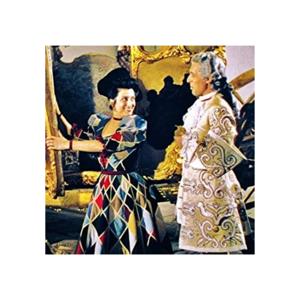


For Paramount 1938 we have two semi-comedic, quasi-historical tales of charming rogues, If I Were King (directed by Frank Lloyd, with a screenplay by Preston Sturges), starring Ronald Colman as medieval bohemian poet Francois Villon, and The Buccaneer (directed by frenemy of the podcast Cecil B. DeMille), starring Fredric March as Louisiana pirate and key figure in the Battle of New Orleans, Jean Lafitte - but perhaps more notable for the comedic chemistry of Akim Tamiroff and Hungarian cabaret star Franciska Gaal. We discuss If I Were King as a New Deal/French Revolution allegory all-in-one and possible source of future Sturgean explorations of wealth inequality in America; and early 20th century leftist mythologization of Andrew Jackson and weird ambivalence towards the idea of America in The Buccaneer.
Time Codes:
0h 01m 00s: IF I WERE KING [dir. Frank Lloyd]
0h 32m 13s: THE BUCCANEER [dir. Cecil B. DeMille]
Studio Film Capsules provided The Paramount Story by John Douglas Eames
Additional studio information from: The Hollywood Story by Joel W. Finler
+++
* Marvel at our meticulously ridiculous Complete Viewing Schedule for the 2020s
* Intro Song: "Sunday" by Jean Goldkette Orchestra with the Keller Sisters (courtesy of The Internet Archive)
* Read Elise's latest film piece on Preston Sturges, Unfaithfully Yours, and the Narrative role of comedic scapegoating.
* Check out Dave's new Robert Benchley blog – an attempt to annotate and reflect upon as many of the master humorist's 2000+ pieces as he can locate – Benchley Data: A Wayward Annotation Project!
Follow us on Twitter at @therebuggy
Write to us at [email protected]
For our Noirvember episode, we look at four Anthony Mann noirs, Railroaded! (1947), T-Men (1947), Raw Deal (1948), and Side Street (1950). We follow Mann as he ascends from Poverty Row to a collaboration with one of film noir's most distinctive cinematographers, John Alton, to the big-time at MGM, with his protagonists only getting more sweaty and desperate and his underworld brutes remaining just as psychotic. We discuss the scapegoating structure of Mann's noirs, their nihilism, their murder-mirror reflection of the capitalist's bottom line and their emphasis on pain - relieved only, in the poetic realism-reminiscent Raw Deal, by some fatalistic romanticism that's nevertheless offset by relentless masochism.
Time Codes:
0h 01m 00s: RAILROADED! (1947) [dir. Anthony Mann]
0h 15m 36s: T-MEN (1947) [dir. Anthony Mann]
0h 31m 01s: RAW DEAL (1948) [dir. Anthony Mann]
0h 46m 18s: SIDE STREET (1950) [dir. Anthony Mann]
1h 10m 01s: Tout Mannsemble
+++
* Marvel at our meticulously ridiculous Complete Viewing Schedule for the 2020s
* Intro Song: "Sunday" by Jean Goldkette Orchestra with the Keller Sisters (courtesy of The Internet Archive)
* Read Elise's latest film piece on Preston Sturges, Unfaithfully Yours, and the Narrative role of comedic scapegoating.
* Check out Dave's new Robert Benchley blog – an attempt to annotate and reflect upon as many of the master humorist's 2000+ pieces as he can locate – Benchley Data: A Wayward Annotation Project!
Follow us on Twitter at @therebuggy
Write to us at [email protected]
This Universal 1937 episode stays paused on the pivotal moment in the studio's history, with another James Whale/Deanna Durbin pairing: Whale's last hurrah, The Road Back, and Durbin's second outing, One Hundred Men and a Girl. Whale's film, based on a Remarque novel about Germany between the wars (familiar territory for the pod), compromised by Nazi censorship, and mutilated by the studio, may not represent the director's vision, but is the emphasis on the low comedy characters played by Slim Summerville and Andy Devine a fatal flaw or a Shakespearean inspiration? Then we turn to Henry Koster's surprisingly dark depiction of the American obsession with success, a perfectly constructed comedy that makes good use of its star's boundless energy.
Time Codes:
0h 01m 00s: THE ROAD BACK [dir. James Whale]
0h 40m 14s: ONE HUNDRED MEN AND A GIRL [dir. Henry Koster]
Studio Film Capsules provided The Universal Story by Richard B. Jewell & Vernon Harbin
Additional studio information from: The Hollywood Story by Joel W. Finler
+++
* Marvel at our meticulously ridiculous Complete Viewing Schedule for the 2020s
* Intro Song: "Sunday" by Jean Goldkette Orchestra with the Keller Sisters (courtesy of The Internet Archive)
* Read Elise's latest film piece on Preston Sturges, Unfaithfully Yours, and the Narrative role of comedic scapegoating.
* Check out Dave's new Robert Benchley blog – an attempt to annotate and reflect upon as many of the master humorist's 2000+ pieces as he can locate – Benchley Data: A Wayward Annotation Project!
Follow us on Twitter at @therebuggy
Write to us at [email protected]
In this week's Acteurist Oeuvre-view episode, Margaret Sullavan takes on the Nazis in Frank Borzage's The Mortal Storm (1940) and Fannie Hurst in Robert Stevenson's Back Street (1941). We discuss the subtleties and broad strokes of this early Hollywood depiction of Nazi Germany, Borzagean heroism, and performative fascism. Turning to Back Street, we consider what this Code-era remake of a classic Pre-Code has to say about which gender has it worse under patriarchy (or the Code). Also: an announcement regarding the long awaited (by us, anyway) return of Fear & Moviegoing in Toronto.
Time Codes:
0h 01m 00s: THE MORTAL STORM (1940) [dir. Frank Borzage]
0h 42m 53s: BACK STREET (1941) [Robert Stevenson]
+++
* Marvel at our meticulously ridiculous Complete Viewing Schedule for the 2020s
* Intro Song: "Sunday" by Jean Goldkette Orchestra with the Keller Sisters (courtesy of The Internet Archive)
* Read Elise's latest film piece on Preston Sturges, Unfaithfully Yours, and the Narrative role of comedic scapegoating.
* Check out Dave's new Robert Benchley blog – an attempt to annotate and reflect upon as many of the master humorist's 2000+ pieces as he can locate – Benchley Data: A Wayward Annotation Project!
Follow us on Twitter at @therebuggy
Write to us at [email protected]
Halloween is always a good time to ponder the horror of incarnation, familial feeling, and our alienation from God. While there are strict horror movies that tackle these subjects, Ingmar Bergman definitely puts his own twist on them, and so we bring you Halloween with Bergman. In The Silence (1963), a woman dies in a hotel room in a foreign country where the people speak no known language, abandoned by her family. In Cries and Whispers (1972), a woman dies in her family home, surrounded by her family. Guess what? It doesn't go any better. Can agonizing suffering bestow on certain individuals the ability to translate the language of God for a battered and bewildered humanity? Or when you die do you just go from one void to a bigger one? We ask the big questions--but also, Cries and Whispers is easily the most horrifying movie Elise has ever seen (with the possible exception of Fire Walk With Me), even before the part with the zombie vampire of love.
Time Codes:
0h 01m 00s: THE SILENCE (1963) [dir. Ingmar Bergman]
0h 26m 31s: CRIES AND WHISPERS (1972) [dir. Ingmar Bergman]
+++
* Marvel at our meticulously ridiculous Complete Viewing Schedule for the 2020s
* Intro Song: "Sunday" by Jean Goldkette Orchestra with the Keller Sisters (courtesy of The Internet Archive)
* Read Elise's latest film piece on Preston Sturges, Unfaithfully Yours, and the Narrative role of comedic scapegoating.
* Check out Dave's new Robert Benchley blog – an attempt to annotate and reflect upon as many of the master humorist's 2000+ pieces as he can locate – Benchley Data: A Wayward Annotation Project!
Follow us on Twitter at @therebuggy
Write to us at [email protected]
For RKO 1937, Katharine Hepburn runs the gamut of emotions from effervescent-but-repressed to robot-with-a-heart-of-gold in the last entry in her latest series of box office bombs, the J. M. Barrie dual-identity farce Quality Street (directed by George Stevens), and her brief return to critical and commercial viability, Stage Door (directed by Gregory La Cava), with Ginger Rogers. Two films that have little in common besides their star but do both invert the typical Hollywood movie gender ratio. We discuss whether Quality Street lives up to Hepburn's reunion with either her Alice Adams director or her Little Minister source author, and dig into the class analysis of Stage Door, one of the best American comedies of the late '30s.
Time Codes:
0h 01m 00s: RKO Data
0h 03m 55s: QUALITY STREET [dir. George Stevens]
0h 24m 15s: STAGE DOOR [dir. Gregory La Cava]
Studio Film Capsules provided by The RKO Story by Richard B. Jewell & Vernon Harbin
Additional studio information from: The Hollywood Story by Joel W. Finler
+++
* Marvel at our meticulously ridiculous Complete Viewing Schedule for the 2020s
* Intro Song: "Sunday" by Jean Goldkette Orchestra with the Keller Sisters (courtesy of The Internet Archive)
* Read Elise's latest film piece on Preston Sturges, Unfaithfully Yours, and the Narrative role of comedic scapegoating.
* Check out Dave's new Robert Benchley blog – an attempt to annotate and reflect upon as many of the master humorist's 2000+ pieces as he can locate – Benchley Data: A Wayward Annotation Project!
Follow us on Twitter at @therebuggy
Write to us at [email protected]
In this week's episode of our Margaret Sullavan Acteurist Oeuvre-view series, we look at a couple of thirds: Sullavan's third film directed by Frank Borzage - the crazed melodrama The Shining Hour (co-starring Joan Crawford) - and third (and most famous) pairing with Jimmy Stewart: the melancholy romantic comedy The Shop Around the Corner (directed by Ernst Lubitsch). We consider The Shining Hour as Borzage's "two women movie" (setting up next week's discussion of Stage Door in the bargain), with Sullavan and Crawford as his magnetic poles of female superheroism; and reflect on the qualities Sullavan brings to Lubitsch's tale of low-income workers negotiating urban isolation.
Time Codes:
0h 01m 00s: THE SHINING HOUR (1938) [dir. Frank Borzage]
0h 30m 30s: THE SHOP AROUND THE CORNER (1940) [dir. Ernst Lubitsch]
+++
* Marvel at our meticulously ridiculous Complete Viewing Schedule for the 2020s
* Intro Song: "Sunday" by Jean Goldkette Orchestra with the Keller Sisters (courtesy of The Internet Archive)
* Read Elise's latest film piece on Preston Sturges, Unfaithfully Yours, and the Narrative role of comedic scapegoating.
* Check out Dave's new Robert Benchley blog – an attempt to annotate and reflect upon as many of the master humorist's 2000+ pieces as he can locate – Benchley Data: A Wayward Annotation Project!
Follow us on Twitter at @therebuggy
Write to us at [email protected]
In our Fox 1937 episode this time around we cover a couple of oddities that nevertheless provide a good snapshot of the studio's latter 30s. Charlie Chan at the Olympics, starring Shakespearean-trained Swedish-American Warner Oland in his final year as Honolulu's Chinese Sherlock Holmes, flaunts racially integrated American Olympic teams at the Summer Olympics in Berlin, while failing completely to acknowledge the distressing existence of Nazism (not to mention the slight problem of a white man portraying the title character). Meanwhile the musical Wake Up and Live, featuring notorious gossip columnist Walter Winchell as himself, bursts with character actors and radio in-jokes. From touring with Nazimova to translating Strindberg to embodying a beloved aphorism-spouting B-movie detective, from New Deal leftist to McCarthyite paranoiac and finally pariah, from the Klondike to the seminary to Broadway to Hollywood character actor, and from Frank Fay's comic foil to Tallulah Bankhead's "personal assistant" to the Tony Award for Best Featured Actress in a Musical: no one needs to tell these Fox players to wake up and live!
Time Codes:
0h 01m 00s: CHARLIE CHAN AT THE OLYMPICS (dir. H. Bruce Humberstone)
0h 31m 22ss: WAKE UP AND LIVE (dir. Sidney Lanfield)
Studio Film Capsules provided by The Films of Twentieth Century Fox by Tony Thomas & Aubrey Solomon
Additional studio information from: The Hollywood Story by Joel W. Finler
+++
* Marvel at our meticulously ridiculous Complete Viewing Schedule for the 2020s
* Intro Song: "Sunday" by Jean Goldkette Orchestra with the Keller Sisters (courtesy of The Internet Archive)
* Read Elise's latest film piece on Preston Sturges, Unfaithfully Yours, and the Narrative role of comedic scapegoating.
* Check out Dave's new Robert Benchley blog – an attempt to annotate and reflect upon as many of the master humorist's 2000+ pieces as he can locate – Benchley Data: A Wayward Annotation Project!
In this week's Acteurist Oeuvre-view episode, we follow Margaret Sullavan to MGM, watching two films from 1938, Three Comrades and The Shopworn Angel. Borzage's film, based on Erich Maria Remarque's Lost Generation novel about Germany between World Wars, could not be more different in tone from H. C. Potter's love triangle melodrama, but both centre on a love that transcends the conventional, selfish two-lovers romance. Sullavan gives us two versions of a woman losing her disillusionment, and we reflect at some length on the meaning of Sullavan in Borzage's movies.
Time Codes:
0h 01m 00s: THREE COMRADES (1938) [dir. Frank Borzage]
0h 50m 44s: THE SHOPWORN ANGEL (1938) [dir. H.C. Potter]
+++
* Marvel at our meticulously ridiculous Complete Viewing Schedule for the 2020s
* Intro Song: "Sunday" by Jean Goldkette Orchestra with the Keller Sisters (courtesy of The Internet Archive)
* Read Elise's latest film piece on Preston Sturges, Unfaithfully Yours, and the Narrative role of comedic scapegoating.
* Check out Dave's new Robert Benchley blog – an attempt to annotate and reflect upon as many of the master humorist's 2000+ pieces as he can locate – Benchley Data: A Wayward Annotation Project!
*And Read lots of Elise's Writing at Bright Wall/Dark Room, Cléo, and Bright Lights.*
Follow us on Twitter at @therebuggy
Write to us at [email protected]
For this pass at Warner Bros. 1937, we have two more vehicles for Dave's favourite actress, Kay Francis: Confession, Joe May's scene-for-scene remake of the German melodrama Mazurka; and Michael Curtiz's Stolen Holiday, a version of the Stavisky affair with Francis, Claude Rains, and Ian Hunter making up the Curtiz Triangle and Orry-Kelly, as usual, fearlessly emphasizing the outré bodies of Warner's female stars. How do you prefer to see Kay Francis: as a sort of combination of Stella Dallas and the Michael Douglas character from Fatal Attraction, mowing down Basil Rathbone in the name of Sacred Motherhood? Or inspiring Claude Rains to discover unsuspected depths of decency with her talent for unconditional friendship? The beauty of this episode is: you don't have to choose.
Time Codes:
0h 01m 00s: Warner Bros. 1937 Studio Data
0h 04m 02s: CONFESSION (dir. Joe May)
0h 33m 49s: STOLEN HOLIDAY (dir. Michael Curtiz)
Studio Film Capsules provided by Clive Hirschhorn's The Warner Brothers Story
Additional studio information from: The Hollywood Story by Joel W. Finler
+++
* Marvel at our meticulously ridiculous Complete Viewing Schedule for the 2020s
* Intro Song: "Sunday" by Jean Goldkette Orchestra with the Keller Sisters (courtesy of The Internet Archive)
* Read Elise's latest film piece on Preston Sturges, Unfaithfully Yours, and the Narrative role of comedic scapegoating.
* Check out Dave's new Robert Benchley blog – an attempt to annotate and reflect upon as many of the master humorist's 2000+ pieces as he can locate – Benchley Data: A Wayward Annotation Project!
Follow us on Twitter at @therebuggy
Write to us at [email protected]
From the publisher's feed

1,536 Listeners
1,077 Listeners

273 Listeners