
Sign up to save your podcasts
Or

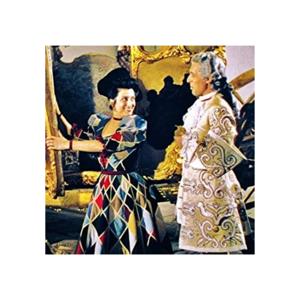


Our Summer in France series concludes with a look at the dynamic duo of poetic realism, director Marcel Carné and screenwriter Jacques Prévert. We discuss their first collaboration, Jenny (1936), and two noirish Oedipal fever dreams, Le quai des brumes (1938) and Le jour se lève (1939). We also look at a Carné film from the period in which Prévert was not involved, Hôtel du Nord (1938), and find both continuity with and difference from the surrounding films. Proletariats, perversion, the death drive, romantic love, and existential isolation: it's everything you ever wanted from a Summer in France.
0h 01m 00s: Introduction to Carné
0h 16m 46s: LE JOUR SE LÈVE (1939) [dir. Marcel Carné]
0h 50m 00s: HÔTEL DU NORD (1938) [dir. Marcel Carné]
1h 07m 52s: QUAI DES BRUMES (1938) [dir. Marcel Carné]
1h 29m 00s: JENNY (1936) [dir. Marcel Carné]
+++
* Marvel at our meticulously ridiculous Complete Viewing Schedule for the 2020s
* Intro Song: "Sunday" by Jean Goldkette Orchestra with the Keller Sisters (courtesy of The Internet Archive)
* Read Elise's latest film piece on Preston Sturges, Unfaithfully Yours, and the Narrative role of comedic scapegoating.
* Check out Dave's new Robert Benchley blog – an attempt to annotate and reflect upon as many of the master humorist's 2000+ pieces as he can locate – Benchley Data: A Wayward Annotation Project!
*And Read lots of Elise's Writing at Bright Wall/Dark Room, Cléo, and Bright Lights.*
Follow us on Twitter at @therebuggy
Write to us at [email protected]
In this MGM 1937 episode, we look at two star-studded historical romances about charismatic political leaders and their mistresses: Conquest (directed by Clarence Brown), with Charles Boyer's Napoleon Bonaparte and Greta Garbo's Marie Walewska, and Parnell (directed by John Stahl), with Clark Gable's Charles Stewart Parnell and Myrna Loy's Katharine O'Shea. Despite the poor-to-terrible reputations of the films, we find a lot to recommend, from Conquest's surprisingly canny politics to Parnell's gender-inversion of Stahl's fallen woman melodramas. Dave reveals his inner Napoleon fanboy, and Elise shudders at the Gnostic void into which love leads Stahl's protagonists.
Time Codes:
0h 01m 00s: Studio Data
0h 10m 01s: CONQUEST [dir. Clarence Brown]
0h 45m 28s: PARNELL [dir. John M. Stahl]
1h 25m 00s: Listener mail with Adam
Studio Film Capsules provided by The MGM Story by John Douglas Eames
Additional studio information from: The Hollywood Story by Joel W. Finler
+++
* Marvel at our meticulously ridiculous Complete Viewing Schedule for the 2020s
* Intro Song: "Sunday" by Jean Goldkette Orchestra with the Keller Sisters (courtesy of The Internet Archive)
* Read Elise's latest film piece on Preston Sturges, Unfaithfully Yours, and the Narrative role of comedic scapegoating.
* Check out Dave's new Robert Benchley blog – an attempt to annotate and reflect upon as many of the master humorist's 2000+ pieces as he can locate – Benchley Data: A Wayward Annotation Project!
*And Read lots of Elise's Writing at Bright Wall/Dark Room, Cléo, and Bright Lights.*
Follow us on Twitter at @therebuggy
Write to us at [email protected]
Our third Margaret Sullavan Acteurist Oeuvre-view episode features another odd juxtaposition: Next Time We Love (1936), a melodrama of ideas that pairs Sullavan with Jimmy Stewart for the first time; and The Moon's Our Home, a (flat) screwball comedy in which she co-stars with ex-husband Henry Fonda (1936). We do some deep reflecting on love, gender roles, and human potential, and try to get a grasp on the Sullavan persona.
0h 1m 00s: NEXT TIME WE LOVE (1936) [dir. Edward H. Griffith]
0h 46n 41s: THE MOON'S OUR HOME (1936) [dir. William A. Seiter]
+++
* Marvel at our meticulously ridiculous Complete Viewing Schedule for the 2020s
* Intro Song: "Sunday" by Jean Goldkette Orchestra with the Keller Sisters (courtesy of The Internet Archive)
* Read Elise's latest film piece on Preston Sturges, Unfaithfully Yours, and the Narrative role of comedic scapegoating.
* Check out Dave's new Robert Benchley blog – an attempt to annotate and reflect upon as many of the master humorist's 2000+ pieces as he can locate – Benchley Data: A Wayward Annotation Project!
*And Read lots of Elise's Writing at Bright Wall/Dark Room, Cléo, and Bright Lights.*
Follow us on Twitter at @therebuggy
Write to us at [email protected]
For our Paramount 1937 episode, we look at two movies starring Carole Lombard and Fred MacMurray: Mitchell Leisen's comedy/melodrama Swing High, Swing Low and Wesley Ruggles' screwball comedy True Confession. Topics include our surprise at Leisen's go-for-broke portrayal of male abjection and MacMurray's risk-taking in Swing High, Swing Low; the quiet virtues of Paramount's leading men; the moment when John Barrymore became Late Al Pacino; and Lombard's adorable sociopath in True Confession as a precursor to Elizabeth Montgomery in Bewitched. "She's going to FRY!"
Time Codes:
0h 01m 00s: SWING HIGH, SWING LOW [dir. Mitchell Leisen]
0h 40m 00s: TRUE CONFESSION [dir. Wesley Ruggles]
1h 20m 26s: Listener mail on La Marseillaise with Adam
Studio Film Capsules provided by The Paramount Story by John Douglas Eames
+++
* Marvel at our meticulously ridiculous Complete Viewing Schedule for the 2020s
* Intro Song: "Sunday" by Jean Goldkette Orchestra with the Keller Sisters (courtesy of The Internet Archive)
* Read Elise's latest film piece on Preston Sturges, Unfaithfully Yours, and the Narrative role of comedic scapegoating.
* Check out Dave's new Robert Benchley blog – an attempt to annotate and reflect upon as many of the master humorist's 2000+ pieces as he can locate – Benchley Data: A Wayward Annotation Project!
*And Read lots of Elise's Writing at Bright Wall/Dark Room, Cléo, and Bright Lights.*
Follow us on Twitter at @therebuggy
Write to us at [email protected]
Our second Margaret Sullavan Acteurist Oeuvre-view entry delivers emotional whiplash as we move from King Vidor's Civil War drama So Red the Rose (1935), in which Sullavan plays a southern belle who's forced to mature when the world she knows collapses around her ears, to William Wyler's comedy The Good Fairy (1935), with a screenplay by Preston Sturges, in which she plays a naive orphan who causes complications when she stumbles on an opportunity to do a good deed. We discuss the relationship of So Red the Rose to the Southern Agrarian movement, debate how progressive the film is attempting to be, and make the inevitable comparisons to Gone With the Wind and Wyler's Jezebel. Then we analyze The Good Fairy as a Preston Sturges comedy, only lacking an American setting to be fully recognizable.
0h 1m 00s: SO RED THE ROSE (1935) [dir. King Vidor]
0h 36m 32s: THE GOOD FAIRY (1935) [dir. William Wyler]
1h 28m 12s: Letter from Listener Adam
+++
* Marvel at our meticulously ridiculous Complete Viewing Schedule for the 2020s
* Intro Song: "Sunday" by Jean Goldkette Orchestra with the Keller Sisters (courtesy of The Internet Archive)
* Read Elise's latest film piece on Preston Sturges, Unfaithfully Yours, and the Narrative role of comedic scapegoating.
* Check out Dave's new Robert Benchley blog – an attempt to annotate and reflect upon as many of the master humorist's 2000+ pieces as he can locate – Benchley Data: A Wayward Annotation Project!
*And Read lots of Elise's Writing at Bright Wall/Dark Room, Cléo, and Bright Lights.*
Follow us on Twitter at @therebuggy
Write to us at [email protected]
In this episode we cover three films from the period of Jean Renoir's flirtation (or fornication?) with Communism: The Crime of Monsieur Lange (1936), The Lower Depths (1936), and La Marseillaise (1938). We discuss how Renoir's depiction of the French Revolution differs from the one familiar to the Anglo-American world, uncover the woman behind the Radical Renoir, and analyze the interaction of class, community, and virtuous violence in the films. And if that sounds heavy, just watch The Crime of Monsieur Lange, we promise you'll have fun. Dark fun. But fun.
Time Codes:
0h 01m 00s: Brief Preamble on Renoir and French Political History
0h 16m 50s: LA MARSEILLAISE (1938) [dir. Jean Renoir]
0h 51m 40s: LES BAS-FONDS aka THE LOWER DEPTHS (1936) [dir. Jean Renoir]
1h 20m 03s: LE CRIME DE MONSIEUR LANGE aka THE CRIME OF MONSIEUR LANGE (1936) [dir. Jean Renoir]
+++
* Marvel at our meticulously ridiculous Complete Viewing Schedule for the 2020s
* Intro Song: "Sunday" by Jean Goldkette Orchestra with the Keller Sisters (courtesy of The Internet Archive)
* Read Elise's latest film piece on Preston Sturges, Unfaithfully Yours, and the Narrative role of comedic scapegoating.
* Check out Dave's new Robert Benchley blog – an attempt to annotate and reflect upon as many of the master humorist's 2000+ pieces as he can locate – Benchley Data: A Wayward Annotation Project!
*And Read lots of Elise's Writing at Bright Wall/Dark Room, Cléo, and Bright Lights.*
Follow us on Twitter at @therebuggy
Write to us at [email protected]
In this Studios Year by Year episode, we witness the changing of the guard at Universal in 1936, in which James Whale's Show Boat brings down the Laemmle Era, and Deanna Durbin's first feature, Three Smart Girls, ushers in the Bankers Era. We find good things to say about both, but we're not gonna lie, most of the episode is devoted to Edna Ferber/Kern and Hammerstein/Whale's Show Boat and its combination of quiet radicalism, family melodrama, and musical entertainment. Musical entertainment is just about the only link between the two films. Dave and Elise marvel at 14-year-old Durbin's terrifying energy and confidence, and Elise is very happy to see 29-year-old Ray Milland, even if he probably shouldn't be quite so happy to see 18-year-old Barbara Read.
Time Codes:
0h 01m 00s: SHOW BOAT [dir. James Whale]
0h 55m 15s: THREE SMART GIRLS [dir. Henry Koster]
Studio Film Capsules provided by The Universal Story by Clive Hirschhorn
+++
* Marvel at our meticulously ridiculous Complete Viewing Schedule for the 2020s
* Intro Song: "Sunday" by Jean Goldkette Orchestra with the Keller Sisters (courtesy of The Internet Archive)
* Read Elise's latest film piece on Preston Sturges, Unfaithfully Yours, and the Narrative role of comedic scapegoating.
* Check out Dave's new Robert Benchley blog – an attempt to annotate and reflect upon as many of the master humorist's 2000+ pieces as he can locate – Benchley Data: A Wayward Annotation Project!
*And Read lots of Elise's Writing at Bright Wall/Dark Room, Cléo, and Bright Lights.*
Follow us on Twitter at @therebuggy
Write to us at [email protected]
This week on the pod, we get started with our new Acteurist Oeuvre-View series: Margaret Sullavan. We were expecting solid entries from the selective Sullavan, but weren't fully prepared for John Stahl to match his Back Street achievement with Sullavan's screen debut, Only Yesterday (1933). We discuss its relationship to Opühls' Letter from an Unknown Woman, with which it shares a source, while concluding that it has more in common with Mervyn LeRoy's Random Harvest. We also posit Stahl-Sullavan as the American Ozu-Hara... if only they'd worked together more than once. Next, another Universal movie set against a backdrop of social chaos, Frank Borzage's Little Man, What Now? (1934), where Sullavan is tasked with the burden of being the entire meaning of a man's life in a bewildering hell-world. Spoiler: we think she's up to the job. We talk differences and similarities between the social outlooks of the Two Franks (Borzage and Capra) and their depictions of grace. This is going to be a long one, so make some popcorn!
Time Codes:
0h 01m 00s: Brief introduction to Margaret Sullavan
0h 15m 54s: ONLY YESTERDAY (1933) [dir. John M. Stahl]
1h 03m 09s: LITTLE MAN, WHAT NOW? (1934) [dir. Frank Borzage]
Referenced This Episode:
Elise Moore on Waterloo Bridge & Little Man, What Now?
The Call of the Heart: John M. Stahl and Hollywood Melodrama - Bruce Babbington and Charles Barr
+++
* Marvel at our meticulously ridiculous Complete Viewing Schedule for the 2020s
* Intro Song: "Sunday" by Jean Goldkette Orchestra with the Keller Sisters (courtesy of The Internet Archive)
* Read Elise's latest film piece on Preston Sturges, Unfaithfully Yours, and the Narrative role of comedic scapegoating.
* Check out Dave's new Robert Benchley blog – an attempt to annotate and reflect upon as many of the master humorist's 2000+ pieces as he can locate – Benchley Data: A Wayward Annotation Project!
*And Read lots of Elise's Writing at Bright Wall/Dark Room, Cléo, and Bright Lights.*
Follow us on Twitter at @therebuggy
Write to us at [email protected]
RKO, 1936: Anne Shirley and Katharine Hepburn have father trouble. In Make Way for a Lady (directed by David Burton), Shirley gets hysterical at the thought of indulgent 20th century dad Herbert Marshall developing a sex life; while in A Woman Rebels (directed by Mark Sandrich), Hepburn blames stern Victorian dad Donald Crisp for her sexual aberrance. We discuss the careers of the source novelists, Elizabeth Jordan and Netta Syrett, both born in 1865, in America and England respectively; find reason to compare Make Way for a Lady to Ozu's Late Spring, Henry James's The Sacred Fount, and Hitchcock's Shadow of a Doubt; and generally make sure that we've got our Freud goggles in place.
Time Codes:
0h 01m 00s: MAKE WAY FOR A LADY [dir. David Burton]
0h 42m 05s: A WOMAN REBELS [dir. Mark Sandrich]
Studio Film Capsules provided by The RKO Story by Richard B. Jewell and Vernon Harbin
+++
* Marvel at our meticulously ridiculous Complete Viewing Schedule for the 2020s
* Intro Song: "Sunday" by Jean Goldkette Orchestra with the Keller Sisters (courtesy of The Internet Archive)
* Read Elise's latest film piece on Preston Sturges, Unfaithfully Yours, and the Narrative role of comedic scapegoating.
* Check out Dave's new Robert Benchley blog – an attempt to annotate and reflect upon as many of the master humorist's 2000+ pieces as he can locate – Benchley Data: A Wayward Annotation Project!
*And Read lots of Elise's Writing at Bright Wall/Dark Room, Cléo, and Bright Lights.*
Follow us on Twitter at @therebuggy
Write to us at [email protected]
Dave's first Summer in France Special Subject is devoted to two lesser-known Max Ophüls movies starring Edwige Feuillère that were made just before the Nazis occupied France and Ophüls fled to Hollywood, Sans lendemain (1939) and De Mayerling à Sarajevo (1940). We consider the two films in light of those dire circumstances and Ophüls' oeuvre, arguing that they deserve more attention--especially the beautifully shot, noirish Sans lendemain (There's No Tomorrow), with its creatively suicidal heroine.
Time Codes:
0h 01m 00s: SANS LENDEMAIN (1939) [dir. Max Ophuls]
0h 44m 28s: DE MAYERLING A SARAJEVO (1940) [dir. Max Ophuls]
+++
* Marvel at our meticulously ridiculous Complete Viewing Schedule for the 2020s
* Intro Song: "Sunday" by Jean Goldkette Orchestra with the Keller Sisters (courtesy of The Internet Archive)
* Read Elise's latest film piece on Preston Sturges, Unfaithfully Yours, and the Narrative role of comedic scapegoating.
* Check out Dave's new Robert Benchley blog – an attempt to annotate and reflect upon as many of the master humorist's 2000+ pieces as he can locate – Benchley Data: A Wayward Annotation Project!
*And Read lots of Elise's Writing at Bright Wall/Dark Room, Cléo, and Bright Lights.*
Follow us on Twitter at @therebuggy
Write to us at [email protected]
From the publisher's feed

1,536 Listeners

1,077 Listeners

273 Listeners