
Sign up to save your podcasts
Or

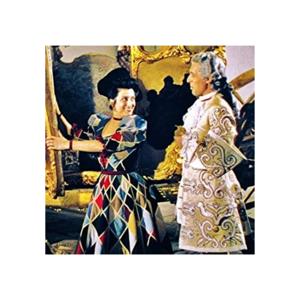


In this Studios Year by Year episode, 1936 begins with Paramount, and we take a look at two movies about gun-running that star Gary Cooper, but have little else in common (despite using the same cinematographer). We don't find much to love about Cecil B. DeMille's tribute to Wild West mythology, The Plainsman, starring Gary Cooper as an insufficiently hirsute Wild Bill Hickock and Jean Arthur as a whip-happy Calamity Jane; but Dave waxes enthusiastic about Lewis Milestone's The General Died at Dawn, an off-kilter Popular Front movie that's half-Hitchcock espionage romance, half-poetic realist manifesto. You know it's wonderful, and we know you're wonderful too.
Time Codes:
0h 01m 00s: THE PLAINSMAN (dir. Cecil DeMille)
0h 40m 23s: THE GENERAL DIED AT DAWN (dir. Lewis Milestone)
Review paragraphs from – The Paramount Story by John Douglas Eames
+++
* Marvel at our meticulously ridiculous Complete Viewing Schedule for the 2020s
*Intro Song: "Sunday" by Jean Goldkette Orchestra with the Keller Sisters (courtesy of The Internet Archive)
* Find Elise's latest film piece on Billy Wilder and 1930s Romantic Comedy
*And Read lots of Elise's Writing at Bright Wall/Dark Room, Cléo, and Bright Lights.*
Follow us on Twitter at @therebuggy
Write to us at [email protected]
In this episode of our Clara Bow Acteurist Oeuvre-view, two films from 1927, the curious love triangle (quadrangle if you're generous) melodrama Children of Divorce, directed by Frank Lloyd (but maybe really Josef von Sternberg), and William A. Wellman's Andy-Hardy-Goes-to-War aerial spectacle, Wings. Elise says "Jamesian"! Dave says "Verhoevian"! (Shouldn't it be "Verhoevenian"?!) We contemplate Clara Bow as a precursor to Judy Garland (but with more nudity) and as a waifish Kate Croy crossed with early Jerry Lewis.
Time Codes:
0h 01m 00s: CHILDREN OF DIVORCE (1927) [dirs. Frank Lloyd & Josef von Sternberg]
0h 36m 30s: WINGS (1927) [dir. William A. Wellman]
+++
* Marvel at our meticulously ridiculous Complete Viewing Schedule for the 2020s
*Intro Song: "Sunday" by Jean Goldkette Orchestra with the Keller Sisters (courtesy of The Internet Archive)
* Find Elise's latest film piece on Billy Wilder and 1930s Romantic Comedy
*And Read lots of Elise's Writing at Bright Wall/Dark Room, Cléo, and Bright Lights.*
Follow us on Twitter at @therebuggy
Write to us at [email protected]
A four-film Special Subject episode, Joan Harrison, Producer, Part 1 looks at: Phantom Lady (1944), The Strange Affair of Uncle Harry (1945), Nocturne (1946), and They Won't Believe Me (1947). These idiosyncratic noirs and Jamesian melodramas by the former Hitchcock screenwriter and honorary family member interrogate gender roles, flip gendered tropes, and deconstruct male resentment of women in ways that faintly anticipate Elaine May's work. We also discuss the Negative Capability of George Raft, the void-like charisma of Robert Young, the appealing androgyny of Ella Raines and very different vibe of Susan Hayward, Geraldine Fitzgerald's ability to be sexy and Victorian at the same time, and George Sanders' subtle way of showing us his soul dying inside of him. It's a big episode!
Time Codes:
0h 01m 00s: Brief introduction to Joan Harrison
0h 19m 08s: PHANTOM LADY (1944) [dr. Robert Siodmak]
0h 48m 41s: NOCTURNE (1946) [dir. Edwin L. Marin]
1h 15m 08s: THE STRANGE AFFAIR OF UNCLE HARRY (1945) [dir. Robert Siodmak]
1h 43m 41s: THEY WON'T BELIEVE ME (1947) [dir. Irving Pichel]
+++
* Marvel at our meticulously ridiculous Complete Viewing Schedule for the 2020s
*Intro Song: "Sunday" by Jean Goldkette Orchestra with the Keller Sisters (courtesy of The Internet Archive)
* Find Elise's latest film piece on Billy Wilder and 1930s Romantic Comedy
*And Read lots of Elise's Writing at Bright Wall/Dark Room, Cléo, and Bright Lights.*
Follow us on Twitter at @therebuggy
Write to us at [email protected]
Our Universal 1935 Studios Year by Year episode examines two movies about the shenanigans of the idle rich, but that's where the resemblance ends. James Whale's Remember Last Night? (1935) is a Thin Man parody heavy on the class satire and absurdism, while Lowell Sherman's swan song, Night Life of the Gods, is about a wealthy scientist who discovers how to turn his straitlaced family into statues and brings a museum's statues of Roman gods to life. Also, for no reason at all, his love interest is a 900-year-old fairy. And yet, somehow the funniest thing in the movie is a fish-slapping vaudeville set piece. They can't all be winners, but people getting hit always brings joy.
Time Codes:
0h 01m 00s: REMEMBER LAST NIGHT? (dir. James Whale)
0h 35m 33s: NIGHT LIFE OF THE GODS (dir. Lowell Sherman)
Review paragraphs from – The Universal Story by Clive Hirschhorn
+++
* Marvel at our meticulously ridiculous Complete Viewing Schedule for the 2020s
*Intro Song: "Sunday" by Jean Goldkette Orchestra with the Keller Sisters (courtesy of The Internet Archive)
* Find Elise's latest film piece on Billy Wilder and 1930s Romantic Comedy
*And Read lots of Elise's Writing at Bright Wall/Dark Room, Cléo, and Bright Lights.*
Follow us on Twitter at @therebuggy
Write to us at [email protected]
Our first Clara Bow movie of this episode, Kid Boots (1926) allows Bow to show off her slapstick skills again in a surprisingly compatible pairing with Eddie Cantor. Then we turn to the second masterpiece of the series so far, the famous-but-somehow-still-underrated It (1927), directed by Clarence G. Badger. We marvel at the full flowering of the Bow persona, including its feminist modernity, its subtle (most of the time) incorporation of androgyny, and, once again, its sexual subjectivity.
Time Codes:
0h 01m 00s: KID BOOTS (1926) [dir. Frank Tuttle]
0h 28m 55s: IT (1927) [dir. Clarence G. Badger]
+++
* Marvel at our meticulously ridiculous Complete Viewing Schedule for the 2020s
*Intro Song: "Sunday" by Jean Goldkette Orchestra with the Keller Sisters (courtesy of The Internet Archive)
* Find Elise's latest film piece on Billy Wilder and 1930s Romantic Comedy
*And Read lots of Elise's Writing at Bright Wall/Dark Room, Cléo, and Bright Lights.*
Follow us on Twitter at @therebuggy
Write to us at [email protected]
RKO 1935: we look at a couple of starring vehicles for two of the Queens of the Lot. First up is Anne Shirley in the deliberately slight and quietly charming Chasing Yesterday, paired with another father figure, O. P. Heggie (also her kindred spirit in the previous year's Anne of Green Gables, from which she took her screen name and which was also directed by George Nicholls Jr.). Then, the not-at-all-quiet Break of Hearts, directed by Philip Moeller (or Jane Loring?), in which Katharine Hepburn's dewy-idealed aspiring composer and Charles Boyer's jaded superstar conductor engage in psychosexual warfare. Dave goes to bat for this unloved Hepburn vehicle and its unique view of female artistry. Should Berman get the credit again?
Time Codes:
0h 01m 00s: CHASING YESTERDAY (dir. George Nicholls Jr.)
0h 43m 17s: BREAK OF HEARTS (dir. Philip Moeller)
+++
* Marvel at our meticulously ridiculous Complete Viewing Schedule for the 2020s
*Intro Song: "Sunday" by Jean Goldkette Orchestra with the Keller Sisters (courtesy of The Internet Archive)
* Find Elise's latest film piece on Billy Wilder and 1930s Romantic Comedy
*And Read lots of Elise's Writing at Bright Wall/Dark Room, Cléo, and Bright Lights.*
Follow us on Twitter at @therebuggy
Write to us at [email protected]
In Part 1 of our look at Fred Astaire and Ginger Rogers' cinematic pairings (part 2 is penciled in for January 2023), we discuss Mark Sandrich's The Gay Divorcee and Top Hat, William A. Seiter's Roberta, and George Stevens' Swing Time. What formula does Sandrich set up for the stars, and how do the other films acknowledge and/or depart from it? What does RKO contribute to the 30s musical? Why is Ginger so paranoid? Is Fred really more like the romantic heroine? What makes Edward Everett Horton sexually irresistible? Expect these and other searching questions to be pondered.
Warning: in case anyone in the world doesn't know, Swing Time contains a blackface number. It's not minstrelsy, perhaps... but it might be something even worse.
For further information, we recommend:
Arlene Croce's The Fred Astaire and Ginger Rogers Book
The greatest studio documentary of them all: Hollywood – The Golden Years: The RKO Story (episode 2 is devoted to the Astaire/Rogers pictures)
Time Codes:
0h 01m 00s: Preamble on the films
0h 15m 17s: The Gay Divorcee (1934) [dir. Mark Sandrich]
0h 57m 15 s: Top Hat (1935) [dir. Mark Sandrich]
1h 29m 58s: Roberta (1935) [dir. William A. Seiter]
1h 41m 35s: Swing Time (1936) [dir. George Stevens]
+++
* Marvel at our meticulously ridiculous Complete Viewing Schedule for the 2020s
*Intro Song: "Sunday" by Jean Goldkette Orchestra with the Keller Sisters (courtesy of The Internet Archive)
* Find Elise's latest film piece on Billy Wilder and 1930s Romantic Comedy
*And Read lots of Elise's Writing at Bright Wall/Dark Room, Cléo, and Bright Lights.*
Follow us on Twitter at @therebuggy
Write to us at [email protected]
For our Fox 1935 episode of The Studios Year by Year, we look at two films about forming idyllic communities within a nightmare society: Henry King's One More Spring, Fox's version of a Depression movie (based on a novel by Portrait of Jennie author Robert Nathan); and John Ford's Steamboat Round the Bend, another Will Rogers satire of Southern mores. Plus Dave reports on the reaction in Southern newspapers to Ford's previous film with Rogers, Judge Priest, and some evidence about Black audience reception of the Rogers/Stepin Fetchit comic pairing in Atlanta.
Time Codes:
0h 01m 00s: One More Spring [dir. Henry King] `
0h 37m 21s: Steamboat Round the Bend [dir. John Ford]
1h 21m 00s: Brief Reports on Audience Reception – Judge Priest {1934)
+++
* Marvel at our meticulously ridiculous Complete Viewing Schedule for the 2020s
*Intro Song: "Sunday" by Jean Goldkette Orchestra with the Keller Sisters (courtesy of The Internet Archive)
* Find Elise's latest film piece on Billy Wilder and 1930s Romantic Comedy
*And Read lots of Elise's Writing at Bright Wall/Dark Room, Cléo, and Bright Lights.*
Follow us on Twitter at @therebuggy
Write to us at [email protected]
This week's Clara Bow Acteurist Oeuvre-view episode sees our star's debut at Paramount, in a supporting role in Dancing Mothers, followed by a starring role in what is sometimes considered her best silent film, Victor Fleming's Mantrap (both 1926). Bow plays two versions of an amoral child-woman, one irritating and one dazzling. We contemplate the Flemingesque woman (so much better than the Hawksian woman, although admittedly, the latter sounds snappier), with comparisons to Sternberg and Bergman. Warning for insane amounts of colonial racism (with a Canadian setting in this case).
Time Codes:
0h 01m 00s: Dancing Mothers (1926) [dir. Herbert Brenon]
0h 24m 05s: Mantrap (1926) [dir. Victor Fleming]
+++
* Check out our complete viewing schedule from here to December 2029!
*Intro Song: "Sunday" by Jean Goldkette Orchestra with the Keller Sisters (courtesy of The Internet Archive)
* Find Elise's latest film piece on Billy Wilder and 1930s Romantic Comedy
*And Read lots of Elise's Writing at Bright Wall/Dark Room, Cléo, and Bright Lights.*
Follow us on Twitter at @therebuggy
Write to us at [email protected]
**Originally released February 26, 2021**
A Warners, 1935 Borzage/Kay Francis/George Brent double feature: Stranded, in which Francis plays a sort of socialite social worker who's romanced by Brent's conservative he-man construction boss; and Living on Velvet, in which Francis is determined to overcome Brent's insouciant death-wish. As usual, Borzage delivers romance with a difference. We discuss Depression-era Liberal Republicanism, argue about whether Living on Velvet's ennui is adequately dramatized, and argue for Julius Epstein as a screenwriting auteur. But what does a Welsh clown have to do with anything? Listen to find out!
Time Codes:
0h 01m 00s: Stranded [dir. Frank Borzage]
0h 54m 10s: Living on Velvet [dir. Frank Borzage]
+++
* Check out our Complete Upcoming Schedule - now projected to the end of our Lilli Palmer series in 2024
*Intro Song: "Sunday" by Jean Goldkette Orchestra with the Keller Sisters (courtesy of The Internet Archive)
* Find Elise's latest film piece on Billy Wilder and 1930s Romantic Comedy
*And Read lots of Elise's Writing at Bright Wall/Dark Room, Cléo, and Bright Lights.*
Follow us on Twitter at @therebuggy
Write to us at [email protected]
From the publisher's feed

1,536 Listeners
1,077 Listeners

273 Listeners