
Sign up to save your podcasts
Or

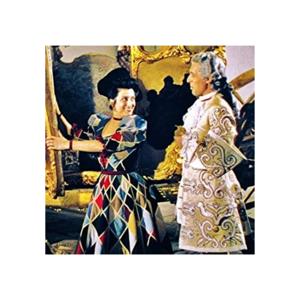


This week, we get closer to Clara Bow's Mature Period with her first big hit, the college movie The Plastic Age (1925). But first, another 1925 pairing with the stalwart Donald Keith. My Lady of Whims. The two films show the flexibility of the flapper archetype, with Clara as a socialite-turned-bohemian in the first and as a hard-partying college girl in the second. Frustratingly, Keith is our protagonist, but the two films give Bow a chance to show off her comedic and dramatic skills, respectively, and pave the way for more complex versions of similar plots in future vehicles.
Time Codes:
0h 01m 00s: My Lady of Whims (1925) [dir: Dallas M. Fitzgerald]
0h 28m 41s: The Plastic Age (1925) [dir. Wesley Ruggles]
+++
* Check out our Complete Upcoming Schedule - now projected to the end of our Lilli Palmer series in 2024
*Intro Song: "Sunday" by Jean Goldkette Orchestra with the Keller Sisters (courtesy of The Internet Archive)
* Find Elise's latest film piece on Billy Wilder and 1930s Romantic Comedy
*And Read lots of Elise's Writing at Bright Wall/Dark Room, Cléo, and Bright Lights.*
Follow us on Twitter at @therebuggy
Write to us at [email protected]
Our Valentine's 2021 episode has something for everyone, couples and singles. Something to make everyone feel deeply unsettled, that is. The subject of these two John Cassavetes movies, Minnie and Moskowitz (1971) and Love Streams (1984), is the difficulty of making any kind of meaningful human connection. Gena Rowlands, Cassavetes' wife and frequent collaborator, plays a woman who's having trouble feeling in the first, and a woman who feels more than is good for her in the second. We try to describe the experience of watching Cassavetes' visceral, emotional, frightening, and frequently very funny films. But who is that naked man?
Time Codes:
0h 01m 00s: Cassavetes preamble
0h 09m 31s: MINNIE & MOSKOWITZ (1971)
1h 01m 01s: LOVE STREAMS (1984)
+++
* Check out our Complete Upcoming Schedule - now projected to the end of our Lilli Palmer series in 2024
*Intro Song: "Sunday" by Jean Goldkette Orchestra with the Keller Sisters (courtesy of The Internet Archive)
* Find Elise's latest film piece on Billy Wilder and 1930s Romantic Comedy
*And Read lots of Elise's Writing at Bright Wall/Dark Room, Cléo, and Bright Lights.*
Follow us on Twitter at @therebuggy
Write to us at [email protected]
MGM, 1935, and two David O. Selznick Dickens adaptations: George Cukor's David Copperfield and Jack Conway's A Tale of Two Cities. Hollywood invents a cinematic language for Dickens, using a mixture of American and British actors, and miraculously pulls it off, in what Dave considers Selznick's finest hour as a producer. (We know he means with the exception of Portrait of Jennie.) We discuss the complex psychology of Copperfield and the simplistic history of Tale of Two Cities.
Also discussed in the episode: Kate Corbelay, head of the story department at MGM.
Time Codes:
0h 01m 00s: David Copperfield [dir. George Cukor]
1h 00m 015s: A Tale of Two Cities [dir. Jack Conway]
1h 49m 08s: Listener correspondence from Adam
+++
* Check out our Complete Upcoming Schedule - now projected to the end of our Lilli Palmer series in 2024
*Intro Song: "Sunday" by Jean Goldkette Orchestra with the Keller Sisters (courtesy of The Internet Archive)
* Find Elise's latest film piece on Billy Wilder and 1930s Romantic Comedy
*And Read lots of Elise's Writing at Bright Wall/Dark Room, Cléo, and Bright Lights.*
Follow us on Twitter at @therebuggy
Write to us at [email protected]
In this Clara Bow Acteurist Oeuvre-view episode, two crime films from 1925: The Primrose Path, directed by Harry O. Hoyt and produced by Hunt Stromberg for Arrow Film Corporation (which folded the following year); and Free to Love, another Schulberg production, directed by Frank O'Connor. The Primrose Path, a bizarre mishmash of Griffith and gangsters, gives us Clara as a showgirl with a heart of gold, but with very little to do. The more interesting Free to Love finally allows Clara to be the hero of the movie. As an orphan and wrongly convicted ex-con who wants to devote herself to helping other unfortunates, she finds herself thwarted by a sort of minor Batman villain who happens to be the father of her betrothed. Clara's emotions shine through even the dopey plot and wretched print.
Time Codes:
0h 01m 00s: The Primrose Path (1925) [dir. Harry O. Hoyt]
0h 21m 01s: Free to Love (1925) [dir. Frank O'Connor]
+++
* Check out our Complete Upcoming Schedule - now projected to the end of our Lilli Palmer series in 2024
*Intro Song: "Sunday" by Jean Goldkette Orchestra with the Keller Sisters (courtesy of The Internet Archive)
* Find Elise's latest film piece on Billy Wilder and 1930s Romantic Comedy
*And Read lots of Elise's Writing at Bright Wall/Dark Room, Cléo, and Bright Lights.*
Follow us on Twitter at @therebuggy
Write to us at [email protected]
Paramount, 1935: we have two very unusual and very different movies, which nevertheless share the theme of private worlds and the possibility of communication between them. First up is Gregory La Cava's Private Worlds, about the inner lives of psychiatrists and the permeable boundary between sanity and insanity. It stars Claudette Colbert as Dr. Jane Everest and Charles Boyer as her chauvinistic boss and secret crush. Next, Henry Hathaway's fantasy melodrama Peter Ibbetson, which treats love as a shared mental world in ways that anticipate Eternal Sunshine of the Spotless Mind, while the camera falls in love with Gary Cooper's sweaty, suffering face.
Time Codes:
0h 0m 00s: PRIVATE WORLDS (dir. Gregory LaCava)
0h 46m 40s: PETER IBBETSON (dir. Henry Hathaway)
+++
* Check out our Complete Upcoming Schedule - now projected to the end of our Lilli Palmer series in 2024
* Find Elise's latest film piece on Billy Wilder and 1930s Romantic Comedy
*And Read lots of Elise's Writing at Bright Wall/Dark Room, Cléo, and Bright Lights.*
Follow us on Twitter at @therebuggy
Write to us at [email protected]
It's our epic episode on the three Imitations of Life! Hear us discuss Fannie Hurst's massively popular 1933 novel and its two popular film adaptations: John M. Stahl's restrained 1934 version, the first Hollywood movie to look seriously, if cautiously, at the impact of white supremacy and racial inequality in America, and Douglas Sirk's strategically lurid, early civil rights-era version, from 1959. We attempt to thoroughly debunk the "trash" reputation of Hurst's eccentric, elaborately written, and harrowing novel, which not only addresses white supremacy but also harpoons the nuclear family and the American religion of success, while putting mother-daughter emotional ambivalence at its imaginative center. We then go on to discuss some of the reasons for the changes from page to screen, and a blatantly political addition to the story in the original Stahl script that didn't make it past the censors. Warning for as much disturbing content as you can imagine this topic occasioning, and then some.
Time Codes:
0h 0m 00s: Imitation of Life (novel by Fannie Hurst)
1h 04m 35s: IMITATION OF LIFE (1934 – dir. John M. Stahl)
1h 57m 48s: IMITATION OF LIFE (1959 – dir. Douglas Sirk)
+++
* Check out our Complete Upcoming Schedule - now projected to the end of our Lilli Palmer series in 2024
* Find Elise's latest film piece on Billy Wilder and 1930s Romantic Comedy
*And Read lots of Elise's Writing at Bright Wall/Dark Room, Cléo, and Bright Lights.*
Follow us on Twitter at @therebuggy
Write to us at [email protected]
A stunning episode of The Studios, Year by Year: a great year for Universal, 1934, gives us The Black Cat, the one big studio success of Edgar G. Ulmer, icon of marginal filmmaking; and James Whale's under-discussed One More River, based on the novel by John Galsworthy. Elise concocts a reading to justify her early, confused understanding of The Black Cat as being about WWII rather than WWI. Then we continue to weave our auteur theory about Whale's interest in women's experience of oppression related to sexual shame. As the Year of the Code continues, two more movies that should never have gotten made: Satan worshipping, flaying old friends alive, virgin sacrifice, marital rape, striking wives with riding crops, and executing demonic cats with knives is what Universal is all about in 1934. And wait for next episode, when we tell you what the original script of Stahl's Imitation of Life included to trigger Breen!
Time Codes:
0h 01m 00s: The Back Cat [dir. Edgar G. Ulmer]
0h 44m 58s: One More River [dir. James Whale]
+++
* Check out our Complete Upcoming Episode Schedule (now projected into 2023)
* Find Elise's latest film piece on Billy Wilder and 1930s Romantic Comedy
*And Read lots of Elise's Writing at Bright Wall/Dark Room, Cléo, and Bright Lights.*
Follow us on Twitter at @therebuggy
Write to us at [email protected]
Theme Music:
"What's Yr Take on Cassavetes?" – Le Tigre
Our second Clara Bow episode pairs a couple of sharply contrasting films: a child star comedy, Helen's Babies (1924), directed by William A. Seiter, and a didactic melodrama, Capital Punishment (1925), directed by James P. Hogan, with a story by producer B. P. Schulberg. Bow has supporting roles in both; but has occasion to display her lack of inhibition as a comedian in both and her emotive skills as an actress in the second. The Schulberg film, whose premise may have influenced Fritz Lang's Beyond a Reasonable Doubt (1956), surprises with its pre-Depression concern for the plight of the urban poor, while the presentation of two impish tomboy girl-children in Helen's Babies, based on a popular Victorian novel about two little boys, chimes neatly with certain aspects of Bow's own persona, even if her place is taken in this one by Baby Peggy.
Time Codes:
0h 01m 00s: Helen's Babies (1924) [dir: William A. Seiter]
0h 22m 10s: Capital Punishment (1925) [dir: James P. Hogan]
+++
* Check out our Complete Upcoming Schedule (to the Autumn of 2024 and the end of our projected Lilli Palmer series)
* Find Elise's latest film piece on Billy Wilder and 1930s Romantic Comedy
*And Read lots of Elise's Writing at Bright Wall/Dark Room, Cléo, and Bright Lights.*
Follow us on Twitter at @therebuggy
Write to us at [email protected]
Theme Music:
"What's Yr Take on Cassavetes?" – Le Tigre
For 2020, we're dreaming of a Noir Christmas! First up, a quick and dirty discussion of the 1988 remake of D.O.A., directed by Rocky Morton and Annabel Jankel of Max Headroom fame and starring Dennis Quaid and Meg Ryan. It's sort of like American Psycho with English professors. A comparison we didn't make in the episode, but wish we had. Next: the art noir no one talks about, Robert Montgomery's Lady in the Lake (1947), whose quirks and romantic sentiment have been overshadowed by its subjective camera experiment. This is the movie that made Dave a man... we mean cinephile. He wasn't a man yet, he was 11. Elise is reluctantly won over by one of these movies.
Feel like doing a bit of reading over the holidays? Elise guested on her friend Mark Simpson's blog to discuss 80s British punk-turned-pop star Adam Ant.
Here's Mark on Adam Ant's Pop Apotheosis:
https://marksimpson.com/2020/12/16/prince-charming-adam-ants-pop-apotheosis/
And Elise on his spectacular self-objectification:
https://marksimpson.com/2020/12/20/the-importance-of-being-adam-ant/
We hope you find a way to have a happy holiday this year!
Time Codes:
0h 01m 00s: D.O.A. (1988) [dirs.: Annabel Jenkel & Rocky Morton]
0h 24m 13s: Lady in the Lake (1947) [dir: Robert Montgomery]
+++
* Check out our Complete Upcoming Episode Schedule (now projected into 2023)
* Find Elise's latest film piece on Billy Wilder and 1930s Romantic Comedy
*And Read lots of Elise's Writing at Bright Wall/Dark Room, Cléo, and Bright Lights.*
Follow us on Twitter at @therebuggy
Write to us at [email protected]
Theme Music:
"What's Yr Take on Cassavetes?" – Le Tigre
For RKO 1934, we take an appreciative look at two unloved Katharine Hepburn movies (now, although the public liked them well enough at the time): John Cromwell's Spitfire and Richard Wallace's The Little Minister, based on a novel by J. M. Barrie of Peter Pan fame. Dave suggests an alternate trajectory for Hepburn's 30s box office decline. Elise rambles on about Barrie's tragic and sinister life. We compare Spitfire to Dreyer's Day of Wrath and Henry King's Song of Bernadette; and agree that The Little Minister is one of the great romance movies (with intimations of her Bringing Up Baby performance in the bargain).
Time Codes:
0h 01m 00s: Katharine Hepburn & Pandro Berman at the Box Office
0h 13m 09s: Spitfire [dir: John Cromwell]
0h 40m 41s: The Little Minister [dir: Richard Wallace]
+++
* Check out our Complete Upcoming Episode Schedule (now projected into 2023)
* Find Elise's latest film piece on Billy Wilder and 1930s Romantic Comedy
*And Read lots of Elise's Writing at Bright Wall/Dark Room, Cléo, and Bright Lights.*
Follow us on Twitter at @therebuggy
Write to us at [email protected]
Theme Music:
"What's Yr Take on Cassavetes?" – Le Tigre
From the publisher's feed

1,536 Listeners
1,077 Listeners

273 Listeners