
Sign up to save your podcasts
Or

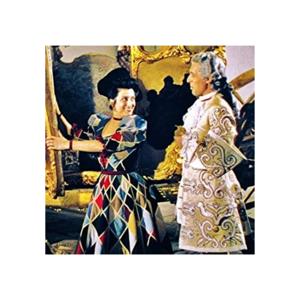


A new year, 1934, and our first studio, Paramount, shows its ability with satire and sympathy for the underdog. It's the Year of the Code, but that doesn't seem to have much applicability to our two films, Cecil B. DeMille's feminist jungle adventure comedy Four Frightened People and Mitchell Leisen's occasionally noirish revenge drama, Behold My Wife! Warning : If you don't want to hear a couple of semi-informed white people talk with qualified admiration about a couple of racially problematic (but relatively sophisticated) mid-30s Hollywood movies, this may not be the podcast episode for you.
Time Codes:
0h 01m 00s: Four Frightened People (dir: Cecile B. DeMille)
0h 48m 52s: Behold My Wife! (dir: Mitchell Leisen)
+++
* Check out our Complete Upcoming Episode Schedule
* Find Elise's latest film piece on Depression era film romance
*And Read lots of Elise's Writing at Bright Wall/Dark Room, Cléo, and Bright Lights.*
Follow us on Twitter at @therebuggy
Write to us at [email protected]
Theme Music:
"What's Yr Take on Cassavetes?" – Le Tigre
In this Setsuko Hara Acteurist Oeuvre-view, two films by Mikio Naruse, The Sound of the Mountain (1954) and Sudden Rain (1956). We discuss the ways that the casting of Setsuko Hara in the first film seems to respond to Ozu's "Noriko trilogy" (especially Tokyo Story, although it was released only two months later), and the overt feminism of the subtle, comic, and ambiguous Sudden Rain. Hara, as usual, gives two very different performances as two very different unhappy wives.
Time Codes:
0h 01m 00s: Sudden Rain (1956; dir. Mikio Naruse)
0h 30m 33s: The Sound of the Mountain (1954; dir. Mikio Naruse)
0h 59m 50s: There's Sometimes a Letter (from Adam)
+++
* Check out our Complete Upcoming Episode Schedule
* Find Elise's latest film piece on Depression era film romance
*And Read lots of Elise's Writing at Bright Wall/Dark Room, Cléo, and Bright Lights.*
Follow us on Twitter at @therebuggy
Write to us at [email protected]
Theme Music:
"What's Yr Take on Cassavetes?" – Le Tigre
Universal, 1933: Two little-known James Whale Pre-Codes that adopt divergent attitudes toward adulterous wives. First, treated as farce, in By Candlelight: Paul Lukas plays a butler who gets himself in trouble by masquerading as his playboy boss in order to have more refined erotic adventures. Then, treated as tragedy, in The Kiss Before the Mirror: Frank Morgan and Nancy Carroll get themselves in trouble by becoming fixated on their deceptive mirror images. Also discussed: Code censorship of ass-grabbing, Nils Asther's persona, David Lynch's Lost Highway, and how the Book of Job is a comedy.
Time Codes:
0h 01m 00s: By Candlelight (dir: James Whale)
0h 31m 53s: The Kiss Before the Mirror (dir: James Whale)
+++
* Check out our Complete Upcoming Episode Schedule
* Find Elise's latest film piece on Depression era film romance
*And Read lots of Elise's Writing at Bright Wall/Dark Room, Cléo, and Bright Lights.*
Follow us on Twitter at @therebuggy
Write to us at [email protected]
Theme Music:
"What's Yr Take on Cassavetes?" – Le Tigre
This week we've got a big one for you: the five films that Frank Capra and Barbara Stanwyck made together. Starting with LADIES OF LEISURE (1930), we interpret the Stanwyck character as the Capra stand-in, which leads to some interesting results. MEET JOHN DOE (1941) becomes LADIES OF LEISURE inverted (Stanwyck as artist, Cooper as model—but Stanwyck as stand-in either way); while MIRACLE WOMAN (1931) also foreshadows MEET JOHN DOE, this time with Stanwyck as Jane Doe. FORBIDDEN (1932) and BITTER TEA OF GENERAL YEN (1933) lie outside of this set of obsessions. The first is Capra doing a weepie with screwball lovers, not a very comfortable fit, while the newspaper setting and political intrigue point to future developments. The second is an interracial romance in which Stanwyck is, for once, the secondary figure, and General Yen is the near-obligatory Capra suicide. While expressing our astonishment at GENERAL YEN's sophisticated critique of white supremacy, which is beyond the capacity of most Hollywood movies of the era, we forgot to issue a trigger warning for the racist doll in MIRACLE WOMAN. John Carson's hobbies are uncool in more ways than one.
Time Codes:
0h 01m 00s: Ladies of Leisure (1930)
0h 36m 41s: The Miracle Woman (1931)
0h 52m 40s: Forbidden (1932)
1h 06m 31s: The Bitter Tea of General Yen (1933)
1h 53m 07s: Meet John Doe (1941)
+++
* Check out our Complete Upcoming Episode Schedule
* Find Elise's latest film piece on Depression era film romance
*And Read lots of Elise's Writing at Bright Wall/Dark Room, Cléo, and Bright Lights.*
Follow us on Twitter at @therebuggy
Write to us at [email protected]
Theme Music:
"What's Yr Take on Cassavetes?" – Le Tigre
RKO 1933: We look at a movie starring one of the hottest female stars of the day, Constance Bennett, George Cukor's Our Betters, and a movie starring an up-and-coming (and down, and up, and down again) RKO star, Katharine Hepburn, Lowell Sherman's Morning Glory. Elise deems both Hepburn's frantically vulnerable performance and Cukor's unsentimental sex comedy "punk rock." We decide that Our Betters is The Women without Norma Shearer's plotline, and all the better for it. Spotted: Gilbert Roland as an hilariously laconic gigolo and Mary Duncan (Murnau's City Girl, in a very different role) as a spoiled but skilled stage star.
Time Codes:
0h 01m 00s: Morning Glory [dir: Lowell Sherman]
0h 47m 12s: Our Betters [dir: George Cukor]
+++
* Check out our Complete Upcoming Episode Schedule
* Find Elise's latest film piece on Depression era film romance
*And Read lots of Elise's Writing at Bright Wall/Dark Room, Cléo, and Bright Lights.*
Follow us on Twitter at @therebuggy
Write to us at [email protected]
Theme Music:
"What's Yr Take on Cassavetes?" – Le Tigre
A strange back-to-school episode for a strange back-to-school year: we look at Amy Heckerling's LOSER (2000) and Whit Stillman's DAMSELS IN DISTRESS (2011), two comedies with very different, but equally dark, visions of class and university life in America, neither of which fared well with audiences or critics at the time. Dave defends the former as a blending of Capra and Wilder romantic comedy modes, while Elise makes the case for the latter as "a perfect movie"—maybe even "the only perfect movie." All the trigger warnings for lots of discussion of roofies, anal, Ronald Firbank, and Whit Stillman's terrible political views, and irreverence about suicide.
Time Codes:
0h 01m 00s: Loser (2000) [dir: Amy Heckerling]
0h 40m 53s: Damsels in Distress (2011) [dir. Whit Stillman]
+++
* Check out our Complete Upcoming Episode Schedule
* Catch up with Dave's fledgling Précis du cinema efforts on the Anagramsci Blog or on Letterboxd
* Find Elise's latest film piece on Depression era film romance
*And Read lots of Elise's Writing at Bright Wall/Dark Room, Cléo, and Bright Lights.*
Follow us on Twitter at @therebuggy
Write to us at [email protected]
Theme Music:
"What's Yr Take on Cassavetes?" – Le Tigre
This episode of our Acteurist Oeuvre-view of Setsuko Hara (with English subs) features our first Naruse, REPAST (1951), and the movie generally considered "Ozu's masterpiece" (as if there were only one), TOKYO STORY (1953). We debate whether REPAST is housewife propaganda or the STARSHIP TROOPERS of domestic reunion dramas, and ask whether a cat can be like a husband, or a husband like a cat. Then we dig into TOKYO STORY, comparing it to the more comedic EARLY SUMMER, and trying to get a handle on the later film's vision of family and of humanity. We also discuss the meaning of Noriko's attitude of renunciation and enigmatic cri de coeur.
Time Codes:
0h 01m 00s: Repast (1951) [dir. Mikio Naruse]
0h 31m 32s: Tokyo Story (1953) [dir. Yasujiro Ozu]
+++
* Check out our Complete Upcoming Episode Schedule
* Catch up with Dave's fledgling Précis du cinema efforts on the Anagramsci Blog or on Letterboxd
* Find Elise's latest film piece on Depression era film romance
*And Read lots of Elise's Writing at Bright Wall/Dark Room, Cléo, and Bright Lights.*
Follow us on Twitter at @therebuggy
Write to us at [email protected]
Theme Music:
"What's Yr Take on Cassavetes?" – Le Tigre
Fox, 1933: we watch a couple of movies that complicate Ethan Mordden's characterization of Fox as "The Rube," Henry King's State Fair and William (billed as Wilhelm) Dieterle's The Devil's in Love (both beautifully shot by Hal Mohr). The first is a sophisticated movie about simple people that doesn't make fun of them or take unsophistication as its ideal, while the second is Fox's attempt at a Sternberg movie, a Foreign Legion quadrangle with a strange climactic twist. Find out how Fox makes pre-Codes (from farm boys losing their virginity to carefree female carnies to how to take Will Rogers' mind off a hog). Also: an inadvertent Victor Jory double-feature!
Time Codes:
0h 01m 00s: State Fair [dir. Henry King]
0h 52m 20s: The Devil's in Love [dir. William Dieterle]
+++
* Check out our Complete Upcoming Episode Schedule
* Catch up with Dave's fledgling Précis du cinema efforts on the Anagramsci Blog or on Letterboxd
* Find Elise's latest film piece on Depression era film romance
*And Read lots of Elise's Writing at Bright Wall/Dark Room, Cléo, and Bright Lights.*
Follow us on Twitter at @therebuggy
Write to us at [email protected]
Theme Music:
"What's Yr Take on Cassavetes?" – Le Tigre
Our August Special Subject is one of Dave's favourite film books, Elizabeth Kendall's The Runaway Bride: Hollywood Romantic Comedy of the 1930s. We discuss Kendall's vision of romantic comedy from this era (it's powered by an auteur/acteur synergy between erstwhile "gag man" directors and a new type of female star) and consider how each of the films she discusses fits her thesis (or fails to). We also take extended looks at two Frank Capra comedies that receive chapters in the book: It Happened One Night (the template for "Depression romantic comedy," as Kendall calls it) and Mr. Deeds Goes to Town (in which, according to Kendall, Capra betrays the spirit of the movement in comedy that he started). Finally, we speculate about why Lubitsch is left out of the book by discussing Ninotchka. (Hint: you can't have Depression romantic comedy with a Communist heroine.)
Time Codes:
0h 01m 00s: Introduction – Kendall's Depression Romantic Comedy Thesis
0h 26m 03s: It Happened One Night (1934) [dir: Frank Capra]
0h 43m 44s: Mr. Deeds Goes to Town (1936) [dir. Frank Capra]
1h 09m 16s: Discussing the remainder of the book
+++
* Check out our Complete Upcoming Episode Schedule
* Catch up with Dave's fledgling Précis du cinema efforts on the Anagramsci Blog or on Letterboxd
* Find Elise's latest film piece on Depression era film romance
*And Read lots of Elise's Writing at Bright Wall/Dark Room, Cléo, and Bright Lights.*
Follow us on Twitter at @therebuggy
Prepare for Pre-Code shenanigans galore! In our Warner Bros. 1933 Studios Year-By-Year episode, the socialist studio shows us capitalism at its nastiest and sexiest. In Baby Face and Employees' Entrance, Barbara Stanwyck and Warren William, respectively, "crush" and "smash" in the name of surviving and triumphing in the capitalist system, and make it a lot of fun to watch—that is, when William isn't attacking passed-out women. We learn that Dave has no compassion for either bank or department store executives and marvel at Stanwyck's way with a beer bottle and a would-be molester's head. You don't want to miss this one.
Time Codes:
0h 01m 00s: Baby Face [dir. Alfred E. Green]
0h 46m 50s: Employees' Entrance [dir. Roy del Ruth]
+++
* Check out our Complete Upcoming Episode Schedule
* Catch up with Dave's fledgling Précis du cinema efforts on the Anagramsci Blog or on Letterboxd
* Find Elise's latest film piece on Depression era film romance
*And Read lots of Elise's Writing at Bright Wall/Dark Room, Cléo, and Bright Lights.*
Follow us on Twitter at @therebuggy
Write to us at [email protected]
Theme Music:
"What's Yr Take on Cassavetes?" – Le Tigre
From the publisher's feed

1,536 Listeners
1,077 Listeners

273 Listeners