
Sign up to save your podcasts
Or

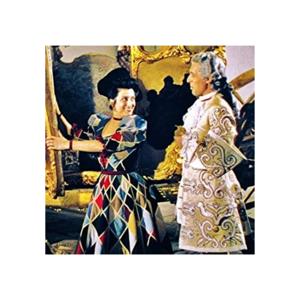


This time on our oeuvre-view of Setsuko Hara's (English-subtitled) career, Kurosawa's The Idiot/Hakuchi, based on Dostoevsky, is paired with Ozu's Early Summer for maximum tonal dissonance. Our heroine proves her range again—even with her Noriko roles. Join us for a discussion of sexual psychosis and tragic caritas in The Idiot and the perverse obsession with normalizing Noriko in Early Summer.
Time Codes:
0h 01m 00s: The Idiot (1951) [dir: Akira Kurosawa]
0h 38m 22s: Early Summer (1951) [dir: Yasujiro Ozo]
1h 16m 26s: Elise Goes Wilder III & Farewell Olivia De Havilland
+++
* Check out our Complete Upcoming Episode Schedule
* Catch up with Dave's fledgling Précis du cinema efforts on the Anagramsci Blog or on Letterboxd
* Find Elise's latest film piece on Depression era film romance
*And Read lots of Elise's Writing at Bright Wall/Dark Room, Cléo, and Bright Lights.*
Follow us on Twitter at @therebuggy
Write to us at [email protected]
Theme Music:
"What's Yr Take on Cassavetes?" – Le Tigre
MGM, 1933. Two very different movies: Penthouse, a crime drama and romantic comedy directed by W. S. "One-Take Woody" Van Dyke, and King Vidor's hard-to-find The Stranger's Return, an agrarian family melodrama reputed to have been Ozu's favourite movie. Myrna Loy, as an unflappable and lovable party girl, with her Thin Man director and producer for the first time, and an uncharacteristically relaxed Miriam Hopkins as a city girl who becomes the actual and spiritual heir of Lionel Barrymore's estate. This time Elise manages to talk to about Jane Austen and not Henry James, so she apologizes if she ruined your drinking game.
Time Codes:
0h 01m 00s: Penthouse (dir. W.S. Van Dyke)
0h 36m 01s: The Stranger's Return (dir. King Vidor)
1h 27m 06s: Elise Goes Wilder III
+++
* Check out our Complete Upcoming Episode Schedule
* Catch up with Dave's fledgling Précis du cinema efforts on the Anagramsci Blog or on Letterboxd
* Find Elise's latest film piece on Depression era film romance
*And Read lots of Elise's Writing at Bright Wall/Dark Room, Cléo, and Bright Lights.*
Follow us on Twitter at @therebuggy
Write to us at [email protected]
Theme Music:
"What's Yr Take on Cassavetes?" – Le Tigre
Summer comes even to a virus-ravaged northern hemisphere, and we're here to celebrate with two teen movies that have a surprising amount in common: Ingmar Bergman's Summer with Monika (1953) and Delmer Daves' A Summer Place (1959). The former turns out to be much less about sex than its reputation would have you believe, while the latter is much more about sex than you'd imagine for a movie starring Troy Donahue and Sandra Dee. Grease got it all wrong! Discussed: Harriet Andersson's granny panties, Bergman's ambivalence toward women's freedom, Sandra Dee's acteur qualifications, and the weakening late-phase Hays Code (dealt bawdy blows by "racy" foreign films like Summer with Monika).
Time Codes:
0h 01m 00s: Summer with Monika (1953) [dir: Ingmar Bergman]
0h 40m 45s: A Summer Place (1959); [dir. Delmer Daves]
1h 35m 32s: Elise Goes Wilder II
+++
* Check out our Complete Upcoming Episode Schedule
* Catch up with Dave's fledgling Précis du cinema efforts on the Anagramsci Blog or on Letterboxd
* Find Elise's latest film piece on Depression era film romance
*And Read lots of Elise's Writing at Bright Wall/Dark Room, Cléo, and Bright Lights.*
Follow us on Twitter at @therebuggy
Write to us at [email protected]
Theme Music:
"What's Yr Take on Cassavetes?" – Le Tigre
Paramount, 1933 (or so): a Charles Laughton and Karl Struss double feature. We start with Cecil B. DeMille's The Sign of the Cross, pitting piety against perversion. Fredric March in a mini skirt, Claudette Colbert in a milk bath, Laughton as a ditzy Nero, and a bunch of Christians bedecked with arrows. But are the Christians really Communists, or are they Mormons? Next, Island of Lost Souls, based on H.G. Wells' The Island of Dr. Moreau. What is the metaphor? (D)evolution or (r)evolution? It's men with whips all the way down. The hairy proletariat. The pathos of Bela Lugosi. The dilemma of Lota, the Panther Woman. All this and more!
Time Codes:
0h 01m 00s: The Sign of the Cross (dir: Cecil B. De Mille)
0h 49m 09s: Island of Lost Souls (dir: Earl C. Kenton)
1h 15m 57s: Elise Goes Wilder
+++
* Check out our Complete Upcoming Episode Schedule
* Catch up with Dave's fledgling Précis du cinema efforts on the Anagramsci Blog or on Letterboxd
* Find Elise's latest film piece on Depression era film romance
*And Read lots of Elise's Writing at Bright Wall/Dark Room, Cléo, and Bright Lights.*
Follow us on Twitter at @therebuggy
Write to us at [email protected]
Theme Music:
"What's Yr Take on Cassavetes?" – Le Tigre
We get to the first Ozu in our Setsuko Hara Acteurist Oeuvre-view at last, but first we look at Tadashi Ima's two-parter, Blue Mountain Range/Aoi sanmyaku (1949), a surprisingly fun movie that leads us to discuss Allied Occupation liberal propaganda, dating as a recent invention, why all men will want to have sex with Katharine Hepburn or Setsuko Hara in the future, and how a geisha is like John Wayne. Then we dig into the great Late Spring (1949), finding connections to Our Town and Little Women to explain Setsuko Hara's character and expressing our admiration for Chishū Ryū's poker face.
Time Codes:
0h 01m 00s: The Blue Mountains, Parts I & II (1949) aka: 續青い山脈' [dir: Tadahi Imai]
0h 56m 42s: Late Spring (1949) aka: 晩春 [dir. Yasujiro Ozu]
+++
* Check out our Complete Upcoming Episode Schedule
* Catch up with Dave's fledgling Précis du cinema efforts on the Anagramsci Blog or on Letterboxd
* Find Elise's latest film piece on Depression era film romance
*And Read lots of Elise's Writing at Bright Wall/Dark Room, Cléo, and Bright Lights.*
Follow us on Twitter at @therebuggy
Write to us at [email protected]
Theme Music:
"What's Yr Take on Cassavetes?" – Le Tigre
In this week's edition of The Studios Year-by-Year, it's Universal 1932, and we have two horror movies with wildly divergent styles. First, it's Robert Florey's Murders in the Rue Morgue, perhaps the sickest and most sadistic of the 30s Universal horror classics (surpassing even The Black Cat) and a probable influence on RKO's King Kong. Then it's John Stahl's Back Street (also shot by Karl Freund), based on the novel by noted feminist author and friend of the podcast Fannie Hurst, which we consider as a kind of Handmaid's Tale cautionary tale in the mode of so op instead of sci fi, but with plenty of saving ambiguity. Both shot by Karl Freund, they couldn't be further apart in style or their approach to melodrama. A great double feature!
Time Codes:
0h 01m 00s: Murders in the Rue Morgue (dir: Robert Florey)
0h 48m 51s: Back Street (dir: John M. Stahl)
+++
* Check out our Complete Upcoming Episode Schedule
* Catch up with Dave's fledgling Précis du cinema efforts on the Anagramsci Blog or on Letterboxd
* Find Elise's latest film piece on Depression era film romance
*And Read lots of Elise's Writing at Bright Wall/Dark Room, Cléo, and Bright Lights.*
Follow us on Twitter at @therebuggy
Write to us at [email protected]
Theme Music:
"What's Yr Take on Cassavetes?" – Le Tigre
For June's Special Subject, we look at three films by Bengali filmmaker Ritwik Ghatak about the aftermath of the Partition of India: Meghe Dhaka Tara/The Cloud-Capped Star (1960), Komal Gandhar/E-flat (1961), and Subarnarekha/Golden Lining (1962). Refugee life, classism, intersectional analysis, melodrama, the confusion of familial and romantic relationships, and the possibility of hope within a despairing worldview are a few of the topics that come up for discussion.
Time Codes:
0h 01m 00s: Brief prologue on Ritwik Ghatak
0h 13m 00s: The Cloud-Capped Star (1960; dir: Ritwik Ghatak) [Meghe Dhaka Tara]
0h 49m 49s: E-Flat (1961; dir: Ritwik Ghatak) [Komal Gandhar]
0h 58m 17s: Golden Lining (1962; dir. Ritwik Ghatak) [Subarnarekha]
+++
* Check out our Complete Upcoming Episode Schedule
* Catch up with Dave's fledgling Précis du cinema efforts on the Anagramsci Blog or on Letterboxd
* Find Elise's latest film piece on Depression era film romance
*And Read lots of Elise's Writing at Bright Wall/Dark Room, Cléo, and Bright Lights.*
Follow us on Twitter at @therebuggy
Write to us at [email protected]
Theme Music:
"What's Yr Take on Cassavetes?" – Le Tigre
RKO, 1932: Selznick has come in as production chief and fired everyone but Pandro S. Berman. We look at the result of this new regime in the form of two La Cava-helmed pictures. First, the white elephant, Symphony of Six Million, based on a short story by Fannie Hurst, shows us how RKO does the Lower East Side. Then, the termite, The Age of Consent, examines the sexual mores of American college life. Though it's probably not what you're thinking.
Time Codes:
0h 01m 00s: Symphony of Six Million (dir: Gregory La Cava)
0h 40m 12s: The Age of Consent (dir: Gregory La Cava)
+++
* Check out our Complete Upcoming Episode Schedule
* Catch up with Dave's fledgling Précis du cinema efforts on the Anagramsci Blog or on Letterboxd
* Find Elise's latest film piece on Depression era film romance
*And Read lots of Elise's Writing at Bright Wall/Dark Room, Cléo, and Bright Lights.*
Follow us on Twitter at @therebuggy
Write to us at [email protected]
Theme Music:
"What's Yr Take on Cassavetes?" – Le Tigre
In our final episode of "unknown" Setsuko Haras before we get into the Ozus and Naruses, we cover another tonally dissonant double feature, Kôzaburô Yoshimura's TEMPTATION/YUWAKU (1948) and Keisuke Kinoshita's HERE'S TO THE YOUNG LADY/OJOSAN KANPAI (1949). We discuss the way these films—a love triangle melodrama and a strange screwball melodrama seemingly inspired by Hepburn and Tracy movies—seem to be proleptically summarizing the Hara persona, even as they contradict it by putting the star in romantic plots.
Time Codes:
0h 01m 00s: Temptation (1948; dir: Kôzaburô Yoshimura)
0h 38m 47s: Here's to the Young Lady (1949; dir: Keisuke Kinoshita)
+++
* Check out our Complete Upcoming Episode Schedule
* Catch up with Dave's fledgling Précis du cinema efforts on the Anagramsci Blog or on Letterboxd
* Find Elise's latest film piece on Depression era film romance
*And Read lots of Elise's Writing at Bright Wall/Dark Room, Cléo, and Bright Lights.*
Follow us on Twitter at @therebuggy
Write to us at [email protected]
Theme Music:
"What's Yr Take on Cassavetes?" – Le Tigre
In this Fox 1932 episode of Studios Year by Year, Fox Film Corporation finds its voice despite behind-the-scenes upheaval, and we offer the name "humanism" for that voice. Termite art classic For Me and My Gal (Raoul Walsh), a loose and leisurely proto-screwball comedy, stars Spencer Tracy and Joan Bennett as a pair of fresh-mouthed but tender-hearted working-class lovers. In Frank Borzage's After Tomorrow, an equally devoted but already engaged pair have their future threatened by selfish mothers (too attached or too detached) and ineffectual or absent fathers. Depression commentary abounds, and we find reasons to believe that Fox might give RKO competition as "the feminist studio."
Time Codes:
0h 01m 00s: Me and My Gal (dir. Raoul Walsh)
0h 43m 07s: After Tomorrow (dir. Frank Borzage)
1h 31m 11s: Dave's Complete Cahiers re-read project and listener mail!
+++
* Check out our Complete Upcoming Episode Schedule
* Catch up with Dave's fledgling Précis du cinema efforts on the Anagramsci Blog or on Letterboxd
* Find Elise's latest film piece on Depression era film romance
*And Read lots of Elise's Writing at Bright Wall/Dark Room, Cléo, and Bright Lights.*
Follow us on Twitter at @therebuggy
Write to us at [email protected]
Theme Music:
"What's Yr Take on Cassavetes?" – Le Tigre
From the publisher's feed

1,536 Listeners

1,077 Listeners

273 Listeners