
Sign up to save your podcasts
Or

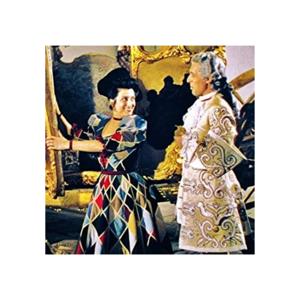


We devote some meta-theorizing to Setsuko Hara's screen persona and its reception and look at two of her lesser-known films that are available with English subtitles, Kōzaburō Yoshimura's A Ball at the Anjo House (1947), and the very uncharacteristic A Woman in the Typhoon Area (1948, directed by Hideo Ôba), in which she plays a vampy tramp who is nevertheless as caring as her more familiar characters. Then we discuss a couple of movies about isolated romance: Frank Capra's Lost Horizon and John Cromwell's The Enchanted Cottage.
Time Codes:
0h 01m 00s: More Meta Musings on Setsuko Hara
0h 15m 42s: A Ball at the Anjo House (1947; dir. Kōzaburō Yoshimura)
0h 45m 06s: A Woman in the Typhoon Area (1948; dir. Hideo Ôba)
1h 02m 21s: Anniversary talk; featuring short bonus discussions of Frank Capra's Lost Horizon (1937) and John Cromwell's The Enchanted Cottage (1945)
+++
* Check out our Complete Upcoming Episode Schedule
* Find Elise's latest published film piece – "Elaine May's Male Gaze" – in the Elaine May issue of Bright Wall/Dark Room*
*And Read Elise's Writing at Bright Wall/Dark Room, Cléo, and Bright Lights.*
Follow us on Twitter at @therebuggy
Write to us at [email protected]
Theme Music:
"What's Yr Take on Cassavetes?" – Le Tigre
This week we talk French Melville—no, not Jean-Pierre, but two temperamentally polar 1999 films by French auteurs based on works by Herman: Claire Denis's Beau Travail and Leos Carax's Pola X, based respectively on Billy Budd, Sailor and Pierre, or the Ambiguities. We ask such questions as: Why fascist aesthetics? Why opera-scored Tai Chi? Why incest? Why unsimulated sex? These are just the kinds of questions that come up when you're dealing with adaptations of classic American literature of the 19th century.
Time Codes:
0h 01m 00s: Melvillian Loomings
0h 14m 31s: Beau Travail (1999; dir: Claire Denis)
0h 33m 26s: Pola X (1999; dir: Leos Carax)
+++
* Check out our Complete Upcoming Episode Schedule
* Find Elise's latest published film piece – "Elaine May's Male Gaze" – in the Elaine May issue of Bright Wall/Dark Room*
*And Read Elise's Writing at Bright Wall/Dark Room, Cléo, and Bright Lights.*
Follow us on Twitter at @therebuggy
Write to us at [email protected]
Theme Music:
"What's Yr Take on Cassavetes?" – Le Tigre
In this week's Studios Year by Year episode, another studio finds its voice in 1932: Warner Bros. gives us the consciousness-raising prison drama I Am a Fugitive from a Chain Gang (dir. Mervyn LeRoy) as well as the weird little maternity ward movie Life Begins (dir. James Flood). They share a harrowing vision of life and Glenda Farrell in uncharacteristically unsympathetic roles. We discuss I Am a Fugitive's indirect but manifest depiction of the chain gang system as a continuation of slavery and the tragic intersection of machine politics and sexual assault in Life Begins. And if you haven't been harrowed enough after all of that, you can read Elise's new essay for Bright Lights Film Journal on James Whale's Waterloo Bridge (previously discussed on this podcast) and Frank Borzage's Little Man, What Now?, "Love Stories in Harrowing Times."
Time Codes:
0h 01m 00s: Life Begins (dirs.: James Flood & Elliott Nugent)
0h 35m 01s: I Am a Fugitive From a Chain Gang (dir: Mervyn Leroy)
1h 41m 41s: James Harvey interview with Douglas Sirk (July/August 1978 Film Comment issue)
+++
* Check out our Complete Upcoming Episode Schedule
* Find Elise's latest published film piece – "Elaine May's Male Gaze" – in the Elaine May issue of Bright Wall/Dark Room*
*And Read Elise's Writing at Bright Wall/Dark Room, Cléo, and Bright Lights.*
Follow us on Twitter at @therebuggy
Write to us at [email protected]
Theme Music:
"What's Yr Take on Cassavetes?" – Le Tigre
In the inaugural episode of our Setsuko Hara Acteurist Oeuvre-view series, the vagaries of foreign film availability lead to an historically illuminating double feature. First up, the fascist propaganda film that made the teenage Setsuko a star, a Japanese-German co-production, melodrama/mountain film/semi-documentary extravaganza, The Daughter of the Samurai (1937), directed by Arnold Fanck and Mansaku Itami. Followed by Akira Kurosawa's No Regrets for Our Youth (1946), a celebration of the wartime anti-fascist resistance, from the unusual perspective (for both the subject and Kurosawa's subsequent career) of a young bourgeois woman who struggles to find a place for himself within that movement. And in our Bonus section, we discuss David O. Selznick's feminine ideal, disclose tidbits from Jennifer Jones's career, and deem beloved critic David Thomson an assclown, before closing with Elise's reading of her favourite Selznick memo.
Time Codes:
0h 01m 00s: Setsuko Hara intro
0h 09m 30s: Atarashiki Tsuchi [aka The Daughter of the Samurai] (1937; dirs: Arnold Fanc &; Nagamasa Kitaka)
0h 50m 55s: No Regrets For Our Youth (1946; dir: Akira Kurosawa)
1h 29m 36s: Memos From Elise on Memo From David O. Selznick
+++
* Check out our Complete Upcoming Episode Schedule
* Find Elise's latest published film piece – "Elaine May's Male Gaze" – in the Elaine May issue of Bright Wall/Dark Room*
*And Read Elise's Writing at Bright Wall/Dark Room, Cléo, and Bright Lights.*
Follow us on Twitter at @therebuggy
Write to us at [email protected]
Theme Music:
"What's Yr Take on Cassavetes?" – Le Tigre
It's time for an epic retrospective episode, sparked by TIFF's Call Me Jimmy: The Films of James Stewart, which was unfortunately interrupted by COVID-19. Nevertheless, we watched the remaining films at home, plus a few that weren't scheduled. Here we substantially discuss Clarence Brown's OF HUMAN HEARTS (1938), Frank Capra's MR. SMITH GOES TO WASHINGTON (1939), and Anthony Mann's THE NAKED SPUR (1953) and THE FAR COUNTRY (1954), and devote a paragraph or so to many others, including REAR WINDOW, ANATOMY OF A MURDER, and CALL NORTHSIDE 777. We identify salient aspects of the Stewart persona, such as the interplay between idealism and cynicism and between suffering and anger.
Time Codes:
0h 01m 00s: Drawling preamble
0h 22m 05s: Of Human Hearts (1938; dir: Clarence Brown)
0h 53m 54s: Mr. Smith Goes to Washington (1939; dir: Frank Capra)
1h 26m 45s: Rear Window (1954; dir: Alfred Hitchcock)
1h 35m 30s: Stewart and Anthony Mann – ft. The Naked Spur (1953)
2h 30m 32s: Call Northside 777 (1948; dir: Henry Hathaway) & Anatomy of a Murder (1959; dir: Otto Preminger)
2h 42m 35s: Harvey (1950; dir: Henry Koster)
+++
* Check out our Complete Upcoming Episode Schedule
* Find Elise's latest published film piece – "Elaine May's Male Gaze" – in the Elaine May issue of Bright Wall/Dark Room*
*And Read Elise's Writing at Bright Wall/Dark Room, Cléo, and Bright Lights.*
Follow us on Twitter at @therebuggy
Write to us at [email protected]
Theme Music:
"What's Yr Take on Cassavetes?" – Le Tigre
Get excited about this one! In our MGM 1932 episode of The Studios Year by Year, the Culver City colossus hits its stride and proves that you don't need auteurs when you have scripts, directors, and stars. It's a Jean Harlow double feature, playing two wildly different characters in RED DUST (dir. Victor Fleming) and RED-HEADED WOMAN (dir. Jack Conway). In addition to Harlow, we discuss '30s screenwriters, Clark Gable's evolving persona, and MGM's vs. Warner Bros.' treatment of the sexual social climber.
Time Codes:
0h 01m 00s: Red Dust (dir: Victor Fleming)
0h 49m 02s: Red-Headed Woman (dir. Jack Conway)
+++
* Check out our Complete Upcoming Episode Schedule
* Find Elise's latest published film piece – "Elaine May's Male Gaze" – in the Elaine May issue of Bright Wall/Dark Room*
*And Read Elise's Writing at Bright Wall/Dark Room, Cléo, and Bright Lights.*
Follow us on Twitter at @therebuggy
Write to us at [email protected]
Theme Music:
"What's Yr Take on Cassavetes?" – Le Tigre
It's a bittersweet episode as we bid farewell to our Jennifer Jones series with first viewings of her final two starring-role films, Henry King's TENDER IS THE NIGHT (1962) and Daniel Petrie's THE IDOL (1966). We find our heroine once again playing characters embroiled in dark Freudian psychodramas, and consider how King's film alters F. Scott Fitzgerald's alternate universe roman à clef, and whether or not Petrie's film deserves its obscurity. From saint to fallen (?) idol: our examination of Jennifer Jones, Acteur is now complete.
Time Codes:
0h 01m 00s: Tender is the Night (1962; dir: Henry King)
0h 38m 57s: The Idol (1966; dir: Daniel Petrie)
1h 24m 00s Jennifer Jones Oeuvre-View –Concluding statements and non-binding Top 5 lists
+++
* Check out our Complete Upcoming Episode Schedule
* Find Elise's latest published film piece "Making America Strange Again: Gangs of New York" in issue #80 Bright Wall/Dark Room*
*And Read Elise's Writing at Bright Wall/Dark Room, Cléo, and Bright Lights.*
Follow us on Twitter at @therebuggy
Write to us at [email protected]
Theme Music:
"What's Yr Take on Cassavetes?" – Le Tigre
This time on The Studios Year by Year it's a rather unfair pairing of Lubitsch's (or Cukor's?) ONE HOUR WITH YOU with Mamoulian's LOVE ME TONIGHT. They have less in common than you'd think for both being operettas starring Maurice Chevalier and Jeanette MacDonald made by Paramount in 1932. Looking for something to lift your mood while you're waiting for quarantine to lift? We confirm with this viewing that LOVE ME TONIGHT is one of the most delightful and inventive movies of the 30s (or any decade). Mamoulian once again proves himself a cinematic pioneer... that no one has caught up with yet. And in our Fear and Staying Home in Toronto segment, we compare the Borzage and Selznick A Farewell to Armses.
Time Codes:
0h 01m 00s: One Hour With You (dirs: Ernst Lubitsch & George Cukor)
0h 26m 15s: Love Me Tonight (dir: Rouben Mamoulian)
1h 07m 56s Fear & Staying Home in Toronto
+++
* Check out our Complete Upcoming Episode Schedule
* Find Elise's latest published film piece "Making America Strange Again: Gangs of New York" in issue #80 Bright Wall/Dark Room*
*And Read Elise's Writing at Bright Wall/Dark Room, Cléo, and Bright Lights.*
Follow us on Twitter at @therebuggy
Write to us at [email protected]
Theme Music:
"What's Yr Take on Cassavetes?" – Le Tigre
In our penultimate Jennifer Jones episode, we consider whether Selznick's final production, A FAREWELL TO ARMS (1957), is Hemingway's vision of war or Selznick's, and contemplate Selznick as Auteur. Then we turn to THE BARRETTS OF WIMPOLE STREET (1957), which is not exactly the staid literary costume drama Elise was expecting. The Jones oeuvre continues to intrigue!
Time Codes:
0h 01m 00s: A Farewell To Arms (1957; Dir: Charles Vidor; Prod: David O. Selznick)
0h 42m 40s: The Barretts of Wimpole Street (1957; Dir: Sidney Franklin)
+++
* Check out our Complete Upcoming Episode Schedule
* Find Elise's latest published film piece "Making America Strange Again: Gangs of New York" in issue #80 Bright Wall/Dark Room*
*And Read Elise's Writing at Bright Wall/Dark Room, Cléo, and Bright Lights.*
Follow us on Twitter at @therebuggy
Write to us at [email protected]
Theme Music:
"What's Yr Take on Cassavetes?" – Le Tigre
For our first COVID-19-era Lightbox retrospective episode, we look at the enigmatic cinema of Angela Schanelec. We focus on her two most recent films, THE DREAMED PATH (2016) and I WAS AT HOME, BUT... (2019). Then, in our final, presciently-named Fear and Moviegoing in Toronto segment for "the duration", it's the last Bressons of TIFF's anniversary retrospective that we were able to see (LANCELOT DU LAC, A GENTLE WOMAN, and his only (?) comedy, FOUR NIGHTS OF A DREAMER), plus we celebrate the emotional generosity of Coppola's PEGGY SUE GOT MARRIED.
Time Codes:
0h 01m 00s: Schanelec Prolegomenon
0h 07m 21s: The Dreamed Path [German title: Der traumhafte Weg] (2016)
0h 39m 13s: I was at Home, But… [German title: Ich war zuhause, aber] (2019)
1h 22m 28s:
Pre-Quarantine cinemagoing:
Une femme douce (1969); Quatre nuits d'un rêveur (1971); Lancelot du lac (1974) [all Dir: Robert Bresson]; Peggy Sue Got Married (1986/dir: Francis Ford Coppola) @ The Revue
+++
* Check out our Complete Upcoming Episode Schedule
* Find Elise's latest published film piece "Making America Strange Again: Gangs of New York" in issue #80 Bright Wall/Dark Room*
*And Read Elise's Writing at Bright Wall/Dark Room, Cléo, and Bright Lights.*
Follow us on Twitter at @therebuggy
Write to us at [email protected]
Theme Music:
"What's Yr Take on Cassavetes?" – Le Tigre
From the publisher's feed

1,536 Listeners

1,077 Listeners

273 Listeners