
Sign up to save your podcasts
Or

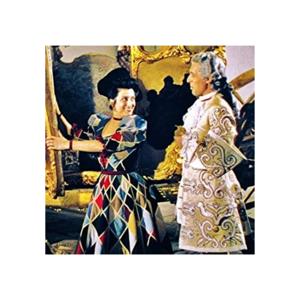


Clara Bow gets a wonderful finale to her (unfortunately foreshortened) career in our final Acteurist Oeuvre-view episode devoted to her. Fox comes through with two excellent vehicles: Call Her Savage (1932), directed by John Francis Dillon and brilliantly shot by Lee Garmes, a delightfully lurid Pre-Code that nevertheless contains a critique of white supremacy; and Hoop-La (1933), a sweet-natured romantic comedy with a circus setting and a hard-boiled veneer. We review, one last time, why Clara Bow is the Ultimate Protagonist, and wrap up the series with our Top 10s from the Bow canon.
Time Codes:
0h 01m 00s: CALL HER SAVAGE (1932) [dir. John Francis Dillon]
0h 42m 57s: HOOPLA (1933) [dir. Frank Lloyd]
1H 17m 49s : Elise and Dave's Top 10 Clara Bow films
+++
* Marvel at our meticulously ridiculous Complete Viewing Schedule for the 2020s
* Intro Song: "Sunday" by Jean Goldkette Orchestra with the Keller Sisters (courtesy of The Internet Archive)
* Read Elise's latest film piece on Preston Sturges, Unfaithfully Yours, and the Narrative role of comedic scapegoating.
* Check out Dave's new Robert Benchley blog – an attempt to annotate and reflect upon as many of the master humorist's 2000+ pieces as he can locate – Benchley Data: A Wayward Annotation Project!
*And Read lots of Elise's Writing at Bright Wall/Dark Room, Cléo, and Bright Lights.*
Follow us on Twitter at @therebuggy
Write to us at [email protected]
Our studio this week is 20th Century Fox, the year is 1936; two fascinating movies of dubious historicity (in the details, at least) by the ever-reliable Henry King, possibly Fox's most characteristic director. First up, Ramona, a sympathetic depiction of North American settler colonialism from the perspective of Native Americans (unfortunately, as ever, with white actors--Loretta Young and Don Ameche--playing the leads). Then, the surprisingly engrossing The Country Doctor, starring Jean Hersholt in his career defining role. We discuss the bizarre and tragic real-life story of the Ontario government's exhibition of the Dionne Quintuplets and what the movie gets right about Canadian society. Elise speculates on what Preston Sturges learned about small-town America from two Fox movies directed by Henry King that aren't even set in America, and Dave argues about the progressive influence of Darryl Zanuck on this phase of the studio.
Time Codes:
0h 01m 00s: RAMONA [dir. Henry King]
0h 37m 52s: THE COUNTRY DOCTOR [dir. Henry King]
1h 11m 45s: Listener mail from Jeff (on Clara Bow series)
Studio Film Capsules provided by The Films of 20th Century Fox by Tony Thomas & Aubrey Solomon
+++
* Marvel at our meticulously ridiculous Complete Viewing Schedule for the 2020s
* Intro Song: "Sunday" by Jean Goldkette Orchestra with the Keller Sisters (courtesy of The Internet Archive)
* Read Elise's latest film piece on Preston Sturges, Unfaithfully Yours, and the Narrative role of comedic scapegoating.
* Check out Dave's new Robert Benchley blog – an attempt to annotate and reflect upon as many of the master humorist's 2000+ pieces as he can locate – Benchley Data: A Wayward Annotation Project!
*And Read lots of Elise's Writing at Bright Wall/Dark Room, Cléo, and Bright Lights.*
Follow us on Twitter at @therebuggy
Write to us at [email protected]
Two more Tuttles for our penultimate Clara Bow episode, a couple of odd genre experiments: "musical romance" Love Among the Millionaires (1930) combines a star-crossed-lovers melodrama with comedy bits featuring vaudeville and future Broadway child star Mitzi Green and a lot of random songs; while No Limit (1931) offers gambling dens, stickup men, pratfalls, redemptive romance, New York location shots, an automat scene, Thelma Todd, and everything else you could want in a movie, according to Dave. We also engage in some bittersweet speculation about what Clara's career would have been like if David O. Selznick had got his way and cast her as the female lead in What Price Hollywood? (the first A Star is Born), and she'd been taken under Pando S. Berman's wing at RKO along with Katharine Hepburn (who was only two years younger).
Time Codes:
0h 01m 00s: LOVE AMONG THE MILLIONAIRES (1930) [dir. Frank Tuttle]
0h 33m 21s: NO LIMIT (1931) [dir. Frank Tuttle]
+++
* Marvel at our meticulously ridiculous Complete Viewing Schedule for the 2020s
*Intro Song: "Sunday" by Jean Goldkette Orchestra with the Keller Sisters (courtesy of The Internet Archive)
* Find Elise's latest film piece on Billy Wilder and 1930s Romantic Comedy
*And Read lots of Elise's Writing at Bright Wall/Dark Room, Cléo, and Bright Lights.*
Follow us on Twitter at @therebuggy
Write to us at [email protected]
For Warner Bros., 1936, we take a look at two stage-to-film adaptations: Three Men on a Horse, a Warners-style farce about gangsters, discontented suburbanites, and the power of greeting card poetry, and The Petrified Forest, a drama by Pulitzer Prize-winner Robert E. Sherwood about gangsters, disillusioned novelists, and the allure of French poetry. We discuss the studio's handling of suburban satire and Leslie Howard's handling of the role of thematic spokesman. It's an all-star episode, with the other players including Bette Davis, Humphrey Bogart (in his first important film role), stage star Sam Levene, Warners comedy stalwarts Frank McHugh, Joan Blondell, and Guy Kibbee, Eddie Anderson in a pre-fame appearance, and Lorenz brother Teddy Hart in a well-deserved Screen Actors Guild award-winning performance. And it doesn't end there. As Bette Davis would say in The Petrified Forest, "It's a little bit crazy!"
Time Codes:
0h 01m 00s: Three Men on Horse [dir. Mervyn Leroy]
0h 29m 13s: The Petrified Forest [dir. Archie Mayo]
Studio Film Capsules provided by The Warner Brothers Story by Clive Hirschhorn
+++
* Marvel at our meticulously ridiculous Complete Viewing Schedule for the 2020s
*Intro Song: "Sunday" by Jean Goldkette Orchestra with the Keller Sisters (courtesy of The Internet Archive)
* Find Elise's latest film piece on Billy Wilder and 1930s Romantic Comedy
*And Read lots of Elise's Writing at Bright Wall/Dark Room, Cléo, and Bright Lights.*
Follow us on Twitter at @therebuggy
Write to us at [email protected]
In this Special Subject episode, we try to get a handle on Andrei Tarkovsky by looking at a couple of our favourites, in which Tarkovsky tries to get a handle on his mother (and faith, and memory, and guilt, and nostalgia, and the nature of womanhood, and the possibility of human connection): Mirror (1975) and Nostalghia (1983). We talk Tarkovskyan dream and "reality"; the interweaving of autobiography and fiction, representations of your own death, different kinds of doubles, mystical dogs, and amazing hair.
Time Codes:
0h 01m 00s: MIRROR (1975) [dir. Andrei Tarkovsky]
0h 59m 00s: NOSTALGHIA (1983) [dir. Andrei Tarkovsky]
+++
* Marvel at our meticulously ridiculous Complete Viewing Schedule for the 2020s
*Intro Song: "Sunday" by Jean Goldkette Orchestra with the Keller Sisters (courtesy of The Internet Archive)
* Find Elise's latest film piece on Billy Wilder and 1930s Romantic Comedy
*And Read lots of Elise's Writing at Bright Wall/Dark Room, Cléo, and Bright Lights.*
Follow us on Twitter at @therebuggy
Write to us at [email protected]
In this week of our (slightly-out-of-order) Oeuvre-view of Clara Bow's career, The Saturday Night Kid (1929), directed by A. Edward Sutherland, is paired with True to the Navy (1930), directed by Frank Tuttle. We see two starkly contrasting Claras separated by just seven months: in Sutherland's working-class drama, she's heroic but bad-tempered, burdened with a flighty love interest, a manager who has it in for her (Edna May Oliver), and a snake of a sister (pre-stardom Jean Arthur interpreting realism as "shrill and whiney"). In Tuttle's comedy, she's a soda fountain girl who scams sailors with her boss, which leads to complications when she falls for a handsome gob played by Fredric March (who decides to introduce Method acting into this broad slapstick comedy for some reason). Elfin Clara gets involved in some satisfying brawls and tells off gangsters with a temerity that equally tiny Barbara Stanwyck would soon make her trademark. Obviously, this is what you had to do in Brooklyn. Also of note: a brief but impactful appearance by an uncredited Louise Beavers.
Time Codes:
0h 01m 00s: The Saturday Night Kid (1929) [dir. A. Edward Sutherland]
0h 19m 47s: True to The Navy (1930) [dir. Frank Tuttle]
+++
* Marvel at our meticulously ridiculous Complete Viewing Schedule for the 2020s
*Intro Song: "Sunday" by Jean Goldkette Orchestra with the Keller Sisters (courtesy of The Internet Archive)
* Find Elise's latest film piece on Billy Wilder and 1930s Romantic Comedy
*And Read lots of Elise's Writing at Bright Wall/Dark Room, Cléo, and Bright Lights.*
Follow us on Twitter at @therebuggy
Write to us at [email protected]
MGM, 1936: the studio of stars, glamour, and conservatism. Or so goes our thesis, which we attempt to complicate by taking a close look at two movies that make romantic rivals of Jean Harlow and Myrna Loy: Clarence Brown's melodrama Wife vs.Secretary and Jack Conway's atypical screwball comedy Libeled Lady. Indubitably the protagonist of the former and top-billed in the latter's star-fest, Harlow plays class underdogs that lend a pointed populism to MGM's aspirational fantasies. We examine MGM's representation of options for career women in Wife vs. Secretary and find it open to a subversive reading.
Time Codes:
0h 01m 00s: WIFE VS SECRETARY (dir. Clarence Brown)
0h 50m 00s: LIBELED LADY (dir. Jack Conway)
Studio Film Capsules provided by The MGM Story by John Douglas Eames
+++
* Marvel at our meticulously ridiculous Complete Viewing Schedule for the 2020s
*Intro Song: "Sunday" by Jean Goldkette Orchestra with the Keller Sisters (courtesy of The Internet Archive)
* Find Elise's latest film piece on Billy Wilder and 1930s Romantic Comedy
*And Read lots of Elise's Writing at Bright Wall/Dark Room, Cléo, and Bright Lights.*
Follow us on Twitter at @therebuggy
Write to us at [email protected]
In this week's Clara Bow Acteurist Oeuvre-view episode, we're finally there: Clara's first two sound films, both from 1929. First, we engage in an extensive analysis of Dorothy Arzner's The Wild Party, Clara's talkie debut. The star plays a college girl rebelling against the Victorian strictures on campus sexuality, but yearning for the loftier aims of her studious roommate and the handsome new anthropology professor (played by Fredric March). One of 1929's great films, The Wild Party is a winning mixture of Austenesque coming-of-age moral trajectory and polymorphously perverse sensuality that only Bow and Arzner could pull off. But then, we get something much odder: Lothar Mendes' Dangerous Curves takes two tendencies of the Bow persona, her active heroism and her comic pathos, to their logical extremes. The result this produces at the movie's climax has to be seen to be believed. (Hint: it involves risking death in a clown suit.) But is Mendes crazy enough to pull off this crazy plot? And can the leads form a convincing romantic union after the sexlessness that's been imposed on them?
Time Codes:
0h 01m 00s: THE WILD PARTY (1929) [dir. Dorothy Arzner]
0h 55m 43s: DANGEROUS CURVES (1929) [dir. Lothar Mendes]
+++
* Marvel at our meticulously ridiculous Complete Viewing Schedule for the 2020s
*Intro Song: "Sunday" by Jean Goldkette Orchestra with the Keller Sisters (courtesy of The Internet Archive)
* Find Elise's latest film piece on Billy Wilder and 1930s Romantic Comedy
*And Read lots of Elise's Writing at Bright Wall/Dark Room, Cléo, and Bright Lights.*
Follow us on Twitter at @therebuggy
Write to us at [email protected]
We look at four noirish British films distributed in the United States by Eagle-Lion: Waterloo Road (1945, directed by Sidney Gilliat), I See a Dark Stranger (1946, directed by Frank Launder), The October Man (1947, directed by Roy Ward Baker), and The Blue Lamp (1950, directed by Basil Dearden). We explore the mental and physical landscape of wartime and postwar England and such subjects as militant Irish politics, English policing, and scapegoating as dramatic structure and social reality, and evaluate the performance of Dirk Bogarde's hair.
Time Codes:
0h 01m 00s: Brief Eagle-Lion Preamble
0h 04m 56s: WATERLOO ROAD (1945) [dir. Sidney Gilliat]
0h 30m 46s: I SEE A DARK STRANGER (1946) [dir. Frank Launder]
0h 58m 20s: THE OCTOBER MAN (1947) [dir. Roy Ward Baker]
1h 22m 16s: THE BLUE LAMP (1950) [dir. Basil Dearden]
+++
* Marvel at our meticulously ridiculous Complete Viewing Schedule for the 2020s
*Intro Song: "Sunday" by Jean Goldkette Orchestra with the Keller Sisters (courtesy of The Internet Archive)
* Find Elise's latest film piece on Billy Wilder and 1930s Romantic Comedy
*And Read lots of Elise's Writing at Bright Wall/Dark Room, Cléo, and Bright Lights.*
Follow us on Twitter at @therebuggy
Write to us at [email protected]
In this week's Clara Bow Acteurist Oeuvre-view episode, two of Clara's best directors, Victor Fleming and Dorothy Arzner, present us with two very different versions of Clara that are both nevertheless logical developments of her persona. In Fleming's Hula (1927), Clara is a wild child of nature and a real loose cannon, pitted against "civilized" ladies who are far more destructive, with another (Hawaiian) colonial setting. In Arzner's Get Your Man (1927), a much more restrained Clara is an American heiress in France who finds herself romantically thwarted, not by British honour this time, but by European aristocratic codes. Neither are any match for her, of course. We discuss Clara's signature desiring gaze, Clive Brook's sweaty manliness, Buddy Rogers' sulky callowness, and cute dog scenes.
Time Codes:
0h 01m 00s: HULA (1927) [dir. Victor Fleming]
0h 46m 41s: GET YOUR MAN (1927) [dir. Dorothy Arzner]
+++
* Marvel at our meticulously ridiculous Complete Viewing Schedule for the 2020s
*Intro Song: "Sunday" by Jean Goldkette Orchestra with the Keller Sisters (courtesy of The Internet Archive)
* Find Elise's latest film piece on Billy Wilder and 1930s Romantic Comedy
*And Read lots of Elise's Writing at Bright Wall/Dark Room, Cléo, and Bright Lights.*
Follow us on Twitter at @therebuggy
Write to us at [email protected]
From the publisher's feed

1,536 Listeners
1,077 Listeners

273 Listeners