
Sign up to save your podcasts
Or



For RKO 1938, a Ginger Rogers double feature: Having Wonderful Time (directed by Alfred Santell - and George Stevens?), based on the play by Arthur Kober (the ex-Mr. Lillian Hellman), and Vivacious Lady (definitely directed by George Stevens), one of the best Hollywood comedies of the 1930s, but not one of the best known. We discuss the consequences of the de-ethnicizing of Kober's play; Stevens' audacity as a comedic stylist; Rogers' all-around comic genius; Jimmy Stewart's particular brilliance in playing drunk scenes; how Vivacious Lady fits the "democratic" version of screwball comedy; and more.
Time Codes:
0h 01m 00s: HAVING WONDERFUL TIME [dir. Alfred Santell]
0h 32m 34s: VIVACIOUS LADY [dir. George Stevens]
Studio Film Capsules provided The RKO Story by Richard B. Jewell & Vernon Harbin
Additional studio information from: The Hollywood Story by Joel W. Finler
+++
* Marvel at our meticulously ridiculous Complete Viewing Schedule for the 2020s
* Intro Song: "Sunday" by Jean Goldkette Orchestra with the Keller Sisters (courtesy of The Internet Archive)
* Read Elise's latest film piece on Preston Sturges, Unfaithfully Yours, and the Narrative role of comedic scapegoating.
* Check out Dave's new Robert Benchley blog – an attempt to annotate and reflect upon as many of the master humorist's 2000+ pieces as he can locate – Benchley Data: A Wayward Annotation Project!
Follow us on Twitter at @therebuggy
Write to us at [email protected]
Our second Daniel Day-Lewis Acteurist Oeuvre-view introduces us to the little-known, but very worthy, Nanou (1986), Conny Templeman's first and seemingly only feature, which we liked enough to discuss it in detail even though Day-Lewis's part is very minor. We draw comparisons between the film and Joanna Hogg's The Souvenir, and between Day-Lewis's part in it and Ben Stiller's in Reality Bites. Then we move on to Philip Kaufman's The Unbearable Lightness of Being (1988) – in which Day-Lewis plays a cool and detached womanizer – and try to articulate the various ways in which the main characters (the others played by Juliette Binoche and Lena Olin) reflect and differ from each other in their attitudes to sex, aesthetics, and love.
Time Codes:
0h 01m 00s: Nanou (1986) [dir. Conny Templeman]
0h 21m 33s: The Unbearable Lightness of Being (1988) [dir. Philip Kaufman]
+++
* Marvel at our meticulously ridiculous Complete Viewing Schedule for the 2020s
* Intro Song: "Sunday" by Jean Goldkette Orchestra with the Keller Sisters (courtesy of The Internet Archive)
* Read Elise's latest film piece on Preston Sturges, Unfaithfully Yours, and the Narrative role of comedic scapegoating.
* Check out Dave's new Robert Benchley blog – an attempt to annotate and reflect upon as many of the master humorist's 2000+ pieces as he can locate – Benchley Data: A Wayward Annotation Project!
Follow us on Twitter at @therebuggy
Write to us at [email protected]
In this 20th Century-Fox 1938 episode we look at two Tyrone Power-starring historical disaster spectacles, Suez (directed by Allan Dwan), about the construction of the Suez Canal and various sorts of post-Napoleonic idealism, and In Old Chicago (directed by Henry King), a heavily fictionalized account of how Mrs. O'Leary's cow started the Great Chicago Fire of 1871. Dave and Elise respectively take up the films' causes, while agreeing that they each make a hash of history.
Time Codes:
0h 01m 00s: SUEZ [dir. Allan Dwan]
0h 28m 39s: IN OLD CHICAGO [dir. Henry King]
+++
* Marvel at our meticulously ridiculous Complete Viewing Schedule for the 2020s
* Intro Song: "Sunday" by Jean Goldkette Orchestra with the Keller Sisters (courtesy of The Internet Archive)
* Read Elise's latest film piece on Preston Sturges, Unfaithfully Yours, and the Narrative role of comedic scapegoating.
* Check out Dave's new Robert Benchley blog – an attempt to annotate and reflect upon as many of the master humorist's 2000+ pieces as he can locate – Benchley Data: A Wayward Annotation Project!
Follow us on Twitter at @therebuggy
Write to us at [email protected]
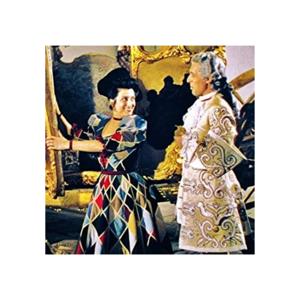
In Part 1 of our Anna Magnani Sampler, we explore a range of the legendary Italian actress's modes and moods: from the neorealism of Rossellini's Rome, Open City (1945) to the postmodernism of Renoir's The Golden Coach (1952); from a working-class mother's tragi-comic attempt to make her daughter into a neorealist child star in Visconti's Bellissima (1951) to an ex-prostitute's tragi-heroic attempt to keep history from repeating itself with her equally stymied and frustrated sister in Dieterle's Vulcano (1950). Larger-than-life? True-to-life? The definition or antithesis of a star? We try to get a grip on the mercurial Magnani.
Time Codes:
0h 01m 00s: Rome: Open City (1945) [dir. Roberto Rossellini]
0h 24m 56s: Vulcano (1950) [dir. William Dieterle]
0h 42m 54s: Bellissima (1951) [dir. Luchino Visconti]
0h 57m 23s: The Golden Coach (1952) [dir. Jean Renoir]
+++
* Marvel at our meticulously ridiculous Complete Viewing Schedule for the 2020s
* Intro Song: "Sunday" by Jean Goldkette Orchestra with the Keller Sisters (courtesy of The Internet Archive)
* Read Elise's latest film piece on Preston Sturges, Unfaithfully Yours, and the Narrative role of comedic scapegoating.
* Check out Dave's new Robert Benchley blog – an attempt to annotate and reflect upon as many of the master humorist's 2000+ pieces as he can locate – Benchley Data: A Wayward Annotation Project!
Follow us on Twitter at @therebuggy
Write to us at [email protected]
Our Daniel Day-Lewis Acteurist Oeuvre-view gets started with the two 1985 films that established his range, giving a naturalistic portrayal of a working-class youth in the one and a caricature of an upper-class aesthete in the other: Stephen Frears' My Beautiful Laundrette, Hanif Kureishi's Oscar-nominated dark comedy about race, class, and sexuality in Thatcher-era England, and Merchant-Ivory's A Room With a View, Ruth Prawer Jhabvala's Oscar-winning adaptation of E. M. Forster's romantic comedy of ideas. We argue for Day-Lewis as the lynchpin of these ensemble pieces, providing the (problematic) heart of one and the void at the center of the other, and consider how they anticipate his future performances.
Time Codes:
0h 01m 00s: My Beautiful Laundrette (1985) [dir. Stephen Frears]
0h 44m 01s: A Room with a View (1985) [dir. James Ivory]
+++
* Marvel at our meticulously ridiculous Complete Viewing Schedule for the 2020s
* Intro Song: "Sunday" by Jean Goldkette Orchestra with the Keller Sisters (courtesy of The Internet Archive)
* Read Elise's latest film piece on Preston Sturges, Unfaithfully Yours, and the Narrative role of comedic scapegoating.
* Check out Dave's new Robert Benchley blog – an attempt to annotate and reflect upon as many of the master humorist's 2000+ pieces as he can locate – Benchley Data: A Wayward Annotation Project!
Follow us on Twitter at @therebuggy
Write to us at [email protected]
It's 1938 and Warner Bros. is in its prime, and so is Bette Davis, just now moving into the kind of top-quality romantic melodramas in which she'd excel. No longer the studio of James Cagney, Joan Blondell, gangster heroes and Busby Berkeley spectacles, it's now the studio of Bette Davis, Errol Flynn, glossy melodramas and action-adventure heroes; or at least, these stars and genres are co-existing with Cagney, Robinson, John Garfield, and soon, Humphrey Bogart vehicles. Warners is broadening its range and turning into the greatest of the studios (prove us wrong).
As for this episode: The Sisters (Anatole Litvak) stars Davis and Flynn as ill-matched lovers contending with gender role expectations and Flynn's obscure demons. Then in The Dawn Patrol, Edmund Goulding's anti-war masterpiece, Flynn transfers his affections to David Niven and his piebald pjs. Even though there's not a single woman glimpsed and barely a woman mentioned, Flynn, Niven, Basil Rathbone, Donald Crisp, and Donald Crisp's imaginary dog achieve enough emotional intimacy and relationship intensity to satisfy any viewer under Goulding's direction.
Time Codes:
0h 01m 00s: Warner Brothers Transformation During the Late 1930s
0h 04m 02s: THE SISTERS (dir. Anatole Litvak)
0h 41m 04s: THE DAWN PATROL (dir. Edmund Goulding)
Studio Film Capsules provided The Warner Brothers Story by Clive Hirschhorn
Additional studio information from: The Hollywood Story by Joel W. Finler
+++
* Marvel at our meticulously ridiculous Complete Viewing Schedule for the 2020s
* Intro Song: "Sunday" by Jean Goldkette Orchestra with the Keller Sisters (courtesy of The Internet Archive)
* Read Elise's latest film piece on Preston Sturges, Unfaithfully Yours, and the Narrative role of comedic scapegoating.
* Check out Dave's new Robert Benchley blog – an attempt to annotate and reflect upon as many of the master humorist's 2000+ pieces as he can locate – Benchley Data: A Wayward Annotation Project!
Follow us on Twitter at @therebuggy
Write to us at [email protected]
For our Xmas 2021 episode, two bittersweet intellectual soap operas about forbidden love and sexual non-conformity in mid-20th century America, Douglas Sirk's All That Heaven Allows (1955), starring Jane Wyman and Rock Hudson, and Todd Haynes' Carol (2015), starring Rooney Mara and Cate Blachett. We talk about the interplay of satire and sincerity in Sirk, romance as a vehicle for self-actualization, coming-of-age story tropes, and how these movies use the expectations set by the holiday season. And in our Fear and Moviegoing in Toronto segment, it's the last of the 20th Century Fox Noirs at the TIFF Bell Lightbox Cinematheque, two great Richard Widmark films: Jean Negulesco's Road House (1948), an Ode to Losers in Love, and Sam Fuller's brutal and lurid Ode to Losers in Life, Pickup on South Street (1953). Happy Holidays and see you in 2022!
Time Codes:
0h 01m 00s: ALL THAT HEAVEN ALLOWS (1955) [dir. Douglas Sirk]
0h 38m 35s: CAROL (2015) [dir. Todd Haynes]
01h 02m 57s: Fear and Moviegoing in Toronto – ROAD HOUSE (1948) & PICKUP ON SOUTH STREET (1953)
+++
* Marvel at our meticulously ridiculous Complete Viewing Schedule for the 2020s
* Intro Song: "Sunday" by Jean Goldkette Orchestra with the Keller Sisters (courtesy of The Internet Archive)
* Read Elise's latest film piece on Preston Sturges, Unfaithfully Yours, and the Narrative role of comedic scapegoating.
* Check out Dave's new Robert Benchley blog – an attempt to annotate and reflect upon as many of the master humorist's 2000+ pieces as he can locate – Benchley Data: A Wayward Annotation Project!
Follow us on Twitter at @therebuggy
Write to us at [email protected]
We bid Margaret Sullavan a sad farewell with her two final films, Cry 'Havoc' (1943), a very dark WWII propaganda film with an all-female main cast in which the Battle of Bataan meets Stage Door, and No Sad Songs for Me (1950), a peak-crazy woman's picture in the mode of The Shining Hour with a slyly progressive screenplay by Howard Koch. Sullavan manages to make having your man stolen from under your nose while dying and fighting fascists/propping up the empty shell-men of post-war America into a triumphant art form. Then: we give our Top 5 Sullavan performances. And in the Fear and Moviegoing in Toronto segment, we discuss and spoil Verhoeven's lesbian nuns/nympho mystic movie, Benedetta (2021), and Preminger's glorious film noir Fallen Angel (1945).
Time Codes:
0h 01m 00s: CRY HAVOC (1943) [dir. Richard Thorpe]
0h 20m 16s: NO SAD SONGS FOR ME (1950) [dir. Rudolph Maté]
0h 38m 54s: Margaret SullavanTop Fives
0h 00m 00s: Fear and Moviegoing in Toronto – BENEDETTA (2021) and FALLEN ANGEL (1945)
+++
* Marvel at our meticulously ridiculous Complete Viewing Schedule for the 2020s
* Intro Song: "Sunday" by Jean Goldkette Orchestra with the Keller Sisters (courtesy of The Internet Archive)
* Read Elise's latest film piece on Preston Sturges, Unfaithfully Yours, and the Narrative role of comedic scapegoating.
* Check out Dave's new Robert Benchley blog – an attempt to annotate and reflect upon as many of the master humorist's 2000+ pieces as he can locate – Benchley Data: A Wayward Annotation Project!
Follow us on Twitter at @therebuggy
Write to us at [email protected]
For this week's Studios Year by Year, it's MGM 1938 and two aviation movies starring the King and Queen of Hollywood, Clark Gable and Myrna Loy. In Jack Conway's wildly entertaining Too Hot to Handle, Loy is a daredevil aviator with a sentimental mission and Gable an unscrupulous journalist who doesn't know whether he wants to exploit or worship her. It's all in good fun until the movie decides to take a weird comic turn into white supremacist psychosis, albeit in a way that's (maybe?) self-subverting. In Victor Fleming's masterful Test Pilot, Clark Gable's magnetic masculinity is under the microscope of Loy's female gaze and Spencer Tracy's queer one. We discuss Loy's thespian opportunities and Gable's perennially underrated emotionalism. Then: the return of Fear and Moviegoing in Toronto. Movies discussed (and spoiled): Niagara (1953), with Marilyn Monroe and Jean Peters, and Moontide (1942), with Jean Gabin and Ida Lupino.
Time Codes:
0h 01m 00s: MGM Star Roster, 1938
0h 03m 43s: TOO HOT TO HANDLE [dir. Jack Conway]
0h 29m 37s: TEST PILOT [dir. Victor Fleming]
1h 04m 45s: Fear and Moviegoing in Toronto – NIAGARA (1953) & MOONTIDE (1942)
Studio Film Capsules provided The MGM Story by John Douglas Eames
Additional studio information from: The Hollywood Story by Joel W. Finler
+++
* Marvel at our meticulously ridiculous Complete Viewing Schedule for the 2020s
* Intro Song: "Sunday" by Jean Goldkette Orchestra with the Keller Sisters (courtesy of The Internet Archive)
* Read Elise's latest film piece on Preston Sturges, Unfaithfully Yours, and the Narrative role of comedic scapegoating.
* Check out Dave's new Robert Benchley blog – an attempt to annotate and reflect upon as many of the master humorist's 2000+ pieces as he can locate – Benchley Data: A Wayward Annotation Project!
Follow us on Twitter at @therebuggy
Write to us at [email protected]
For our penultimate Sullavan episode, two movies widely disparate in tone: John Cromwell's So Ends Our Night (1941), the fourth and final Sullavan appearance in an anti-Nazi film (and the second based on an Erich Maria Remarque novel); and Appointment for Love (1941), a less bitter Woman of the Year in which Sullavan revisits her Even Newer Woman character from Next Time We Love and director William A. Seiter gets to redeem himself for The Moon's Our Home. Whether paired with a young Glenn Ford making puppy-dog eyes or a befuddled Charles Boyer who's so desperate he uses Eugene Pallette as his love confidant, Sullavan continues her streak of co-star chemistry.
Time Codes:
0h 01m 00s: SO ENDS OUR NIGHT (1941) [dir. John Cromwell]
0h 28m 05s: APPOINTMENT FOR LOVE (1941) [dir. William A. Seiter]
+++
* Marvel at our meticulously ridiculous Complete Viewing Schedule for the 2020s
* Intro Song: "Sunday" by Jean Goldkette Orchestra with the Keller Sisters (courtesy of The Internet Archive)
* Read Elise's latest film piece on Preston Sturges, Unfaithfully Yours, and the Narrative role of comedic scapegoating.
* Check out Dave's new Robert Benchley blog – an attempt to annotate and reflect upon as many of the master humorist's 2000+ pieces as he can locate – Benchley Data: A Wayward Annotation Project!
Follow us on Twitter at @therebuggy
Write to us at [email protected]
From the publisher's feed

1,536 Listeners

1,077 Listeners

273 Listeners