
Sign up to save your podcasts
Or

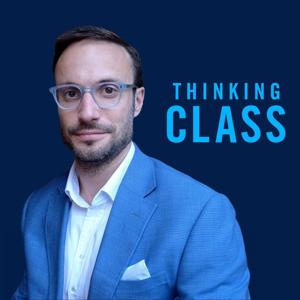


Lord Tony Sewell CBE is a British educational consultant, author, and life peer. Born in Brixton to Jamaican parents, he trained as a teacher and worked in some of London's most challenging schools, during which time he completed his PhD on black masculinities and schooling at the University of Nottingham. He helped transform education in Hackney as part of the team that established the Learning Trust and the iconic Mossbourne Academy, a flagship of the Academy movement. He is the founder and chair of Generating Genius, a charity that has helped hundreds of young people from disadvantaged backgrounds into STEM careers at top universities. In 2021 he chaired the government's Commission on Race and Ethnic Disparities, producing what became known as the Sewell Report. He was awarded a CBE for services to education in 2016 and elevated to the House of Lords as Baron Sewell of Sanderstead in 2022, where he sits as a member of the Joint Committee on Human Rights. His latest book is Black Success: The Surprising Truth, published by Swift Press.
In this conversation, Lord Sewell and I think out loud about:
Find Lord Sewell's work:
About Thinking Class: Thinking Class is a long-form interview podcast exploring the cultural, historical, and moral forces shaping England, Britain, and the wider Western world. Hosted by John Gillam, the show features serious conversations with thinkers, historians, and commentators grappling honestly with the condition of our civilisation.
▶ YouTube: https://www.youtube.com/@ThinkingClass
✍️ Substack: https://thinkingclass.substack.com
🎧 Spotify: https://open.spotify.com/show/37vvzrlxpo8eORDoTDRtbH
🐦 X: https://x.com/thinkingclasses
New episodes every week.
Jonathan Rose is William R. Kenan Professor of History at Drew University in New Jersey. He edits the journal Book History and was founding president of the Society for the History of Authorship, Reading, and Publishing. He is the author of several books including The Literary Churchill and The Intellectual Life of the British Working Classes.
For the better part of two centuries, the British working class sustained one of the most remarkable intellectual traditions in any civilisation. Miners read Shakespeare. Engine-men debated Darwin. Workmen's institutes built libraries of tens of thousands of volumes. Literacy was not a middle-class gift — it was seized, organically, as a form of human dignity claimed on their own terms. Then we severed it.
In this conversation, we think out loud about:
Find Jonathan Rose's work:
About Thinking Class: Thinking Class is a long-form interview podcast exploring the cultural, historical, and moral forces shaping England, Britain, and the wider Western world. Hosted by John Gillam, the show features serious conversations with thinkers, historians, and commentators grappling honestly with the condition of our civilisation.
▶ YouTube: https://www.youtube.com/@ThinkingClass
✍️ Substack: https://thinkingclass.substack.com
🎧 Spotify: https://open.spotify.com/show/37vvzrlxpo8eORDoTDRtbH
🐦 X: https://x.com/thinkingclasses
New episodes every week.
Gary Gerstle is Paul Mellon Professor of American History Emeritus at the University of Cambridge and the author of The Rise and Fall of the Neoliberal Order — one of the most clarifying accounts written of how a set of economic assumptions came to dominate Western politics, and how they are now collapsing. He is currently Kluge Chair of American Law and Governance at the Library of Congress, working on his next book, Politics in Our Time: Authoritarian Peril and Democratic Hope in the Twenty-First Century, forthcoming from Penguin Press.
The neoliberal order is over — the set of ideas that captured both Reagan and Clinton, both Thatcher and Blair. Gary Gerstle on what that means for Britain, America, and the communities the order hollowed out — and whether what comes next is a swing of the pendulum or a rupture of a different kind. He ends the conversation by calling liberty a fragile flower. Draw your own conclusions.
Find Gary Gerstle's work:
About Thinking Class: Thinking Class is a long-form interview podcast exploring the cultural, historical, and moral forces shaping England, Britain, and the wider Western world. Hosted by John Gillam, the show features serious conversations with thinkers, historians, and commentators grappling honestly with the condition of our civilisation.
▶ YouTube: https://www.youtube.com/@ThinkingClass
✍️ Substack: https://thinkingclass.substack.com
🎧 Spotify: https://open.spotify.com/show/37vvzrlxpo8eORDoTDRtbH
🐦 X: https://x.com/thinkingclasses
New episodes every week.
Theodore Dalrymple is the pen name of Dr. Anthony Daniels — physician, psychiatrist, and social diagnostician. He spent years working in the hospitals and prisons of Birmingham before his essays for City Journal established him as the foremost chronicler of what he called the culture of the British underclass. His writing has also appeared in The British Medical Journal, The Times, New Statesman, The Observer, The Daily Telegraph, The Spectator, The Salisbury Review, National Review, The New English Review, and The Wall Street Journal. Theodore has authored numerous books, his book Life at the Bottom is twenty-five years old this year, including Life at the Bottom, The Worldview That Makes the Underclass, Our Culture, What's Left of It, and Spoilt Rotten: The Toxic Cult of Sentimentality.
Rob Henderson is a Senior Fellow at the Manhattan Institute, a contributing editor at City Journal, and the author of the memoir Troubled: A Memoir of Foster Care, Family, and Social Class — a national bestseller selected by The Economist as one of the best books of 2024. He is best known for coining the concept of luxury beliefs: ideas that confer status on the educated class while the costs are borne entirely by those at the bottom. He has written the foreword to the 25th anniversary edition of Life at the Bottom.
In this conversation we think out loud about:
Find Theodore Dalrymple's work:
Find Rob Henderson's work:
About Thinking Class: Thinking Class is a long-form interview podcast exploring the cultural, historical, and moral forces shaping England, Britain, and the wider Western world. Hosted by John Gillam, the show features serious conversations with historians, legal scholars, economists, theologians, and public intellectuals — concerned with long-term patterns over headlines and hot-takes.
If you value serious conversations about Britain, the West, and the forces shaping our future, why not subscribe:
▶️ Subscribe on YouTube
🎧 Follow on Spotify
📰 Read on Substack
🐦 Follow on X
Michael Lind is a political theorist, historian, and one of America's most rigorous independent analysts of class, democracy, and political economy. He is a Professor at the Lyndon B. Johnson School of Public Affairs at the University of Texas at Austin, a co-founder of the New America think tank, and a visiting professor at the University of Austin. He has taught at Harvard and Johns Hopkins and previously served as an assistant to the Director of the Center for the Study of Foreign Affairs at the US Department of State.
His books include The New Class War: Saving Democracy from the Managerial Elite, Land of Promise: An Economic History of the United States, The Next American Nation, and among more than a dozen works of non-fiction, history, and political theory. His writing has appeared in UnHerd, Tablet, The Wall Street Journal, The Atlantic, Foreign Affairs, American Affairs, and The New York Times, among many others.
This is the first episode in a four-part Thinking Class series on social class in Britain and the West.
In this conversation, we think out loud about:
Follow Michael Lind
About Thinking Class: Thinking Class is a long-form interview podcast exploring the cultural, historical, and moral forces shaping England, Britain, and the wider Western world. Hosted by John Gillam, the show features serious conversations with historians, legal scholars, economists, theologians, and public intellectuals — concerned with long-term patterns over headlines and hot-takes.
If you value serious conversations about Britain, the West, and the forces shaping our future, why not subscribe:
▶️ Subscribe on YouTube
🎧 Follow on Spotify
📰 Read on Substack
🐦 Follow on X
Dr. Carl R. Trueman is Professor of Biblical and Religious Studies at Grove City College in Grove City, Pennsylvania and currently a visiting Professor at the University of Notre Dame, Indiana. His most recent books are The Rise and Triumph of the Modern Self: Expressive Individualism, Cultural Amnesia, and the Road to Sexual Revolution, (with Bruce Gordon) The Oxford Handbook to Calvin and, and To Change All Worlds: Critical Theory from Marx to Marcuse (B and H). His writing has appeared in Deseret Journal, Wall Street Journal, National Review Online, American Mind, Claremont Review of Books and Public Discourse.
The question "what is a woman?" is only confusing, Carl Trueman argues, because the prior question — what does it mean to be a human being — has already been answered wrongly, or abandoned entirely. His new book The Desecration of Man traces how that happened: a long arc from Luther through Rousseau and Nietzsche, through the sexual revolution and the death of serious art, to transgenderism, artificial intelligence, and the hollowed-out Church of England hosting iftars in its cathedrals.
This is the third time Trueman has joined Thinking Class, and in this conversation we think out loud about:
Follow Carl Trueman
About Thinking Class: Thinking Class is a long-form interview podcast exploring the cultural, historical, and moral forces shaping England, Britain, and the wider Western world. Hosted by John Gillam, the show features serious conversations with historians, legal scholars, economists, theologians, and public intellectuals — concerned with long-term patterns over headlines and hot-takes.
If you value serious conversations about Britain, the West, and the forces shaping our future, why not subscribe:
▶️ Subscribe on YouTube
🎧 Follow on Spotify
📰 Read on Substack
🐦 Follow on X
Richard IV is a writer, cultural commentator and men's mentor whose work has helped thousands of men in Britain and across the West understand what has gone wrong and what can still be recovered.
In this episode of Thinking Class, John Gillam speaks with Richard about the invisible order that once gave men a path through life — the initiatory traditions, the moral codes, the religious inheritance — and what has happened to the men who grew up without it. They discuss why so many young men in Britain are adopting a roadman identity that has nothing to do with their own culture; why the Andrew Tate phenomenon is a symptom rather than a cause; what C.S. Lewis predicted about a civilisation that stops giving young men heroes to look up to; and why the Church of England, sitting atop one of the greatest spiritual inheritances in human history, has largely vacated its responsibility to pass it on.
John also shares his own journey — from growing up in Northumberland and adopting a globalised identity with no roots in his own people, to studying virtue ethics at a desk while working full time, to baptism and confirmation into the Christian faith — as a case study in what it looks like when a man finds his way back to the tradition of his own people.
This is a conversation about what was lost, what it cost, and whether the cycle can turn.
Find Richard's work:
About Thinking Class:
Thinking Class is a long-form interview podcast exploring the cultural, historical, and moral forces shaping England, Britain, and the wider Western world. Hosted by John Gillam, the show features serious conversations with historians, legal scholars, economists, theologians, and public intellectuals. Expect to hear discussion of long-term patterns over headlines and hot-takes.
If you value serious conversations about Britain, the West, and the forces shaping our future, why not subscribe:
▶️ Subscribe on YouTube
🎧 Follow on Spotify
📰 Read on Substack
🐦 Follow on X
New episodes every week.
Kathleen Stock is a Contributing Editor to UnHerd, a philosopher, author of Material Girls and Do Not Go Gentle, and one of the most forensically precise thinkers in British public life.
A bill is moving through the British Parliament right now that would allow doctors to help their patients die. Its proponents call it assisted dying. Its opponents call it assisted suicide. In Canada, five percent of all deaths now occur through the state-sanctioned equivalent. In Belgium, they have extended it to newborn babies. Canada will allow it for those with mental illness alone from 2027.
The question is not only whether the bill is good policy. It is what it reveals about the kind of society we have become — and what we now believe a human life is worth.
In this episode of Thinking Class, Kathleen Stock examines the case against assisted dying not as a religious argument but as a philosophical one. Stock identifies three types of advocate — the Freedom Lover, the Merciful Helper, and the Utilitarian who sees humans as units — and subjects each position to the kind of rigorous examination its proponents have largely been able to avoid.
We think out lout about:
Kathleen Stock's new book Do Not Go Gentle is available here: https://amzn.to/4bUImaP
Follow Kathleen on X: @Docstockk | Read her at UnHerd
About Thinking Class:
Thinking Class is a long-form interview podcast exploring the cultural, historical, and moral forces shaping England, Britain, and the wider Western world. Hosted by John Gillam, the show features serious conversations with historians, legal scholars, economists, theologians, and public intellectuals. Expect to hear discussion of long-term patterns over headlines and hot-takes.
If you value serious conversations about Britain, the West, and the forces shaping our future, why not subscribe:
▶️ Subscribe on YouTube
🎧 Follow on Spotify
📰 Read on Substack
🐦 Follow on X
New episodes every week.
For decades, the British Empire in India has been reduced to a simple moral claim: that it was an extractive, exploitative system which left only damage behind.
But is that really the full story?
In this episode of Thinking Class, John Gillam is joined by Lord Nigel Biggar and Professor Tirthankar Roy to examine what the British Empire — and the East India Company before it — actually did in India, and how that history continues to shape the present.
One of India's leading economic historians, Professor Tirthankar Roy challenges the dominant narrative from within — and his conclusions may surprise you.
Together, they discuss the main charges levelled against British rule in India, including famine, violence, extraction, and the denial of self-government. They also explore why some of those claims may be justified, why others may be overstated, and how both British and Indian historians are rethinking the role of empire, markets, law, trade, migration, and state power.
This conversation goes beyond the usual moral shorthand. It asks how Bombay, Calcutta, and Madras became engines of commerce; how British rule helped create the conditions for law, investment, and global integration; how liberal and constitutional ideas were transmitted; and why India’s rise today makes this history newly relevant.
India is now one of the world’s most important rising powers. Its capital, people, and influence increasingly shape life in Britain and across the West. So the question is not simply what happened in the past — but what we think happened, and how that shapes the future relationship between Britain and India.
Lord Nigel Biggar is Regius Professor Emeritus of Moral and Pastoral Theology at Oxford and the author of major works on empire, ethics, and public life.
Professor Tirthankar Roy is one of India’s leading economic historians and the author of The East India Company: The World’s Most Powerful Corporation.
Professor Roy's books: https://amzn.to/41tWCCF
If you enjoy Thinking Class, subscribe on YouTube, Spotify, Apple Podcasts, and Substack.
About Thinking Class:
Thinking Class is an independent forum for long-form inquiry examining the political, cultural and civilisational questions shaping England, Britain and the West.
Hosted by John Gillam, the show features serious conversations with historians, legal scholars, economists, theologians, politicians, and public intellectuals.
Thinking Class is concerned with discovering long-term patterns over headlines and hot-takes. Expect historically-grounded analysis on matters of national character, institutions, demography, democracy, identity, inheritance, institutional continuity and social change.
New episodes every week.
▶️ Subscribe on YouTube
🎧 Follow on Spotify
📰 Read on Substack
🐦 Follow on X
Will Tanner is a writer and commentator on history, politics, and the late imperial world, whose work explores the realities of decolonisation and what followed in its wake. Will is the Co-Founder of the American Tribune and he is the host of the podcast The Old World with Will Tanner.
What happens after empire ends and what should the West learn from it?
In this episode of Thinking Class, Will Tanner discusses decolonisation not as an abstract academic slogan, but as a historical process with real political, social, and civilisational consequences.
We explore why the end of empire remains so contested, what happened in places like Rhodesia and elsewhere in the post-imperial world, and why questions of governance, legitimacy, migration, identity, and elite responsibility have returned so forcefully to public life in Britain, America, and the wider West.
This is a conversation about:
This episode examines historical and political arguments about decolonisation and its aftermath. The views expressed are those of the guest and are discussed in the context of broader debates about governance, migration, and institutional change in Britain, America, and the West.
If you enjoy serious long-form conversations on the political, cultural, and civilisational questions shaping Britain and the West, subscribe to Thinking Class on YouTube, Spotify, and Substack.
Follow Will Tanner
About Thinking Class:
Thinking Class is an independent forum for long-form inquiry examining the political, cultural and civilisational questions shaping England, Britain and the West.
Hosted by John Gillam, the show features serious conversations with historians, legal scholars, economists, theologians, politicians, and public intellectuals.
Thinking Class is concerned with discovering long-term patterns over headlines and hot-takes. Expect historically-grounded analysis on matters of national character, institutions, demography, democracy, identity, inheritance, institutional continuity and social change.
New episodes every week.
▶️ Subscribe on YouTube
🎧 Follow on Spotify
📰 Read on Substack
🐦 Follow on X
From the publisher's feed
Thinking Class is a weekly long-form interview podcast and documentary series exploring the cultural, historical, and civilisational forces shaping Britain, the Anglosphere, and the wider West.…
Hosted by John Gillam, founder of the Albion Institute (Lord Nigel Biggar CBE serves as Advisory Board Chair) and creator of The Call of England and the forthcoming Call of America documentary series.
Each episode brings together historians, philosophers, theologians, economists, and public intellectuals for conversations that go beyond the news cycle.
Guests have included David Starkey, Lord Jonathan Sumption, Lord Nigel Biggar, Iain McGilchrist, Peter Hitchens, R.R. Reno, Auron MacIntyre, Patrick Deneen, Lionel Shriver, David Goodhart, Carl Trueman, Eric Kaufmann, Carrie Gress, Katharine Birbalsingh, Kathleen Stock, Frank Furedi, Rob Henderson, Robert Tombs, and many more.
If you value serious conversation about England, Britain, the Anglosphere, and the forces shaping our civilisation, this is the show for you.
New episodes every Thursday.
Albion Institute: albioninstitute.org
Substack: thinkingclass.substack.com
YouTube: youtube.com/@ThinkingClass
X: x.com/thinkingclasses
Contact: [email protected]

180 Listeners

208 Listeners

2,146 Listeners
367 Listeners
55 Listeners
91 Listeners
657 Listeners
222 Listeners
242 Listeners

284 Listeners
461 Listeners

28 Listeners

12 Listeners
20 Listeners
5 Listeners