
Sign up to save your podcasts
Or

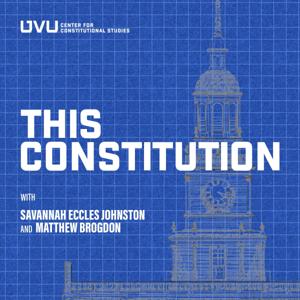


Have you ever wondered where America’s revolutionary ideas really came from? Was it the genius of the Founders? What if the story of the Constitution didn’t begin in Philadelphia in 1776, but in colonial homes, small-town churches, and the stubborn belief that no one has the right to rule another?
In this episode of This Constitution, Savannah Eccles Johnston and Matthew Brogdon trace the folk origins of American self-government. Through the voices of farmers, ministers, and everyday colonists, they uncover how the principles of liberty and equality were not imported from Europe’s philosophers but born from generations of lived experience.
From the self-written laws of the early colonies to the fiery courage of men like Captain Levi Preston, who famously said, “We always had governed ourselves, and we always meant to,” this conversation reveals that America’s Revolution was not just a political one. It was deeply personal.
If you think the Declaration of Independence was the start of freedom’s story, think again. This episode examines how the American spirit of self-rule was already alive, thriving, and waiting to be documented.
In This Episode
Notable Quotes
What if the American Revolution didn’t begin in the halls of Congress, but in the pews of colonial churches?
In this episode of This Constitution, hosts Savannah Eccles Johnston and Matthew Brogdon uncover the spiritual and intellectual fire that helped ignite the Revolution. Before muskets were fired at Lexington and Concord, preachers across New England were already preparing their congregations for rebellion, not just politically but theologically.
From the sermons of Reverend Jonas Clark to the democratic church governance of the Puritans, and from Jonathan Mayhew’s biblical case for resistance to tyranny to Peter Muhlenberg’s dramatic call to arms, Savannah and Matthew trace how America’s revolution was born in the pulpit long before it was fought on the battlefield.
Together, they explore how this Black-Robed Regiment of clergymen bridged faith and politics, shaping the moral vocabulary of liberty that defined the nation’s founding.
In This Episode
Notable Quotes
(00:08:44) “Democratic governance in America didn’t begin in politics. It began in the church.” — Savannah Eccles Johnston
(00:24:45) “The bravery it took for Samuel Cook to stare down the loyal governor and call him a tyrant… that’s a different kind of courage.” — Savannah Eccles Johnston
(00:25:09) “People say religion and politics should be kept separate. But that view ignores our founding. Religion was the spark.” — Savannah Eccles Johnston
(00:20:36) “If obedience to rulers who govern on God’s behalf is obedience to God, then obedience to a tyrant would be obedience to the devil.” — Matthew Brogdon
(00:23:40) “It’s a dangerous thing when theology fuels revolution, but without it, we wouldn’t have political progress.” — Matthew Brogdon
(00:27:55) “Religion in America has always shaped politics—not through force, but through conscience.” — Matthew Brogdon
Season 3 of This Constitution focuses on the people and events surrounding the making of the Declaration of Independence.
What if America’s Revolution had collapsed before it truly began? In this episode of This Constitution, host Savannah Eccles Johnston sits down with Dr. Kevin Weddle, retired U.S. Army colonel, military historian, and author of The Compleat Victory, to explore how George Washington survived the most dangerous year of the war.
From the daring crossing of the Delaware to the humiliating loss of Fort Ticonderoga, Washington faced both battlefield disaster and political backstabbing. Yet, in the fire of 1777, he learned to balance three roles at once: front-line commander, national commander-in-chief, and political strategist. Together, Johnston and Weddle trace how Washington’s leadership in this single year transformed him into the indispensable man of the Revolution and laid the foundation for his presidency.
In This Episode
Notable Quotes
(05:45) “Just pulling something like that off with an army that’s falling apart—bad morale, desertions everywhere—is brilliant. It’s a tribute to Washington’s leadership.” — Kevin Weddle
(10:01) “It’s considered the ‘Ten Crucial Days’ of the American Revolution because those two victories really turned things around.” — Kevin Weddle
(28:09) “Talent management—that’s exactly what Washington was doing. He knew where the right leaders needed to be, even if it meant sending his best away.” — Kevin Weddle
(33:39) “I think this is a brilliant move on Washington’s part… he goes to Congress and says: I am commander-in-chief. Reinforce it. And they do.” — Kevin Weddle
(39:57) “By eliminating rivals and strengthening his own position, Washington emerged from 1777 not weaker, but indispensable.” — Savannah Eccles Johnston
What if America’s greatest strength wasn’t just its leaders, but the way everyday people came together to shape history? In this episode of This Constitution, host Matthew Brogdon sits down with Nicholas Cole of Oxford’s Pembroke College, creator of the Quill Project, to dig into the overlooked story of America’s founding.
Far from being the work of a single “lawgiver” like Solon or Jefferson, the Declaration of Independence and other revolutionary texts were born out of spirited collaboration. From town halls in Massachusetts to Virginia’s Fairfax Resolves, communities debated, revised, and ultimately claimed ownership over the words that would launch a nation. Cole explains how this culture of deliberation, grand juries, militias, assemblies, and conventions set America apart from revolutions elsewhere, transforming ordinary gatherings into the foundation of popular sovereignty.
Together, Brogdon and Cole trace how these practices not only produced the Declaration but also laid the groundwork for the U.S. Constitution and federal union. They explore how Jefferson’s draft drew on community voices, and how America’s deliberative spirit still shapes our civic life today.
If you’ve ever wondered what truly makes America’s founding unique, this conversation offers a fresh lens and a reminder of the power of collective decision-making.
In This Episode
Notable Quotes
Did you know that George Washington could have become an American Caesar, but instead chose to walk away from power? Unlike Napoleon or Cromwell, he rejected dictatorship and dynasty, setting the precedent for civilian control of the military, limited executive authority, and the peaceful transfer of power.
In this episode of This Constitution, host Matthew Brogdon sits down with eminent historian Jeremy Black to trace Washington’s extraordinary balancing act. From the battlefields of the Revolution to the presidency, Washington navigated fragile institutions, fractious states, and the lure of personal power and, in doing so, set precedents that continue to define American politics.
The conversation explores Washington’s role as a “meritocratic monarch,” how he differed from figures like George III, Napoleon, and Oliver Cromwell, and why his restraint proved essential to building a constitutional republic. They discuss the challenges of commanding a multi-state army, the dangers of potential coups, his deliberate retirement, and the legacy of leadership “for country, not party.”
They also tackle a deeper question: what does Washington’s example teach us about the relationship between military power and constitutional government? His decision to submit force to law, ambition to restraint, and leadership to the service of the people remains one of the defining features of American constitutionalism.
In This Episode
Notable Quotes
How did a political system founded by leaders who warned against factions end up making political parties an indispensable part of democracy? And why has the United States remained a two-party nation for nearly two centuries?
In this episode of This Constitution, host Matthew Brogdon sits down with political scientist Daniel DiSalvo to trace the fascinating constitutional and political journey of America’s party system. From Jefferson’s “party to end all parties” to Martin Van Buren’s invention of the enduring two-party model, they unpack the forces that created, shaped, and sustained the parties we know today.
The conversation explores how early mechanisms like the “King Caucus” gave way to national conventions, how parties managed (and sometimes suppressed) divisive issues like slavery, and why the two-party system has proven so resilient thanks to first-past-the-post elections, the Electoral College, and state ballot laws.
They also tackle a deeper question: how political parties and the Constitution are in constant tension. The Constitution disperses power through the separation of powers; parties try to assemble it to win and govern. That push-and-pull has defined American politics from the 1790s to the present.
In This Episode
Notable Quotes
How should a democracy balance the need for independent investigations of government wrongdoing with the president’s constitutional authority over prosecutions? Where do we draw the line?
In this episode of This Constitution, hosts Savannah Eccles Johnston and Matthew Brogdon dig into the fascinating and often murky world of special counsels. From their origins in President Grant’s efforts to distance himself from scandals, to the dramatic moments of the Watergate era and the "Saturday Night Massacre," the history of special counsels is anything but straightforward.
They break down the creation of independent counsels under the Ethics in Government Act of 1978, a powerful legal framework that was later undone by high-profile investigations like Iran-Contra and the Clinton impeachment. Fast forward to today, and the special counsel role has become a battleground for constitutional debate, raising tough questions about who holds the power to fire them and when.
Matthew makes a compelling argument for why prosecutorial power must remain politically accountable, warning against a future where legal battles spiral beyond the courts’ control. They wrap up the episode with a powerful reminder to rethink our reliance on legally ambiguous mechanisms and consider the Constitution’s built-in safeguards, like impeachment, as a much-needed check on power.
Tune in for an eye-opening dive into the constitutional tension between justice and executive authority.
In This Episode
Notable Quotes
When we hear “impeachment,” most of us immediately think: the President. But what if that’s only part of the story? In this episode of This Constitution, Savannah Eccles Johnston and Matthew Brogdon explore the lesser-known history of impeaching cabinet secretaries and other executive officials, revealing how the process has always been more political than legal.
They revisit the case of Secretary of War William Belknap, who resigned in tears in 1876, hoping to dodge impeachment—only to face it anyway. Fast-forward to 2024, and Secretary Alejandro Mayorkas is at the center of a modern-day controversy that reopens the same unresolved questions. Can officials be impeached after they’ve left office? What actually qualifies as a “high crime or misdemeanor”? And who decides?
Through historical case studies, sharp legal insight, and a few surprising turns (including George Washington daring Congress to impeach him), this episode digs into how impeachment functions as a tool of accountability—and a reflection of the political moment.
If you think impeachment is just about criminal wrongdoing, think again. This conversation will shift how you view one of the Constitution’s most powerful and misunderstood mechanisms.
In This Episode
Notable Quotes
In This Episode
In this episode of This Constitution, Savannah Eccles Johnston and Matthew Brogdon explore one of the least understood and most powerful tools in the U.S. Constitution: impeachment. But forget presidents for now, this episode dives deep into judicial impeachments: how they work, why they're rare, and why judges have historically been the ones who get removed.
Savannah and Matthew unpack what it means for Congress to wield this political sword, why it's not a criminal process, and how colorful cases like Samuel Chase and Alcee Hastings shaped our understanding of judicial accountability. Along the way, they raise big questions about what "high crimes and misdemeanors" really means—and whether just being bad at your job is enough to get you booted off the bench.
Notable Quotes
(00:03:00) "Though this is set up like a criminal trial, it’s important to note this is a political process. This is not a criminal process." — Savannah Eccles Johnston
(00:07:05) "You only get to hold this office as long as you behave yourself. And there’s a way to get rid of you if not." — Matthew Brogdon
(00:12:25) "Had they impeached Chase, it would’ve telegraphed to the court: if you act like a partisan hack on the bench, we will kick you off." — Matthew Brogdon
(00:15:00) "He’s no longer a judge, but Florida elects him to Congress. So I guess… he wins?" — Savannah Eccles Johnston
(00:18:57) "High crimes and misdemeanors are not defined in the Constitution. But 'misdemeanor' back then just meant to misbehave." — Matthew Brogdon
(00:26:05) "There is a fine balance between judicial independence and oversight by Congress. And impeachment is the only tool Congress has." — Savannah Eccles Johnston
Resources and Links
This Constitution
Savannah Eccles Johnston
Matthew Brogdon
In this Independence Day episode of This Constitution, Matthew Brogdon is joined by Dr. Jane Calvert, Director of the John Dickinson Writings Project and author of Penman of the Revolution. Together, they explore the legacy of John Dickinson, one of America’s most influential yet often overlooked founders.
Best known for Letters from a Farmer in Pennsylvania, Dickinson was a leading advocate for colonial rights but notably opposed the rush toward independence. Jane explains how Dickinson’s belief in natural rights, his cautious approach to revolution, and his commitment to unity positioned him as both a voice of reason and a strategic architect of America’s founding.
Matthew and Jane dive into Dickinson's critical contributions to the Articles of Confederation, his overlooked role in shaping early American foreign policy, and how he continued to influence the nation, leading troops, freeing enslaved people, and playing a vital part in the Constitutional Convention.
If you think the American Revolution was driven only by firebrands and radicals, this episode will challenge that view and reveal how one of the most cautious founders helped lay the foundation for American independence and unity.
In This Episode
Notable Quotes
From the publisher's feed
This Constitution is an every-two-weeks podcast ordained and established by the Center for Constitutional Studies at Utah Valley University, the home of Utah’s Civic Thought & Leadership…
Co-hosted by Savannah Eccles Johnston and Matthew Brogdon, This Constitution equips listeners with the knowledge and insights to engage with the most pressing political questions of our time, starting with Season 1, focusing on the powers and limits of the U.S. presidency.
3,365 Listeners

112,173 Listeners
1,797 Listeners
909 Listeners

10,670 Listeners
15,273 Listeners

26,554 Listeners

10,832 Listeners