
Sign up to save your podcasts
Or

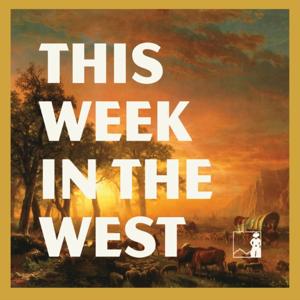


🤠This Week in the West
📢 Episode Summary:
Before he became famous, Russell spent more than a decade working as a cowboy and night wrangler. During that time, he carefully observed the people, animals and cultures of the West. He lived among cowboys, learned from mountain men and spent time with Native communities, experiences that gave his later paintings an authenticity few artists could match.
Russell’s artistic career began almost by accident during the devastating winter of 1886–87, when he sketched a starving steer in the snow with the caption Waiting for a Chinook. The small drawing circulated among ranchers and townspeople and brought Russell his first attention as an artist. By the early 1890s, he set aside cowboy life to focus on painting full-time.
With the support of his wife Nancy, who became his tireless promoter and business manager, Russell’s work gained national and international recognition. Yet he remained rooted in Montana and committed to telling the stories of the West as he had lived them. Today, Russell’s paintings, drawings and sculptures remain some of the most powerful visual records of frontier life.
🔍 What You’ll Learn:
👥 Behind the Scenes
🔗 Further research:
📬 Connect With Us:
🗺️ Visit Us: The National Cowboy & Western Heritage Museum, 1700 NE 63rd Street, Oklahoma City, OK, 73111. See us on the map
🎟️: You can now buy tickets to The Cowboy online, go to https://nationalcowboymuseum.org/tickets/
🎧 Listen & Subscribe:
⭐ If you enjoyed this episode, don’t forget to rate & review!
🤠This Week in the West
📢 Episode Summary:
Joe Miller distinguished himself not only as a rancher but as a promoter who understood the public’s fascination with the American West. In 1907 he helped launch the 101 Ranch Real Wild West Show, which brought the spectacle of frontier life to audiences across the United States and around the world. The show featured cowboys, Native American performers from many tribes, and rising Western legends such as Bill Pickett, Will Rogers and Tom Mix. Through daring demonstrations of horsemanship and frontier skills, the show helped shape the public’s image of the cowboy and the West.
At the same time, the ranch itself thrived as a hub of innovation, agriculture and oil development, helping launch what became the Marland Oil Company, later known as Conoco. Yet the Wild West show business proved volatile, and mounting costs, competition and economic challenges eventually caught up with the Millers. After Joe Miller’s death in 1927 and the onset of the Great Depression, the great 101 Ranch empire collapsed. Today, the legacy of the ranch survives in preserved historic sites, museum artifacts and the enduring myth of the American cowboy that the Millers helped bring to life.
🔍 What You’ll Learn:
👥 Behind the Scenes
🔗 Further research:
📬 Connect With Us:
🗺️ Visit Us: The National Cowboy & Western Heritage Museum, 1700 NE 63rd Street, Oklahoma City, OK, 73111. See us on the map
🎟️: You can now buy tickets to The Cowboy online, go to https://nationalcowboymuseum.org/tickets/
🎧 Listen & Subscribe:
⭐ If you enjoyed this episode, don’t forget to rate & review!
🤠This Week in the West
📢 Episode Summary:
Throughout the 1820s and 1830s, Chisholm worked as a scout and guide across what is now Oklahoma, Kansas and Texas. He later established trading posts where commerce and diplomacy could take place peacefully between Native communities and newcomers. His language skills made him a trusted mediator in treaty negotiations and diplomatic missions, even interpreting for tribal delegations meeting with President James K. Polk. Leaders across the Southern Plains came to view Chisholm as a fair dealer and a reliable peacemaker.
After the Civil War devastated Indian Territory, Chisholm reopened trade and improved a wagon route he had long traveled across the region. That road, built simply to move goods efficiently through the Plains, later became the famous Chisholm Trail when cattlemen used it to drive millions of Texas longhorns north to Kansas railheads. Though Chisholm never drove cattle and died in 1868 before the great cattle drives reached their peak, the trail bearing his name helped shape the economy, culture and enduring mythology of the American West.
🔍 What You’ll Learn:
👥 Behind the Scenes
🔗 Further research:
📬 Connect With Us:
🗺️ Visit Us: The National Cowboy & Western Heritage Museum, 1700 NE 63rd Street, Oklahoma City, OK, 73111. See us on the map
🎟️: You can now buy tickets to The Cowboy online, go to https://nationalcowboymuseum.org/tickets/
🎧 Listen & Subscribe:
⭐ If you enjoyed this episode, don’t forget to rate & review!
🤠This Week in the West
📢 Episode Summary:
As railroads spread westward and commercial hunters decimated the buffalo herds that sustained Plains cultures, Parker emerged as a war leader among the Kwahadi Comanche. He fought to defend his people’s homeland during the final years of open conflict between Plains tribes and the United States, including the famous 1874 attack at Adobe Walls that helped trigger the Red River War. When the buffalo were gone and survival on the open plains was no longer possible, Parker faced the difficult decision to surrender and lead his people onto the reservation at Fort Sill in 1875.
Rather than fade into history, Parker adapted. Appointed principal chief of the Comanche Nation, he became a bridge between cultures—advocating for his people while navigating the new realities of reservation life. A successful rancher, political advocate and protector of Native traditions, Parker helped guide the Comanche through one of the most difficult transitions in their history.
🔍 What You’ll Learn:
👥 Behind the Scenes
🔗 Further research:
📬 Connect With Us:
🗺️ Visit Us: The National Cowboy & Western Heritage Museum, 1700 NE 63rd Street, Oklahoma City, OK, 73111. See us on the map
🎟️: You can now buy tickets to The Cowboy online, go to https://nationalcowboymuseum.org/tickets/
🎧 Listen & Subscribe:
⭐ If you enjoyed this episode, don’t forget to rate & review!
🤠This Week in the West
🎙️ Episode 68: Albert Bierstadt's Larger-Than-Life Artistic Journey
📢 Episode Summary:
This episode of This Week in The West explores the life and legacy of artist Albert Bierstadt through one of the National Cowboy & Western Heritage Museum’s most breathtaking works, Emigrants Crossing the Plains. Known for his massive, dramatic landscapes, Bierstadt didn’t simply document the American West — he transformed it into a vision of hope, grandeur, and destiny that captured the imagination of a nation eager for expansion and opportunity.
From his immigrant beginnings in Massachusetts to his groundbreaking journeys west with government surveys, Bierstadt used sketches, photography, and bold artistic license to create scenes that felt larger than life. His famous wagon train paintings, inspired by real emigrants he encountered near Fort Kearny, blended reality with romantic storytelling, shaping how generations would envision the pioneer experience. At the height of his career, his paintings sold for astonishing sums and drew crowds eager to be transported into the West’s sublime beauty.
But tastes eventually changed, personal tragedy struck, and Bierstadt’s once-celebrated style fell out of favor before being rediscovered decades later. Today, his work is recognized not just for its technical mastery but for its powerful role in shaping America’s myth and memory of the frontier — a legacy that still stops visitors in their tracks at The Cowboy.
🔍 What You’ll Learn:
How Albert Bierstadt used photography, travel, and artistic embellishment to create the iconic Western landscapes Americans fell in love with
The real-life wagon train encounter that inspired Emigrants Crossing the Plains and how the painting blends history with imagination
Why Bierstadt’s career soared, collapsed, and ultimately experienced a major revival in the 20th century
👥 Behind the Scenes
Host: Seth Spillman
Producer: Chase Spivey
Writer: Mike Koehler
🔗 Further research:
📬 Connect With Us:
🌐 Website: www.thecowboy.org
📖 Read Our Blog: https://nationalcowboymuseum.org/blog/
📩 Email: [email protected]
📲Facebook:https://www.facebook.com/ncwhm/
📷Instagram: https://www.instagram.com/nationalcowboymuseum
❎X/Twitter: https://x.com/ncwhm
💼LinkedIn: https://www.linkedin.com/company/national-cowboy-&-western-heritage-museum
🗺️ Visit Us: The National Cowboy & Western Heritage Museum, 1700 NE 63rd Street, Oklahoma City, OK, 73111. See us on the map
🎟️: You can now buy tickets to The Cowboy online, go to https://nationalcowboymuseum.org/tickets/
💡 Support Us:🏅Become A Member of the Museum: https://nationalcowboymuseum.org/support/memberships/
🛒Shop at Persimmon Hill, our Museum store: https://persimmonhillstore.com/
🎧 Listen & Subscribe:
🔹 Apple Podcasts:https://podcasts.apple.com/us/podcast/this-week-in-the-west/id1776228708
🔹 Spotify: https://open.spotify.com/show/2KYmd2BumVtQVH1ez1Cr2U
🔹YouTube: https://www.youtube.com/playlist?list=PLFoE2kU21JpX9T6W9NonXuD9UapS1TsmN
🔹Podbean: https://thisweekinthewest.podbean.com/
⭐ If you enjoyed this episode, don’t forget to rate & review!
🤠This Week in the West
🎙️ Episode 67: Laura Ingalls Wilder, Little House Author’s Version of Pioneer Life
📢 Episode Summary: This episode of This Week in The West explores the life and legacy of Laura Ingalls Wilder, whose Little House books shaped how generations of Americans imagine frontier life. Born in 1867, Wilder grew up in a constantly moving pioneer family that faced illegal settlement on Native land, brutal winters, crop failures, disease and near-constant financial instability. Far from a romantic adventure, her childhood was marked by hardship, early labor and survival on the margins of the American frontier.
After marrying Almanzo Wilder and enduring years of personal loss and economic struggle, Laura eventually settled in Missouri, where she began writing seriously in her 60s, encouraged by her daughter, Rose Wilder Lane. Although her first autobiographical manuscript was rejected as too bleak, she reworked her memories into books for young readers, beginning with Little House in the Big Woods in 1932. The series became a cultural phenomenon, later adapted into the beloved TV show Little House on the Prairie.
🔍 What You’ll Learn:
👥 Behind the Scenes
Host: Seth Spillman
Producer: Chase Spivey
Writer: Mike Koehler
🔗 Further research:
📬 Connect With Us
🌐 Website: www.thecowboy.org
📖 Read Our Blog: https://nationalcowboymuseum.org/blog/
📩 Email: [email protected]
📲Facebook:https://www.facebook.com/ncwhm/
📷Instagram: https://www.instagram.com/nationalcowboymuseum
❎X/Twitter: https://x.com/ncwhm
💼LinkedIn: https://www.linkedin.com/company/national-cowboy-&-western-heritage-museum
🗺️ Visit Us: The National Cowboy & Western Heritage Museum, 1700 NE 63rd Street, Oklahoma City, OK, 73111. See us on the map
🎟️: You can now buy tickets to The Cowboy online, go to https://nationalcowboymuseum.org/tickets/
💡 Support Us:🏅Become A Member of the Museum: https://nationalcowboymuseum.org/support/memberships/
🛒Shop at Persimmon Hill, our Museum store: https://persimmonhillstore.com/
🔹 Apple Podcasts:https://podcasts.apple.com/us/podcast/this-week-in-the-west/id1776228708
🔹 Spotify: https://open.spotify.com/show/2KYmd2BumVtQVH1ez1Cr2U
🔹YouTube: https://www.youtube.com/playlist?list=PLFoE2kU21JpX9T6W9NonXuD9UapS1TsmN
🔹Podbean: https://thisweekinthewest.podbean.com/
🤠This Week in the West
📢 Episode Summary:
Belle Starr’s life sits at the uneasy intersection of fact and legend, shaped as much by mythmaking as by crime. Born in Missouri in 1848 and educated in refinement, the Civil War upended her world and drew her into outlaw circles that included Confederate guerrillas and future members of the James-Younger Gang.
In Indian Territory, Starr reinvented herself not as a gunslinger, but as a savvy organizer who harbored fugitives, moved stolen goods and cultivated a dramatic public image that captured national attention. Her unsolved murder in 1889 and the flood of dime novels that followed transformed Belle Starr into one of the most enduring—and controversial—figures in Wild West lore.
👥 Behind the Scenes
📬 Connect With Us:
🗺️ Visit Us: The National Cowboy & Western Heritage Museum, 1700 NE 63rd Street, Oklahoma City, OK, 73111. See us on the map
🎟️: You can now buy tickets to The Cowboy online, go to https://nationalcowboymuseum.org/tickets/
🎧 Listen & Subscribe:
⭐ If you enjoyed this episode, don’t forget to rate & review!
🤠This Week in the West
📢 Episode Summary:
Tibbs wasn’t just a champion rider—he was rodeo’s first true superstar. His distinctive style, fearless riding and larger-than-life personality helped elevate rodeo into mainstream American culture, earning him a Life magazine cover and widespread fame. Even as injuries mounted, Tibbs continued to compete and win, famously shrugging off broken bones and hospital stays. His impact was so profound that he was inducted into the inaugural class of the National Rodeo Hall of Fame while still actively competing.
After stepping away from full-time competition at just 26, Tibbs carried the spirit of rodeo into Hollywood and beyond. He appeared on television, advised film productions, worked with legends like John Wayne, produced his own movies and took American rodeo worldwide through international tours and Wild West shows. In his later years, Tibbs fulfilled his dream of ranch life in California, remaining connected to the sport he helped shape until his death in 1990. The episode honors Tibbs not just as a champion, but as a cultural ambassador who forever changed how the world saw rodeo.
🔍 What You’ll Learn:
👥 Behind the Scenes
🔗 Further research:
📬 Connect With Us:
🗺️ Visit Us: The National Cowboy & Western Heritage Museum, 1700 NE 63rd Street, Oklahoma City, OK, 73111. See us on the map
🎟️: You can now buy tickets to The Cowboy online, go to https://nationalcowboymuseum.org/tickets/
🎧 Listen & Subscribe:
⭐ If you enjoyed this episode, don’t forget to rate & review!
🤠This Week in the West
📢 Episode Summary:
As co-founder of the Essanay studio, Anderson didn’t just act—he helped shape how films were made. When early Westerns struggled to connect with audiences, he created Broncho Billy, a cowboy character with depth, emotion, and humanity. Through innovative techniques like close-ups and structured storytelling, Anderson turned simple short films into powerful narratives, producing nearly 150 Broncho Billy movies and helping establish the visual language of cinema that’s still used today.
After stepping away from filmmaking, Anderson faded from public memory until a rediscovery in the 1950s led to a long-overdue Honorary Academy Award. Accepting the Oscar at age 78 with humor and humility, Anderson was finally recognized for the enormous impact he had on motion pictures and Western storytelling. Today, his legacy lives on as one of the foundational figures who defined both the movie Western and the art of filmmaking itself.
🔍 What You’ll Learn:
👥 Behind the Scenes
🔗 Further research:
📬 Connect With Us:
🗺️ Visit Us: The National Cowboy & Western Heritage Museum, 1700 NE 63rd Street, Oklahoma City, OK, 73111. See us on the map
🎟️: You can now buy tickets to The Cowboy online, go to https://nationalcowboymuseum.org/tickets/
🎧 Listen & Subscribe:
⭐ If you enjoyed this episode, don’t forget to rate & review!
🤠This Week in the West
📢 Episode Summary:
At age 37, Reeves became one of the first Black deputy marshals west of the Mississippi, serving under Judge Isaac Parker out of Fort Smith. Illiterate but possessing an extraordinary memory, Reeves memorized every warrant before riding out, often covering more than 75,000 square miles of dangerous territory. Over 32 years, he made more than 3,000 arrests, relied on disguises and strategy more than brute force, and upheld a strict moral code—even when it meant arresting his own son for murder.
Reeves’ reputation grew into legend, influencing Western storytelling and possibly inspiring the fictional The Lone Ranger. His legacy experienced a resurgence in recent decades, with honors including induction into the Hall of Great Westerners, a statue in Muskogee, the U.S. Marshals Museum in Fort Smith, and renewed popular attention through the TV series Lawmen: Bass Reeves. Once nearly erased from history, Bass Reeves is now rightly recognized as a towering figure of justice, resilience, and frontier law.
🔍 What You’ll Learn:
👥 Behind the Scenes
🔗 Further research:
📬 Connect With Us:
🗺️ Visit Us: The National Cowboy & Western Heritage Museum, 1700 NE 63rd Street, Oklahoma City, OK, 73111. See us on the map
🎟️: You can now buy tickets to The Cowboy online, go to https://nationalcowboymuseum.org/tickets/
🎧 Listen & Subscribe:
⭐ If you enjoyed this episode, don’t forget to rate & review!
From the publisher's feed

227,578 Listeners

7,607 Listeners
9,185 Listeners
1,039 Listeners

1,722 Listeners

3,628 Listeners

2,937 Listeners
453 Listeners

46,909 Listeners
1,320 Listeners

61,792 Listeners

7,433 Listeners

272 Listeners
1,376 Listeners
444 Listeners