
Sign up to save your podcasts
Or

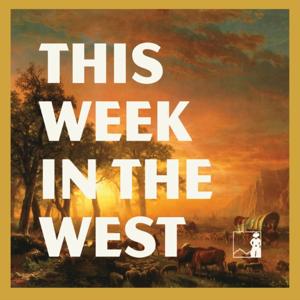


🤠This Week in the West
📢 Episode Summary: On this week's episode of This Week in the West, we spotlight the life and legacy of J.K. Ralston, a celebrated Western artist born March 31, 1896, in Montana. Raised on the frontier by a family that chased gold across the West before settling near Choteau, Ralston lived the cowboy life before ever picking up a paintbrush. Though he spent his early years riding the Montana range, his passion for art led him to enroll in the Chicago Art Institute—by way of a cattle train, no less—in one of the most "cowboy-artist" career turns in American history.
Ralston's life took many twists, including a near-deployment in World War I that was canceled mid-Atlantic after peace was declared. After returning to the U.S., he resumed his art education and began a commercial art career out West. But Montana’s pull was strong. He and his wife returned home in 1930 to take over the family ranch, but the Great Depression made ranching unviable. Ralston moved to Billings, Montana, and threw himself into full-time painting, eventually gaining recognition for his work on post office murals and historical Western scenes.
A stickler for accuracy and authenticity, Ralston traveled extensively to research the settings and stories he portrayed. His work helped shape how Americans envision the West, particularly through his murals and historical paintings like Custer’s Last Hope. In a powerful photograph taken in 1981 by Jay Dusard, Ralston stands in front of his log cabin studio—saddle and spurs at his feet—embodying the very fusion of cowboy and artist that defines his legacy.
🔍 What You’ll Learn:
👥 Behind the Scenes
🔗 Further research:
📬 Connect With Us:
🗺️ Visit Us:
🎧 Listen & Subscribe:
⭐ If you enjoyed this episode, don’t forget to rate & review!
🤠This Week in the West
📢 Episode Summary:
🔍 What You’ll Learn:
👥 Behind the Scenes
🔗 Further research:
📬 Connect With Us:
🗺️ Visit Us:
🎧 Listen & Subscribe:
⭐ If you enjoyed this episode, don’t forget to rate & review!
🤠This Week in the West
📢 Episode Summary:
Born on March 17, 1902, Alice grew up breaking horses on her family’s ranch before taking a job as a teenage mail carrier, covering 37 miles a day on horseback. When a group of cowboys dared her to ride a bucking bronco at a local rodeo, she took the challenge—and discovered her calling.
Alice’s rodeo career spanned decades, earning her four world championships and a leading role in shaping the sport. She helped establish the Professional Rodeo Cowboys Association.
🔍 What You’ll Learn:
👥 Behind the Scenes
🔗 Further research:
📬 Connect With Us:
🗺️ Visit Us:
🎧 Listen & Subscribe:
⭐ If you enjoyed this episode, don’t forget to rate & review!
🤠This Week in the West
📢 Episode Summary:
Sandoz’s work went beyond biography—she fearlessly tackled political corruption, social injustice, and the realities of life on the Great Plains. Her novel Slogum House was banned for its unvarnished depiction of greed and cruelty, and Capital City stirred controversy for exposing government corruption. She later became known for her groundbreaking biography Crazy Horse: The Strange Man of the Oglalas, written from within the Lakota perspective, a pioneering approach for its time.
Mari Sandoz remained devoted to her craft despite setbacks, rejection, and even threats. Her deep commitment to truth and historical accuracy led to a body of work that continues to shape our understanding of the West. Inducted posthumously into the Hall of Great Westerners in 1998, her legacy lives on as an uncompromising voice of the frontier.
🔍 What You’ll Learn:
👥 Behind the Scenes
🔗 Further research:
📬 Connect With Us:
🗺️ Visit Us:
🎧 Listen & Subscribe:
⭐ If you enjoyed this episode, don’t forget to rate & review!
🤠This Week in the West
📢 Episode Summary:
🔍 What You’ll Learn:
👥 Behind the Scenes
🔗 Further research:
📬 Connect With Us:
🗺️ Visit Us:
🎧 Listen & Subscribe:
⭐ If you enjoyed this episode, don’t forget to rate & review!
🤠This Week in the West
📢 Episode Summary: When Salvatore Lucchese and his family arrived in America in 1883, they had the knowledge of shoemaking, and not much else.
More than a century later, “Sam” has a legacy - Lucchese Bootmaker, one of the most well-known and respected brands for cowboy boots.
In our podcast this week, we tell the story of Sam’s journey to Texas from Italy and how being in the right place at the right time allowed Lucchese Bootmaker to become a bootmaker for the army before moving on to some of the most well-known customers in the world.
And then there was the time their shop door opened and in walked Teddy Roosevelt...
You can see some great examples of Lucchese boots at "Cowboy Boots: From Roundups to Runways," a new exhibition at the National Cowboy & National Heritage Museum.
🔍 What You’ll Learn:
👥 Behind the Scenes
🔗 Further research:
📬 Connect With Us:
🗺️ Visit Us:
🎧 Listen & Subscribe:
⭐ If you enjoyed this episode, don’t forget to rate & review!
🤠This Week in the West
📢 Episode Summary:
Funded by J.P. Morgan, Curtis embarked on an ambitious project, The North American Indian, producing 40,000 photographs and 10,000 audio recordings. However, his dedication came at a significant personal and financial cost, leaving him in obscurity until his work was rediscovered decades later.
🔍 What You’ll Learn:
👥 Behind the Scenes
🔗 Further research:
📬 Connect With Us:
🗺️ Visit Us:
🎧 Listen & Subscribe:
⭐ If you enjoyed this episode, don’t forget to rate & review!
🤠This Week in the West
📢 Episode Summary:
His partnership with Buffalo Bill led to a hugely successful touring show, and he later settled in Pawnee, Oklahoma, where he built a ranch, experimented with Western films, and preserved his legacy. Despite personal tragedies, his impact on Western history remains, with his ranch now a museum honoring his contributions.
🔍 What You’ll Learn:
👥 Behind the Scenes
🔗 Further research:
📬 Connect With Us:
🗺️ Visit Us:
🎧 Listen & Subscribe:
⭐ If you enjoyed this episode, don’t forget to rate & review!
🤠This Week in the West
📢 Episode Summary:
From serving as a spy for President James K. Polk during the Oregon boundary dispute to rallying reinforcements in the Mexican-American War alongside Kit Carson, Beale built a reputation for bravery and resourcefulness. He later played a key role in confirming the California Gold Rush to the U.S. government, further cementing his place in history as an agent of westward expansion.
One of Beale’s most notable contributions was his 1857 expedition to survey a route from Fort Defiance, Arizona, to the Colorado River, during which he experimented with using camels as pack animals in the harsh desert environment. Though the U.S. Army ultimately abandoned the camel experiment, the route he mapped—known as Beale’s Wagon Road—became a vital artery for westward migration, influencing the path of the Santa Fe Railroad, Route 66, and today’s Interstate 40. His contributions placed him among the key explorers who left a lasting impact on the American frontier.
🔍 What You’ll Learn:
👥 Behind the Scenes
🔗 Further research:
📬 Connect With Us:
🗺️ Visit Us:
🎧 Listen & Subscribe:
⭐ If you enjoyed this episode, don’t forget to rate & review!
It’s lost to history when this dentist precisely decided his practice was too dull and that writing should be his life's pursuit.
He may have been pulling a tooth or drilling a cavity, but as the 19th Century ended, Dr. Zane Grey knew he was bored and depressed with his current life.
In the years that followed, despite publishers’ rejections and struggles with his mental health, Zane Grey became one of the most popular Western novelists in history. He was born this week, January 31, 1872.
From the publisher's feed

227,578 Listeners

7,607 Listeners

9,185 Listeners
1,039 Listeners

1,722 Listeners

3,628 Listeners

2,937 Listeners
453 Listeners

46,909 Listeners
1,320 Listeners

61,792 Listeners

7,433 Listeners

272 Listeners
1,376 Listeners
444 Listeners