
Sign up to save your podcasts
Or

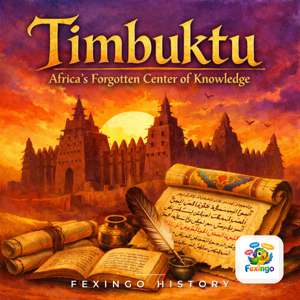


In this episode, Lucas and Luna explore the dramatic story of Askia Ishaq II, the last great emperor of Songhai, whose disastrous military decisions led to the empire's collapse at the Battle of Tondibi in 1591. They discuss the Saadian invasion from Morocco, the technological disparity between Moroccan arquebusiers and Songhai's cavalry, and the internal political strife that weakened the empire. Lucas explains how Ishaq's refusal to adopt gunpowder weapons, despite warnings, sealed Songhai's fate. The episode also touches on the aftermath: the sacking of Timbuktu, the deportation of scholars like Ahmad Baba, and the lasting impact on West African intellectual traditions. Listeners learn about key figures like Judar Pasha, the eunuch general who led the Saadian forces, and the role of the salt mines of Taghaza in triggering the conflict. This episode offers a fresh perspective on a pivotal moment often overshadowed by the earlier Mali Empire.
#SonghaiEmpire #BattleOfTondibi #AskiaIshaqII #JudarPasha #SaadianInvasion #Timbuktu #WestAfricanHistory #GunpowderEmpires #AhmadAlMansur #Taghaza #Gao #NigerRiver #16thCentury #MilitaryHistory #AfricanEmpires #History #FexingoHistory #MoroccanHistory
Keep every episode free: buymeacoffee.com/fexingo
Before Europeans mapped West Africa, Timbuktu's scholars were charting the Niger River, the Sahara trade routes, and the coastline from Senegal to the Gulf of Guinea. This episode explores the lost cartographic traditions of the Sankore libraries—manuscripts like the Kāshif al-Asrār and the work of cartographer Mahmud Kati, who compiled geographic knowledge from travelers, merchants, and astronomers. Lucas and Luna discuss how these maps blended Ptolemaic coordinates with local toponyms, the role of qibla-direction calculations in shaping maps, and why so few of these maps survive. They also examine the 1550 map of West Africa by the Ottoman admiral Piri Reis, which may have drawn on Timbuktu sources. A look at the art of Sahelian cartography and what it reveals about African knowledge of the world before colonialism.
#Timbuktu #Cartography #MahmudKati #PiriReis #Sankore #Sahel #MaliEmpire #SonghaiEmpire #NigerRiver #Ptolemaic #KashifAlAsrar #AfricanHistory #Maps #SaharaTrade #Qibla #FexingoHistory #History #WestAfrica
Keep every episode free: buymeacoffee.com/fexingo
In the heart of the Sahara, a single commodity was worth its weight in gold: salt. In this episode, Lucas and Luna explore the brutal 16th-century struggle for Taghaza, the salt mines that fueled the Songhai Empire and sparked a war with the Saadian sultanate of Morocco. We follow the story of the Tarikh al-Sudan, the chronicle that recorded how Moroccan sultan Ahmad al-Mansur sent an army across the desert to seize the mines, leading to the fateful Battle of Tondibi. Along the way, we meet the Tuareg nomads who controlled the salt caravans, the silent trade that exchanged gold for salt, and the Moroccan pasha Judar Pasha, whose invasion reshaped West Africa. We also examine the legends of Taghaza's buildings made of salt blocks and the grim reality of life in this remote, inhospitable outpost. This is a story of empire, greed, and the surprising ways a humble mineral changed history.
#SaltWars #Taghaza #SonghaiEmpire #SaadianSultanate #AhmadAlMansur #JudarPasha #TarikhAlSudan #AlSadi #Tuareg #TransSaharanTrade #BattleOfTondibi #WestAfrica #Sahara #Mali #Morocco #16thCentury #History #FexingoHistory
Keep every episode free: buymeacoffee.com/fexingo
In this episode, Lucas and Luna dive into the military campaigns of the Songhai Empire, focusing on the Battle of Tondibi in 1591. They explore how the Songhai navy, known as the hi-koi, dominated the Niger River and how internal divisions, gunpowder, and Moroccan mercenaries led to the empire's collapse. The discussion highlights the tactics of Askia Ishaq II, the role of the Saadian sultan Ahmad al-Mansur, and the aftermath that reshaped West African trade and scholarship.
#SonghaiEmpire #BattleOfTondibi #AskiaIshaqII #AhmadAlMansur #JudarPasha #SaadianSultanate #HiKoi #NigerRiver #Gunpowder #WestAfrica #Timbuktu #MoroccanInvasion #TarikhAlSudan #MaliEmpire #Gao #MilitaryHistory #History #FexingoHistory
Keep every episode free: buymeacoffee.com/fexingo
Long before Timbuktu became a center of scholarship, it was a cornerstone of the trans-Saharan gold trade. In this episode, Lucas and Luna trace the flow of gold from the Bambuk and Bure fields through Timbuktu's markets to the mints of North Africa and Europe. They explore how Mali's Mansa Musa used gold to project power, how Songhai's Askia Dawud regulated the trade, and how the Moroccan invasion aimed to seize control of this wealth. Along the way, they discuss the silent barter system of Wangara traders, the role of salt as currency, and the impact of gold on Timbuktu's intellectual life. Key figures include Mansa Musa, Askia Dawud, and the Moroccan sultan Ahmad al-Mansur.
#Timbuktu #GoldTrade #TransSaharanTrade #MaliEmpire #SonghaiEmpire #MansaMusa #AskiaDawud #AhmadAlMansur #Wangara #Bambuk #Bure #SaltTrade #Taghaza #SaharanCaravans #MedievalTrade #WestAfricanHistory #History #FexingoHistory
Keep every episode free: buymeacoffee.com/fexingo
In 2012, jihadists seized Timbuktu. They destroyed tombs and threatened the city's ancient manuscripts. This episode tells the story of the heroic librarians who smuggled over 350,000 pages to safety. We follow the secret evacuation, the role of the Mamma Haidara and Ahmed Baba Institutes, and the betrayal by a former ally. We also explore how these manuscripts survive today, digitized and preserved against all odds. A tale of courage, cultural survival, and the fragile legacy of knowledge.
#Timbuktu #Manuscripts #MammaHaidara #AhmedBabaInstitute #Jihadists #2012 #Mali #CulturalHeritage #Smuggling #Libraries #Sankore #Djinguereber #AlQaeda #AnsarDine #AbdelKaderHaidara #Preservation #History #FexingoHistory
Keep every episode free: buymeacoffee.com/fexingo
In this episode, we meet Abd al-Rahman al-Sa'di, the 17th-century Timbuktu scholar who authored the Tarikh al-Sudan, one of the most vital sources for the history of the Songhai Empire and the Sahel. Born in 1594, just after the Moroccan invasion, al-Sa'di witnessed the collapse of Songhai and the rise of new powers. He served as a qadi in Djenné and Timbuktu, and his chronicle documents the reigns of the Askia emperors, the Moroccan occupation, and the intellectual life of Sankore. We explore his motivations for writing, the challenges of preserving history in a time of turmoil, and how his work complements the Tarikh al-Fattash. Lucas and Luna discuss the manuscript's survival, its journey to French archives, and its role in reconstructing Africa's pre-colonial past. This episode offers a deep dive into the mind of a historian who refused to let his world be forgotten.
#Timbuktu #TarikhAlSudan #AbdAlRahmanAlSadi #SonghaiEmpire #WestAfricanHistory #Sankore #Djenné #Qadi #MoroccanInvasion #17thCentury #Manuscripts #HistoryWriting #Sahel #NigerRiver #OralTradition #Historiography #FexingoHistory #History
Keep every episode free: buymeacoffee.com/fexingo
When Mamma Haidara's library in Timbuktu was threatened by jihadists in 2012, a secret operation smuggled hundreds of thousands of ancient manuscripts to safety. But what are these documents, really? In this episode, Lucas and Luna explore the astonishing range of Timbuktu's manuscript tradition: from legal fatwas on slavery to poetry, astronomy, medicine, and mathematics. They discuss the Tarikh al-Sudan and Tarikh al-Fattash, the chronicles that preserve the Songhai Empire's history; the Mi'raj al-Su'ud which debated the ethics of enslavement; and the ijaza system that certified scholars across the Sahara. Lucas explains how these manuscripts challenge the notion that Africa had no written history, and how the Ahmed Baba Institute and Mamma Haidara Library became global heritage treasures. The episode also touches on the recent digitization efforts, the role of UNESCO, and the ongoing work to preserve these fragile pages. It's a story of resilience, scholarship, and the power of the written word in the Sahel.
#Timbuktu #Manuscripts #MammaHaidara #AhmedBabaInstitute #TarikhAlSudan #TarikhAlFattash #Mi'rajAlSu'ud #Ijaza #SonghaiEmpire #MaliEmpire #SaharanTrade #Sankore #UNESCO #Digitization #AfricanHistory #Manuscripts #FexingoHistory #History
Keep every episode free: buymeacoffee.com/fexingo
In this episode, Lucas and Luna explore the overlooked legacy of women scholars in Timbuktu's intellectual golden age. While the great libraries of Sankore, Djinguereber, and Sidi Yahya are often associated with male scholars like Ahmad Baba, women were active participants in the city's scholarly culture. Lucas introduces figures such as Nana Asma'u—though more closely tied to Sokoto, her influence reached Timbuktu—and local women like Khadija bint Muhammad al-Aqib and Aisha al-Maghiliyya, who taught, wrote, and issued fatwas. The discussion delves into the system of ijazas (scholarly licenses) held by women, the role of the Qadiriyya Sufi order in fostering female education, and how the Moroccan invasion of 1591 disrupted these networks. Lucas explains how the city's banco architecture—mosques built with mud-brick—created intimate learning spaces where women taught from home. The episode also touches on the recovery of women's writings from the Mamma Haidara Library and the Ahmed Baba Institute, and what they reveal about gender and knowledge in the Sahel. Listeners will come away with a concrete understanding of Timbuktu's hidden intellectual sisterhood and its enduring impact.
#Timbuktu #WomenScholars #Sankore #Djinguereber #AhmadBaba #NanaAsma'u #KhadijaBintMuhammad #AishaAlMaghiliyya #Ijaza #Qadiriyya #MoroccanInvasion #Sahel #MammaHaidaraLibrary #AhmedBabaInstitute #BancoArchitecture #SidiYahya #History #FexingoHistory
Keep every episode free: buymeacoffee.com/fexingo
This episode dives into the world of Timbuktu's qadis — the judges who interpreted Maliki law across the Sahel for centuries. While we've talked about scholars like Ahmad Baba, we've never focused on the legal system itself. We explore how the qadis of Timbuktu, like the famous al-Maghili and the lesser-known Muhammad al-Kaburi, navigated issues from trade disputes to slavery, blending Islamic jurisprudence with local custom. We look at actual fatwas from the 16th and 17th centuries preserved in the Mamma Haidara Library, and how the position of qadi was often a family dynasty. We also discuss the competition between the Qadiriyya and Tijaniyya Sufi orders and how their rivalries played out in court. The episode ends with the impact of the Moroccan invasion on the legal class, and how qadis like Ahmad Baba fought to preserve the rule of law even as the Songhai Empire crumbled.
#Timbuktu #Qadis #Maliki #IslamicLaw #Sahel #AhmadBaba #al-Maghili #MammaHaidaraLibrary #Fatwa #Sankore #SonghaiEmpire #MoroccanInvasion #Qadiriyya #Tijaniyya #LegalHistory #MaliEmpire #History #FexingoHistory
Keep every episode free: buymeacoffee.com/fexingo
From the publisher's feed