
Sign up to save your podcasts
Or

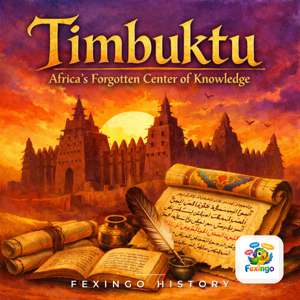


While Timbuktu is famous for its manuscripts and scholars, the educational system that produced them remains little understood. This episode examines the Sankore curriculum — how students at Timbuktu's great mosque-university progressed from memorizing the Quran to mastering Maliki jurisprudence, astronomy, logic, and medicine. Drawing on the Tarikh al-Sudan and surviving teaching licenses (ijazas), we explore the daily life of a student in 16th-century Timbuktu: the books they studied, the teachers who shaped them, and how this system rivaled anything in Europe at the time. We also look at the role of the Qadiriyya Sufi order in shaping pedagogy, the influence of al-Maghili's reforms, and how the curriculum adapted to the Sahara's trade routes. Finally, we consider what was lost when the Moroccan invasion disrupted this intellectual ecosystem — and what the surviving manuscripts tell us about a forgotten model of higher education.
#SankoreMadrasa #Timbuktu #SonghaiEmpire #IslamicEducation #WestAfricanHistory #QuranicStudies #MalikiFiqh #Ijazas #TarikhAlSudan #AlMaghili #Qadiriyya #SaharanTrade #MedievalUniversities #AfricanScholarship #MaliEmpire #16thCentury #History #FexingoHistory #MansaMusa #AskiaMuhammad
Keep every episode free: buymeacoffee.com/fexingo
In this episode, Lucas and Luna explore the remarkable legal history of Timbuktu through the lens of slavery and emancipation. They focus on a specific fatwa issued by the great scholar Ahmad Baba al-Timbukti in the early 17th century, which declared that Muslims who had been captured and enslaved from the Songhai Empire after the Moroccan invasion were, in fact, free. Lucas explains the legal reasoning behind the fatwa, drawing on Maliki jurisprudence and the concept of asl al-'abd (the default status of a person being free). He also discusses the economic and social pressures that led to widespread enslavement of Muslims by fellow Muslims, and how Ahmad Baba's ruling challenged the status quo. Luna asks about the impact of the fatwa, and Lucas describes how it was used to free individuals and shape debates about slavery in the Sahel for centuries. The episode also touches on the trans-Saharan slave trade, the role of Timbuktu's scholars in Islamic legal discourse, and the legacy of this fatwa in modern discussions of slavery in Africa.
#Timbuktu #AhmadBaba #Fatwa #Slavery #IslamicLaw #Maliki #Songhai #Sahel #TransSaharanSlaveTrade #MiRajalSuUd #AslalAbd #Emancipation #LegalHistory #WestAfrica #Scholars #FexingoHistory #History #Africa #MaliEmpire #SonghaiEmpire
Keep every episode free: buymeacoffee.com/fexingo
In the late 16th century, Timbuktu was the intellectual capital of the Songhai Empire, home to Sankore University and thousands of manuscripts. But in 1591, the Moroccan invasion shattered that world. Within decades, the Tuareg—nomadic Berbers of the Sahara—rose up and seized control of the city. This episode follows the Tuareg revolt of the 1620s, led by the legendary chieftain Amar al-Tehasi. We explore how the Tuareg exploited Songhai weakness, the brutal sack of Timbuktu, and the forgotten massacre of 1635 that ended the city's independence. Drawing on the Tarikh al-Sudan of al-Sa'di, we trace the shifting alliances between Tuareg clans, Moroccan pashas, and the remnants of Songhai nobility. The episode also examines the environmental pressures—drought and the shrinking Niger River—that drove Tuareg southward. Amar al-Tehasi's story is one of cunning, violence, and the fragile nature of desert empires. It's a chapter of Sahelian history that reveals how Timbuktu's decline was not solely due to Morocco, but also to the nomadic forces that surrounded it. We also touch on the legacy of these events in modern Mali, where Tuareg rebellions continue to echo.
#Tuareg #AmarAlTehasi #Timbuktu #SonghaiEmpire #MoroccanInvasion #TarikhAlSudan #AlSadi #Sahel #SaharanHistory #Nomads #WestAfricanHistory #17thCentury #Revolt #TimbuktuDecline #FexingoHistory #History #AfricanHistory #Desert #MaliEmpire #MansaMusa
Keep every episode free: buymeacoffee.com/fexingo
In this episode, Lucas and Luna explore the hidden world of Timbuktu's female scholars and the private libraries they built and preserved. Long before the Moroccan invasion, women like Nana Asma'u, Fatima al-Suqayriya, and Khoja Fatima amassed collections of manuscripts on law, poetry, and astronomy, often inheriting and expanding their fathers' libraries. The episode focuses on a 17th-century figure, Aisha al-Siddiqa, a little-known scholar whose library catalog survives in the Mamma Haidara Collection. Lucas explains how women used the Maliki legal principle of waqf to protect their books from confiscation, and how their libraries became secret archives during the Saadi occupation. The conversation also touches on the role of women in copying manuscripts, with some like Fatima bint Muhammad al-Fulani becoming renowned calligraphers. Luna asks about the preservation of these treasures today, and Lucas shares how modern digitization projects have uncovered these women's stories.
#Timbuktu #WomenScholars #Manuscripts #NanaAsmau #FatimaAlSuqayriya #KhojaFatima #AishaAlSiddiqa #Waqf #MalikiLaw #SaadiOccupation #Calligraphy #MammaHaidaraCollection #Digitization #WestAfrica #SonghaiEmpire #IslamicHistory #History #FexingoHistory #MaliEmpire #MansaMusa
Keep every episode free: buymeacoffee.com/fexingo
Long before the Songhai Empire or the scholarly golden age of Ahmad Baba, Timbuktu was a dusty seasonal camp for Tuareg nomads. This episode traces the city's transformation from obscurity into a global center of trade and learning, driven by one of the most extraordinary events in medieval history: the 1324 hajj of Mansa Musa, the emperor of Mali. We walk through the logistics of his legendary caravan—tens of thousands of soldiers, slaves, and camels bearing tons of gold—and its shocking economic aftermath in Cairo, where his spending triggered a decade-long gold deflation. We then follow how Mansa Musa used his newfound prestige to bring architects, poets, and scholars back from Mecca, commissioning the Djinguereber mosque and the Sankore madrasa, buildings that still stand today. The episode also weighs uncomfortable questions: how much of the narrative was shaped by Arab chroniclers like al-Umari and Ibn Khaldun, and what can we really know? It's a story of wealth, power, and the deliberate creation of a city of knowledge—on a scale that still beggars belief.
#MansaMusa #Timbuktu #MaliEmpire #Hajj #Djinguereber #Sankore #GoldTrade #AlUmari #IbnKhaldun #MedievalAfrica #SahelianHistory #IslamicScholarship #Cairo #Mecca #WestAfricanHistory #Architecture #History #FexingoHistory #SonghaiEmpire #AskiaMuhammad
Keep every episode free: buymeacoffee.com/fexingo
Long before Timbuktu became a legendary center of scholarship, it was a dusty seasonal camp at the crossroads of trade routes that stretched across the Sahara. In this episode, Lucas and Luna follow the salt, gold, and book caravans that turned a Tuareg watering hole into a metropolis. They explore the camel's revolutionary role—how a single-humped beast opened the Sahel to trans-Saharan commerce—and trace the rise of the Wangara trading networks, the silent barter system at the goldfields of Bambuk and Bure, and the perilous journey to the salt mines of Taghaza. Along the way, they meet the Sanhaja Berber tribes who controlled the desert routes, the Hausa merchants who brought kola nuts and textiles, and the scholars who rode the caravans themselves, carrying manuscripts from Fez, Cairo, and Mecca. The episode also examines the less-glamorous side: the human cost in slaves who marched north and the environmental toll of deforestation for pack saddles. It's a story of how geography, technology, and human ambition converged to make Timbuktu a node in a global medieval economy.
#Timbuktu #TransSaharanTrade #CamelCaravans #Wangara #BambukGold #TaghazaSalt #SanhajaBerbers #SilentBarter #Sahel #SonghaiEmpire #MaliEmpire #HausaMerchants #SaltTrade #GoldTrade #AfricanHistory #MedievalTrade #Sahara #FexingoHistory #MansaMusa #AskiaMuhammad
Keep every episode free: buymeacoffee.com/fexingo
In 1591, after the Moroccan invasion of Songhai, Sultan Ahmad al-Mansur ordered the confiscation of Timbuktu's scholarly manuscripts for transport to Marrakesh. This episode follows the little-known story of how local librarians and scholars—led by the family of Ahmad Baba al-Timbukti—hid thousands of manuscripts in caves, under floors, and behind walls to save them from the sultan's agents. We explore the logistics of the secret rescue, the role of the Kunta tribe in smuggling texts south, and the eventual fate of the manuscripts that did reach Marrakesh, including their rediscovery in the 20th century. The episode also touches on the Tarikh al-Sudan's account of the sacking and the long-term impact on Timbuktu's scholarly tradition.
#Timbuktu #Manuscripts #AhmadBaba #AlMansur #Songhai #MoroccanInvasion #Kunta #TarikhAlSudan #Marrakesh #1600s #SecretRescue #Libraries #Scholarship #SaadiDynasty #WestAfrica #History #FexingoHistory #Podcast #MaliEmpire #SonghaiEmpire
Keep every episode free: buymeacoffee.com/fexingo
In this episode, Lucas and Luna explore the story of Ali Fanta, a former slave who led a massive rebellion in the Songhai Empire around the early 16th century. They discuss how Fanta, a soldier captured in war, escaped bondage and rallied thousands of marginalized people—runaway slaves, displaced farmers, and disgruntled soldiers—against the Askia dynasty. The rebellion threatened Gao itself before being crushed by Askia Musa's army. Lucas explains the role of slavery in Songhai society, the legal status of slaves under Maliki law, and how the revolt exposed tensions within the empire. He also draws on the Tarikh al-Sudan and Tarikh al-Fattash, which provide fragmentary accounts of the rebellion. The conversation touches on parallels with other slave revolts and the legacy of resistance in West African history. Listeners will gain insight into the complex social fabric of Songhai and the voices often left out of its golden-age narrative.
#AliFanta #SonghaiEmpire #SlaveRebellion #AskiaMusa #TarikhAlSudan #TarikhAlFattash #Gao #MalikiLaw #Sankore #Timbuktu #WestAfrica #Slavery #Resistance #OralTradition #16thCentury #History #FexingoHistory #AfricanHistory #MaliEmpire #MansaMusa
Keep every episode free: buymeacoffee.com/fexingo
In this episode, Lucas and Luna explore the history of the Great Mosque of Djenné, the largest mud-brick building in the world and a masterpiece of Sudano-Sahelian architecture. They trace its origins to the 13th century, its reconstruction under French colonial rule in 1907, and the role of the annual crépissage festival in maintaining the mosque's iconic form. Learn about the legendary figure of Koyam Banna, the influence of the Djenné people, and how this UNESCO World Heritage site has survived floods, political upheaval, and the challenges of modern conservation. Lucas reveals the little-known story of the mosque's original design by architect Ismaila Traoré and the unique building techniques that have endured for centuries. This episode deepens the listener's appreciation of Timbuktu's architectural legacy beyond the better-known Djinguereber and Sankore mosques.
#GreatMosqueofDjenn #Djenn #MudBrickArchitecture #SudanoSahelian #IsmailaTraor #KoyamBanna #CrPissage #UNESCO #MaliEmpire #FrenchColonialism #Timbuktu #WestAfrica #History #FexingoHistory #Architecture #Mali #NigerRiver #BaniRiver #SonghaiEmpire #MansaMusa
Keep every episode free: buymeacoffee.com/fexingo
We all know Timbuktu as a desert city of scholars and gold, but few remember that the Songhai Empire built a formidable navy on the Niger River. In this episode, Lucas and Luna explore the Askiya dynasty's little-known riverine fleet—how it controlled trade from Djenné to Gao, transported troops and salt, and even fought battles on the water. They look at the role of the hi-koi, the Songhai admiral, and the devastating impact of the Moroccan invasion's river blockade. Along the way, they uncover the story of a 16th-century naval campaign against the Mossi kingdoms and the strategic use of the Bara, a massive canoe-like vessel. This is a side of West African history rarely told: a river empire as much as a land empire, where control of the Niger meant control of the Sahel. Featuring specific details from the Tarikh al-Sudan and recent archaeological work on Songhai shipbuilding, this episode re-centers the river in our understanding of Timbuktu's power.
#SonghaiEmpire #NigerRiver #AskiaDawud #Timbuktu #TarikhAlSudan #HiKoi #BaraCanoe #MossiKingdoms #RiverNavy #WestAfricanHistory #SaltTrade #GoldTrade #Djenn #Gao #MoroccanInvasion #Sahel #NavalHistory #FexingoHistory #MaliEmpire #MansaMusa
Keep every episode free: buymeacoffee.com/fexingo
From the publisher's feed