
Sign up to save your podcasts
Or

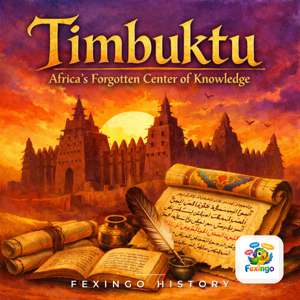


In this episode of Timbuktu: Africa's Forgotten Center of Knowledge, Lucas and Luna explore the life and legacy of al-Qadi al-Mustafa al-Kaburi, the chief justice of the Songhai Empire under Askia Dawud. They reveal how al-Kaburi, a native of Timbuktu, rose to become the highest legal authority in the empire, shaping a sophisticated judicial system that combined Maliki law with local custom. Lucas shares details from the Tarikh al-Fattash about al-Kaburi's family, his education at Sankore, and his tense relationship with the Askia. They discuss the famous confrontation between al-Kaburi and Askia Dawud over the execution of a slave, which highlighted the limits of royal power. The episode also covers al-Kaburi's role in building the Sankore mosque's minaret, his writings, and the eventual decline of his influence under Askia Ishaq II. Through this portrait, listeners gain insight into the inner workings of the Songhai legal system and the scholars who held rulers accountable.
#AlQadiAlMustafaAlKaburi #AskiaDawud #SonghaiEmpire #Timbuktu #Sankore #TarikhAlFattash #ChiefJustice #MalikiLaw #IslamicJurisprudence #WestAfrica #Sahel #16thCentury #History #AfricanHistory #LegalHistory #FexingoHistory #Scholars #Manuscripts #MaliEmpire #MansaMusa
Keep every episode free: buymeacoffee.com/fexingo
In this episode, Lucas and Luna venture into the Sahara to uncover the brutal industry that powered Timbuktu's golden age: salt mining at Taghaza. While gold from the south gets most of the attention, it was the salt trade—worth its weight in gold literally—that made Timbuktu a hub of commerce and learning. Lucas describes the hellish conditions at the Taghaza mines, where slaves and free laborers extracted salt slabs in blistering heat with little food or water. He explains how Taghaza's salt was traded for gold from the Bambuk and Bure regions, and how the empire of Mali and later Songhai controlled this trade route. Luna learns about the famous quote from the Tarikh al-Sudan describing Taghaza as 'a place of no good,' and how the Moroccan invasion of 1591 partly aimed to seize these salt revenues. The episode also touches on the decline of Taghaza as the mines were abandoned and replaced by Taoudenni. Along the way, Lucas recounts the story of a 14th-century traveler named Ibn Battuta who visited Taghaza and described it with horror. This episode offers a gritty, eye-opening look at the mineral that built an intellectual capital.
#Taghaza #SaltMines #TransSaharanTrade #Timbuktu #IbnBattuta #TarikhAlSudan #MaliEmpire #SonghaiEmpire #Bambuk #Bure #GoldTrade #SlaveryInWestAfrica #MoroccanInvasion1591 #Taoudenni #SaharaDesert #History #FexingoHistory #WestAfricanHistory #MansaMusa #AskiaMuhammad
Keep every episode free: buymeacoffee.com/fexingo
In this episode, Lucas and Luna explore how Timbuktu entered the European imagination through the writings of Leo Africanus, a 16th-century diplomat and scholar captured by pirates and gifted to Pope Leo X. They trace his journey from Fez to Timbuktu, his nine-month stay as a diplomat under Askia Muhammad, and his eventual capture and forced conversion. Lucas explains how Leo's book, "Description of Africa," became the definitive European source on the continent for centuries, mixing firsthand observation with classical and medieval stereotypes. The episode also delves into how Leo's descriptions of Timbuktu's wealth and scholarship fueled European fantasies about Africa, and how his legacy as a "European" author erased his African and Islamic identity. Along the way, they touch on the controversy around Leo's reliability—was he an eyewitness or a compiler?—and how later explorers like René Caillié used his work as a guide. The conversation ends by considering how Timbuktu's image as a lost wonder of learning was shaped as much by European storytelling as by its own history.
#LeoAfricanus #Timbuktu #Africa #WestAfrica #DescriptionOfAfrica #PopeLeoX #AskiaMuhammad #Sahel #IslamicScholarship #EuropeanImagination #Orientalism #RenCailli #Fez #SonghaiEmpire #16thCentury #History #FexingoHistory #CrossCulturalEncounters #MaliEmpire #MansaMusa
Keep every episode free: buymeacoffee.com/fexingo
In the early 16th century, a young Muslim diplomat from Granada named al-Hasan ibn Muhammad al-Wazzan was captured by Christian pirates and presented to Pope Leo X. Forced to convert, he took the name Giovanni Battista Ramusio, but is better known as Leo Africanus. His book 'Description of Africa' became the first comprehensive account of West Africa available in Europe—and it shaped the European imagination of Timbuktu for centuries. But how reliable was it? Leo Africanus had actually visited Timbuktu in 1510, during the Songhai Empire's golden age under Askia Muhammad. He described a vibrant city of scholars, a thriving book trade, and a king who 'has a great treasure of coins and gold.' Yet he also exaggerated, repeated secondhand rumors, and wrote to please his papal patron. In this episode, Lucas and Luna examine the man behind the myth, his journey from Fez to Timbuktu to Rome, and the lasting consequences of his account. They also explore how later travelers—like Shabeni in the 18th century and René Caillié in the 19th—tried to verify or debunk his claims. The result is a fascinating look at how one book can create a legend, and how history is often written by outsiders.
#LeoAfricanus #Timbuktu #DescriptionOfAfrica #AlHasanIbnMuhammadAlWazzan #SonghaiEmpire #AskiaMuhammad #PopeLeoX #GiovanniBattistaRamusio #Fez #RenCailli #Shabeni #EuropeanViewsOfAfrica #16thCentury #HistoryOfExploration #BookTrade #Scholarship #History #FexingoHistory #MaliEmpire #MansaMusa
Keep every episode free: buymeacoffee.com/fexingo
In this episode of Timbuktu: Africa's Forgotten Center of Knowledge, Lucas and Luna explore the overlooked role of women in the intellectual life of Timbuktu. While the city's famous scholars like Ahmed Baba dominate the historical record, women such as Nana Asma'u – the daughter of Usman dan Fodio – and the female scribes of the Sankore tradition played crucial roles in preserving and transmitting knowledge. We discuss the challenges of finding women's voices in the historical archive, the legal treatises written by women, and the famous 'Fatima fatwa' that debated women's right to education. The episode also covers the legendary library of Khoja Fatima, one of the largest private collections owned by a woman in the Sahel. A fresh angle on Timbuktu's golden age that reveals a more inclusive history of scholarship.
#Timbuktu #WomenScholars #NanaAsmau #UsmandanFodio #Sankore #AhmedBaba #FatimaFatwa #KhojaFatima #Sahel #Songhai #Hausa #SokotoCaliphate #IslamicScholarship #AfricanHistory #FexingoHistory #History #WestAfrica #Education #MaliEmpire #SonghaiEmpire
Keep every episode free: buymeacoffee.com/fexingo
In this episode, Lucas and Luna explore the intricate system of the trans-Saharan gold trade that underpinned Timbuktu's wealth and scholarship. They trace the journey of gold from the Bambuk and Bure fields through Wangara merchants, the role of silent barter, and the relationship with the Mali and Songhai empires. Lucas explains how gold was traded for salt from Taghaza and Taoudenni, and how this exchange funded mosques, libraries, and scholars like Ahmed Baba. The episode also examines the impact of the Portuguese arrival on the coast and the eventual shift in trade routes, challenging the narrative of Timbuktu's decline. Listeners will learn about the Wangara trading network, the mystique of the gold sources, and how the flow of gold shaped diplomacy, war, and intellectual life in the Sahel.
#GoldTrade #TransSaharanTrade #Timbuktu #Sahel #Wangara #MaliEmpire #SonghaiEmpire #SaltTrade #Bambuk #Bure #Taghaza #Taoudenni #AhmedBaba #SilentBarter #PortugueseExploration #EconomicHistory #AfricanHistory #FexingoHistory #MansaMusa #AskiaMuhammad
Keep every episode free: buymeacoffee.com/fexingo
In this episode, we delve into the life and works of al-Qadi Aqib ibn Mahmud ibn Umar, the 16th-century judge and patron who reshaped Timbuktu's skyline. While Mansa Musa's wealth and Ahmed Baba's scholarship are well-known, Aqib's architectural and administrative contributions have been overlooked. He commissioned the rebuilding of the Djinguereber Mosque and the Sankore Mosque, transforming them into the iconic structures we recognize today. We explore his role as qadi, his patronage of scholars, and how his building projects symbolized Timbuktu's golden age. Learn about the precise geometric patterns of the mihrab, the controversy over the minaret's height, and the legacy that outlasted the Songhai Empire. This episode uncovers the man behind the stones.
#Timbuktu #AlQadiAqib #DjinguereberMosque #SankoreMosque #IslamicArchitecture #SonghaiEmpire #WestAfricanHistory #MaliEmpire #Qadi #Scholarship #AskiaDawud #AhmedBaba #MansaMusa #TarikhAlSudan #SudanicArchitecture #MosqueArchitecture #AfricanHistory #FexingoHistory #AskiaMuhammad #SankoreUniversity
Keep every episode free: buymeacoffee.com/fexingo
In 1591, the Songhai Empire collapsed under Moroccan gunfire at the Battle of Tondibi. But the real story is what happened next: the occupation of Timbuktu by Judar Pasha's army, and how the city's scholars — led by the legendary Ahmad Baba al-Timbukti — resisted, negotiated, and preserved their intellectual legacy under foreign rule. This episode zooms in on the occupation years (1591-1600), the deportation of scholars to Marrakesh, the burning of the Sankore library, and the quiet defiance in the face of occupation. We follow Ahmad Baba's captivity, his release, and his return to a city forever changed. The episode explores how knowledge survives conquest, and why the manuscripts of Timbuktu are not just artifacts but acts of resistance.
#Timbuktu #JudarPasha #AhmadBaba #SonghaiEmpire #BattleOfTondibi #MoroccanInvasion #Sankore #Manuscripts #Resistance #Scholars #Occupation #Marrakesh #1591 #WestAfrica #History #FexingoHistory #Knowledge #Colonialism #MaliEmpire #MansaMusa
Keep every episode free: buymeacoffee.com/fexingo
In this episode, Lucas and Luna explore a forgotten legal and administrative revolution under Askia Dawud of the Songhai Empire. While earlier episodes covered Timbuktu's scholars and the fatwa on slavery, this one turns to the institutional reforms that made Songhai a model of Islamic governance in West Africa. Lucas unpacks Askia Dawud's creation of a formalized legal bureaucracy, his codification of Maliki jurisprudence under the oversight of qadis like al-Qadi al-Mustafa al-Kaburi, and the establishment of a hierarchical court system that spanned from the capital of Gao to provincial centers like Timbuktu and Jenne. They discuss the tension between dynastic power and the independence of judges, the role of the muezzin and the muhtasib in enforcing public morality, and how the Tarikh al-Fattash and Tarikh al-Sudan record these reforms. The episode also touches on the legal training of women scholars like Nana Asma'u, and how Songhai's legal system influenced later West African states. A nuanced look at how law, religion, and politics intertwined in the Sahel.
#SonghaiEmpire #AskiaDawud #MalikiJurisprudence #WestAfricanHistory #Timbuktu #Gao #Jenne #TarikhAlFattash #TarikhAlSudan #AlQadiAlMustafaAlKaburi #NanaAsmaU #Muhtasib #Qadi #IslamicLaw #LegalHistory #Sahel #History #FexingoHistory #MaliEmpire #MansaMusa
Keep every episode free: buymeacoffee.com/fexingo
In this episode, Lucas and Luna explore the life and enduring influence of Ahmad Baba al-Timbukti, the 16th-century scholar who became a symbol of resistance during the Moroccan invasion of Songhai. After being captured and taken to Marrakesh, Ahmad Baba used his vast knowledge of Islamic law to challenge the enslavement of free Muslims, penning the influential fatwa 'Mi'raj al-Su'ud'. They discuss his years in exile, his network of students across West Africa, and his return to Timbuktu where he rebuilt the scholarly community. The episode also touches on his writings, including his biographical dictionary 'Nayl al-Ibtihaj', which preserved the legacy of West African scholars. Unlike earlier episodes focused on the manuscripts or the sacking, this one centers on Ahmad Baba's personal story and his role as a defender of intellectual freedom against imperial power.
#AhmadBaba #Timbuktu #SonghaiEmpire #MoroccanInvasion #MiRajalSuUd #NaylalIbtihaj #WestAfrica #IslamicScholarship #SlaveryInIslam #MaliEmpire #AhmedBaba #16thCentury #AfricanHistory #Resistance #Fatwa #Scholarship #History #FexingoHistory #MansaMusa #AskiaMuhammad
Keep every episode free: buymeacoffee.com/fexingo
From the publisher's feed